
From the risk of extinction for humanity before 2030 to proposals to rename it as a superintelligence, passing through fears that it would invalidate some of our distinguishing traits as a species —creativity, for example—, which have the publishing world in upheaval: the pendulum of AI has swung from disbelief about its ability to do things that until recently were reserved only for humans to the opposite extreme: something capable of leaving us stranded in the most absolute irrelevance if, as some warn, it comes to substitute us in the bulk of the tasks that we perform in our day-to-day and, to top it off, turns against us and, bold as it is, dares to destroy us!
Thinking about dystopian futures is useful as a tool for reflection. The “what if” questions allow us to prepare in case, eventually, the wolf arrives. But as with almost everything in life, the virtue lies in moderation, and perhaps in the debate about what the advancement of AI might bring us within a reasonable time horizon, the most sensible reflection is to contemplate a coexistence that becomes ever more interwoven between us, humans, and them, the AI-directed systems. The agent revolution is only part of what we are going to see: digital workers, installed on our computers or phones, capable of planning, deciding and executing actions in a more or less autonomous way and that, when well trained, can free us from easy or routine tasks in which they have proven to be more efficient. There are already those who are integrating them into their virtual meetings and into the organizational charts of their organizations with full names, to give them visibility, but also to start thinking about those concerns that worry us all: who takes responsibility if it makes a mistake or a negligence?
“There are already those who are integrating these agents into their virtual meetings and into the organizational charts of their organizations with full names”
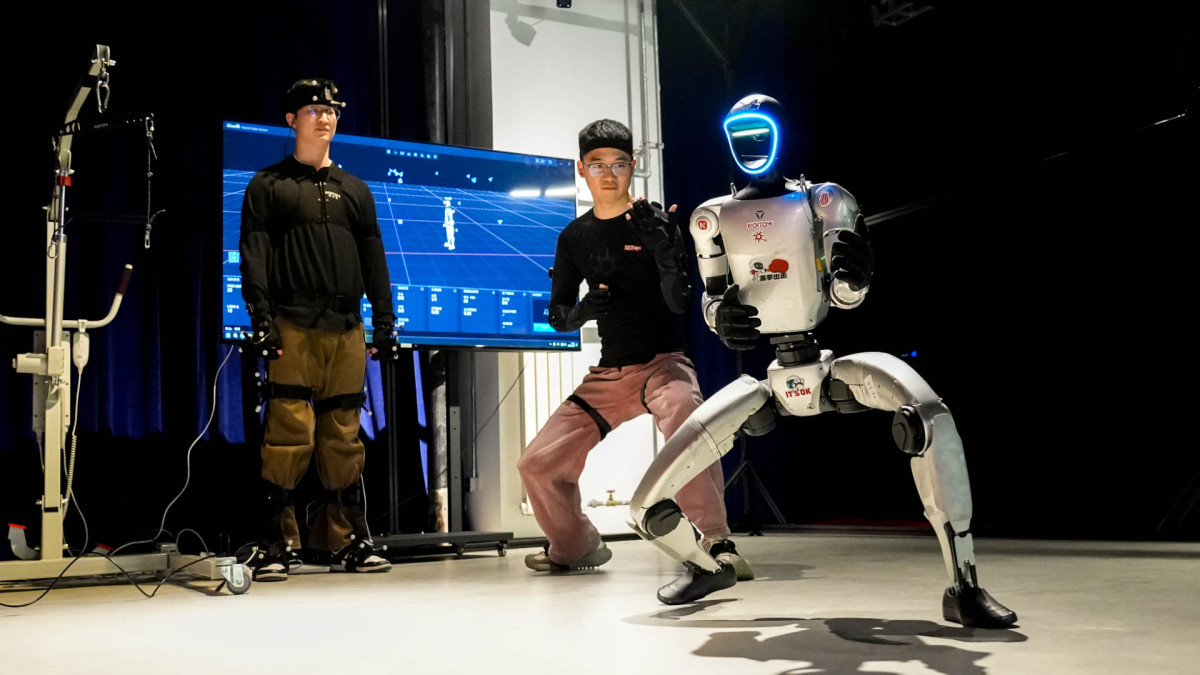
The big change, some experts already point out, could come with moving AI: robots, with arms, legs and wheels, moving through factories, warehouses, hospitals and greenhouses, assisted by an AI and capable of connecting the digital world with physical reality like never before seen. The bulk of studies addressing the potential impact of this technology on the productivity of economies focuses, precisely, on quantifying the efficiency gains —time savings— associated with applying generative AI tools to programming tasks and the creation of written and audiovisual content. What they barely incorporate is the game-changing effect that physical AI could have if it manages to take off during the next decade.
In the case of Europe, one of the main productive challenges it faces is ensuring that technological progress permeates the areas where it can truly generate a quantitative leap in productivity. Small and medium-sized enterprises operating in traditional sectors and public services are two of them. Combining the deployment of agents with simple generative AI solutions tailored to administrative, sales and business management needs can yield substantial improvements in efficiency and service quality across many sectors. However, in other areas where the presence of physical tasks is high or standard tools fail to enable meaningful changes in production and innovation processes, the AI of things could become the differentiating factor. In some of these, moreover, labor needs may be particularly acute in the coming years as native populations age and intergenerational handover becomes more complex. Process automation in these cases would not necessarily replace human employment, but rather address its scarcity.
“Automation of processes would not necessarily replace human employment in these cases, but would address its scarcity”
In this regard, a recent study from the Joint Research Centre on AI adoption in strategic sectors of the European Union is very revealing. In 2025, at least 30% of companies in sectors such as culture, communications, energy or electronics reported using at least one such technology; in mobility, tourism, agriculture, construction and manufacturing, the proportion ranged between 12% and 16%. Although there are fundamental reasons to explain this divergence, such as the digital maturity of each sector or the education level of its employed population, the truth is that the need for systems tailored to the reality of certain production processes, which go beyond the generic solutions offered by large language models, also constitutes a considerable barrier to accelerating adoption.
The good news is that Europe starts from a relatively favorable position to bet on physical AI given its experience in industrial automation. The figures on robots in industry show that countries like Germany, Sweden or Denmark have a robot density per employee higher than the United States and comparable to Japan (469 robots per 10,000 employees in Germany versus 323 in the United States or 452 in Japanese industry), although still far from the two Asian leaders in automation: Singapore and South Korea. The recent trend, however, is not as positive: the number of units installed has been declining and, in 2025, Europe accounted for only 12% of the world’s total installed industrial robots, with China occupying almost 60% of the market.
“Europe starts from a relatively favorable starting position to bet on physical AI given its experience in industrial automation”
For tasks such as inspection, maintenance, cleaning, parcel organization and logistics, its use is increasingly common and, with the recent advances in AI, they could expand their capabilities to adapt their movements to changing spaces, autonomously handle packages of different sizes, or perform additional checks in the face of unforeseen anomalies without the need for specific programming for each situation.
The potential of intelligent robotics is undeniable, but, unlike the standard interfaces of generative AI, its deployment requires substantial investments, rearranging production processes and entire workflows and, above all, ensuring the safety and reliability of those artifacts that will interact directly with the real world. When we enter these fields, we confront head-on some of the classic challenges cited to explain Europe’s productivity gap with its main competitors. Time will tell whether, over the next decade, the AI of things becomes a new source of growth or fails to move beyond a handful of industrial applications.
