
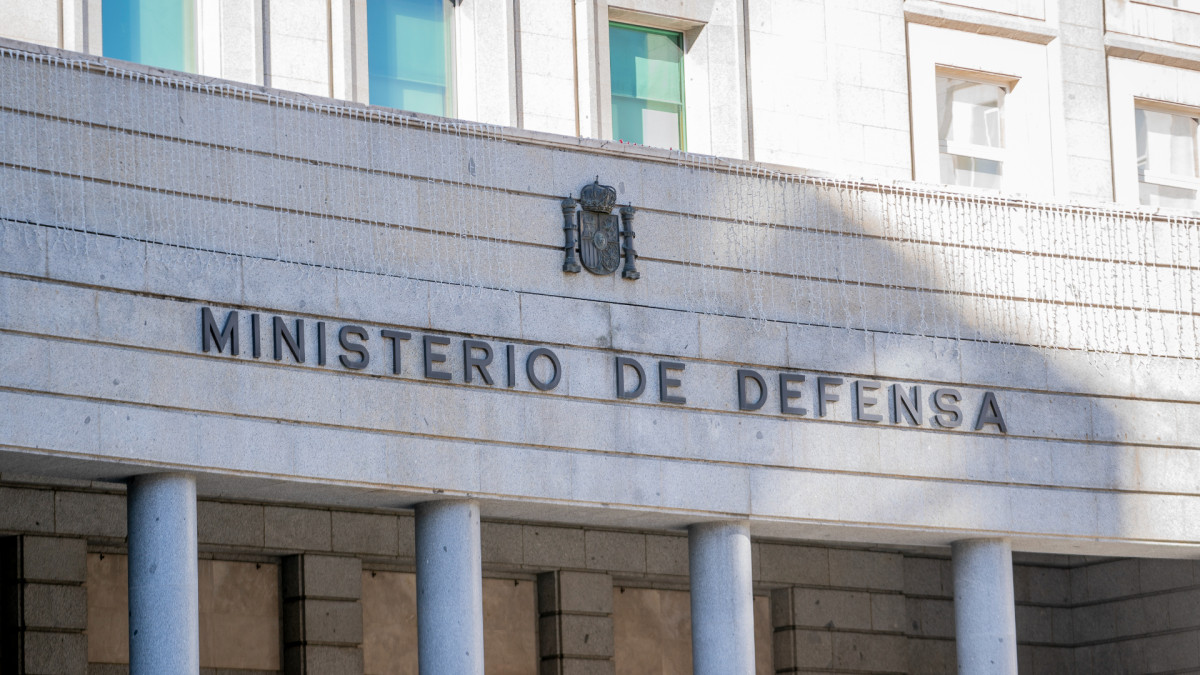
Spain faces the risk of spending more and more on defense without reviewing which political framework determines and implements it. The upcoming Ministry of Defense will have to confront reforms that have been postponed for years or resolved through minimal adjustments, while commitments accumulate that will condition military capabilities and the industrial base over the coming decades. Continuing with this inertia means letting decisions depend on the balances between organizations and inherited priorities without examining their usefulness or demanding results, as well as on the influence of third parties who determine our place in European security. Hence, among the many challenges of the next legislature, here I highlight several political-institutional reforms that the Ministry should urgently promote.
“Spain is at risk of spending more and more on defense without reviewing what political structure decides and implements it”
It is a consensus element in the Spanish strategic community that there is a duty to undertake a strategic defense review that leads to an updated strategy that orders strategic vision and planning. Javier Jordán has argued in these pages for the need to restore coherence so as to review decisions taken under assumptions that have changed in a deep and radical way. Undoubtedly, that discussion requires concessions, explaining which risks are considered tolerable—and which are secondary—and reviewing inherited commitments. The Ministry should drive that process together with the Presidency and Foreign Affairs. Political leadership will have to face the resistances of those who have built their expectations around continuity as is inherent in any process of organizational transformation.
The “iron triangle” of defense policy can favor durable agreements, but it can also hinder revising its premises, encouraging bureaucratic inertia. Defense is developed chiefly through a triangular relationship between political leaders —with ideological and territorial cleavages very marked in the Spanish case—, the military administration, and the defense industry, whose resources and interests do not have to be aligned. From our own research within the project “Rethinking the Role of the Armed Forces,” we know that our elites differ markedly on what should be the priorities on the agenda. This is a hurdle that deepens the differences among the various strategic cultures present in Spain.
“The ‘iron triangle’ of defense policy can foster durable agreements, but it can also complicate revising its premises, promoting bureaucratic inertia”
Another institutional reform should target the revision of the Organic Law of National Defense of 2005. Twenty years since its enactment: several wars with systemic consequences have occurred, and there is a need to adapt the missions of the Armed Forces, their organization, and the decision-making mechanisms to the current context. It should also be aligned with the National Security Law of 2015. It would be wise to specify the use of military capabilities in crisis management, differentiating the situation of national security interest from exceptional states, while strengthening parliamentary oversight over operations, investments, and their results — numerous controversies in the last three years touch on these matters, from deployments in domestic emergencies to the Ceuta crisis in July of this year, including escorts for the “Gaza flotilla” or calls for the Army’s role in immigration management. Additionally, the prominence given to Parliament during this legislature has been far from sufficient to accompany the magnitude of the commitments (especially financial) undertaken, including both budgetary obligations and the multitude of military missions.
In this window, a new opportunity opens to strengthen the position of the JEMAD, whose configuration as primus inter pares with the other service chiefs extends over time without achieving its own “full operational capability.” Its authority over the operational structure provides a foundation from which to expand its effective capacity to guide training, propose capabilities, and supervise their availability, under the political leadership of the minister. If there is conviction about the value of this figure, organizational reflection should specify which powers it needs to exercise that preeminence also in planning and force generation, preventing decisions from ending up dependent on the balance between organizations that defend their own programs.
In the ministerial chart, the position of the UME also deserves a review, preserving its military nature and examining which institutional dependency would be most suitable for its tasks. In any case, its assignment to Defense should be discussed together with the financing of capabilities primarily intended for civil emergencies, so that it is clear which obligations fall under the military budget and which should be sustained through other public civil protection policies, and not charged to that 2% of GDP in defense. A decision that would have to be embedded in strengthening those policies within the National Security System.
Another issue concerns the advisability of recovering the CNI’s assignment to the Presidency’s domain, taking into account its cross-cutting function and the needs of whoever leads the National Security System. Avoiding the political cost that certain scandals might impose on the president should not condition the organization of intelligence, whose institutional position requires greater coherence with the level at which the decisions it must support are made. Its current placement is already an anomaly.
Another consensus among specialists is a multi-year programming and financing law that would provide stability to the ongoing economic effort, and would ease embedding force objectives with investments and operating costs into a viable budget path. The current program-financing scheme is unsustainable: the reform must offer an integrated planning that allows anticipating accumulated obligations and assessing their fulfillment. It should also provide for periodic reviews so that financial certainty remains compatible with technological adaptation and so that cost, timing, or need changes can be discussed before committing to further expansions.
“The current program-financing scheme is unsustainable: the reform should provide an integrated planning that allows anticipating accumulated obligations and assessing their fulfillment”
That planning requires an administration capable of carrying it out. The General Directorate of Armament and Materiel and the almost newly created General Directorate of Strategy and Innovation of the Defense Industry —both under the Secretariat of State for Defense— are today distinct pieces of that organization, whose coordination with the Defense Staff should facilitate that operational needs guide the procurement of weapon systems and technological innovation. The next team will have to review this organigram and the division of responsibilities, so that there is also emphasis on program evaluation. There is also consensus on the need to speed up procurement processes, while bearing in mind the different renewal cycles depending on system types. Some lessons from the Ukraine war in terms of industrial capabilities point in this direction.
In this regard, and on the industrial front, Defense should set which technologies, supplies, and production capacities must be preserved, coordinating afterward with Industry and Finance to establish appropriate supports. Industrial autonomy requires defining which dependencies we can reduce and which it is reasonable to share with our partners; there, the European dimension enters, but as a logical consequence, not as a political a priori. Moreover, it should be stressed that the creation of skilled employment, technological innovation, or regional economic activity are relevant benefits, yes, but their contribution should be assessed together with the cost and military usefulness of each program.
“Industrial autonomy requires specifying which dependencies we are able to reduce and which it is reasonable to share with our partners”
Personnel management should be among the legislature’s priorities. There is little discussion about how to leverage and retain those who have already chosen to serve, compared with the emphasis on increasing recruitment. The question should be what career path we offer so that human potential can develop and remain in the Armed Forces. This requires revisiting the current assignment, promotion, and specialization systems: what effects do geographic mobility, pay, work-life balance, and uncertainty about continued service or promotion have? The steps taken in this legislature have been necessary but scarce given the modest results. Finally, the recognition of the military profession as a high-risk profession should be carried out; this deficit is incomprehensible.
Finally, defense policy needs an ecosystem of knowledge that expands its capacity to examine alternatives and impacts. That implies strengthening strategic analysis within the administration and fostering stable, high-quality research relationships with universities and research centers. The selection of researchers and collaborators should rest on the quality and relevance of their contributions. A specialized community capable of discussing matters independently, critically, and without sympathy for mere proximity would help improve both the Government’s decisions and parliamentary oversight; in short, Spain’s defense. When political leadership intervenes in a disjointed or erratic way due to a lack of intellectual muscle, the capacity of organizing other actors — also civilians and with ulterior interests — gains greater influence over domestic personal agendas.
The campaign has devoted little attention to defense policy, with barely a brief crossfire in the two-way debate about funding that supposed 5% spending target. This shortcoming is now even more serious due to the demands of a moment of international upheaval. Likewise, electoral programs hardly contain a handful of proposals with very uneven concreteness, making it very difficult to recognize what model of Armed Forces each government option intends to sustain. And yet, the future responsible for the Defense portfolio will have to take the initiative if institutional inertia is to stop setting the pace of this policy.
