
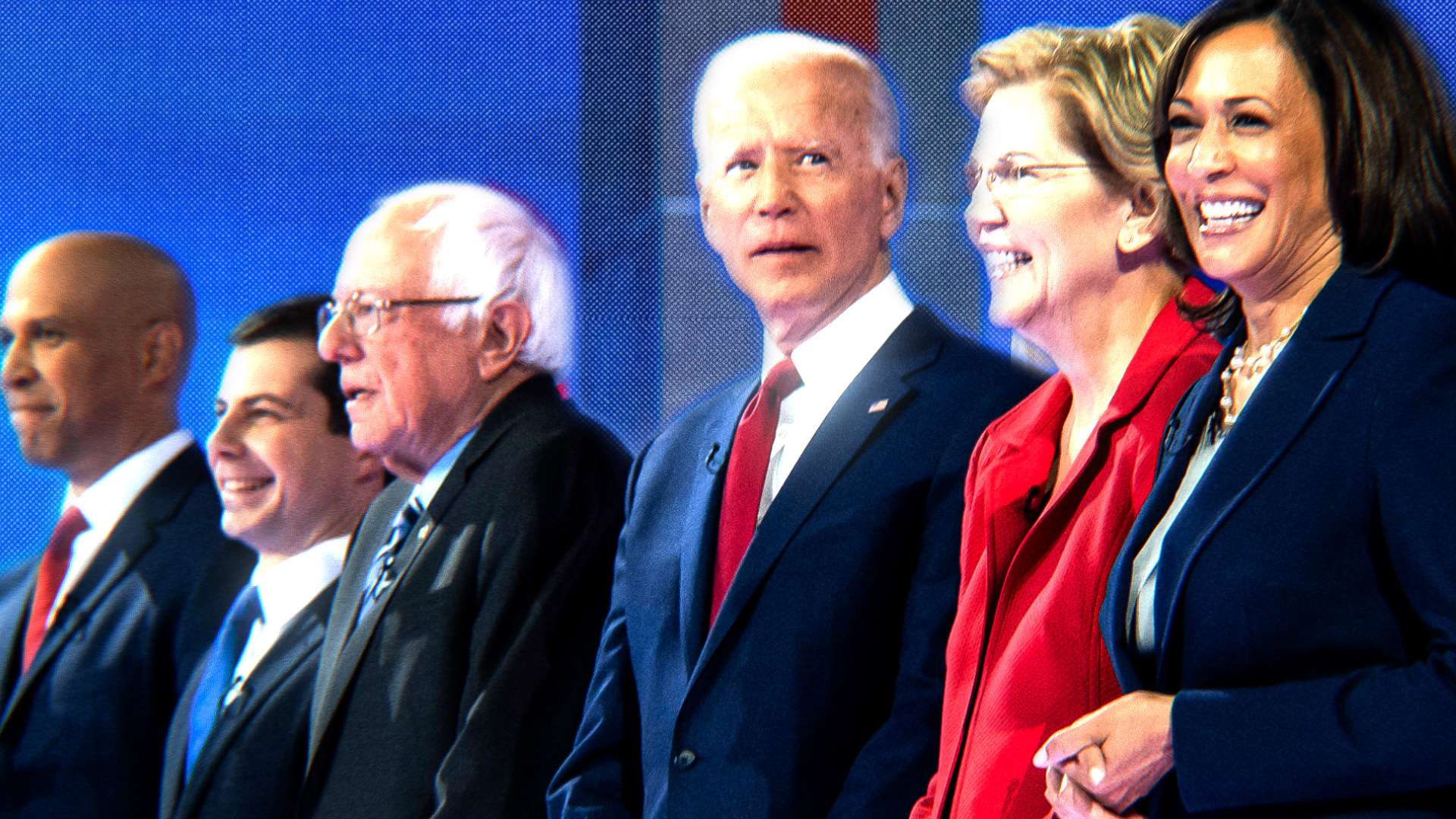
The DNC’s handling of transparency during the 2024 race stood in stark contrast to the openness it now claims to pursue for 2028.
Clear your calendar for 2027 and 2028, because a dozen Democratic primary debates are on the docket, with the first one set to unfold in June. The grueling slate of debates is part of the DNC’s newly unveiled blueprint for the 2028 presidential contest. Although enduring twelve primary face-offs might feel like a nightmare—imagine the barrage of polished, engineered viral moments we’ll be subjected to—many see a more rigorous process as preferable to the near-absence that characterized 2024.
The DNC also aims to maximize audience reach for these twelve debates, stating it will “seek to maximize viewership,” in part by bringing creators and influencers into the debate process. The plan has already drawn attention from Hasan Piker, who on X asked, “the debate will include creators and influencers you say?” The Washington Post reports that some influencers and content creators are already weighing involvement. Brian Tyler Cohen, who heads the Chorus Creator Incubator program (which, according to technology journalist Taylor Lorenz, was funded by a liberal dark-money group), argues that it’s overdue for independent media and a creator to host a debate, as noted by the Post.
Exactly how influencers will participate remains unclear—the DNC has not laid out the mechanics (will everyone be equipped with tiny mics, or will the winner be judged by the most popular TikTok post?). The party does state, however, that candidates must not take part in events where two or more candidates share the stage and answer questions, whether online or in person; those who participate in such unsanctioned debates would be barred from future sanctioned debates. While new media voices can help democratize discourse, an influencer-driven debate could push the political conversation toward a more superficial spectacle than is desirable. Will candidates face a panel of critics on Jubilee? Will they sit down with the SubwayTakes crew? Although building a savvy social-media strategy helped some local candidates, like a current mayoral hopeful in New York, Zohran Mamdani, it won’t automatically translate into broad support if the candidates’ proposals fail to connect with voters—no matter how catchy the campaign slogans or how chic the memes.
In a further move to shape the 2028 primary as transparent, fair, and rigorous, the DNC is asking candidates to publicly denounce dark-money spending in order to qualify for these debates. The party acknowledges it cannot legally ban dark money or super PACs, but it says it will provide a uniform denunciation statement for each campaign to complete once it is notified of spending that violates the pledge. This pledge, however, would not apply to the general election.
“You want to lead this party? Earn it—with voters, not with dark money,” DNC chair Ken Martin wrote on Substack this week.
Securing votes in 2028 is expected to be more challenging than in the midterms, when Democrats managed to attract support from some voters who were dissatisfied with President Trump’s approach to Iran and with high gasoline prices. While adding more independent voices to the debate could be informative for voters, it would be unwise for Democrats to assume that appearances on social media or standout debate performances alone will secure the nomination. Ultimately, voters look for tangible results, and perhaps more than anything else, Democrats have not always shown a strong penchant for self-critique.
