
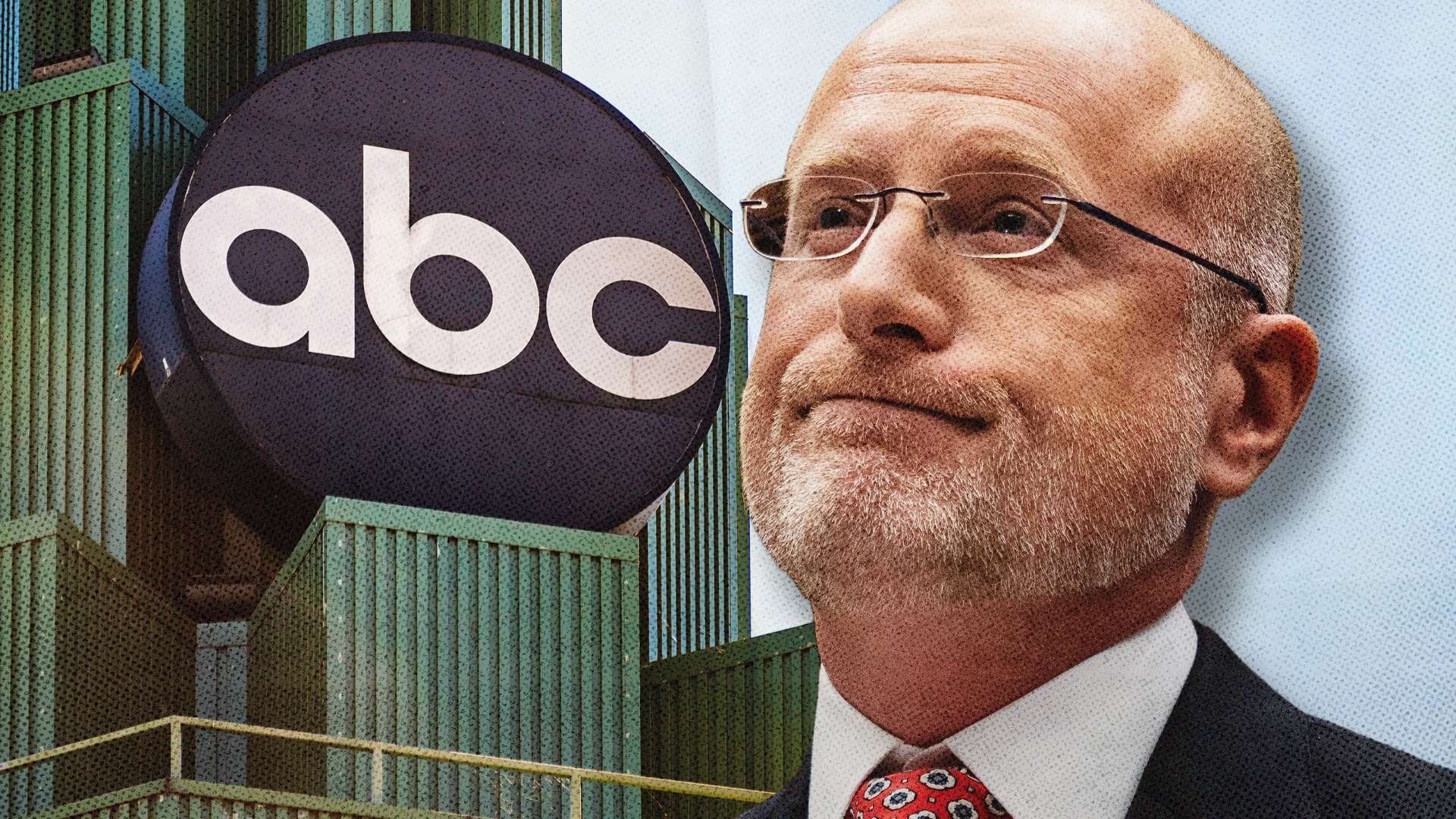
The FCC “may not retaliate against or punish” broadcasters “for disfavored speech,” U.S. District Judge Loren AliKhan says.
A federal judge this week moved to stop an unprecedented, expedited examination of the broadcast licenses held by ABC-owned stations, warning that such a review could represent an existential danger and have a chilling effect on the network’s constitutionally protected editorial choices. Loren AliKhan, a Biden appointee serving in the U.S. District Court for the District of Columbia, issued a preliminary injunction after determining that ABC is probably right in its claim that the Federal Communications Commission (FCC) violated the First Amendment by targeting the stations for speech that Trump and FCC Chairman Brendan Carr found objectionable.
“Given the extreme, indeed existential, nature of the possible penalty Plaintiffs face—loss of their broadcast licenses—the court concludes that early license renewal proceedings create a risk sufficient to chill a broadcaster of ordinary firmness,” AliKhan writes. “No one doubts that the Commission may enforce the law in the manner it sees fit. But in doing so, Defendants may not retaliate against or punish Plaintiffs and other broadcast license holders for disfavored speech.”
Seth Stern, head of advocacy at the Freedom of the Press Foundation, characterized the FCC’s moves as a campaign of intimidation and retaliation against speech that displeased Donald Trump. “The First Amendment does not permit government officials to appoint themselves the guardians of journalism or comedy. The Constitution recognizes that even well‑intentioned government actors cannot adjudicate journalistic merit without letting political aims distort their judgment, and Brendan Carr is far from a good‑faith actor,” Stern said in a written statement.
In April of the previous year, the FCC announced that it was reviewing the licenses of all eight television stations owned by ABC: WABC in New York, KABC in Los Angeles, WLS in Chicago, WPVI in Philadelphia, KTRK in Houston, KGO in San Francisco, WTVD in Durham, North Carolina, and KFSN in Fresno, California. The announcement came well before the licenses would normally come up for renewal. The FCC had not invoked its authority to conduct early license reviews in more than fifty years, and it had never before reviewed the entire slate of a single network’s owned-and-operated stations at the same time.
The stated motive for the probe was concern that Disney, which owns ABC, may have violated the agency’s equal employment opportunity regulations by engaging in discriminatory practices under the banner of diversity, equity, and inclusion (DEI). Yet Carr signaled that the inquiry would also explore a broader question: whether ABC’s outlets were meeting the loosely defined requirement to operate in the public interest—a standard he contends rules out programming choices that he views as biased against the president.
The license-review unfolds against a backdrop in which Carr’s worries go far beyond the DEI concerns he cited. For nearly a decade, Trump has threatened to revoke broadcast licenses in response to what he sees as unfair and unbalanced coverage, often taking aim at ABC in particular.
On September 11, 2024—the day after Trump’s presidential debate against Democratic nominee Kamala Harris, moderated by ABC News—he criticized the debate as “rigged” and labeled ABC “the most dishonest news organization,” adding that the network’s license should be revoked for how the event was conducted. A month later, he reiterated that ABC should lose its license for “what they’ve done.” Shortly after taking the helm at the FCC, Carr reopened a probe into whether ABC’s fact‑checking during the debate constituted “broadcast news distortion,” a claim the agency had previously deemed unfounded.
“ABC & NBC FAKE NEWS” are “two of the worst and most biased networks in history” because they “give me 97% BAD STORIES,” Trump posted on Truth Social in August 2025. “THEY ARE SIMPLY AN ARM OF THE DEMOCRAT PARTY AND SHOULD, ACCORDING TO MANY, HAVE THEIR LICENSES REVOKED BY THE FCC. I would be totally in favor of that because they are so biased and untruthful, an actual threat to our Democracy!!!”
Trump repeated that threat a short time later. ABC and NBC are “two of the absolute
worst and most biased networks anywhere in the World,” and they “should lose their Licenses for their unfair coverage of Republicans and/or Conservatives,” he wrote. “Crooked ‘journalism’ should not be rewarded, it should be terminated!!!”
The following month, late‑night comedian Jimmy Kimmel delivered a monologue on his ABC late‑night program in which he erroneously suggested that Charlie Kirk’s would‑be assassin was a Trump supporter. Two days afterward, Carr publicly warned ABC stations that they could face fines or license revocation if they did not punish Kimmel for his misinformed but constitutionally protected remarks. ABC and its affiliates promptly complied by suspending Kimmel’s show for a week—the punishment Carr had recommended.
Trump remained dissatisfied with that outcome. “I can’t believe ABC Fake News gave Jimmy Kimmel his job back,” he said. “I think we’re going to test ABC out on this.”
The FCC “should look into the license of NBC, which shows almost exclusively positive Democrat content,” Trump posted on Truth Social in October 2025. “Likewise, ABC Fake News—About the same thing, 97% negative to Republicans!”
At a press conference in November, Trump once again raised the issue. “I think the license should be taken away from ABC because your news is so fake and it’s so wrong,” he told Mary Bruce, ABC’s chief White House correspondent. “And we have a great commissioner, the chairman, who should look at that because I think when you come in and when you’re 97 percent negative to Trump, and then Trump wins the election in a landslide, that means obviously your news is not credible and you’re not credible as a reporter.”
The White House followed with a press release the next day, headlined “ABC ‘News’ Is Fake News,” asserting that “ABC ‘News’ is not journalism—it’s a Democrat spin operation masquerading as a broadcast network.” The release contended that the network’s longstanding pattern of hoaxes, character assassinations, and outright fiction targeting only one side of the political spectrum amounts to deliberate deception intended to wage war on President Trump and the millions of Americans who elected him to multiple terms.
Trump returned to the issue with another Truth Social post four days later: “ABC & NBC, in particular, are a disaster—A VIRTUAL ARM OF THE DEMOCRAT PARTY,” he wrote. “They should be viewed as an illegal campaign [of] the Radical Left. NO EXPANSION OF THE FAKE NEWS NETWORKS. If anything, make them SMALLER!”
The theme resurfaced in December. “If Network NEWSCASTS, and their Late Night Shows, are almost 100% Negative to President Donald J. Trump, MAGA, and the Republican Party, shouldn’t their very valuable Broadcast Licenses be terminated?” he asked. “I say, YES!”
A month later, the FCC opened an inquiry into ABC’s talk show The View, raising questions about its decades‑long exemption from the agency’s “equal time” rule, which is essential for ensuring candidates get fair access to the airwaves. “For years,” Carr complained on X in January, “legacy TV networks assumed their late‑night and daytime talk shows qualified as ‘bona fide news’ programs—even when their purposes were purely partisan. Today, the FCC reminded them of their duty to give all candidates equal opportunities.”
Trump had frequently criticized The View, and Carr shared his antipathy. “Once President Trump has exposed these media gatekeepers and smashed this facade, there are going to be consequences,” Carr remarked in July 2025. “I think the consequences aren’t finished yet. And look, The View has its own share of challenges.”
In April, Kimmel again crossed Trump’s line by joking about the president’s age and about his wife’s feelings on their marriage. Trump condemned the bit as “really shocking” on Truth Social, calling for Disney and ABC to fire Kimmel immediately. The FCC announced its early review of ABC’s licenses the very next day.
In July, ABC and NBC declined to broadcast Trump’s primetime address. While such choices are routine in administrations of both parties, Trump was furious. “NBC and ABC fake news have both said they would not cover this speech,” he said during the address, which contained disputed claims about election fraud. “They knew what it was about but chose not to air it because they dislike the topic, because they know how corrupt our system is and they don’t want to reveal it,” he claimed. “They and others in the media are part of a plot.” He added that “fraud like this should mean a revocation of their licenses.”
Carr lent his support to that suggestion at a press conference the following week. “When you have the president of the United States delivering an important speech from within the White House, I believe broadcasters should carry it,” he said. He added that Disney’s decision there would be one of the “points raised” during the ABC license review.
“The decision by broadcasters to carry or not carry the speech is something that is likely to be raised by petitioners who want the FCC not to renew the Disney ABC stations’ licenses,” Carr explained in a subsequent interview. “We are examining this very question about the choice to air programming or not.”
In short, Carr appears to share Trump’s interpretation of ABC’s “public interest” duties, which the president contends the network has violated by fact-checking him, offering coverage that displeases him, withholding attention he believes he deserves, and broadcasting remarks—including criticism and jokes at his expense—that upset him. Given Trump’s anti‑ABC rhetoric and the chairman’s apparent agreement with it, AliKhan concluded there was merit to ABC’s claim that the FCC’s threat to shutter its stations was driven by a desire to punish First Amendment-protected speech. The episode fits into Trump’s broader effort to weaponize the agency against his opponents.
The ABC license review is “more intrusive, burdensome and extreme than anything I observed as a chairman,” said Mark Fowler, who headed the FCC during the Reagan era, in a declaration supporting the network’s lawsuit. “The evident link between presidential complaints about ABC’s broadcast content and subsequent FCC punishment demonstrates the Chairman acting as a biased political actor with a personal stake in the outcome. Never before has the Commission acted so corruptly or illegally to intrude on broadcasters’ First Amendment rights.”
The license‑revocation threat has already shaped ABC’s programming strategies. In response to Carr’s “equal time” probe, ABC said it must now assess any invitation to a political candidate for its potential consequences, including whether the invitation could later be cited by the Commission as a reason not to renew the stations’ licenses. The View’s producers began steering clear of interviews with political candidates and even stopped featuring clips of politicians that might trigger FCC scrutiny. Kimmel’s show likewise chose not to air an interview with James Talarico, a Senate candidate at the time, opting instead to publish the exchange on YouTube.
“The ripple effects of the FCC’s campaign to hush speech extend beyond ABC or the outlets targeted by Carr,” Stern noted. “He has signaled to broadcasters that if their coverage provokes a Truth Social backlash, the FCC may deem harming the president’s feelings to be contrary to the ‘public interest’ and pursue spurious investigations. Those outlets that have faced intimidation can breathe a bit easier. The takeaway from this ruling is simple: resist giving in to Carr or any other anti‑speech bullies in this administration. Instead, head to court—the judiciary is watching them, and they tend to lose.”
