
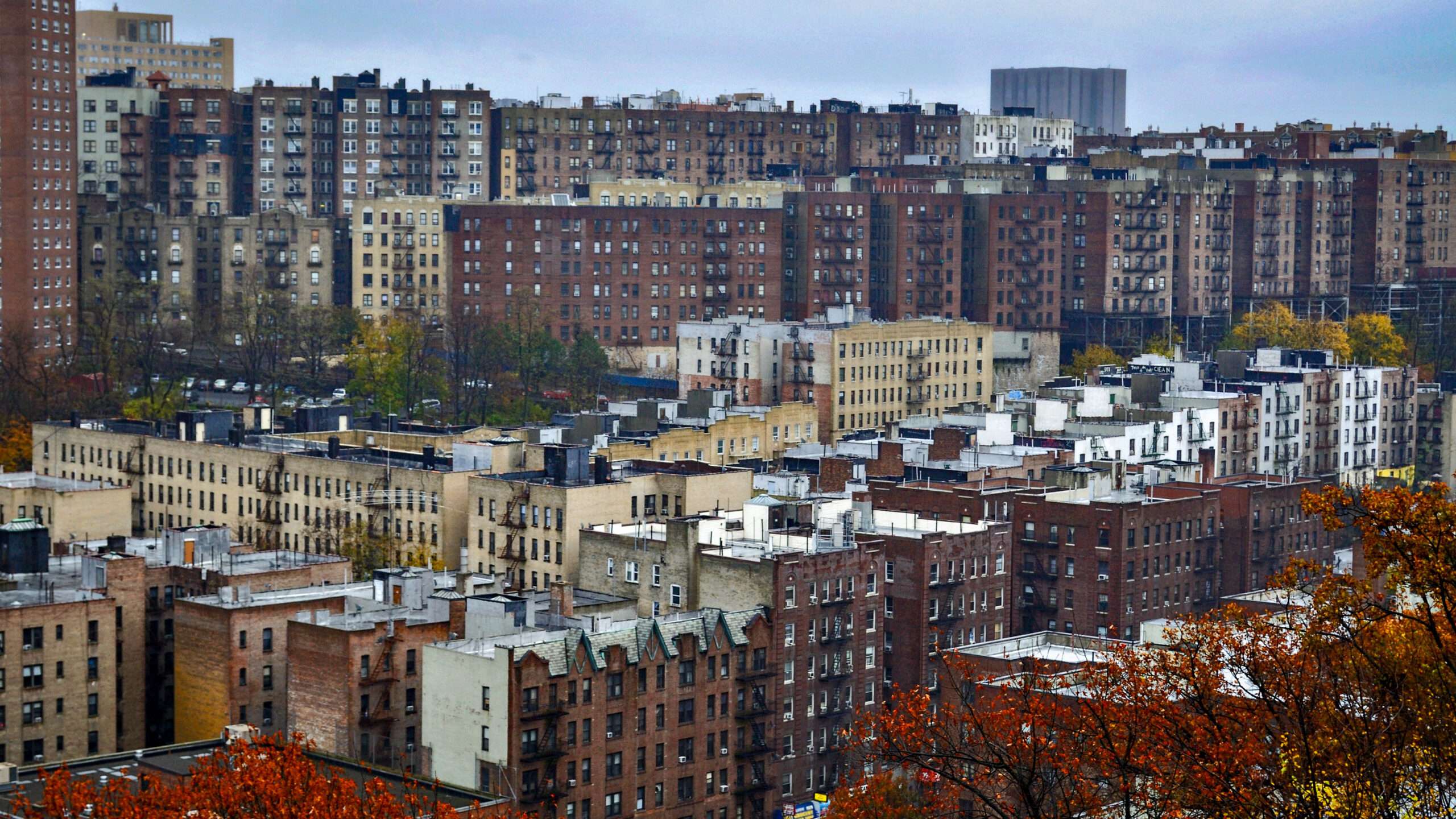
Mayor Zohran Mamdani maintains that the count of vacant, unfit-for-rent, rent-stabilized flats sits only in the low thousands, while property owners argue it is considerably higher.
The clearest indicator of the strain caused by New York’s rent stabilization regime is the phenomenon often referred to as “ghost apartments”: empty, deteriorating residences with legal rents so low that owners cannot afford to repair them and reintroduce them to the market.
People widely debate not about whether ghost apartments exist but about their quantity.
Landlords contend that the tightening of the state’s rent-control regime in 2019 has given rise to tens of thousands of these ghost units across New York City, with their numbers increasing year after year.
Rent Free Newsletter by Christian Britschgi. Get more of Christian’s urban regulation, development, and zoning coverage.
A lawsuit filed last year by several city landlords contends that the existence of ghost apartments proves that New York’s rent caps on vacant units constitute an uncompensated (and thus unconstitutional) seizure of their property.
Mayor Zohran Mamdani, in a recent New York Times event with Andrew Ross Sorkin, estimated the number of unrentable vacant apartments—defined by him as those left empty for five years or more—at roughly 6,000.
To claim otherwise, he argued, would be dangerous.
“In the middle of a housing-supply crisis in our city, the mayor chooses to dodge the question and the real problem: units sit empty for years because of flawed policy,” countered Kenny Burgos, chief executive of the New York Apartment Association, in a statement provided to Reason.
In theory, the state Division of Housing and Community Renewal (DHCR), which requires landlords to report the occupancy status of their rent-stabilized units by April 1, should be able to dispel this confusion.
These figures offer a snapshot of the vacancy rate for rent-stabilized apartments. Yet a DHCR data dump last week offered little clarity on the actual count of “ghost apartments.”
The most recent DHCR analysis shows that among the 1,086,000 rent-stabilized units in the New York City area, 58,200 were listed as vacant in 2026. An additional 32,000 were marked as “temporarily exempt,” meaning they are occupied by an owner, a building superintendent, or are being used for a nonresidential purpose.
Last year’s vacancy figures were also revised upward, from 57,000 to 60,000.
Approximately a fifth of these vacancies came from apartments registered this year, The New York Times reports. A state official told the Times that any rise in vacancies is largely driven by newly constructed rent-stabilized units that have yet to be leased.
(Typically, rent stabilization covers units built before 1974. New units can fall under rent stabilization if they were financed using certain tax credits, state subsidies, or are income-restricted units in buildings that benefited from recent upzonings.)
The remaining vacancies are a blend of units still on the market but currently unoccupied and the aforementioned ghost units that are in such poor physical condition that they cannot be rented.
The quintessential ghost apartment refers to an older building unit that has housed a single tenant for many years.
Under both the pre- and post-2019 rent-stabilization regimes, rents for occupied rent-stabilized units could generally rise only in line with the annual increases set by the city’s Rent Guidelines Board (RGB). (These increases are typically modest. This year, the RGB—whose members Mamdani helped select—froze annual rent increases.)
A long-term tenancy thus means rents have remained artificially low for potentially decades.
Because these buildings are aged, their maintenance needs are substantial. Furthermore, the 2019 law removed landlords’ ability to claim higher rent increases when a unit turned vacant and imposed tight limits on rent hikes tied to repairs.
Critics of the 2019 rent law argue that ghost apartments are the product of older, long-occupied units with low legal rents and high maintenance burdens entering the market, leaving landlords unable to finance repairs and leaving the units vacant.
Skeptics of the ghost-apartment theory note that the latest DHCR figures show the share of older vacant units has remained flat in recent years. The number of older vacant units has risen only by a few thousand since the 2019 law took effect.
According to the Times’ reading of the data, there are 27,000 vacant rent-stabilized apartments that were registered before 1990, up from 21,000 vacant pre-1990 units in 2019.
At first glance, that does not look like a dramatic surge in unrentable ghost apartments.
Yet examining only the raw change in older vacant units is a crude metric. And grouping all pre-1990 units into a single category, as the DHCR data do, is equally simplistic.
It could still overlook meaningful shifts in the makeup of older vacant units. It is possible that the vacancy rate for relatively higher-rent, higher-quality units that joined rent stabilization in the 1980s fell, while the vacancy rate for pre-1974 units rose. That would point to a rise in ghost apartments even if the headline vacancy numbers did not climb year over year.
The headline vacancy rate is almost certainly higher than what DHCR reports. A 2024 memo from the RGB indicates that 110,000 rent-stabilized units lacked lease information or had errors in the lease data.
These units are counted as occupied in DHCR’s tallies, even though the absence of valid lease information could indicate vacancy. If even a portion of these units are vacant, the overall vacancy rate would be higher, given that all of them are counted as occupied.
Even if the overall rent-stabilized vacancy rate is roughly accurate, it still signals considerable distress within the rent-stabilized segment.
If a good is priced below market value, one would expect a shortage that drives buyers toward the discounted option. The lower price typically attracts more demand than producers are willing to supply at that discount, which implies that the vacancy rate for rent-stabilized units should be lower than that for market-rate units.
The most recent citywide vacancy survey, conducted in 2023, put the total vacancy rate at 1.41 percent and the rent-stabilized vacancy rate at under 1 percent. The latest DHCR figures place it at around 6 percent.
In other words, the cheapest apartments in New York are also the least occupied. In such a high-priced market, that fact is telling and suggests serious flaws in the quality of these units. Otherwise, why wouldn’t they be moving at the steeply discounted price?
(One additional, not mutually exclusive explanation is that many vacant rent-stabilized units are income-restricted, with eligibility criteria that prevent landlords from renting to qualifying tenants.)
Even if these units aren’t ghost apartments by Mamdani’s definition, they remain effectively off the market. And that represents a problem.
