
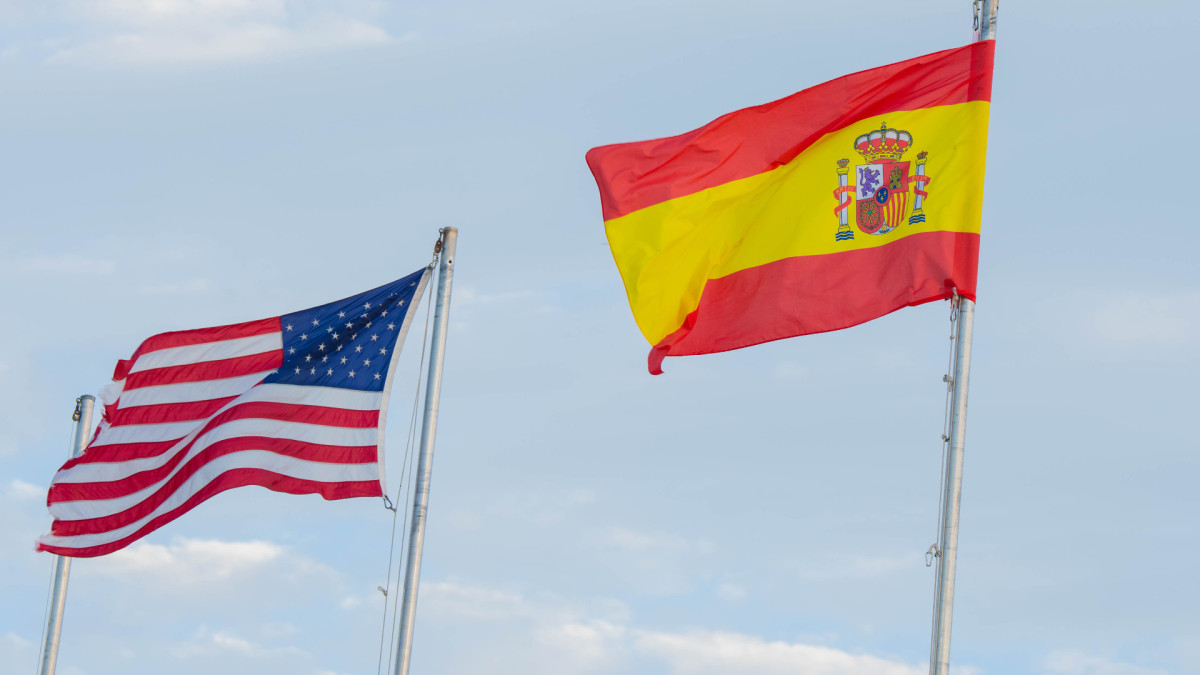
What matters this week depends on where you stand. Here, in northern Virginia, from which I write this column on Thanksgiving morning, the big news is, as one would expect, this milestone date. On the other side of the Atlantic, in Spain, the big news is the elections slated for this coming Sunday, November 29. For some time now, in the Washington metropolitan area, people have been talking about these elections and what they could mean for the relations between Spain and the United States.
The Spanish view of Transatlantic relations
Between November 12 and 14, 2026, the Spanish Public Policy Network (SPPN)—an organization that brings together Spanish public policy professionals to exchange perspectives and learn from one another on both sides of the Atlantic—celebrated the fifth edition of its annual sessions in Washington, D.C. The gathering was made possible, in part, thanks to the collaboration of Dr. Federico Steinberg, holder of the Prince of Asturias Chair at the School of Foreign Service at Georgetown University. During the sessions, numerous issues related to public policy were examined, among them transatlantic economic relations and the impact that the recent U.S. midterm elections and Spain’s upcoming elections could have on them.
“Celebrating the fifth annual meeting of the SPPN in Washington, D.C. has been especially meaningful, bringing together Spaniards from across the United States just after the U.S. midterm elections and on the eve of Spain’s general elections,” Victoria Suárez, president of the Spanish Public Policy Network, told Agenda Pública. “It is an essential annual gathering that fosters learning, enables connections with distinguished public policy professionals, and forges lasting friendships,” she added.
For his part, Professor Steinberg told Agenda Pública that “the transatlantic economic relationship remains the closest in the world and will likely endure despite tensions during the presidency of [President] Trump.” He added that, “despite Democratic victories in the midterm elections, it is unlikely that major changes will take place in U.S. trade and foreign policy before the 2028 elections, while artificial intelligence, falling fertility rates, and climate change will play an increasingly larger role in the global economy.”
The American view of the Spanish elections
Agenda Pública has also consulted American professionals about the current state of the United States–Spain relationship and about possible repercussions—if any—of the Spanish elections on bilateral ties and, more broadly, on Europe–United States relations. Lester Munson, head of the international practice at BGR Group, a bipartisan public affairs firm, told Agenda Pública: “Spain needs a government capable of implementing a sensible plan that guarantees solid economic growth over the next generation. Otherwise, Spain will lose relevance and will find its room for maneuver on the international stage greatly limited.” Munson—formerly director of the Foreign Relations Committee staff of the U.S. Senate—added: “From the United States, we expect Spanish voters to choose accordingly.”
“The transatlantic economic relationship remains the closest in the world and will likely endure despite tensions during the Trump presidency“
For his part, Bjorn Beam, economist and former operations officer for the United States Central Intelligence Agency (CIA), who helped assemble the daily intelligence briefing for the president and who now serves as director of geopolitical research at Arcano Research, told Agenda Pública: “A victory by the main Spanish opposition parties could open the door to a new phase in relations with the Trump administration, which, now that Democrats control Congress, will focus even more attention on foreign policy and will likely find in Madrid a more willing interlocutor to collaborate.” Beam concluded: “Restrictions on the U.S. use of the Rota and Morón bases are the issue where both sides have the best chance to achieve an initial breakthrough.”
Giving thanks
As I finish writing this column this morning, I am grateful that there are people on both sides of the Atlantic deeply committed to the Spain–United States relationship, as recent SPPN sessions have shown.
Whatever happens on Sunday, the relations between Spain and the United States will endure because they go beyond politics and public policy: they rest on people who want to keep learning from one another. Regardless of the electoral outcome, one thing that will surely endure is the goodwill among people.
