
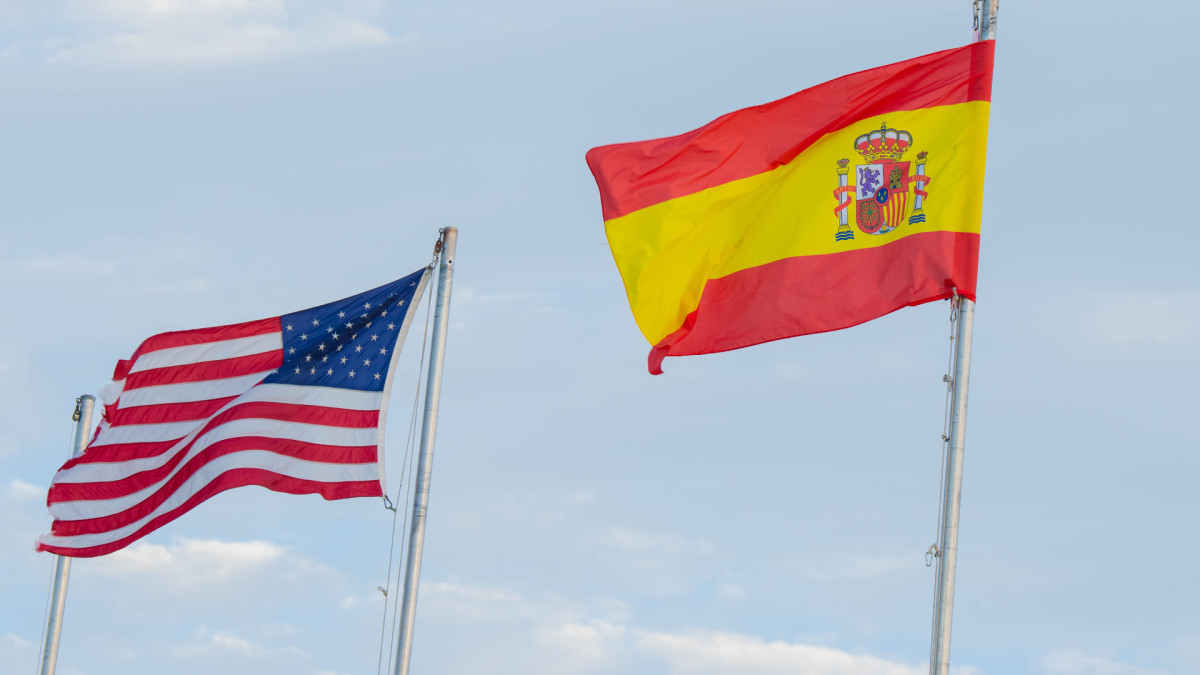
What matters this week depends on where you are. Here in northern Virginia, where I write this column on Thursday, November 26, the morning of Thanksgiving, the conversation centers on Thanksgiving. By contrast, in Spain the dominant topic is the forthcoming election on Sunday, November 29. In the Washington, D.C. area, there has long been discussion about the forthcoming vote and what it might mean for the Spain–U.S. relationship.
Spanish perspectives on the Transatlantic relationship
From November 12 through November 14, 2026, the Spanish Public Policy Network (SPPN) — an association that connects Spanish public-policy professionals to exchange ideas and learn from one another across the Atlantic — held its fifth annual Jornadas conference in Washington, D.C. The event benefited in part from the involvement of Federico Steinberg, Ph.D., the Prince of Asturias Chair at Georgetown University’s School of Foreign Service. Attendees debated a broad array of public-policy topics, including the Transatlantic economic relationship and how it could be shaped by the recent U.S. midterms and Spain’s upcoming general elections.
“Hosting SPPN’s fifth annual gathering in Washington, D.C., was particularly meaningful, bringing together Spaniards from across the United States just after the U.S. midterms and ahead of Spain’s general elections,” said Victoria Suárez, President of the Spanish Public Policy Network, to Agenda Pública. “It is an essential annual event that fosters learning, builds meaningful connections with leading public policy professionals, and creates lasting friendships.”
For his part, Steinberg told Agenda Pública that the transatlantic economic relationship remains the deepest in the world and is likely to endure despite tensions under President Trump. He added that, despite Democratic midterm victories, major U.S. trade and foreign-policy shifts are unlikely before the 2028 elections, while artificial intelligence, declining fertility rates, and climate change will increasingly shape the global economy.
U.S. perspectives on the Spanish election
Agenda Pública also sought American opinions on where the U.S.–Spain relationship stands at this moment, asking what the Spanish election could mean — if anything — for the Spain–U.S. relationship and for European–U.S. ties more broadly. Lester Munson, Head of the International Practice at the bipartisan public-affairs firm BGR Group, told Agenda Pública, “Spain needs a government capable of implementing a credible plan for robust economic growth over the next generation. Without such leadership, Spain risks becoming more and more peripheral and its options on the global stage could be severely limited.” Munson — who previously served as Staff Director of the U.S. Senate Foreign Relations Committee — went on to say that from the United States, we hope Spanish voters will choose accordingly.
The transatlantic economic relationship remains the deepest in the world and is likely to endure despite tensions under President Trump.
For his part, Bjorn Beam, a former U.S. Central Intelligence Agency Operations Officer and economist who worked on the Presidential Daily Briefing staff — who is now Head of Geopolitical Research at Arcano Research — told Agenda Pública, “A victory for Spain’s main opposition parties could open the door to a reset with the Trump administration, which, with Democrats now controlling Congress, will focus even more on foreign policy and would likely find a more willing partner in Madrid.” Beam went on to add, “The restrictions on U.S. use of the bases at Rota and Morón are the most likely place for an early win for both sides.”
Giving Thanks
As I wrap up this column this morning, I’m grateful to see that there are clearly people on both sides of the Atlantic who care deeply about the Spain–U.S. relationship, as the recent SPPN Jornadas conference demonstrated. Whatever unfolds on Sunday, the Spain–U.S. relationship will endure because it transcends politics and policy: it is about people who want to continue learning from one another. No matter what the election yields, the goodwill between individuals will likely remain a constant.
