
The world has accelerated its shift in the transformation of the international order. In light of this new reality, the discussion now tends to revolve around how the forthcoming order will be framed, which powers will ascend, which will withdraw, and which principles and values will prevail during this phase. There is no singular answer, but the reflections of Pol Morillas and Bruno Maçães offer reasons for European optimism while also clearly identifying a number of areas where uncertainty is higher and where special vigilance will be necessary.
Morillas, the director of CIDOB, interprets the current disruptions — including the conflict in the Middle East — as evidence that “we are still uncertain about the form the new order will take.” Yet amid that uncertainty, he insists we must speak of a “post-Western world.”
Maçães, writing from a European vantage point, contends that “the fundamental problem is nostalgia,” especially among Europe’s leaders. Regarding the technological revolution, which both regard as a principal driver of change, he notes that “it may appear that Europe is falling behind, but past technological revolutions were never confined to the technology alone.” In other words, how these advances are integrated into governance systems could prove even more decisive than the technology itself.
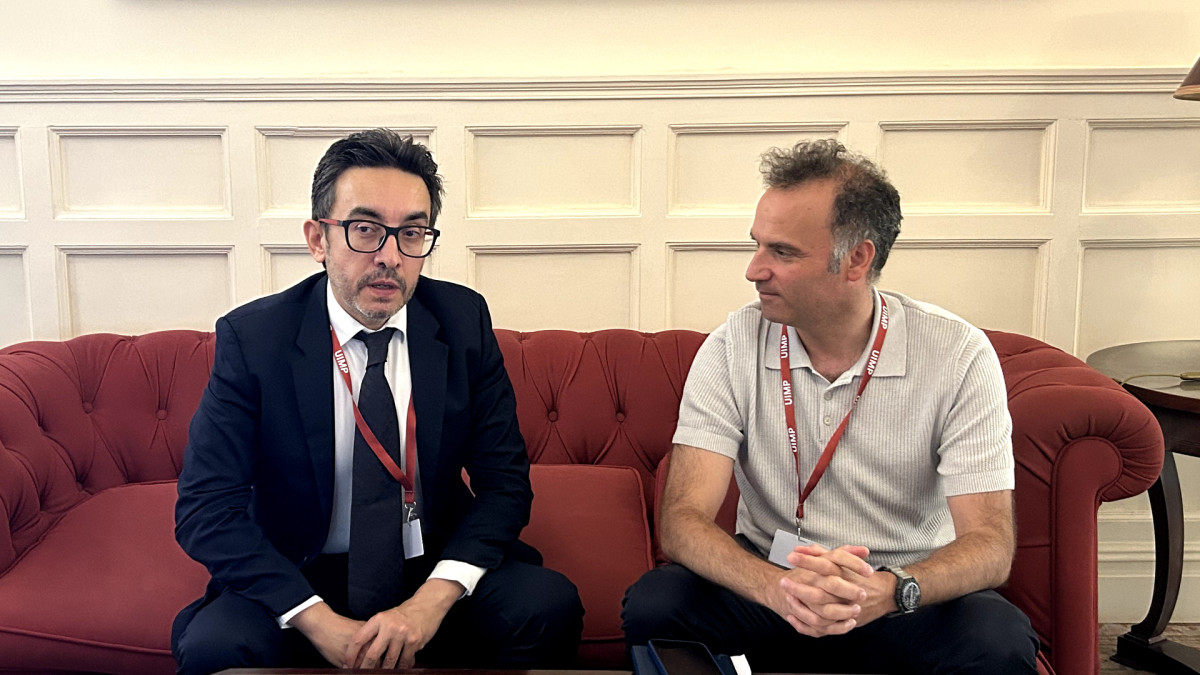
Maçães and Morillas are among the panellists taking part in the fourth edition of the Spain in the World course. Photo: Agenda Pública
I wanted to begin with what we discussed yesterday about the new global order. When we try to understand where it is heading, where should we look? We think, of course, about China, artificial intelligence or the war in the Middle East. What is driving this new global order?
Bruno Maçães (B. M.): In several respects, what we are witnessing is a normal transition, what scholars describe as a hegemonic transition. History shows that hegemonic cycles exist, and although some doubt it, I believe we are currently undergoing one.
American power is waning and technology is spreading across the globe. In the modern era, technology serves as a source of power, and its diffusion translates directly into shifts in power distribution.
There are also changes occurring within the United States. It no longer operates as a benevolent hegemon but rather as a deeply anxious one in decline. And, of course, questions arise about Europe’s place in this future order, because Europe has been part of the existing structure and of the hegemonic system itself.
“In modern times, technology is a source of power, so that diffusion translates directly into changes in the distribution of power”
We are not merely facing a transition among Western powers, as occurred historically with Portugal, Spain, the Netherlands, France, Britain and the United States. That has characterized the last five centuries. This moment is especially significant because, in certain respects, it marks a shift away from the West rather than a shift occurring solely within it.
Pol Morillas (P. M.): Building on Bruno’s point, I think we are dealing with two parallel processes that are crucial in shaping the current state of the global order and the form it will take in the future.
On one hand, there is the distribution of power across all its dimensions: economic, technological, military and even soft power, which has been a central element for decades and is now eroding in many places. The way power is distributed helps us understand the world we live in now, and, more importantly, the world we are entering.
In this light, debates emerge about whether we are moving toward a new bipolarity or whether middle powers will gain significance and help construct a more multipolar arrangement. There is broad consensus that it will not be unipolar.
On the other hand, there is the question of how that power distribution is managed. Will we continue to rely on cooperative mechanisms that require reform? The current system is not prepared for the new world we are entering or for this new distribution of power.
We must ask whether we intend to reform existing cooperative frameworks to manage climate change, artificial intelligence, technologies and global public goods. We should also consider what sorts of cooperation we will build: whether we are witnessing the birth of new organizations and new forms of cooperation among regions, or even within them, and whether those regions will eventually collaborate at the global level through an entirely new architecture of international governance.
“Will we continue to manage the distribution of power through mechanisms of cooperation that need to be reformed? The current system is not prepared for the new world we are entering”
At the moment, with these two dimensions still in play, what we see is disruption. We observe it in conflicts, in the weaponisation of interdependence and in great-power rivalry. These are disruptions of the system because we remain uncertain about the form the new order will take. I think that is precisely where we are now.
RELATED ARTICLES
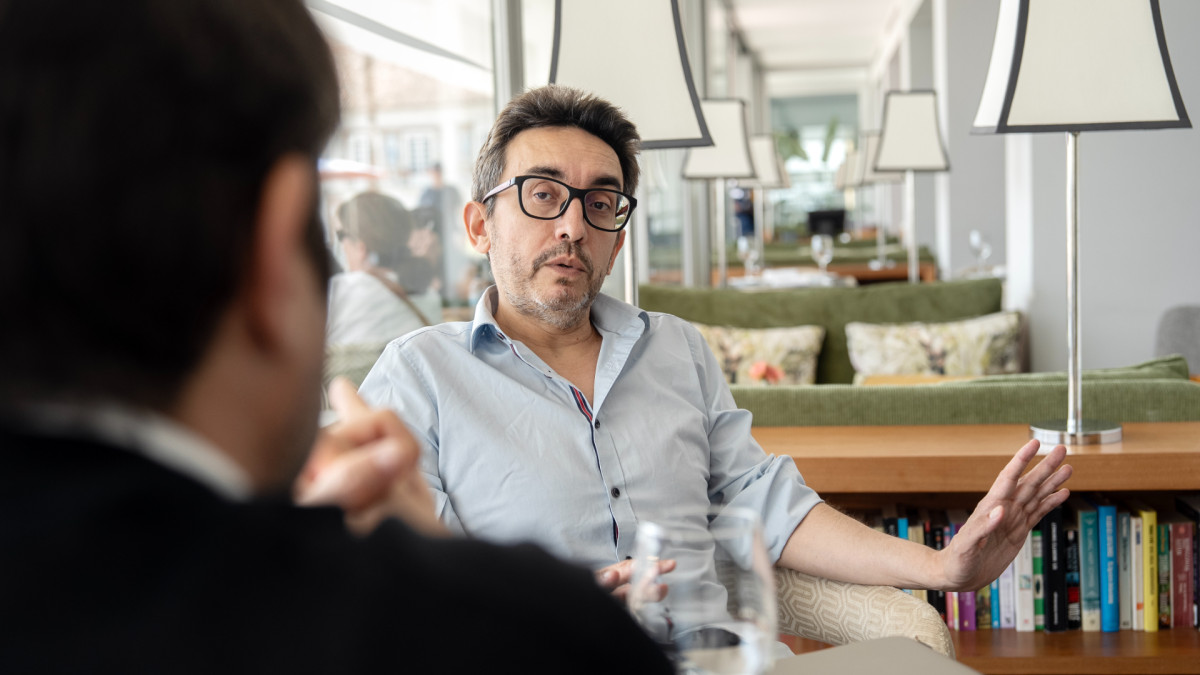
Maçães and López Plana talk in Portugal.Agenda Pública / Ana Brígida
Globe monument on the shores of the Arctic Ocean in NorwayPexels / Thea Cintia Paixão da Silva
Turning to Europe, I am somewhat sceptical about whether we share the same analysis. Consider, for example, Spain’s position on China, which you discussed yesterday. Faced with such different national interests, what should Europe do? How does all this fit into cooperation between new regions and centres of power?
B. M.: Europe has to accept change and even embrace it. I think the fundamental problem is nostalgia, and it is particularly acute at this moment because of a generational question.
The generation currently in power is the one that came of age in 1989. It is so deeply shaped by that moment that it finds it very difficult to think in any other way. It is a problem that will be resolved quite naturally through generational change.
We will have a generation that is less attached to the past and does not suffer as much from this nostalgia. 1989 was a beautiful moment in history, almost a miracle, but one cannot live in the past forever.
I hope there will be an embrace of the future. That means accepting that the world order is changing and that Europe must participate in that process. It must possess the power required to help shape the future, although not in a hegemonic manner, because that too would be a form of nostalgia for an imperial age. It must do so as one stakeholder among many, representing its own values.
That is another of the changes taking place. We have to accept something resembling value pluralism. China and India represent different civilisations. Europe itself is also a civilisation.
We represent values that are not universal. One would hope that the future world order will be shaped from different places and through different contributions. It will be a kind of hybrid world order.
“I hope there will be an embrace of the future. That means accepting that the world order is changing and that Europe must participate in that process”
I do not generally speak of multipolarity, but rather of hybridity or a hybrid world order, because, ultimately, there is a single order shaped from different places. I do not believe we are moving towards a fragmented order.
Order is always global, especially in the age of advanced technology. It is not possible to maintain exclusively local orders. Ultimately, there is a global system that is financial, technological and economic.
Europe has to be one of the stakeholders involved in it. It is a question of percentages: different parts of the world will contribute in different ways to shaping that future order.
P. M.: Along the same lines, I think it is essential to understand that we talk a great deal about a post-Western world, and for good reason. The United States and Europe are no longer moving in the same direction, and there are multiple actors with a great deal to say about the present and future of the global order.
The entry into this post-Western phase reflects the fact that the context has changed, both in transatlantic relations and in relation to the growing importance of other powers. But this post-Western world is not moving in a single direction, nor is it leading towards an alternative order that completely excludes the West.
“The entry into this post-Western phase reflects the fact that the context has changed, both in transatlantic relations and in relation to the growing importance of other powers”
A complete system is not emerging, with a new set of values and institutions ready to replace the previous one. That is not what is happening. What we are witnessing is the obsolescence of the Western-led order and the need for the new order to represent more accurately the role of other actors in shaping it.
It is precisely at this juncture that Europe still retains the capacity to exert influence. Since there is no fully constructed alternative order, it is up to many actors —and Europe is one of them— to help shape the future. We must accept that it will not be the same order we knew and that it will have to be more representative, more efficient and more consistent with the new distribution of power. But that does not mean Europe will be irrelevant.
This opportunity may be even greater if the United States retreats, because someone from the so-called West will have to contribute a vision for the future of the global order. That is where Europe’s window of opportunity lies.
The problem is that Europe is not always aware of these major tectonic changes or clear about what it wants to defend at this particular moment. Sometimes this is due to its internal divisions, which limit its capacity to influence the shape of the new order. At other times, it reflects its traditional dependencies on the United States. Many European countries believe that moving away from Washington leads to irrelevance, while others consider that the time has come for strategic autonomy and a stronger European role.
The main problem, therefore, lies within Europe itself. We have to ensure that our interlocutors in this new system can identify a European voice. First, we must build that voice and then understand that the new order has yet to be constructed. That is precisely our opportunity.
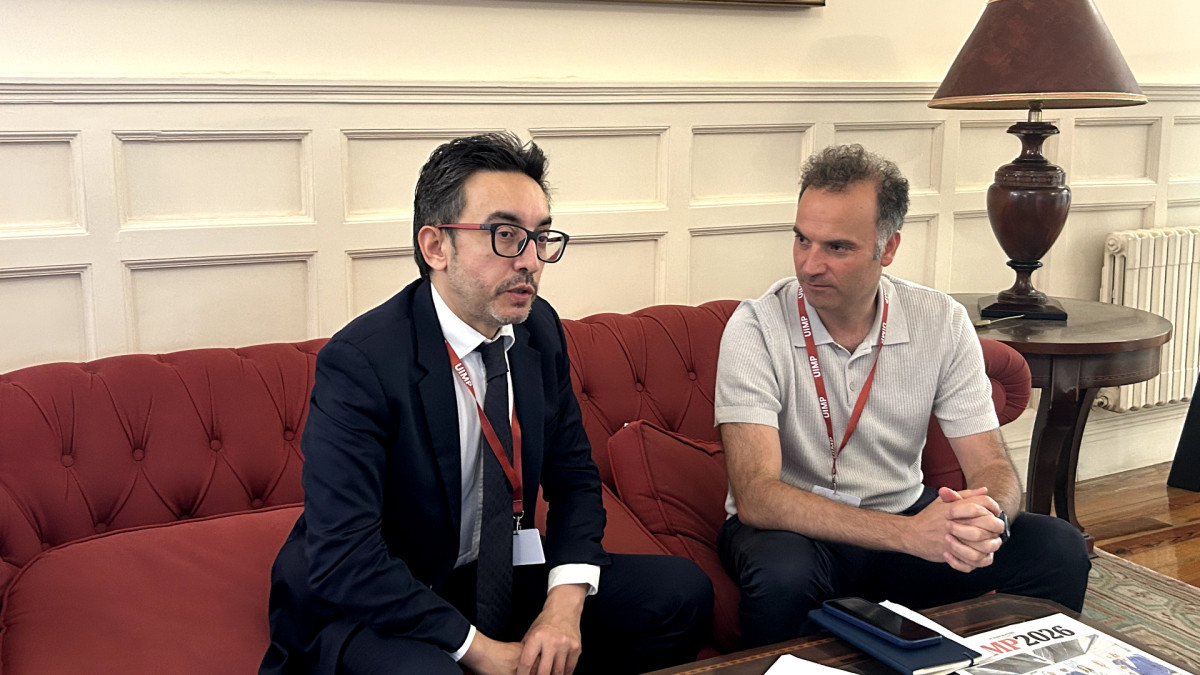
The analysts discuss the processes of global change and the role of democracy. Photo: Agenda Pública
I am interested in what is going to happen to democracies. In a sense, the West was also identified with democracy, but we are moving towards a scenario in which democracy may no longer be regarded as indispensable. Do you think democracy will be questioned even more broadly in Europe, given what is happening in the United States and the rise of new centres of power?
B. M.: First of all, I think Pol has made a very significant point. We live with the constant anxiety that another world order already exists, fully formed and ready to supplant us. We project an image of an enemy just outside the door waiting to take our place, when in reality the future is open and will also be shaped by us.
That is an important idea, and it connects to the question of democracy. We could adopt an optimistic view —we are sometimes overly pessimistic— and argue that we are undergoing a process of democratisation of the global system. Power will be more widely distributed, and values will be more open to contestation, change and debate.
“We project the image of an enemy waiting just outside the door to take our place, when in reality the future is open and will also be shaped by us”
Ultimately, Fukuyama’s notion of the end of history was profoundly undemocratic. One can disagree: it was democratic within Western democracies, but at the level of the global system, power was meant to stay concentrated in certain places, and the shape of the system was not open to discussion, debate or change. We were supposedly at the end of history, and the values and the system were thought to be fixed forever.
That is why this could also be a moment of democratisation. Democracy, of course, carries a certain ambivalence. In a democracy, we must often recognise that the solution adopted may not be the one we prefer because we are in the minority. Democracy is, by its very nature, somewhat unstable, precisely because the final outcome remains open.
Therefore, saying that we are entering a process of democratisation of the system also means acknowledging that we are navigating a dangerous moment.
Nevertheless, the intellectual heritage of the West —the critique and questioning of established structures, monarchies, the clergy and hierarchies— has not vanished. In fact, it has been embraced by India, China and the rest of the world.
That questioning is, in a sense, the source of democracy: we should not accept social and political structures as given or as inherently tied to tradition. They must remain open to critique.
I am not pessimistic about democracy. I simply believe that the form and structure of Western liberal democracy may not be the democracy of the future.
It may resemble Indian democracy, which is less liberal and might appear less stable from the outside. But one cannot automatically conclude that it is less democratic.
P. M.: I agree that the state and quality of democracy are in crisis. All the major institutions studying the issue report the same: there is a drift toward autocracy, and democratic quality is deteriorating in many places.
At the same time, democracy remains resilient because it is fundamentally about managing change within our societies. The future of the world will depend on the ability to adapt. The challenge is that this domestic adjustment is taking place amid a profound transformation of our political systems: fragmentation, polarisation, the role of social media, fake news and disinformation.
All these phenomena lead us to ask whether democracy, as a tool, is equipped to handle today’s changes. But that does not mean questioning the democratic principle. What is being questioned is the operational framework through which democracy functions.
Our political systems must demonstrate that their resilience allows them to adapt to evolving conditions.
I also share Bruno’s critique of the idea that democracy can be exported: the belief that there is a single way to practice it and that everyone else must learn to do it the Western way. That notion is precisely what is being fiercely contested today.
There are alternative ways of understanding democracy. Some major powers claim they are democratic too, but argue that their systems require a certain degree of guidance, and they regard that guidance as the truly essential element.
There are multiple ways to interpret democracy. The problem arises when we regard it as a static construct, both within our own societies and in the external world. If we accept only one conception of democracy, it will lack resilience and eventually crumble under the multiple pressures currently driving it into crisis.
In that sense, Fukuyama’s interpretation was extraordinarily static: the Western form of democracy would, in the end, be exported to everyone. It is a static and linear view.
“If we accept only one conception of democracy, it will not be resilient and will ultimately collapse”
What we are experiencing, however, geopolitically and politically, is characterized by non-linearity. There are many ways to interpret values, the core elements of society, the economy and the use of technology.
Everything is in flux. Democracy will endure so long as it proves capable of being resilient and adapting to these new conditions.
To conclude, from a European vantage point, what is the strongest argument for remaining optimistic about Europe’s future?
B. M.: I believe Europe still holds significant advantages. It remains tethered to a set of enduring values inherited from the past, especially those of the Enlightenment, which will continue to matter down the line.
Our societies retain a broad social consensus. Relative to many other places, they appear less fragmented, and that is a valuable asset. I think we are reasonably well prepared to face these challenging times.
Consider the advent of new technologies. At first glance, Europe might seem to be slipping behind, but earlier technological shifts were never limited to the gadgets themselves. They also hinged on how social and economic systems adapted to their arrival.
Managing that transformation requires democracies that function properly and respond effectively. I believe European democracies may perform better than the American system and perhaps better than most alternatives around the world.
What will happen to societies in the face of artificial intelligence? It will be an extremely arduous process with major challenges, including for employment. I believe European democracies are better equipped to address those challenges.
“Managing that change requires democracies that function properly and are capable of responding”
This question, to me, matters more than merely inventing new technologies. What matters is how they spread, how societies absorb them, how they adapt to them and how they learn to manage them. Governing a new disruptive technology is, in fact, more crucial than inventing it. The United States proved extraordinary at managing the advent of electricity, for example. It did so through social, political and economic systems that now appear deeply dysfunctional in America and considerably less so in Europe.
Ultimately, I think our political structures are in better shape than elsewhere. That will be the decisive factor in determining which societies succeed most.
P. M.: To balance that view with a positive angle, I think it is essential to grasp contemporary European politics. There is a very strong reaction from those who defend a Europe of nations and the so-called patriots, who propose an alternative model for the continent’s future.
They speak of returning powers to the national level, of placing authority in the hands of the member states rather than the European Union, of halting further integration, strengthening intergovernmental coordination and even reclaiming competences that have already been transferred. Thus there exists, in effect, an alternative model.
But I read this model as a reaction to many things that have gone wrong. I am referring to the economic situation, the distribution of wealth, the cost of living, recent socio-economic crises, immigration and the belief that the world was moving along a linear trajectory with no viable alternatives to the established order or to the political centre.
The Europe of nations and patriots is, to a large extent, a response to neglecting real problems. For me, that response marks a first step, but not the final one.
It does not signal Europe’s imminent disintegration. It does signify that a new cleavage is emerging, placing enormous pressure on many member states: the divide between those who back deeper integration and those who advocate a Europe comprised of nations and patriots.
Europe’s future could be bright if we recognise that the demands emerging from many member states are calls for reform, for a new mode of doing politics in Europe and for a new European role on the world stage.
“The Europe of nations and patriots is, to a large extent, a response to the neglect of real problems. For me, that response represents a first step, but not the final one”
We will need a united Europe that is resilient and capable of acting on the global stage. That is why I believe integration remains the right long-term approach.
In the meantime, we must address the problems that have prevented that approach from succeeding, or that have led it to be viewed negatively by those who defend a Europe of nations.
The future is not pre-written. The contest between these models is far from resolved. In fact, it has only just begun.
