
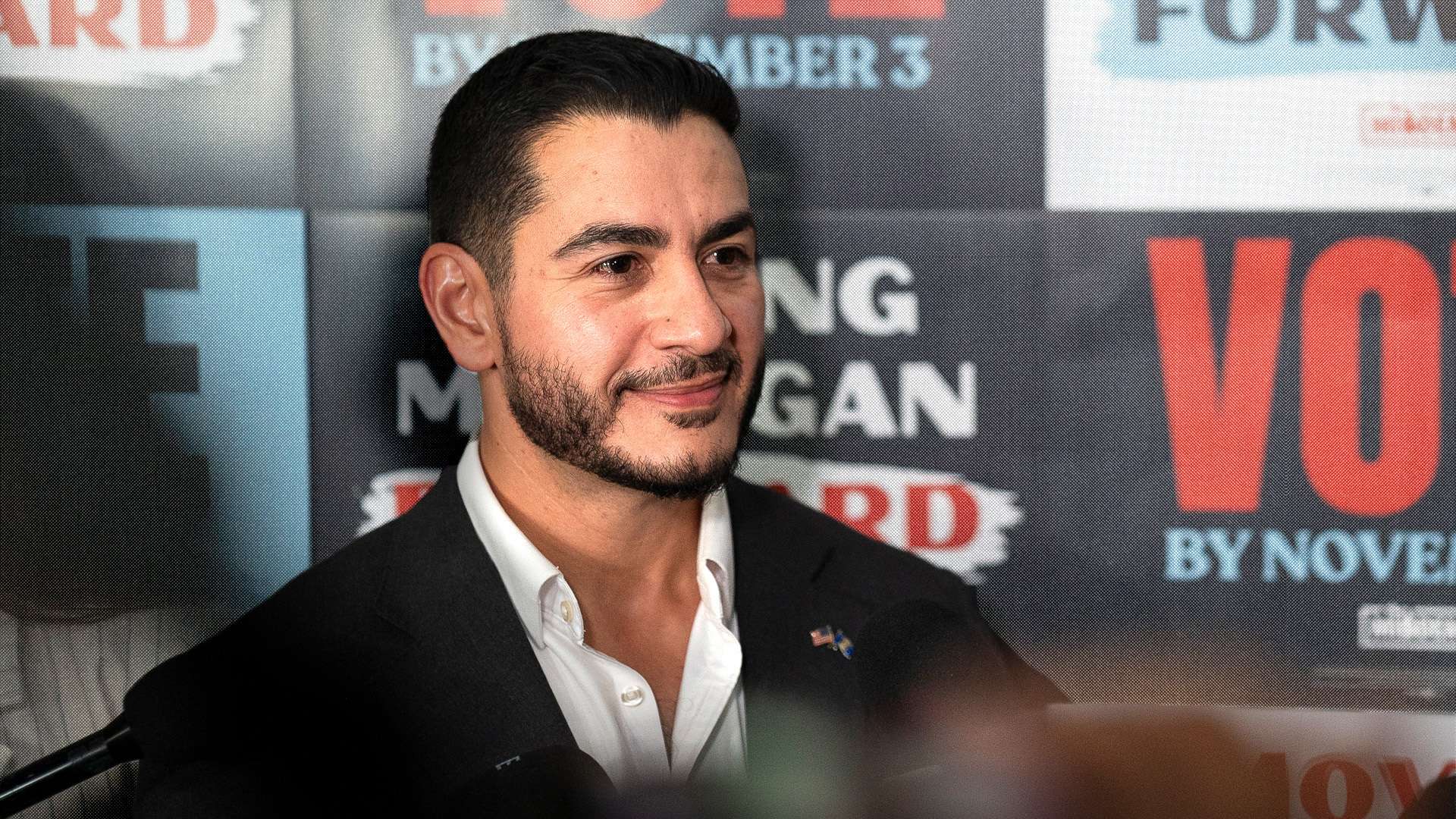
His votes are expected to mirror the policy lines championed by Bernie Sanders and Elizabeth Warren.
Abdul El-Sayed has claimed Michigan’s Senate seat by defeating the Republican challenger Mike Rogers.
The arc of his campaign drew significant national notice after he spent time with Hasan Piker, a controversial far-left commentator who has faced criticism for defending extremist groups and communist governments. El-Sayed later cut ties with Piker while arguing that the media was trying to push him into cancel culture. “I thought we were over it,” he told Politico.
His relationship with his primary rival, the more moderate Democratic Rep. Haley Stevens, deteriorated to such an extent that she issued a late endorsement of Rogers just two days before the general election. While that move was dramatic, it does not appear to have altered the result.
As a Senate member, El-Sayed is expected to be among the more left-leaning lawmakers on the national stage. He has described himself as a capitalist rather than a socialist and has declined membership in the Democratic Socialists of America, yet his policy goals are closely aligned with theirs. He backs a universal, government-run health care system akin to Medicare for All, calls for steep taxes and new regulations on the wealthiest Americans, and favors broad limits on the tech sector and on artificial intelligence. He has characterized Barack Obama as “fairly centrist, middle-of-the-road,” a stance that does not bode well for libertarians.
As is often the case with progressives, certain parts of his program touch on libertarian-leaning themes. He is vehemently opposed to the Trump administration’s aggression toward Iran and to foreign interventionism in general. He also opposes the widespread use of Flock by police to surveil citizens and infringe on privacy rights. (His defeated opponent, Rogers, supported the USA PATRIOT Act and its extensions during his time in Congress.) The Senate welcoming another dependable vote for civil liberties would be a welcome development.
Yet on economic liberty and the overall size of government, El-Sayed is likely to cast votes alongside Sen. Bernie Sanders (I–Vt.) and Sen. Elizabeth Warren (D–Mass.) and other like-minded peers.
His victory emerged amid a sweeping blue wave that produced the strongest Democratic showing since 2008: his party is positioned to hold substantial majorities in both chambers when the next Congress convenes in January.
