
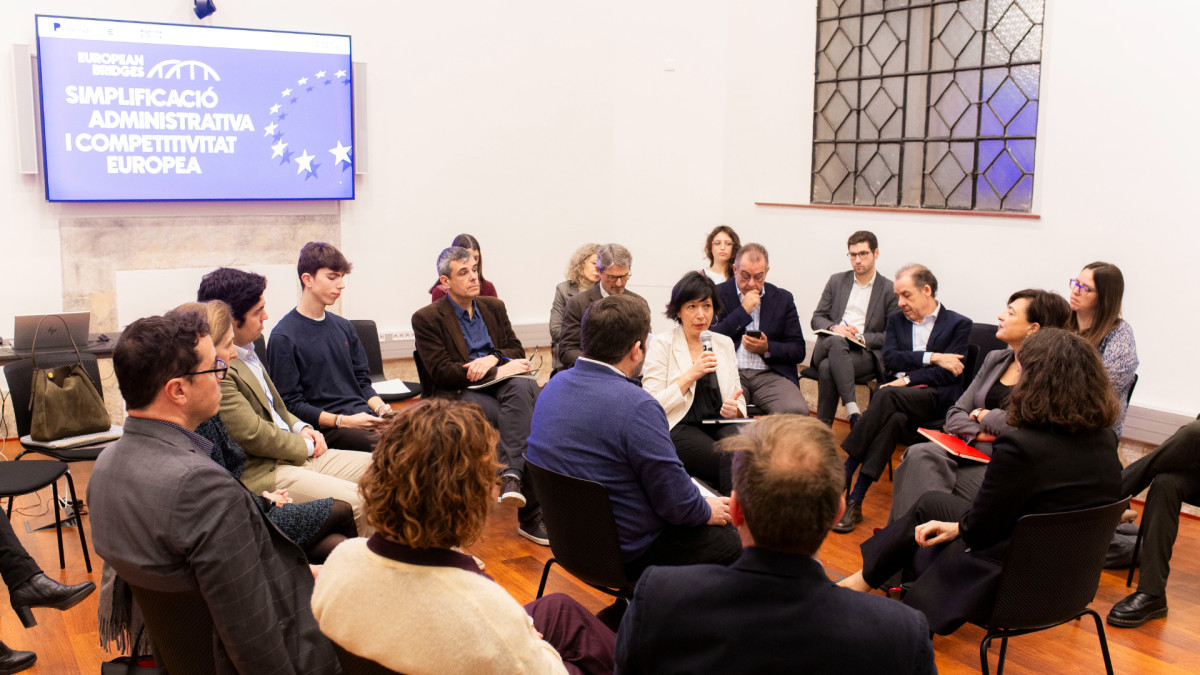
Europe and Spain no longer talk about administrative simplification solely as a matter of procedures: they have placed it at the center of the debate on competitiveness and democratic quality. This was outlined by the editor and director of , Marc López Plana, to the attendees of the new session of European Bridges this Monday in Barcelona.European Bridges este lunes en Barcelona.
Following the presentation, led by Gemma Martínez, deputy director of El Periódico de Catalunya, the starting point was a common idea that was summarized by Ana Gallego, the Director-General of Justice and Consumers in the European Commission: “Simplification reflects a desire”. For both investing or innovating companies and citizens waiting for a license, a service or a response. “No one can be against doing a bit of legal housekeeping to see if the interaction of the different rules continues to serve the objective for which they were designed,” she added. With this goal in mind, both the European Union and the various administrations of the member states are opting for a thorough review of administrative processes.
“Nadie puede estar en contra de hacer un poco de limpieza jurídica para ver si la interacción de las distintas normas sigue sirviendo para el objetivo que se diseñaron”
From the European Commission, there is a push for Omnibus laws, which are large legislative packages focused on specific sectors —such as the digital sector or data protection— aimed at simplifying European regulation. These measures, “which respond to a situation deemed urgent,” are designed “to strengthen the competitiveness of the European market” as well as “to reach a real single market“. Therefore, “an exceptional intervention from the legislative process has been required.”
Ana Gallego explains the European Commission’s perspective on simplification. Photo: Agenda Pública / Rocío Curia
A Simplified Governance to Reach Citizens
Although the objective is “a pursuit of greater competitiveness,” Gallego stressed that under no circumstances can simplification be translated into “abandoning the core protection of a rule”. This idea is shared by Eva Giménez, the Secretary General of the Presidency of the Generalitat de Catalunya, who explained that they are working to make an Administration “easier, faster, and closer” for businesses and citizens.
If this is not achieved, she warned, “we have a significant challenge to our welfare state and our democratic system“. And the governments hold the spotlight here: “If the Administration does not deliver, we generate disengagement,” she urged. “Simplifying processes without deregulating —” she continued— “is the only way to counter antipolitics discourse” and defend democracy. In the debate on deregulation, reducing steps, unifying front desks, or eliminating duplications can improve efficiency without altering what is protected; the problem arises when, under the promise of agility, standards are lowered and controls become a lighter process with less traceability, less oversight or less accountability.
“The simplification of processes without deregulating is the only way to confront antipolitics discourse”
For this reason, Giménez offered some clear examples of simplifications that do not compromise regulatory standards, such as the Generalitat’s plan to simplify procedures related to the status of single-parent or large families. “It made no sense that [the renewals] were not automatic,” she stressed. In addition to speeding up processes, for example with the implementation of artificial intelligence (AI), the Administration’s aim is to reverse the current situation in critical sectors: “It cannot be that we spend more time doing paperwork than building [housing],” she cited as a paradigmatic case.
Citizen fatigue in this area is felt at all levels. Gallego acknowledged that “there is a responsibility in political communication and the media,” which is shared and must help people understand what measures are being taken and why they are being taken. Here, the director of El Periódico and Director of Content at Prensa Ibérica, Albert Sáez, floated the possibility of improving legislation “ex ante and not ex post“. That is, to perfect the legislation and regulations from the outset to avoid having to rectify them later, thereby avoiding the democratic wear and the public’s impatience.
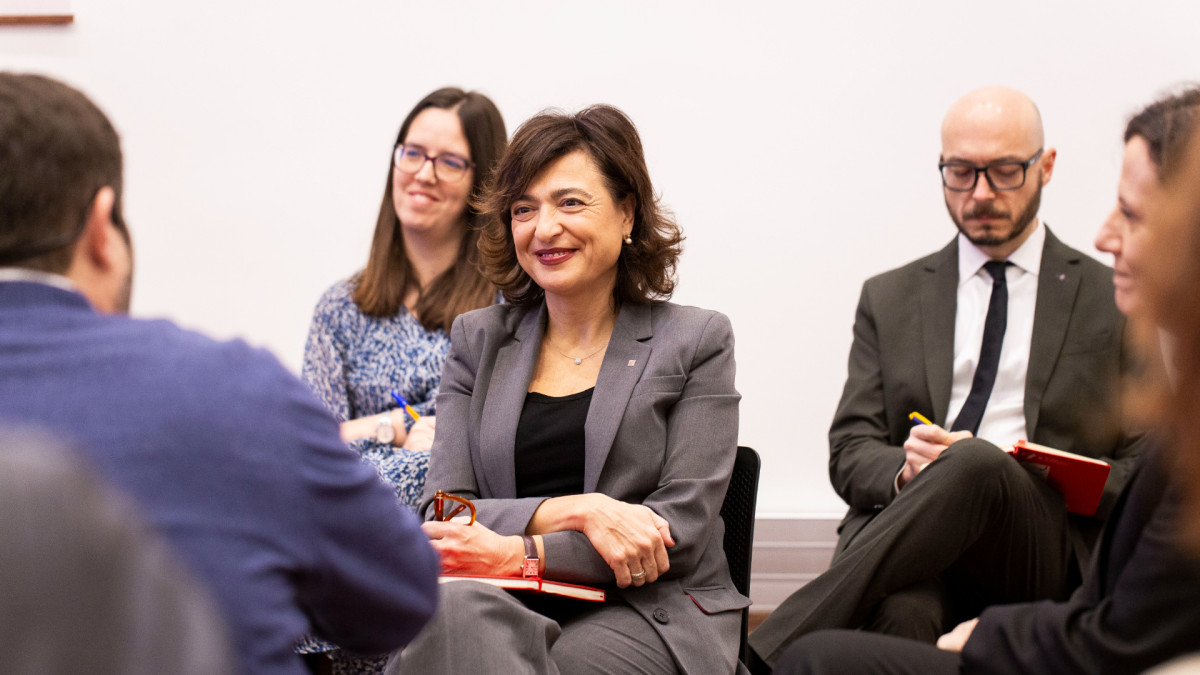
Eva Giménez outlines during the session some examples of regulatory impact from the Generalitat de Catalunya. Photo: Agenda Pública / Rocío Curia
Business Competitiveness and Government Support
In the session, coordinated with El Periódico-Prensa Ibérica and with the support of the Generalitat de Catalunya, representatives from business, academia, the third sector, youth organizations and various administrations gathered.
Many of these sectors’ concerns directly involve the competitiveness of companies—European and Spanish—and their day-to-day operations. PIMEC representative Jacinto Soler Matutes offered a clear example where simplification can have an impact: a small company affiliated with the Catalan employers’ association that sets up event canopies must apply different legislation for each municipality where it operates, in Spain (Barcelona, Valencia or Zaragoza) as well as in France. “We propose legislating positive administrative silence at the European level for SME projects,” he insisted, also a member of the Economic and Social Council (ECOSOC).
Although complete harmonization is not possible, it can be achieved for certain licenses, responded Gallego, while highlighting the benefits of digital improvements the Commission has already launched, such as the European Business Wallet. This tool, designed to reduce cross-border problems among member states, will make it easier for companies to have “a single digital identity and a single channel of correspondence with governments“.
Regarding the measures being applied, Lluís Rodríguez, Vice President of Corporate Relations at the ICL Group on the Iberian Peninsula, proposed “how to fit the mismatch between what Europe tries to achieve and what is ultimately applied“. “The law is so complex because it codified a particular situation,” argued Giménez, who also urged going beyond organizational changes. “We need to take the procedure and see where it stalls.” Sometimes it’s a matter of changing the department’s workflow, other times implementing new technology or introducing new automatons. All of this does not mean “deregulating, but regulating well,” she stressed.
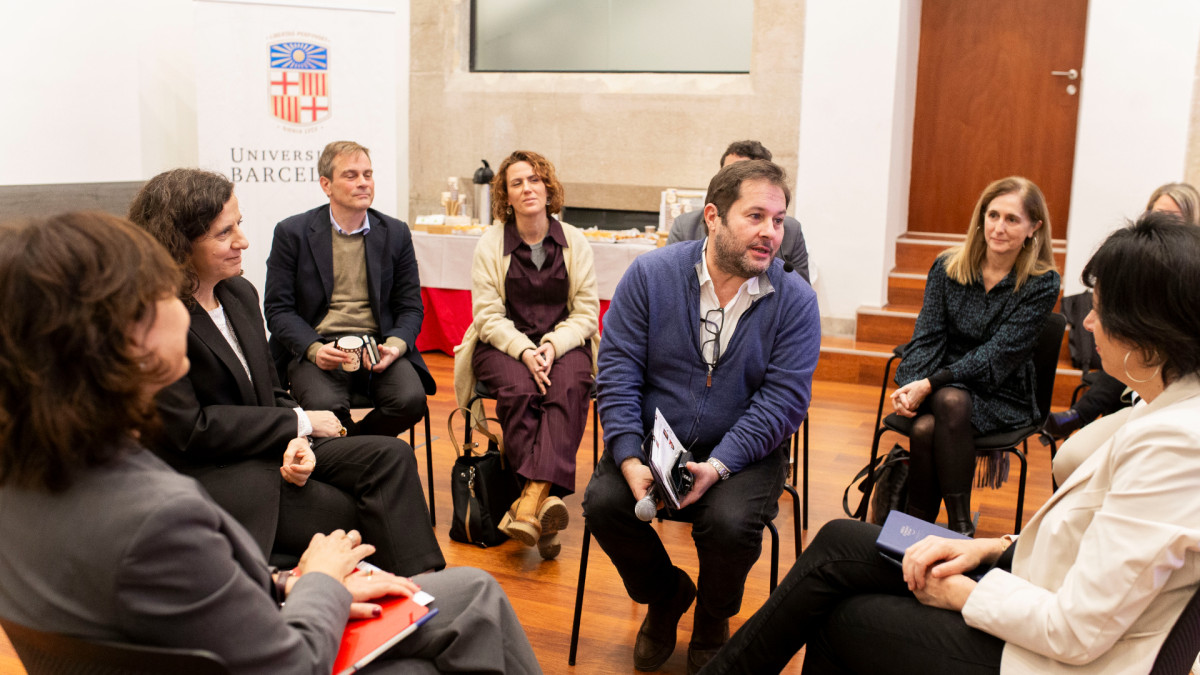
Marc López Plana moderating the discussion among participants. Photo: Agenda Pública / Rocío Curia
The president of the Table of Entities of the Third Sector Social of Catalonia, Xavier Trabado Farré, asked about the role of simplification in addressing better challenges in childcare or elder care. Specifically, he focused on the Administration’s role in procurement tasks, seeking to avoid “situations of precarious work and, above all, poor care.” From the Generalitat, Giménez stressed that the price of a contract cannot be the indicator that measures public-private relationships, but that “we must take into account efficacy and the quality of service delivery.” She also noted that the Generalitat has recently enabled a public consultation process to modify the regulations of public procurement.
“La simplificación administrativa al servicio de la ciudadanía y de las empresas por una competitividad europea”
Other attendees included the Generalitat’s General Director of Economic Activity, Víctor Soria; the President of the UOC Advisory Council, Xavier Prats; the Director of the Catalunya Europa Foundation, Dolors Camats; the Deputy Director of Sustainability of the National Association of Perfumery and Cosmetics (STANPA), Lucía Jiménez Silva, and members of Joves per Futur, Jan Rodríguez and Cèlia Aparicio.
In closing the event, Marc López Plana thanked all participants for their involvement, especially Ana Gallego and Eva Giménez, and synthesized the session’s spirit in one sentence: “Administrative simplification in service of citizens and businesses for European competitiveness.”
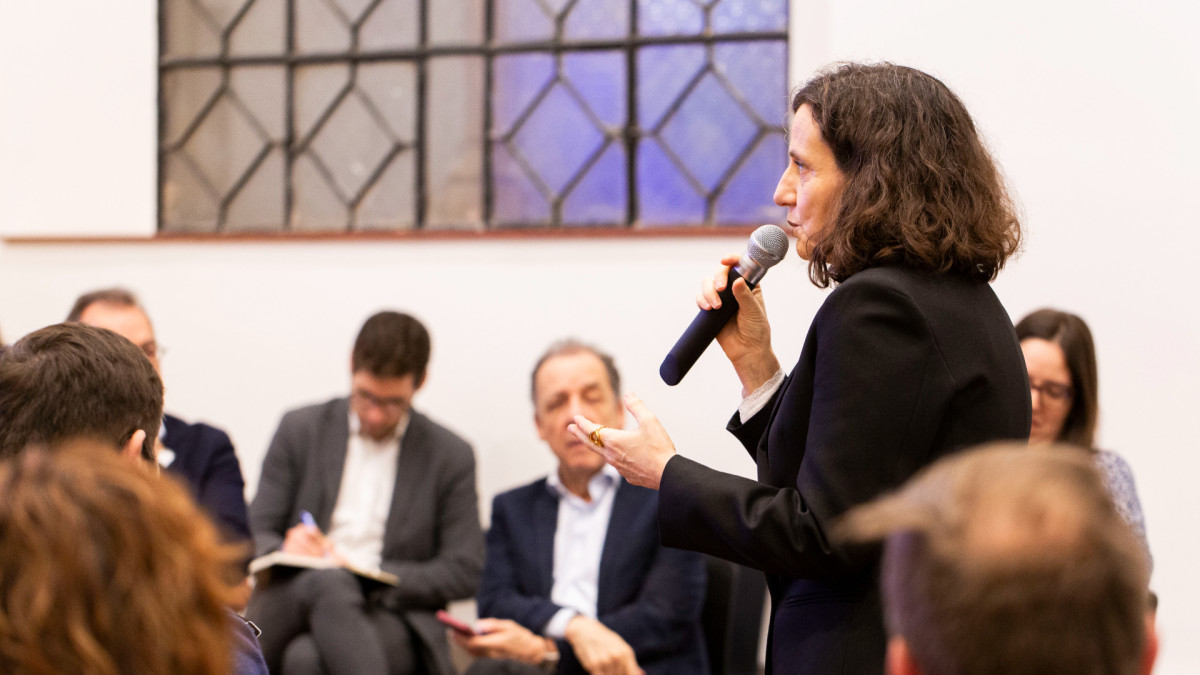
Gemma Martínez during the presentation of the ‘European Bridges’ session, Photo: Agenda Pública / Rocío Curia
Con el apoyo de


Natalie Foster
I’m a political writer focused on making complex issues clear, accessible, and worth engaging with. From local dynamics to national debates, I aim to connect facts with context so readers can form their own informed views. I believe strong journalism should challenge, question, and open space for thoughtful discussion rather than amplify noise.