
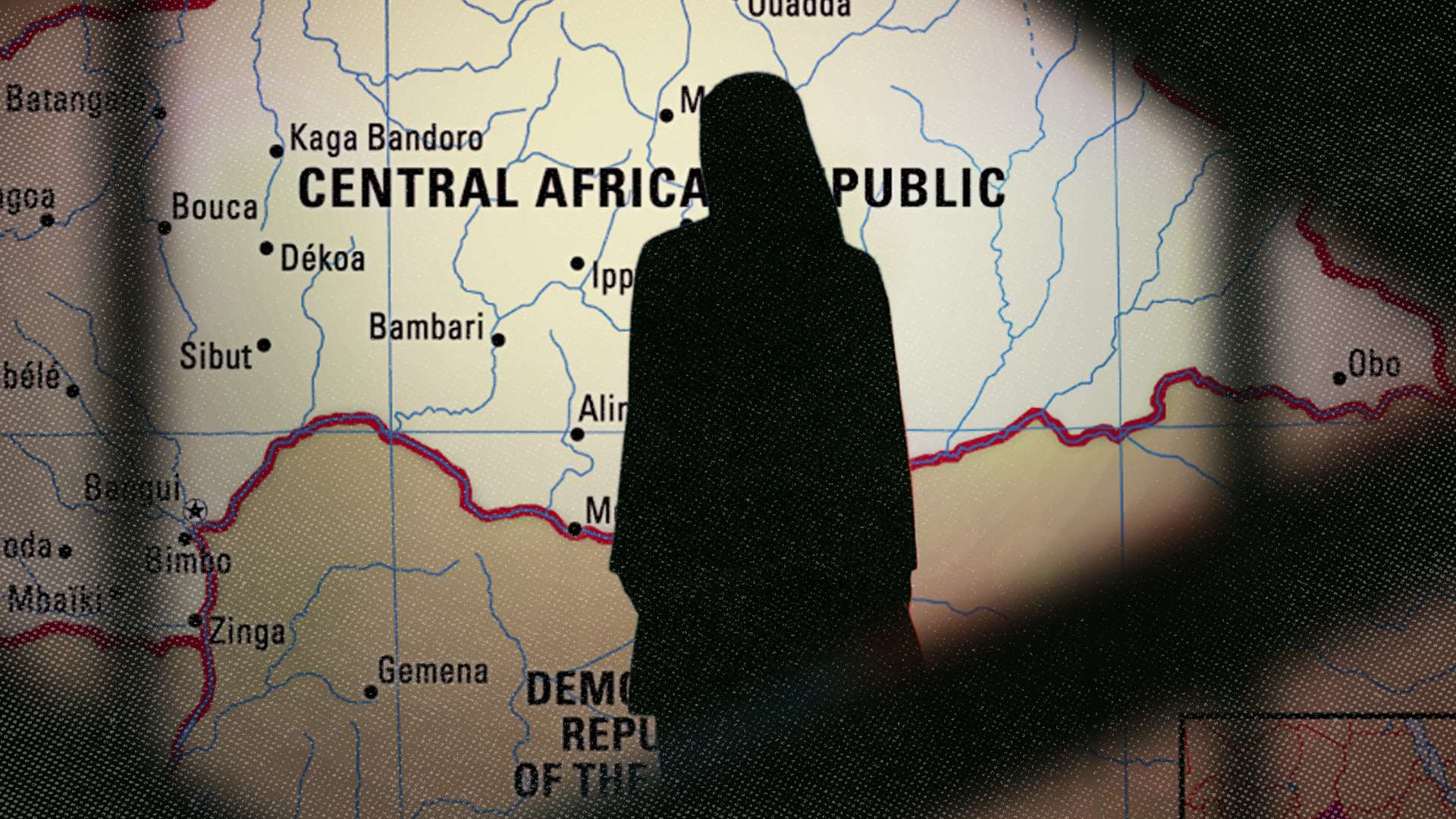
On August 28, lawyers representing a 32-year-old Afghan woman submitted an urgent petition seeking a provisional injunction to prevent the U.S. government from deporting her. That same day, Immigration and Customs Enforcement (ICE) boarded her onto a flight bound for the Central African Republic, surrounded by roughly 40–50 men, and abandoned her in the new country without any identity papers or employment prospects.
Farzana is the fiancée of a man who had applied for a Special Immigrant Visa (SIV), a program created for individuals who supported the U.S. mission in Afghanistan and who now face reprisals from the Taliban-led government. The couple entered the United States through the southern border in May 2024, seeking asylum via the CBP One app during the Biden era, and were detained.
Farzana recounts spending years in ICE detention that she describes as “awful,” saying that they treated them “like animals.” She reports rude conduct by officers and claims that none of her complaints were taken seriously.
In a final bid to win her release from custody, Farzana filed a petition for a writ of habeas corpus to challenge the legality of her ongoing detention. Some Afghans have gained freedom after their legal teams filed such a writ, but Farzana’s federal defender did not succeed within the Louisiana court system.
The day after the government filed its response opposing her habeas petition, her counsel submitted an emergency motion for a temporary restraining order, apparently as an effort to secure her release or prevent her removal, according to the court docket online. On that same day, Farzana was flown to the Central African Republic. Three days later, the government issued an order denying the motion.
Now residing in Bangui, the capital city of the Central African Republic, Farzana has no employment and says she is “safe only inside [her] room.” She notes that UN and host-country resettlement support amounted to just three months.
“The situation here is also dangerous,” she told via a messaging app, sharing a pinned location. “I have no connections, no cultural grounding, and I don’t even understand the language. I also can’t return to my country because of the Taliban. What does the future hold for me?”
This week she learned she is infected with plasmodium falciparum, the parasite responsible for the deadliest form of malaria. Farzana describes herself as feeling “hopeless.”
The Central African Republic is hardly a beacon of opportunity. In 2023 the World Bank Group reported that the country had the world’s fifth-highest poverty rate, with about 70 percent living in extreme poverty and around 90 percent of residents lacking access to electricity. UN Women notes that progress toward gender equality remains needed in the country.
Of course, life in CAR offers women greater access to basic human rights than they would have under the Taliban’s gender-segregated regime in Afghanistan. The Taliban has issued 166 decrees as of June 2026 restricting women’s participation in society. These include prohibitions on unaccompanied travel, bans on speaking in public, strict dress codes and enforcement, exclusion from most jobs, restricted access to male doctors, and the removal of many girls from the education system after the sixth grade.
Third-Country Removal as Policy
International law prohibits the practice of “refoulement,” sending a refugee back to a country where they may face torture or persecution. Yet the Trump administration discovered a workaround through third-country removals, displacing asylum seekers to places they had never lived before.
Such refugees often realize there is little to gain there. They don’t have solid pathways to resettlement. They may be allowed to stay, but the conditions are not conducive, says Shawn VanDiver, president of the nonprofit AfghanEvac, describing the third countries as “in rubble” with little chance of employment or future prospects. “The countries essentially tell these Afghans, ‘Okay, I guess you can go home.’ And that’s refoulement by another name, and it’s a truly terrible situation.”
VanDiver tells Reason that he has heard of about 20 Afghan third-country removals on Farzana’s flight alone, and his organization is hearing from relatives of detainees at facilities “in places like Mississippi, Florida, and Louisiana… terrified because deportations are happening.”
Although the Trump administration began employing third-country removals for refugees from other nations, Afghans have largely avoided this fate—until now. VanDiver believes the current wave is unfolding because officials have finally found the tactic useful for circumventing the non-refoulement principle.
Between November 2025 and April 2026, Equatorial Guinea accepted 14 African migrants through third-country removals from the U.S. Human Rights Research reports that all of these individuals had previously secured legal protection in the United States against removal to their home countries. In June 2026, Equatorial Guinea forcibly deported six people, with three of them being readmitted after a denial of admission at entry.
A complaint alleging that Equatorial Guinea violated detainees’ rights has been filed with the African Commission on Human and People’s Rights.
Muzaffar Chishti, a lawyer and senior fellow at the Migration Policy Institute, told CNN that chain refoulement—transporting a refugee to a third country from which they are then sent back to the danger zone in their homeland—is illegal under both domestic and international law.
Yet an ICE memorandum from July 2025 states that “if the United States has received diplomatic assurances from the country of removal that aliens removed from the United States will not be persecuted or tortured, and if the Department of State believes those assurances credible, the alien may be removed without needing further procedures.”
VanDiver remarked that when he reflects on former President Ronald Reagan’s vision of the United States as a “shining city on a hill,” he cannot find that spirit reflected in today’s government. He argued that “there’s nothing humane about it” when the administration sends refugees “to these places to remove them from our books, and then doesn’t care about what happens to them afterward.”
The Public Sentiment
AfghanEvac and HIAS, another immigration-focused nonprofit, have conducted surveys of the American public, engaging both Republicans and Democrats. VanDiver says the organizations concluded that federal actions did not reflect the wishes of most Americans.
The results are striking: 84 percent of those polled believe the U.S. should safeguard Afghan allies and their families; 80 percent think the country can protect national security while honoring its commitments; 63 percent oppose deporting Afghan allies to places where they have no connections.
“When such a large portion of the country agrees on something, it’s hard to argue that the White House is out of touch with public opinion, or that the State Department isn’t aligned with what Americans want,” VanDiver notes. “They preach America-first foreign and immigration policies, but I wonder who actually represents America. This poll shows that over 80 percent of the American public believes we must look after these Afghans.”
