
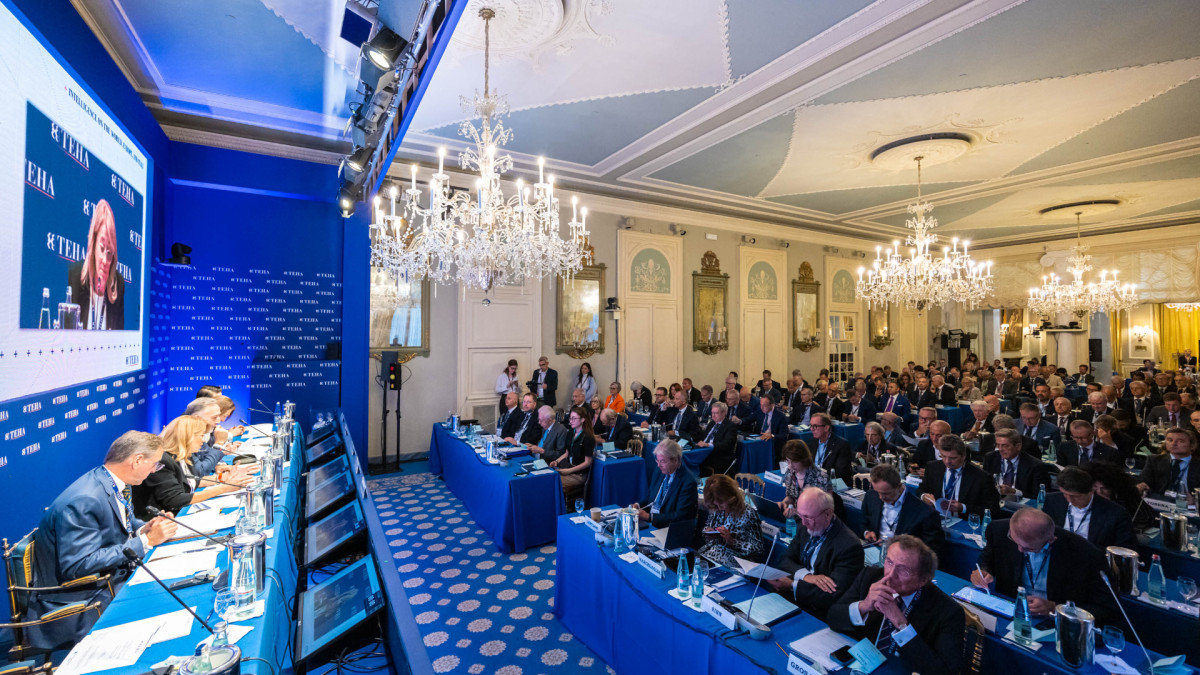
The TEHA-Ambrosetti Cernobbio Forum stands as a privileged witness to European history. More than fifty editions bear witness to this enduring role. Italy, a nation that has played a fundamental part in shaping and advancing the European project, again hosted a dynamic global public conversation, propelled, among other factors, by the distinctive Italian paradiplomacy from which we Spaniards have much to learn. Former Prime Ministers Enrico Letta, Mario Monti, and Paolo Gentiloni were not only central figures in this edition of the Ambrosetti Forum, but they also helped articulate a genuine global and European dialogue crafted in Italy, illustrating the reasons behind the breadth of Italian influence within the Union.
I share some conclusions and reflections after logging dozens of hours speaking and listening over three days to ministers or prime ministers, business leaders, diplomats, journalists, and academics from Europe, Asia, Africa, and the Americas, while respecting the attendees’ Chatham House commitment. And with a very clear vision: we Europeans are a superpower despite the victimhood that we ourselves have woven over our own public debate.
Henry Huiyao Wang, founder and president of the Center for China and Globalization. Photo: TEHA-Ambrosetti
The European Union, the gentle superpower
Exclusively pessimistic and negative narratives, and catastrophic forecasts that criticize and dismantle the European design, are not based on evidence: we are a superpower—and a gentle one at that, a builder of peace (which is why we were born), capable of combining economic prosperity with an unparalleled level of well-being in the world. Furthermore, we do this with a productive muscle based on the real economy, with 34 million small and medium-sized enterprises generating 6 trillion euros in added value, with exports approaching 9 trillion euros, and capturing 27% of global trade compared to 15% for the US or 13% for China. We are the superpower where one in two major global patents is registered across ten key sectors, including, for example, 40% of the patents linked to water technologies, and where other technologies such as GSM or the World Wide Web were born. Innovation certainly bears a European stamp.
And, furthermore, we do not crush our own
The US lives with 44 million people (12%) below the poverty line. In the European Union, that figure is halved. The Gini index, which measures inequality, is almost 50% higher in the United States than in the European Union. And while we Europeans have health recognized in our Charter of Fundamental Rights, in the United States, access to it is conditioned by financial means. The European Union is worth a lot, and it is very much worth the effort.
Our enemies are internal. And, sometimes, they are ourselves
Our enemies are internal. And, sometimes, they are ourselves. An example explained by an EU insider: if a businessman exports secondary raw materials (e.g., paper) from Italy to Germany, the cargo would legally leave classified as “end-of-waste”. But upon crossing the border, Germany would not recognize that label, categorizing it as simple “garbage” and blocking the truck. Regulatory balkanization paralyzes the economy.
Added to this is the poison of patriotism disguised as the political theater of “national interest”. One of the men with the most accumulated scars in Brussels explained an anecdote with irony: ministers and heads of government of all stripes would come to his office in private to beg him to please have the Commission summarily ban some state aid that they themselves had just promised with great fanfare during an electoral campaign.
“You don’t know how happy it would make me if you banned it, because that is throwing money out the window,” they would sometimes confess. But, immediately, the leader in question would add the warning: “Mind you, when you veto it, don’t ask me not to get publicly angry. I will have to fire on the Commission and on you with all my artillery, because I have already declared to my electorate that this is of vital national interest.”
“Ministers and heads of government of all stripes would come to his office in private to beg him to please have the Commission summarily ban some state aid”
This teatral imposture has real, very heavy costs that always end up being paid by the same taxpayer. We saw it, for example, in the prolonged drama of Alitalia, when the fetish of “Italianness” sabotaged a three-way merger agreement with Air France (France) and KLM (Netherlands), all to end up assuming an astronomical public bill for the mere pride of the acronym. Or in the obstinacy of defending for two decades, explained another expert on EU policy, the privileges of local beach resorts against EU directives, operating, moreover, with their backs to the single market under the false flag of national sovereignty.
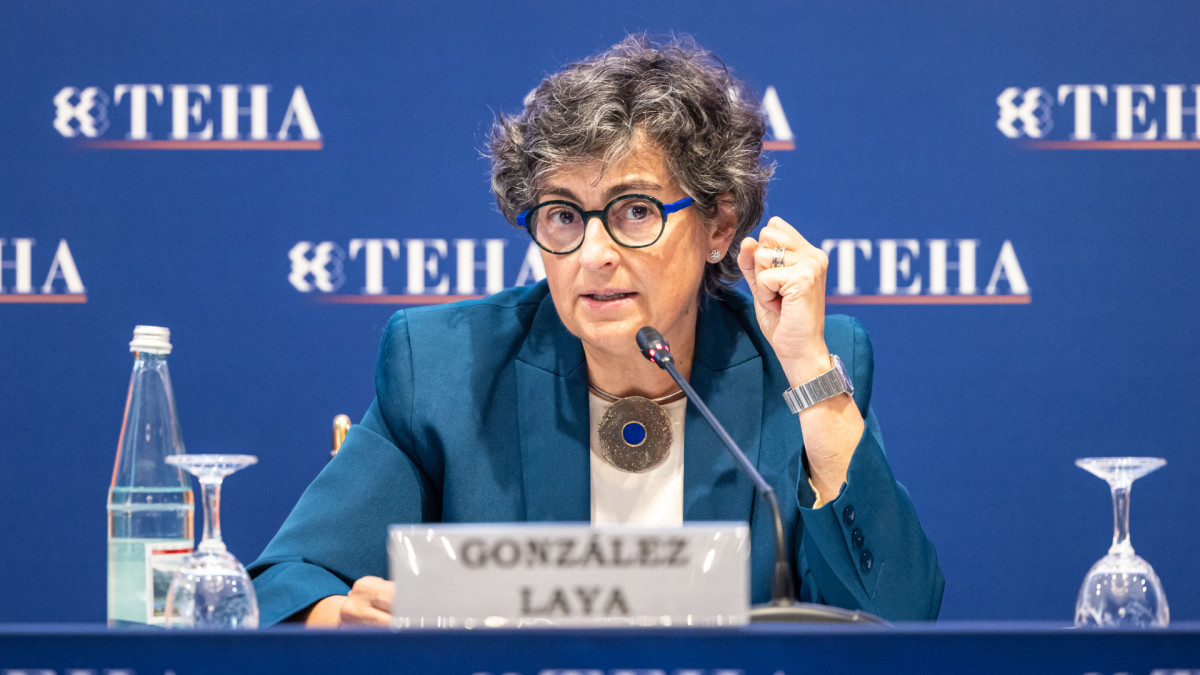
Arancha González Laya, dean of the Paris School of International Affairs (PSIA). Photo: TEHA-Ambrosetti
The Calimero complex and short-sighted populism
That victim-playing rhetoric is nothing more than the “Calimero complex”. A short-sighted populism that convinces citizens that we are superior, but that no one respects us, feeding a sterile resentment to build a narrow-minded national vision. There is a preference to keep citizens as hostages to electoral political clienteles rather than pursuing their true economic progress on a continental scale.
The defense of sovereigntism dynamites the very machinery that sustains its prosperity. A single market devoid of a strong central referee, without the primacy of European justice and the Commission to sanction rule violations, would cease to exist the very next day. The same entrepreneurs who today generate the continent’s wealth would be left at the mercy of a storm of cross-cutting and arbitrary national protectionist measures, impossible to stop. It is the old trick of divide et impera, the very fracture map that Vladimir Putin or Donald Trump cheer on from the outside to weaken the continent.
“There is a preference to keep citizens as hostages to electoral political clienteles rather than pursuing their true economic progress on a continental scale”
That is why, as evening falls in Cernobbio, François Mitterrand’s words before the European Parliament, “nationalism is war”, cease to sound like monumental rhetoric and become a warning of elementary political physics. And that is why Albert Camus’s motto is, in practice, the only true and mature patriotism: “I love my country too much to be a nationalist”.
We have a roadmap, we just need to apply it
Faced with this “Calimero complex”, the populist victimhood that injects us with the false resentment of not feeling respected in the world, there is an urgent need to apply the agreed-upon recipe: the “One Market, One Europe” plan, with around forty vital measures before the end of 2027. One of the crown jewels will be the single corporate code that will allow companies to operate frictionlessly across the 27 member states. In addition, the Savings and Investment Union must be completed, channeling the 100 trillion euros of European families into our own reindustrialization.
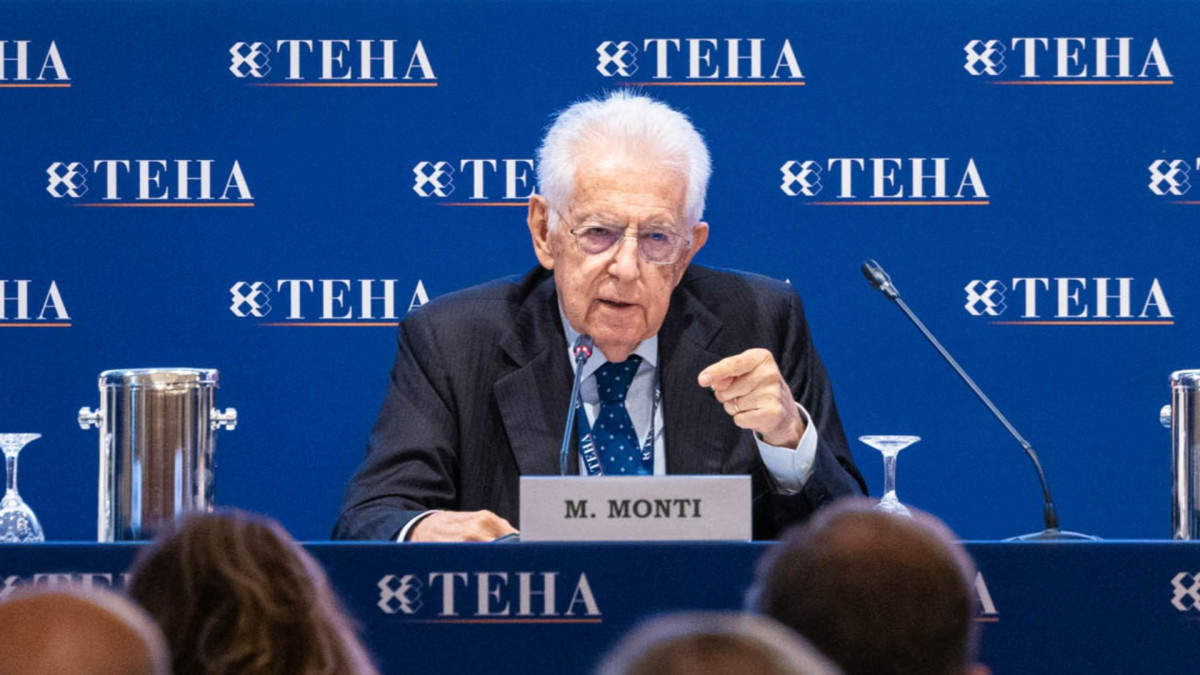
Mario Monti, former prime minister and former economy minister of Italy. Photo: TEHA-Ambrosetti
Next stop: Barcelona
The supposed European decline is a state of mind, not a statistical reality. Perhaps Europe’s greatest resource is not found underground, but resides in the talent, creativity, and skills of our citizens. And in our own values. Europe is not defended today by managing a glorious past, but by taking advantage of the greatest competitive privilege on the planet. Therefore, the best might be yet to come.
“Europe is not defended today by managing a glorious past, but by taking advantage of the greatest competitive privilege on the planet”
Relations between the governments of Spain and Italy are not going through their best moment. However, the alliance between Madrid and Rome, with layovers in Barcelona and Milan, is a winning European strategy. And if we were to add the capacities represented by Poland to the Spanish-Italian axis, we would multiply our European capacity even further.
We will discuss all of this, European competitiveness and the opportunities for Spain in greater depth at the Health and Competitiveness Symposium jointly organized by beBartlet and TEHA-Ambrosetti, with Agenda Pública as a media partner, on November 27th at CosmoCaixa in Barcelona. A mandatory stop in Spain to continue developing the European superpower that no longer deserves any more victimhood.
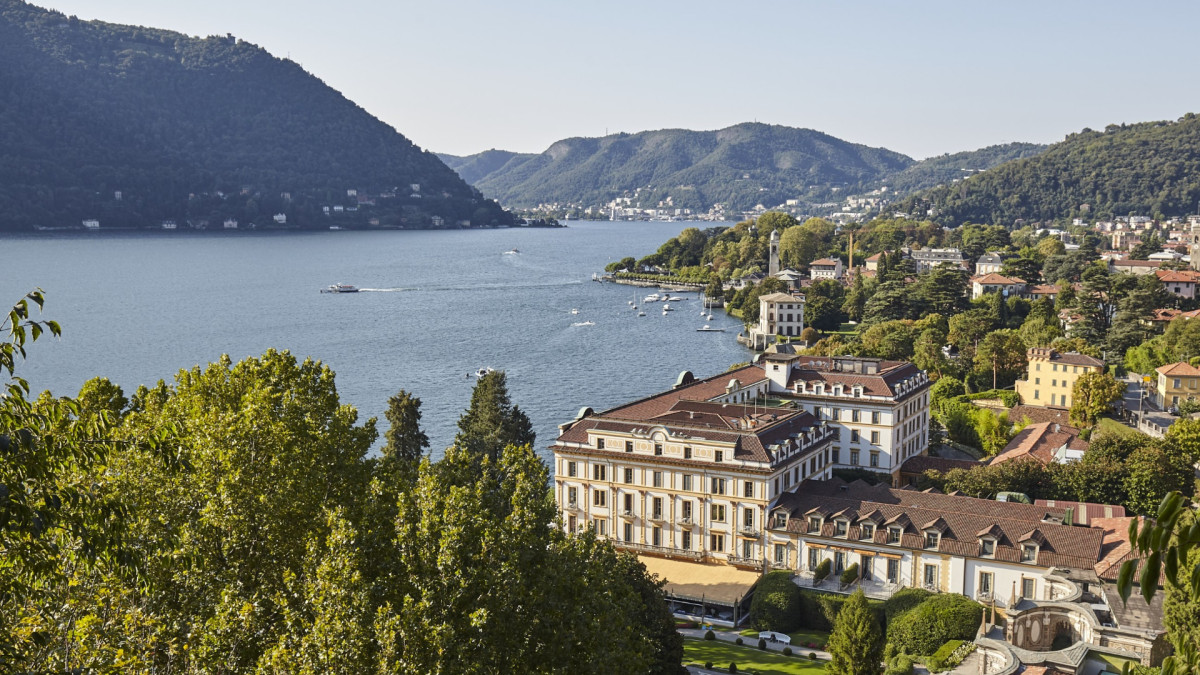
Aerial view of Lake Como around Cernobbio. Photo: TEHA-Ambrosetti
