Continental rearmament faces the absence of a true single defense market. In this interview, the head of the European Defence Agency (EDA), General André Denk—who participated this week in the War and Peace Week organized by the Barcelona Centre of International Affairs (CIDOB)—dismantles the complex puzzle of coordinating twenty-seven member states that act as sole customers. Against those who demand total and immediate integration, the analysis warns of the dangers of monopolies and recalls that “a certain degree of fragmentation can even strengthen Europe’s supply security.”
In this context, the invasion of Ukraine has blown apart taboos surrounding armament acquisition, boosting intergovernmental cooperation platforms. Although national procurement remains dominant for reasons of labor and industrial protection, Denk stresses that “the interest in joint action and in cooperating within an EU framework has risen significantly.” This new political will is essential to maximize efficiency and ensure the interoperability of allied troops on the ground.
However, true military autonomy remains a chimera while Europe’s grave technological and logistical vulnerabilities persist. The capitals are forced to acquire equipment from the United States or South Korea due to the local industry’s inability to meet deadlines. If, to deter Moscow, “we need to substantially strengthen our military capabilities as a strong European pillar within NATO,” will our defense industry rise to the challenge before the next geopolitical crisis? That is the horizon for European defense.
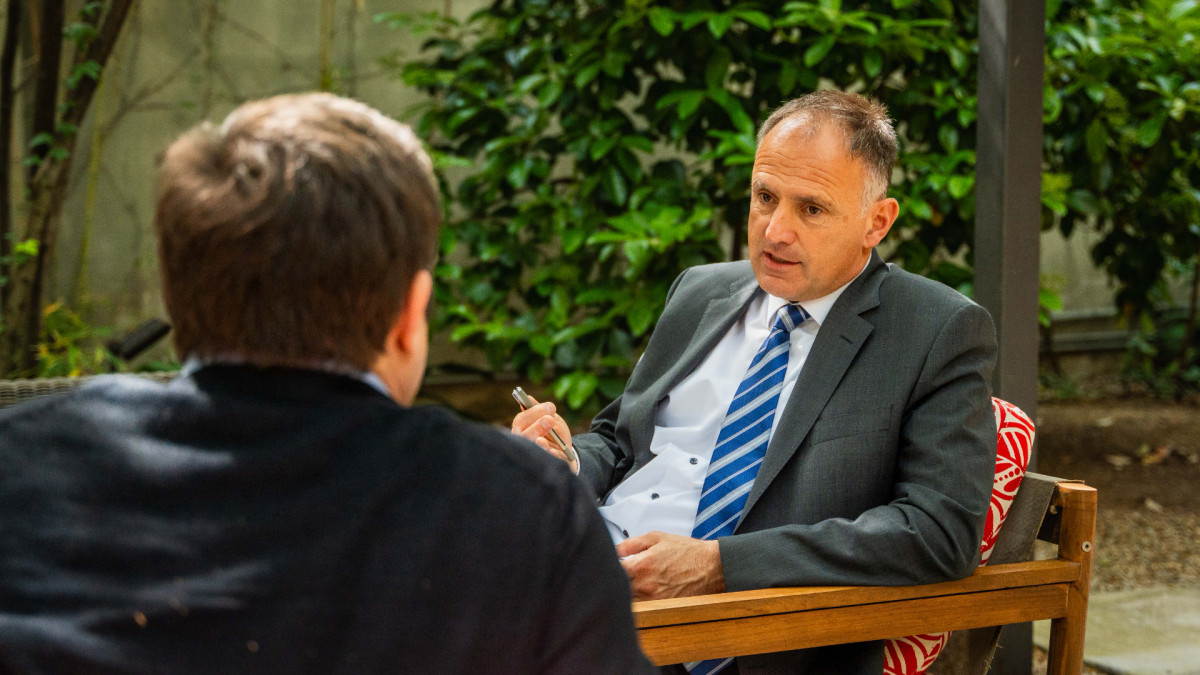
André Denk, director of the European Defence Agency, in Barcelona. Photo: Agenda Pública / Tsun Ho
What is the role of the European Defence Agency?
Created in 2004, the European Defence Agency is formally included in the Treaty on European Union [TEU]. It is an EU agency operating on an intergovernmental basis, designed to assist the member states in developing their military capabilities.
It acts as a platform for cooperation among the member states and is led by their defense ministries. At the same time, the political head of the agency is the High Representative and Vice-President, Kaja Kallas.
What are the main challenges to building a truly integrated European defense market?
First of all, one must acknowledge that, strictly speaking, there is no defense market as such. Only states purchase defense equipment, so, at best, in the EU there are twenty-seven clients. The states, and more precisely the defense ministries, are also the ones who define the requirements for military capabilities.
The harmonization of those requirements is one of the EDA’s main tasks, but it is not always possible to design systems that fit the needs of all member states. In short, defense policies, including procurement, are a national prerogative, not an EU one.
Some member states, as you noted, also have defense industries, whether large or specialized. Logically, they want to promote or protect those industries and the jobs they generate. Others do not, which means they buy existing equipment, sometimes outside the EU—for example from the United States or South Korea—depending on cost, military specifications, or political reasons.
“Although national procurement is not optimal in terms of cost savings, joint procurement can maximize efficiency and reduce interoperability problems”
In addition to the fragmentation of Europe’s defense product offerings, we must also address the fragmentation of demand, bearing in mind that the decision-makers are the member states. Although national procurement is not optimal in terms of cost savings, joint procurement can maximize efficiency and reduce interoperability issues.
With joint procurement you buy interoperability. On the other hand, market fragmentation is not exclusively negative. A certain degree of fragmentation can even strengthen Europe’s supply security. The more suppliers there are, the greater the resilience.
Ultimately, we need more cooperation among the member states to jointly develop and deploy large next-generation systems, especially in enabling strategic capabilities, and the EDA can support those research, technology and capability development efforts. But we also need now more joint acquisitions of equipment that already exists and is available on the market, and that is already happening. Likewise, in this area the EDA supports its member states: we have created a government-to-government platform to help them prepare the so-called SAFE loans.
What is critical is to improve cooperation among the member states. Integration into a single defense market is a more distant objective.
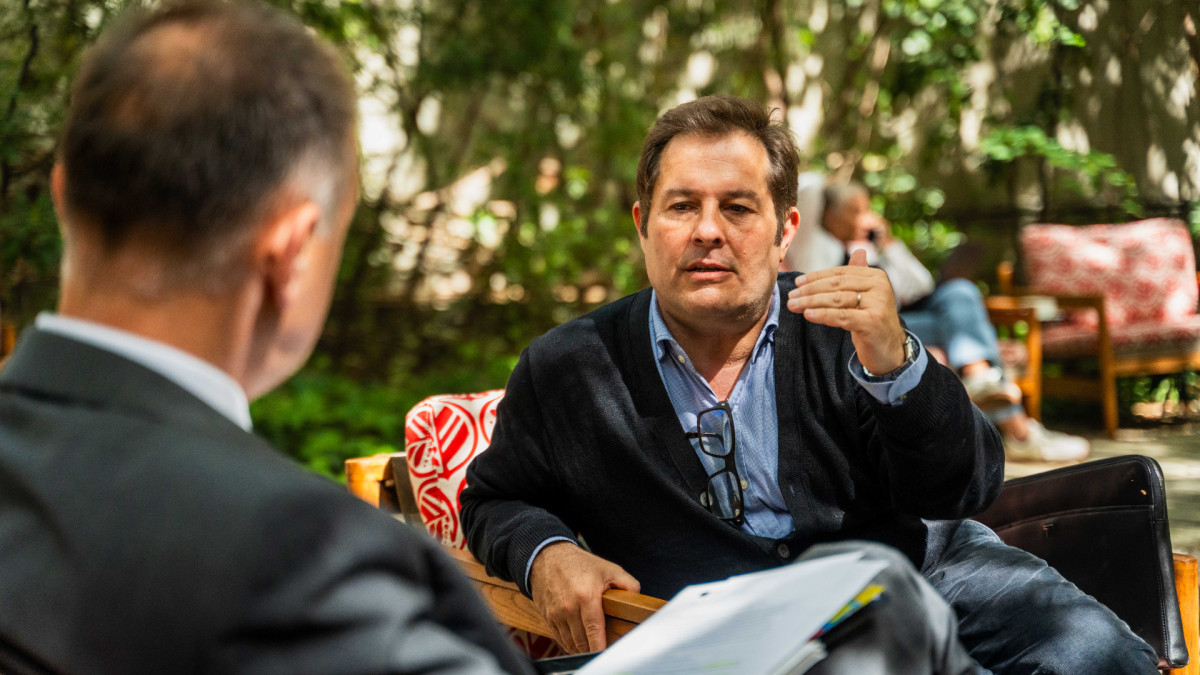
López Plana asks Denk about the European defense single market. Photo: Agenda Pública / Tsun Ho
Since the invasion of Ukraine, have you observed a higher level of involvement or cooperation from the member states with the Agency?
The agency is led by and, so to speak, owned by the member states. They are the ones who fund our budget. We are always in contact with them because they are our shareholders. But the interest in joint action and in cooperating within an EU framework has risen significantly. That means there is a clear understanding among member states that they want to do more things together.
“The purpose of the EDA is to act as a platform for cooperation so that member states acquire military capabilities that are very necessary for the security of our continent”
That is precisely the purpose of the EDA: to act as a platform for cooperation so that member states acquire military capabilities that are very necessary for the security of our continent, of our countries and of our citizens.
How do you view the evolution of the relationship between NATO and European defense?
There is one clear thing: NATO is responsible for Europe’s collective defense. It handles planning and defense operations, while the EU supports its member states in strengthening their military capabilities, in defining and developing capabilities—this is where the EDA comes in—and in regulating and offering financial incentives through the EU budget, managed by the European Commission.
Twenty-three member states are also allies of NATO, so it makes no sense to pit the EU against NATO. They complement each other.
The real question is burden-sharing as demanded by the United States. Specifically, the EU member states—or rather, the EU’s allies, those member states that are also NATO allies—must shoulder greater responsibility for Europe’s collective defense, both within NATO and within the European Union.
That is already happening, with a substantial rise in defense expenditure across the EU. We are at 2.2% of GDP in 2025 and the projection is 2.4% of GDP in 2026, including investment. Part of this progress is taking place cooperatively, also thanks to EU support and incentives, such as the SAFE and EDIP regulations. In the future there will be more measures with the European Fund for Competitiveness. Still, more efforts and more cooperation among the member states are required.
“The EU and NATO should work in a complementary manner, without substituting for or duplicating each other. That is exactly what we are seeing now”
This applies initially to reduce dependencies in the EU’s supply chains and to mitigate bottlenecks such as raw materials or components, and also in later phases, in concrete capabilities where the EU’s collective dependence on US capabilities remains high. This includes enabling strategic capabilities such as ISR — intelligence, surveillance and reconnaissance —, air-to-air refueling or the suppression of enemy air defenses.
In short, the EU and NATO must work in a complementary manner, without substituting for or duplicating each other. That is exactly what we are seeing now. EU efforts serve to meet NATO’s capability objectives.
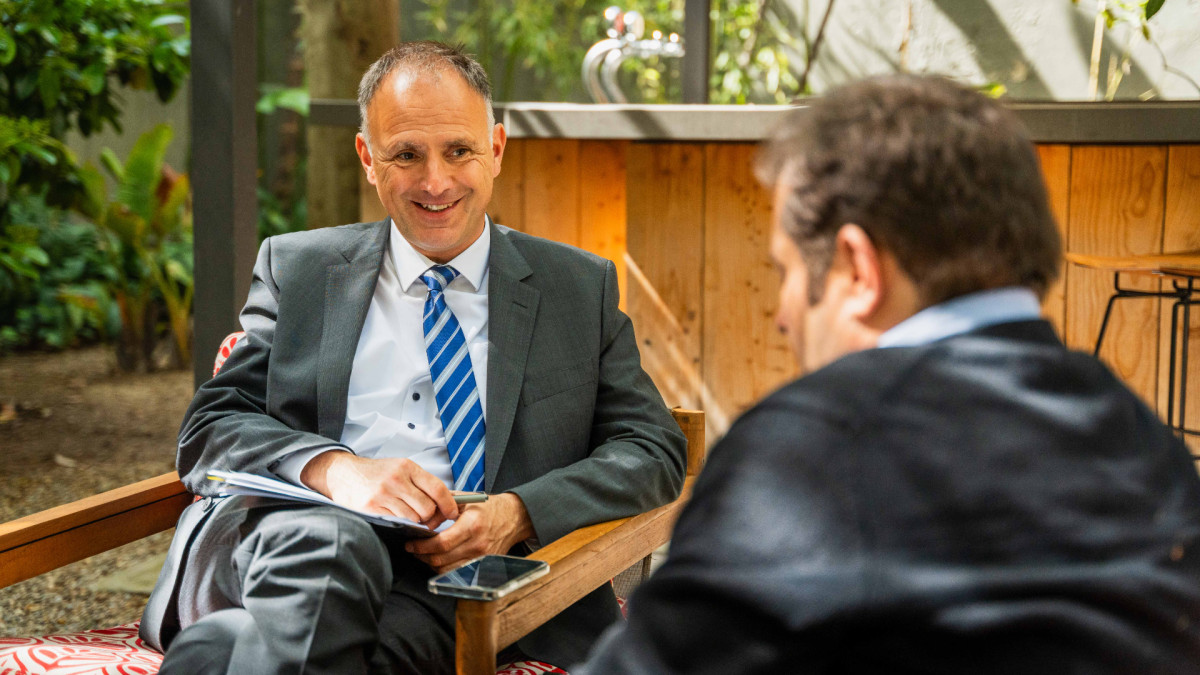
The EDA director assesses the relationship between the European Union and NATO. Photo: Agenda Pública / Tsun Ho
Do you think Europe currently has the industrial capacity to absorb the recent rise in defense spending?
I don’t have specific figures on the production capacity of Europe’s defense industry. What we do see is a substantial uptick in activity within Europe’s defense industry. It’s a very promising sign, but there is still a lot to be done industrially to cover all needs, not only in terms of volume but also in delivery timelines.
We must reach a point where relatively simple equipment orders translate, in the best case, into immediate or very rapid deliveries. We are not there yet, but that is exactly the objective we should aim for.
What is your view on state participation in defense companies?
There are different approaches and traditions, and I am completely neutral as long as those defense companies deliver what is needed. When activities are undertaken, the European Defence Agency focuses specifically on the European defense industry, and nothing beyond that. That is our main focus. Whether there is state participation or that it is a privately organized entity is something for the companies and the states to decide.

The prominent German military figure also analyzes the context of the US-European relationship. Photo: Agenda Pública / Tsun Ho
When do you think the European Union might reach a level of capabilities that would allow it to depend less on the United States?
That is hard to measure. At the moment, we, as allies, remain united and defend NATO territory together.
“Everything depends on the level of defense spending that member states are willing to sustain and the investments they make”
But if the question is when the European Union could become completely independent of the United States, it is very difficult to say. It all depends on the level of defense spending that member states are willing to sustain and the investments they make, not only to meet NATO’s capability objectives but also in enabling strategic capabilities that the United States currently provides.
I hope it won’t be necessary to plan without the United States, but we must be prepared as Europeans. We need to substantially strengthen our military capabilities as a strong European pillar within NATO. That is also what the United States expects.
That is what we are working on: helping member states build capabilities that can credibly deter a potential adversary, in this case Russia.
Thank you.
In partnership with