
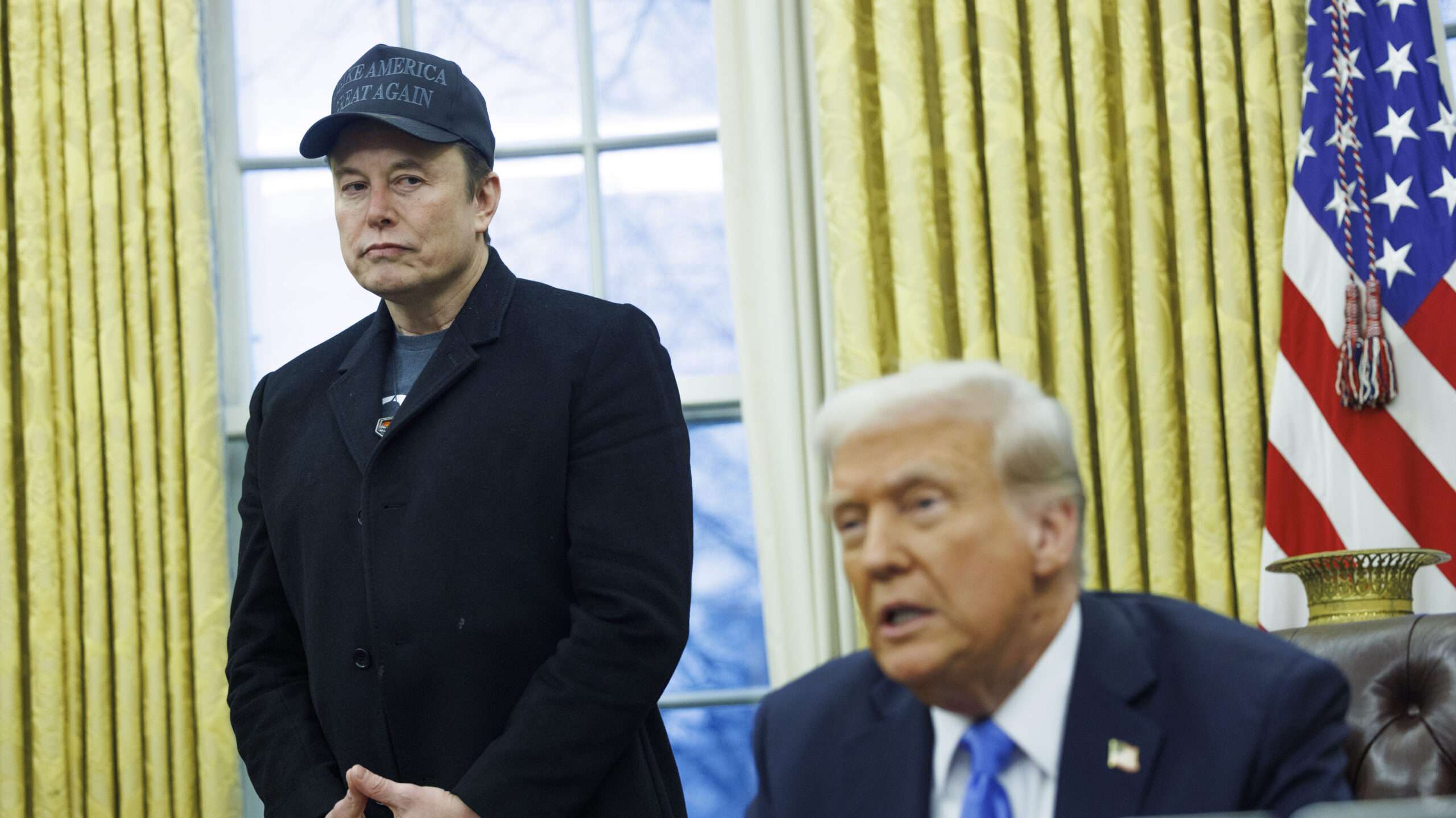
The DOGE initiative stood out as perhaps the strongest idea of the latter part of the Trump presidency, yet its execution proved to be severely flawed.
When Elon Musk and President Donald Trump launched the Department of Government Efficiency (DOGE), they promised to cut trillions in federal spending and bring the receipts.
Ultimately, the actual reductions fell far short of those promises.
As for the “wall of receipts” that DOGE highlighted on its website? Many of those seem inflated, dubious, or unverifiable, according to a fresh Government Accountability Office (GAO) assessment.
Overall, $110 billion of DOGE’s claimed savings could not be verified by GAO auditors. That doesn’t necessarily prove those savings never occurred, but it certainly highlights the chaotic manner in which DOGE operated, likely limiting its impact.
The GAO states it could not verify a staggering 96 percent of the savings DOGE claimed from reducing various federal grants because the department “did not provide sufficient information to verify” those cuts. Similarly, the GAO notes that “several issues limit the transparency and reliability” of savings DOGE claimed from terminating federal contracts and leases.
In some cases, DOGE appears to have completely fabricated those “savings.”
For instance, DOGE initially proposed ending a $1.7 billion contract that provides information technology support to military medical facilities around the world. After meetings with Pentagon officials, however, DOGE “agreed no action should be taken to terminate the contract,” the GAO report explains.
The contract was never terminated. No spending was cut. And yet, that $1.7 billion remains listed among the “savings” on DOGE’s “wall of receipts.”
That’s far from the only example.
There are 13,476 contracts listed on the DOGE “wall of receipts” as having been terminated to save taxpayers about $61 billion, but in many cases those contracts were never actually ended, the GAO found. “No termination action was taken on 2,503 of the contracts, representing $27.4 billion of reported savings,” the GAO reports.
The new GAO report seems to confirm earlier inquiries by various outlets that questioned the legitimacy and accuracy of DOGE’s claimed savings.
While DOGE may have been the administration’s best policy notion in theory, the effort was undeniably hampered by a lack of execution and a focus on political optics rather than a serious drive to reduce spending. As some observers have noted, DOGE would have benefited from more input from libertarians and conservatives who actually understand how the federal budget operates.
Indeed, Congress did pass a modest rescission bill that cut $9 billion in federal spending as a direct result of the DOGE effort. Nevertheless, total government spending rose during Trump’s first year in office.
The conclusion is clear. DOGE was a well‑meaning failure that may have hindered future, potentially more serious, attempts to curtail spending.
“The data quality issues identified in this report limit the value of the Wall of Receipts to policymakers,” concludes the GAO report. “In addition, when government data are not reliable, it can undermine the public’s trust in government.”
The DOGE was a promising concept, but the Trump administration failed to deliver on its promise.
