
The Chancellor’s Messenger
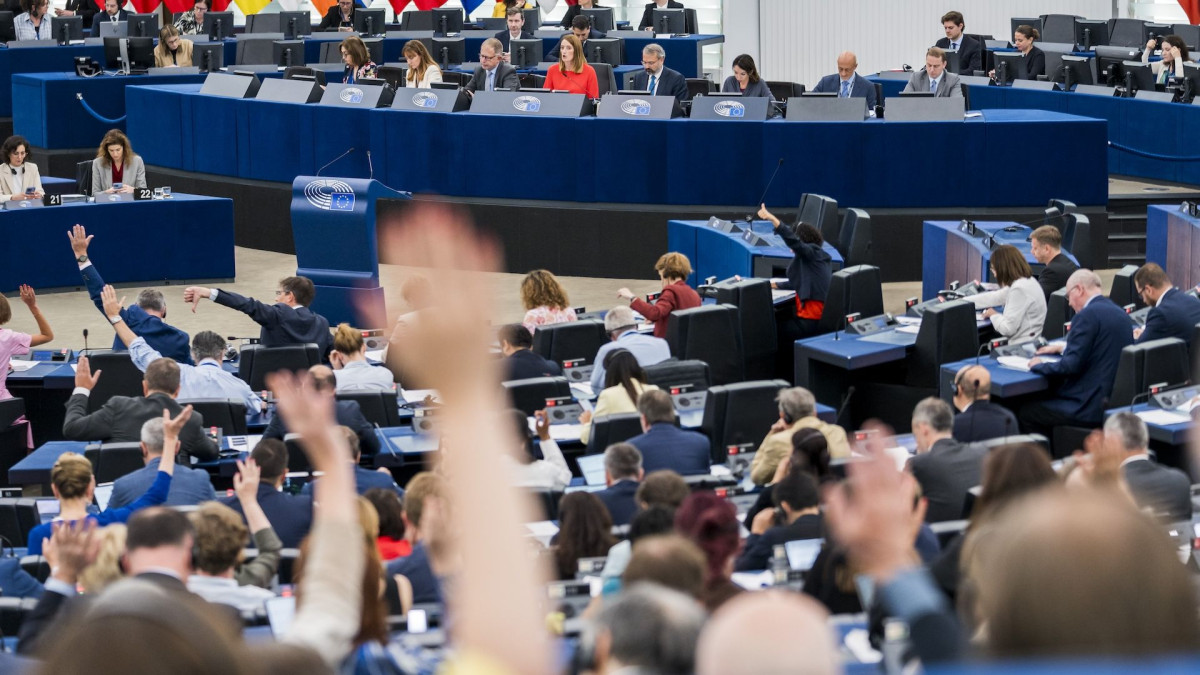
Last Monday, in Strasbourg, a tense mood dominated the meeting of the Group of the Socialists and Democrats (S&D), particularly among the members of the German delegation, the group’s second-largest after the Spanish delegation.
The trigger was the request to lift the parliamentary immunity of a German Member of the European Parliament from the Christian Democratic Union (CDU), the leading party in Germany’s governing coalition and the flagship of the European People’s Party (EPP). An important detail: the group’s unwritten rule is to vote in favor of immunity lifts.
The meeting grew heated when René Repasi, the leader of the German Social Democrats (SPD) in Brussels, argued for voting “no” to removing immunity and thus saving the conservative deputy.
What was being discussed in the S&D meeting was whether to correct what had already been voted on in the Legal Affairs Committee (JURI). In that committee, the immunity lift for the CDU MEP had already been voted down. That was where the internal contest began, led by the German delegation against its own leader, René Repasi, chairman of JURI and the proponent of voting against the lift of immunity.
The meeting heated even more when Repasi, the SPD leader in Brussels, defended the stance: the S&D would vote “no” to removing the immunity and, therefore, would save the conservative deputy.
The Chancellor’s Messenger
Seeing Repasi in the role of savior of the CDU was difficult for many to digest. He is a doctor of Law, a professor, and the group’s spokesperson in the Legal Affairs Committee.
Several German SPD MEPs rose against the decision. Protecting a direct rival was, for them, an insult to their electoral bases. How could they explain in their districts that they had voted to protect the conservatives?
“The CDU federal leadership had picked up the phone to ask the favor directly from the SPD leadership”
That is when Repasi had to articulate the real motive. The decisive argument came from a message received from Berlin. The CDU’s federal leadership had picked up the phone to request the favor directly from the SPD leadership. In Germany’s fragile political chessboard —where the stability of regional alliances and federal governance compel social democrats and Christian democrats to maintain a tacit non-aggression pact in the face of the extremes’ advance— reciprocity is a currency of immense value. And Repasi carried out the order.
The Spanish delegation kept a low public profile, though considerably more critical in the corridors. A public low profile because in the European Parliament it is known that granting a favor to the German delegation is an invoice kept in a drawer and collected later, with interest, when Madrid needs shielding in debates on sensitive national policy or financial support for the priorities of Southern Europe. But on the other hand, many were surprised by Repasi’s inability to discipline his own delegation and to arrive at the group meeting with the matter settled.
The Strategic Trap: the Bear Hug toward the PPE
However, reducing the episode to a simple internal debate would ignore the real tectonics running through the S&D group in the European Parliament. Social-democratic sources explain Repasi’s move as part of a broader, in their view vital logic to preserve Europe’s cordon sanitaire: the pressing need to maintain bridges of trust with Manfred Weber’s PPE.
In a European Parliament where the radical right —ECR and Patriots for Europe— has gained legislative influence since the last European elections, the S&D’s obsession is to prevent the PPE from undergoing a structural shift to the right. Saving the CDU deputy was, at bottom, a peace offering and a signal the S&D intended to send to the conservatives.
The problem is that this appeasement strategy places the social democrats in the position of the “responsible hostage.” By voluntarily assuming the political and ethical cost of protecting a rival to woo the PPE, the S&D risks paying a price in exchange for a pledge of loyalty that the center-right frequently breaks whenever it needs the votes of the hard right to overturn Green Deal measures or tighten migration policy.
“Weber and the PPE leverage their ability to strike deals with radical-right groups to strengthen their negotiating position against the S&D on major legislative dossiers.”
But Manfred Weber and the PPE sense the structural weakness of an S&D that fears being left out of decision-making centers, and they use their ability to strike deals with radical-right groups to bolster their negotiating position on the major legislative dossiers.
The greatest danger of this immunity pact is the argumentative gift it hands to the anti-system and far-right parties’ narratives. For formations like AfD or Vox, episodes like this serve as empirical evidence of their discourse about the existence of a political cartel or a transnational partyocracy in Brussels: a system where the two traditional families stage public clashes in the states, but privately pact and shield each other in the shadows of committees and the European Parliament’s plenary sessions.
The CDU deputy’s immunity stayed intact in the plenary, thereby preserving the balance of German politics and feeding the hope of drawing the PPE toward the center. Yet, in the process, the SPD’s strategy was left blurred.
BONUS: Note that in Germany, more precisely within the CDU parliamentary group, some dream of a CDU minority government, ruling without the SPD. Yesterday, former chancellor Olaf Scholz echoed this debate in a video posted on social media. And be aware that the future of a CDU that might consider a pact with the AfD is written: “if the Christian Democrats were to pact with the AfD, it would probably break.”
