
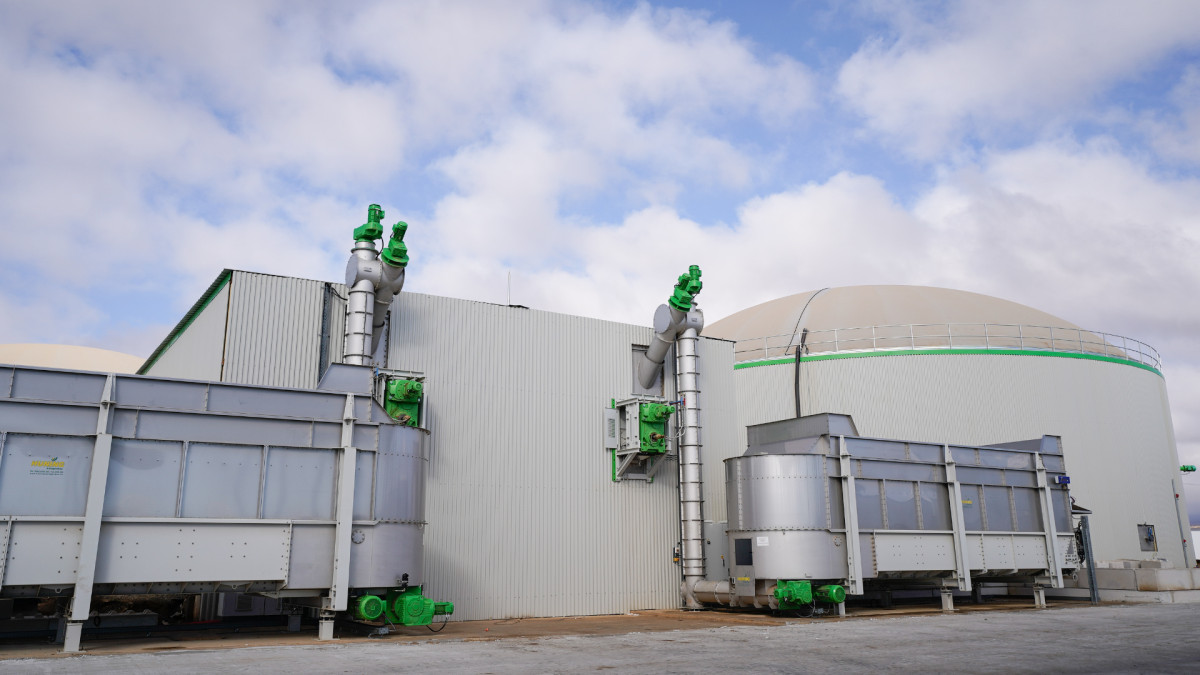
A few months ago, Olivier Massol, Mihai Pascalau, and I prepared a report titled Biogas and Biomethane in Spain: A Critical Scenario-Based Assessment. In this work we analyzed the technical potential for feedstock availability and the economic viability of biomethane in Spain toward 2030 and 2050.
From the study we obtained the following results and conclusions:
1. There is a sufficient biomethane potential in Spain to meet the objectives set by the National Integrated Energy and Climate Plan for 2030. We estimate a potential capacity of between 14.4 and 39.3 TWh for 2030, and 74.1 to 93.9 TWh for 2050, a substantial increase from around 4 TWh in 2023. The 20 TWh target for 2030 is therefore achievable, but it will not be easy, as it requires materializing about 75% of our estimated technical potential in the central scenario within a very short timeframe.
2. Biomethane cannot substitute all natural gas consumption. Anaerobic digestion is a mature technology, so cost reductions through innovation may be limited. Nevertheless, fossil gas is subject to greater uncertainty and can experience episodes of high prices more frequently. In addition, guarantees of origin can help improve project viability by allowing the renewable nature of biomethane to be certified and valued.
3. Biomethane can serve to decarbonize hard-to-electrify uses where it delivers the maximum value-added, such as high-temperature energy-intensive industry, heavy transport, or dispatchable backup electricity generation. It can also be an alternative to other energy vectors in conditions where it avoids investments in other equipment or infrastructures.
4. Short-term evolution will depend, among other factors, on the ability to mobilize the available feedstocks, especially livestock and agricultural waste, to supply the plants in a stable manner and at reasonable costs.
“In Spain there is a sufficient biomethane potential to reach the objectives set in the National Integrated Energy and Climate Plan for 2030”
Recently I had the opportunity to participate in a working space organized by beBartlet in Madrid, where I presented the results of the report and we were able to discuss the prospects of first-hand biomethane with representatives from public administrations, the energy sector, industry, and civil society.
The gathering served to confirm that the sector is evolving at a very rapid pace. The fundamental questions about uses and the most appropriate regulatory frameworks remain, but the discussion has advanced. New challenges related to the on-the-ground deployment of the first projects have emerged, while some initial doubts have been clarified.
Administrative agility and regulatory certainty
The administrative complexity or permitting was identified as the main brake on development and, therefore, on meeting the national objectives for 2030. On regulation, the general view was to emphasize the need for a stable and homogeneous framework across autonomous communities. Regarding incentives, in general they were not deemed necessary because well-structured projects are viable without public aid if licenses are streamlined.
Digestate management and valorization
Emphasized the technical and regulatory challenge of turning digestate into a safe, high-quality organic fertilizer. The lack of a clear regulatory framework that provides certainty for its commercialization hampers effectively closing the circular economy loop in the agro-larming sector.
Social license and multilevel governance
It was observed the need to address local opposition in rural settings, partly linked to perceived local impacts such as odors or increased heavy traffic. A proper siting, the use of the best available technical solutions, and rigorous management of the installations can significantly reduce these impacts.
“A proper siting, the use of the best available technical solutions, and rigorous management of the installations can significantly reduce these impacts”
During the session, the need to generate real public participation was mentioned, in the terms of the Aarhus Convention, ratified by Spain, which requires that the public participate from the outset, have access to complete and comprehensible information, and that their contributions are effectively taken into account.
Therefore, to guarantee the success of projects, it is essential to articulate transparent governance among the central government, the autonomous communities, and the municipalities that integrates citizen engagement in local communities.
In short, the day showed that biomethane is ready to contribute to the decarbonization of the energy mix, but it still faces the challenges typical of an early deployment phase. To overcome them, it will be key to learn from the experience of European countries with more advanced development and, at the same time, to build our own model, adapted to our territory and shared by the various actors involved.
