
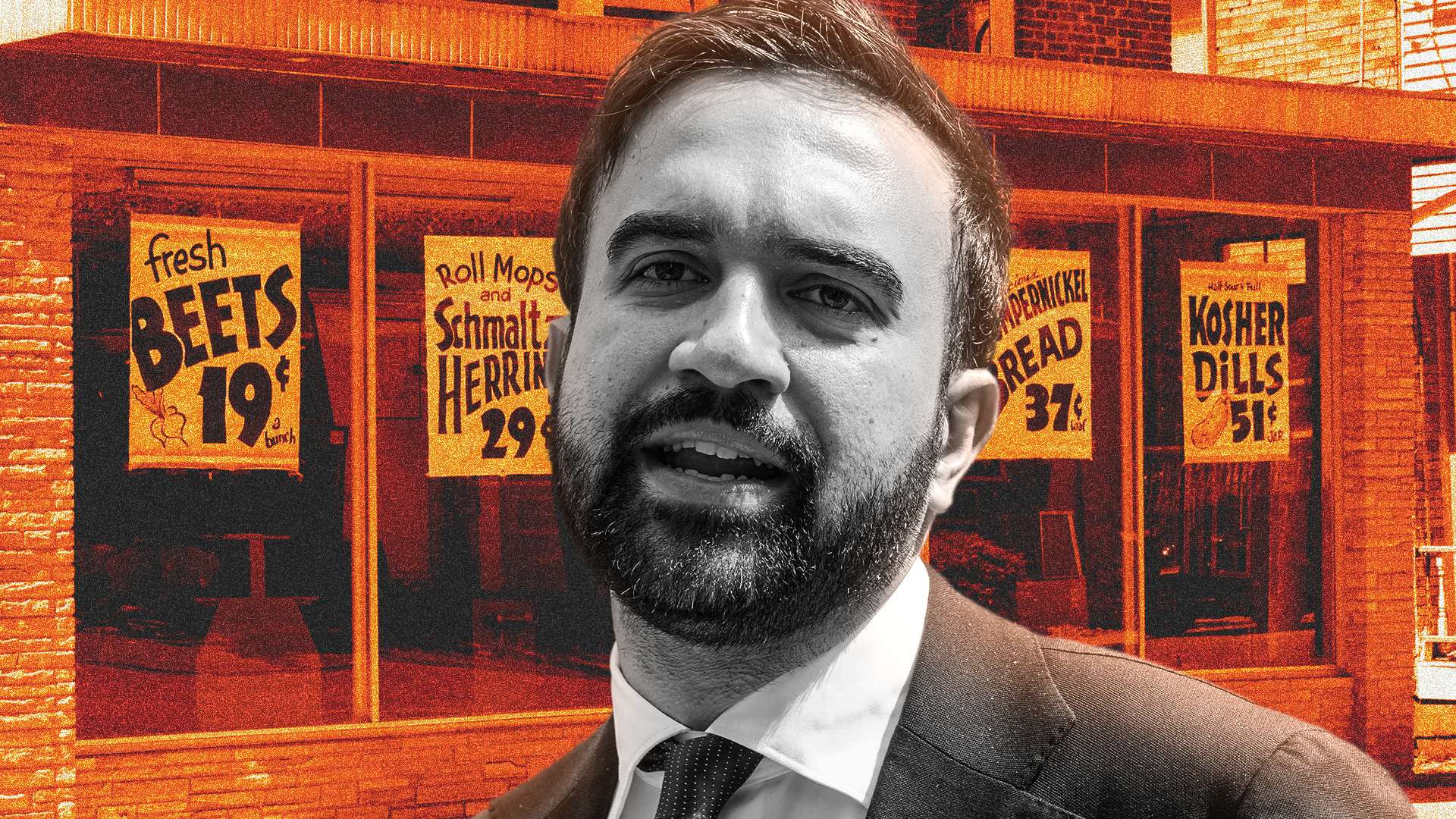
Zohran Mamdani’s administration has yet to assess how the city-supported grocery outlets it pursues will influence nearby mom-and-pop shops that operate on razor-thin margins.
During the early phase of his tenure as New York City’s mayor, Mamdani has presented himself as a champion of the city’s small businesses. Just a couple of weeks into the job, he declared: “You cannot tell the story of New York without our small businesses.” He went on to condemn burdensome city regulations that have “long made it too hard for these same businesses to open their doors.”
Perhaps buoyed by a love for food, Mamdani has shown particular adoration for NYC’s network of independently owned bodegas: “I can’t imagine New York City without bodegas. They represent our hustle and entrepreneurial spirit.” Yet so far, the mayor’s self-proclaimed concern for the little guy has proved more rhetoric than reality—especially when it comes to groceries.
Mamdani’s central initiative in the grocery arena, of course, has been to push his $70 million plan to establish a city-owned grocery store in each of Gotham’s five boroughs. But at a New York City Council hearing last week, the mayor’s budget chief disclosed that the administration has failed to carry out a small-business impact assessment on how these government-backed stores would affect nearby mom-and-pop outlets, which operate on slim profit margins.
The neglect hardly comes as a surprise to those who know how this narrative tends to unfold. Despite Mamdani’s team’s claim that the government-owned stores would target so-called “food deserts,” the sites chosen thus far are hardly devoid of food.
There are already several bodegas and small grocers within blocks of the planned East Harlem site for one of the government-backed stores. A Fox News digital analysis found roughly 45 grocery stores within a 35-minute walk of the proposed location. Among the 500 largest cities in the U.S., a recent study ranked New York as the third-best city for grocery access, outperforming San Francisco, Los Angeles, Philadelphia, Chicago, and Washington, D.C., among many others.
This matters. Mamdani’s stores will enjoy a distinct edge over private grocers: they will not have to pay rent or property taxes. Annual rental prices for storefronts in East Harlem average from $120 to $225 per square foot for high-traffic corridors and $65 to $120 per square foot for secondary retail. For the former, a 1,000-square-foot retail space would run about $10,000 to $18,750 in monthly rent; for the latter, it would be between $5,000 and $10,000. (Multiply that by many, as the city-owned grocery store in East Harlem is slated to be 9,000 square feet.)
The grocery sector is also infamous for its tight profit margins—usually hovering around 1-3 percent—further underscoring the potential threat posed by rent-free and tax-free competitors. As a result, local independent grocery stores are pressuring the city council to take action against Mamdani’s government outlets.
The president of the National Supermarket Association, which represents 450 independent grocery stores inside the city, called the government-backed stores a “slap in the face.” One bodega owner pointed out the irony of the city “using our tax money to compete with us,” since the property taxes that private stores pay will functionally help offset the tax-free existence of the new government-operated competitor stores.
Supporters of the mayor’s plan might argue that competition from a mere five stores spread across a city as vast as NYC will have little real impact on existing private grocers. But not every lawmaker intends to stop at five stores.
Last week, a new bill was introduced in the New York City Council to make the city-owned stores permanent and to expand the number to five per borough. “Let’s make sure it’s not something that just our current mayor invests in, but something we can codify into in perpetuity,” said Jennifer Gutiérrez (D–Brooklyn), the sponsor of the bill, in an interview with The City Reporter.
While some have questioned whether Mamdani’s subsidized stores will actually result in cheaper food prices, it’s clear that the mayor himself is unconcerned by that skepticism—and in fact views his stores as market competitors to be reckoned with. “Now, some will insist that city-owned businesses do not work, the government cannot keep up with corporations,” said Mamdani. “My answer to them is simple. I look forward to the competition.”
The main competitors, however, will not be massive corporations. They will be the nearby mom-and-pop bodegas the mayor says he loves.
