
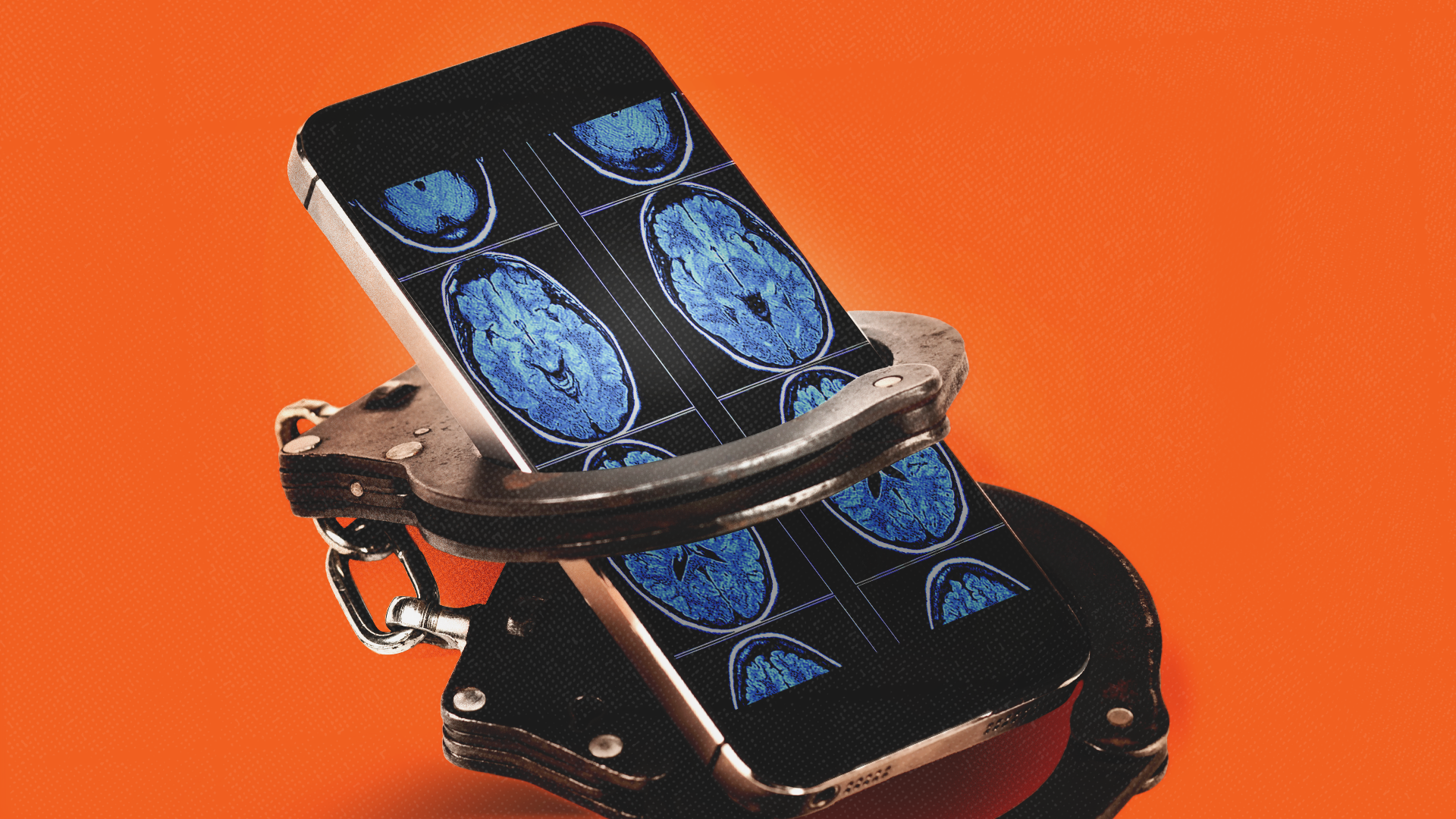
CBP allegedly warned a nurse that “your lawyer cannot do anything” and suggested that data could be taken “the easy way or the hard way.”
A psychiatric nurse practitioner’s phone, loaded with confidential patient information, was confiscated by U.S. Customs and Border Protection at Washington Dulles International Airport last week, according to a new lawsuit. The plaintiff, Muhammad Numaan Imam, alleges that CBP agents told him they could seize his electronic devices “the easy way or the hard way” and blocked access to legal counsel by stating, “we are the authorities at the border.”
The suit filed by the American-Arab Anti-Discrimination Committee (ADC) may mark a first challenge to CBP over the seizure of medical records. ADC is also representing Palestinian-American attorney Jay Shehadeh and Jewish-American journalist Max Blumenthal in separate actions alleging the seizure of their devices.
“We are observing a pattern in which officers rely on their border-search authority not to pursue legitimate border-related objectives, but to punish individuals for denying access to their personal electronics and for holding views the government did not approve of,” wrote Jenin Younes, president and legal director of ADC, in a statement emailed to reporters.
While Shehadeh and Blumenthal argue that CBP is retaliating for their political views, Imam contends that he faced threats and retaliation simply for asserting his privacy rights. Both Imam and Shehadeh were considered “trusted travelers” under the Global Entry program, which allows certain American citizens who pass background checks to use automated lanes at airports and along borders.
When contacted by Reason, a CBP spokesperson did not address the specifics of the case, offering only a general remark about CBP’s authority to lawfully inspect electronic devices as essential to safeguarding the country in an increasingly digital world.
The border exception to the Fourth Amendment grants U.S. authorities the power to search for contraband crossing the border without a warrant. Courts have issued a tangle of inconsistent rulings on whether this authority extends to travelers’ electronic data, but in practice CBP can seize the physical devices on which that data resides.
Moreover, the agency has been known to mislead travelers whose data it seeks. Recently unsealed documents in the case of Atlanta protester Samuel Tunick reveal CBP providing a false reason for detaining him and promising he would be allowed to leave with his phone if he cooperated, even though supervisors had ordered the seizure of his devices regardless. Tunick now faces trial for allegedly tricking CBP into deleting his data to avoid a search.
“It’s happening to a lot of people, and it’s being used in a coercive, inappropriate way,” Younes told Reason.
Imam’s troubles began at another border before reaching Dulles. He was en route to Istanbul for a family vacation with his Pakistani wife, Khadijah Mansoor, and their one-year-old child. Turkish authorities demanded to see Mansoor’s U.S. green card, which she had left at home, and would not allow her entry on her Pakistani passport alone. The family had to board the next flight back to Washington. Upon their return, CBP officials questioned why they had been turned away and why Mansoor did not have her green card.
The situation grew stranger when agents told Imam he had been “flagged” for undisclosed reasons, pulled him into a separate room, and began questioning him about his social media use and group chats. Imam recalls they asked about group chats in general, not about any particular conversation. When agents requested the password to Imam’s phone, he explained that the device is used to communicate with and manage cases for patients at the rehabilitation facility where he works. HIPAA strictly prohibits sharing patient data without consent, so Imam requested to speak with a lawyer.
“Your lawyer cannot do anything. We are the authorities at the border,” one agent allegedly stated. A supervisor then informed the couple that CBP could take all of their electronics the “easy way or the hard way,” and that the devices could be detained for months before they could be returned.
CBP’s own internal policy states that devices should ordinarily be held for less than five days. The same policy includes vague guidelines for handling medical information: “Possibly sensitive information, such as medical records and work-related information carried by journalists, shall be handled in accordance with any applicable federal law and CBP policy.” Imam says the agents claimed to have software capable of filtering out HIPAA-protected data.
After about four hours of detention, CBP seized the family’s phones and laptops and released them. The following day Imam received an email stating, “We regret to inform you that your membership in Global Entry has been revoked for the following reason(s): You do not meet the Trusted Traveler standard.” In addition to losing valuable work data, the lawsuit argues Imam is now unable to prescribe certain psychiatric medications to his patients due to federal rules requiring phone verification.
The lawsuit seeks the return of the devices and data under Rule 41(g) of the Federal Rules of Criminal Procedure, which requires the government to return property that is no longer needed for a criminal investigation. ADC has also filed similar motions in Shehadeh and Blumenthal’s cases. (CBP returned Blumenthal’s and Shehadeh’s phones almost immediately afterward, but ADC continues to pursue records of what was done to those phones in custody.) Younes filed a brief on Blumenthal’s behalf in support of a forthcoming Supreme Court case examining whether CBP may continue these electronic searches.
“The devices are neither contraband nor subject to forfeiture, and, to Plaintiffs’ knowledge, there is no ongoing criminal investigation, criminal prosecution, or warrant authorizing their continued seizure or search,” Imam’s lawsuit states. “The Fourth Amendment does not permit the border-search exception to become a means of coercing compliance through the threatened or actual confiscation of travelers’ personal property.”
