
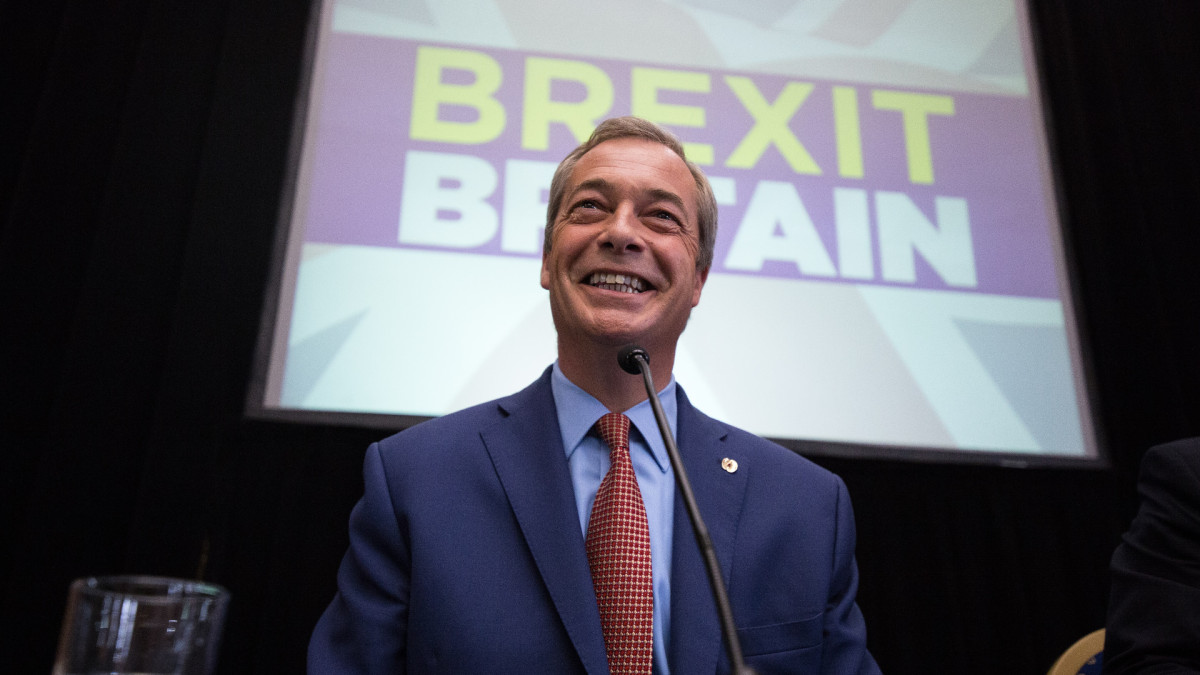
Ten years after the referendum that redirected the United Kingdom’s path, the country is poised to appoint its seventh prime minister since that historic vote. Few figures capture the Brexit legacy as well as this one. What began as an enterprise to “take back control” opened a decade of institutional instability, political fragmentation, and sluggish economic growth that still shows no signs of easing.
With the perspective time grants, perhaps the most important takeaway is another: the gravest mistake was not the result. It was calling a binary referendum on a question whose legal, economic, and constitutional complexity was incompatible with a yes-or-no answer. Referendums make sense when the question is clear, the mandate is clearly defined, and its consequences reasonably known. Brexit did not meet any of those conditions. Citizens did not vote for a treaty, nor for a specific trade model, nor for a defined institutional architecture, but for a path into the unknown.
“The gravest error was not the outcome. It was calling a binary referendum on a question whose legal, economic and constitutional complexity was incompatible with a yes-or-no answer”
Brexit meant things that were mutually incompatible. For some it represented the model of economic cooperation with the EU on the Norwegian line; for others, Canada’s free-trade treaty; for others, a neoliberal Singapore in the Atlantic; for many, a policy of migration control against the Polish plumber or the Italian secretary; for many more, a revolt against urban, cosmopolitan London; for some, the last sentimental echo of the British Empire. The ballot paper folded all those contradictory desires into a slim majority and then handed to the institutions the impossibly task of turning that bundle of incompatible expectations into a coherent public policy.
The cost of that ambiguity was not merely political. It ended up reflecting in the economy with dire consequences. A recent study by the National Bureau of Economic Research estimates that Brexit has reduced British GDP per capita by between 6% and 8%, investment by between 12% and 18%, and employment and productivity by between 3% and 4%. The Office for Budget Responsibility—the UK’s equivalent of AIReF—estimates that the new trading relationship with the European Union will reduce long-term potential productivity by about 4%. The Centre for European Reform, for its part, has calculated that the exit has lowered UK exports to the EU by roughly 12% and imports from the EU by around 16%.
The country bore some typical weaknesses of Western European economies: low productivity, regional disparities, erosion of public services and one of the lowest levels of investment and gross fixed capital formation among the major developed economies. Brexit did not create these problems, but it has worsened them at the worst possible moment. When the British economy needed more investment, more openness and greater regulatory certainty, it chose to add barriers, uncertainty, and distance from its principal market.
“Brexit did not create those problems, but it has worsened them at the worst possible moment”
Public opinion has understood it only in part. According to YouGov, on the tenth anniversary of the referendum, 57% of Britons consider leaving the European Union a mistake, against 30% who still believe it was the right decision. Additionally, 55% would support re-entry in abstract terms. But that support falls to 35% if the return would require giving up the old British exemptions. Here lies the current paradox: many Britons want to correct Brexit, but do not want to bear the political cost of undoing it.
Behind that “yes” lay, in fact, three illusions.
The first great illusion was the familiar cherry-picking. London believed it could keep the best of being part of Europe — preferential market access, tariff-free trade, regulatory cooperation, a financial passport — without accepting its obligations: free movement, budget contributions, a shared jurisdiction, and regulatory alignment. It was the old British fantasy of being inside and outside at the same time, elevated to a failed negotiating doctrine.
The second illusion was absolute sovereignty. Take back control was a striking slogan because it allowed a line of three words to project all sorts of frustration: economic, cultural, regional, and democratic. But it conflated formal sovereignty with real power. In the nineteenth century, sovereignty could be understood as legal independence. In the twenty-first century, it increasingly means the ability to influence the rules that govern interdependence. The United Kingdom regained a voice on its own in exchange for losing a seat at the table where a large portion of its economic environment is decided. Moreover, it ended up part of the menu.
“The United Kingdom regained its voice in solitary fashion in exchange for losing a seat at the table where much of its economic environment is decided”
The third illusion was the citadel of demographics. Brexit promised to reclaim border control. Yet the United Kingdom was never a participant in the Schengen area and had maintained its own border controls throughout its EU membership. It also had significant immigration and asylum exceptions. The irony is hard to beat. Net migration did not vanish; it accelerated and shifted in composition. European inflows fell, but those from third countries rose, especially from Asia and Africa. It did not eliminate Britain’s dependence on foreign labor in health care, elder care, higher education, construction, or hospitality; it simply replaced an integrated mobility regime with Europe by one that is more bureaucratic and less predictable, thereby opening the door to immigration that is less socially and culturally permeable.
Yet the deeper error was not economic or migratory. It was democratic. Brexit exposed the limits of plebiscitary democracy when applied to extraordinarily complex questions. No mature democracy should reduce a process that requires thousands of pages of international negotiation, dozens of affected sectors, and multiple possible institutional models to a binary question.
There is the difference between plebiscitary democracy and deliberative democracy. The former demands emotional alignment: yes or no, people or elites, patriot or traitor, victory or humiliation. The latter accepts the imperfection of politics: pluralism, partial agreements, review of evidence, institutional bargaining, learning. Brexit shattered for years that intermediate space. Every concession was denounced as betrayal. Every economic warning was cast as a conspiracy. Every nuance was treated as cowardice.
“Brexit revealed the limits of plebiscitary democracy when applied to extraordinarily complex issues”
The 2016 campaign also marked a turning point in voter manipulation. It did not invent political lying, which is as old as politics itself. But it demonstrated the power of a digital ecosystem capable of micro-segmenting emotions, reinforcing biases, and turning propaganda into a personalized experience. Brexit was, in that sense, the prologue to our political era: echo chambers, microtargeting, digital tribalism, post-truth, territorial resentment, and algorithms that reward outrage. The British Parliament investigated the use of data, platforms, and digital political advertising. The Electoral Commission determined that the official Brexit campaign had breached electoral law by channeling part of its digital advertising spend through affiliated organizations, circumventing the legal limits on campaign financing.
Ten years on, the United Kingdom remains enmeshed in a contradiction. The social majority seems to have grasped that Brexit was a mistake, yet there is not yet a political majority willing to accept the terms of a genuine reintegration. Rejoining the EU would entail accepting rules, contributions, and a shared alignment that every member state now requires, and from which the UK historically exempted itself. Moving closer without rejoining would ease some costs, but would not resolve the essential question: deep access to the European market demands a formal surrender of sovereignty in exchange for real influence.
“Democracies fail not only when they vote badly. They also fail when they cease to create the conditions for citizens to vote rationally”
Democracies fail not only when they vote badly. They also fail when they stop creating the conditions for citizens to vote rationally. The process that forged that collective will was dominated by incomplete information, impossible promises, emotional manipulation, and identity-based tribalism, and a digital architecture that rewarded polarization more than deliberation. The most unsettling legacy of Brexit is not simply taking the United Kingdom out of the European Union. It is having shown that even a mature democracy can adopt a collectively irrational decision when the public sphere is fractured, truth is personalized, and politics ceases to deliberate and merely counts sides.
