
Top of the week to you, and welcome to another issue of Rent Free.
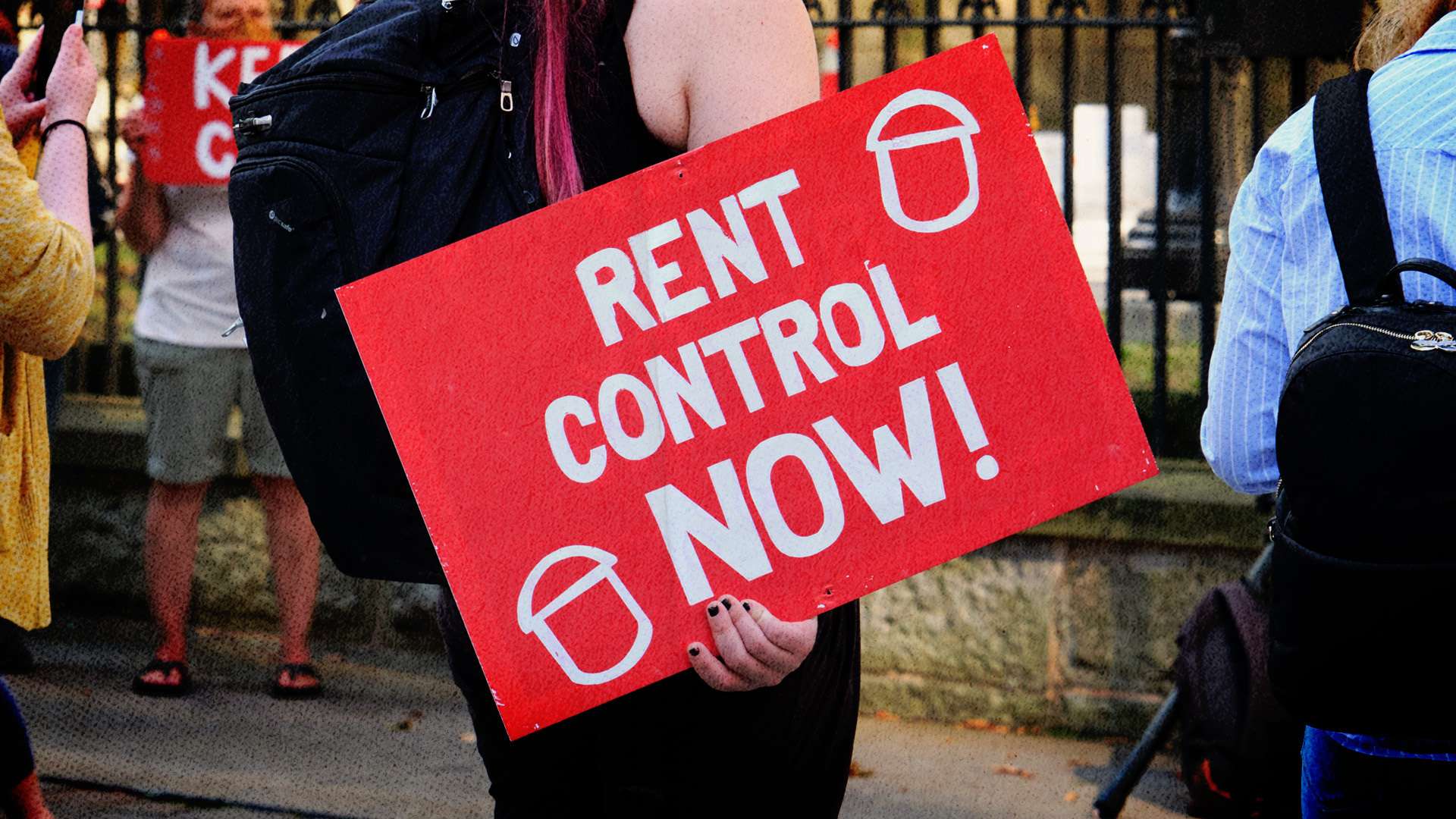
In this edition, we examine a proposal that would set up universal rent caps across California whenever authorities determine that a foreign conflict is pushing housing costs higher.
The newsletter also highlights housing and transportation policy advocate Charles Marohn’s First Amendment win against licensing officials who sought to penalize him for referring to himself as an engineer.
War=Rent Control?
Until the United States embraces a more noninterventionist foreign policy, California landlords could continue to live under the threat of universal price controls.
That would be the scenario under a measure advanced by California state Senator Josh Becker (D–Menlo Park), which would add war to the triggers that activate the state’s price-gouging statute.
Rent Free Newsletter by Christian Britschgi. Get more of Christian's urban regulation, development, and zoning coverage.
Under current California law, price increases are limited to no more than 10 percent whenever a chief executive or local authority proclaims an emergency due to fires, floods, riots, health crises, and similar events.
Those controls cover a broad array of essentials—from groceries and emergency supplies to construction materials and housing rents—and they endure for a minimum of 30 days, with the possibility of indefinite renewal.
Becker’s proposal would authorize the governor to declare an emergency linked to war to trigger those price protections, provided Congress announces hostilities, the U.S. takes part in a United Nations peacekeeping operation, or the U.S. is “actively conducting military operations against any foreign nation, whether a formal state of war exists or not.”
“California should not become collateral damage in an international confrontation,” Becker stated during a committee hearing in which he framed the measure as a response to rising fuel prices.
The bill also tightens the limits on when war-related price caps could go into effect.
Only a presidential or gubernatorial declaration of emergency could trigger war-related price controls. The attorney general would need to establish a link between a war and an increase in the price of a good before the 10 percent cap could be imposed. The caps could be extended once for an additional 30 days, allowing a maximum duration of 60 days.
Property owners across California oppose the bill, arguing that the broad and vague interpretation of “war” would create compliance uncertainties and even criminal exposure for landlords who raise rents during ongoing overseas hostilities.
Already, the attorney general has highlighted cases of landlords who raised rents in the aftermath of last year’s wildfires.
California’s rent-control landscape is already layered and intricate. Many municipalities maintain legacy rent restrictions on older housing, typically limiting annual increases by modest percentages. There is also a statewide rent-control provision capping rent hikes at 10 percent for dwellings that are at least 15 years old.
Becker’s proposal would introduce a third tier of rent controls that could be activated sporadically by foreign conflict, and if activated, could expose landlords to criminal penalties.
Housing Advocate and ‘Professional Engineer’ Wins First Amendment Case
Following a lengthy legal fight with Minnesota licensing authorities, Charles Marohn, founder and president of Strong Towns, has secured a First Amendment victory regarding his right to identify himself as a “professional engineer.”
Marohn spent years working as a licensed civil engineer before dedicating himself to activism and writing full-time. Through his work at Strong Towns, he often critiques contemporary traffic engineering practices and public infrastructure projects.
That stance drew some critics within the profession, one of whom filed a complaint against him in 2020 when he continued to describe himself as an engineer in speeches and author bios even though his license had lapsed.
That initial complaint evolved into a formal disciplinary action in 2022, when Minnesota’s Board of Architecture, Engineering, Land Surveying, Landscape Architecture, Geoscience, and Interior Design fined and censured Marohn for using the title in the context of his advocacy work.
In response, Marohn filed a lawsuit. He argued that his description of himself as an engineer in public advocacy, and not for soliciting engineering work, fell under his First Amendment rights to use the title.
Last week, Judge Nancy E. Brasel of the U.S. District Court for Minnesota granted summary judgment in favor of Marohn’s First Amendment claim.
The board had contended that it could police who calls themselves engineers as part of its mission to license the field and safeguard public safety. Because Marohn used the term in a professional context without a current license, the board argued, it could sanction him.
Brasel rejected this argument, ruling that Marohn’s use of the term engineer was “part and parcel” of his advocacy work, not state-regulated engineering activity. That meant any sanction based on the title would have to satisfy the Supreme Court’s strict scrutiny standard, which the board did not meet.
In similar cases from Oregon and North Carolina, federal courts have largely sided with free-speech protections for unlicensed engineers engaging in public advocacy against licensing boards.
“This is a significant vindication,” Marohn remarks about the ruling in his case.
“Personally, having the state allege for six years that I lied and misrepresented myself to the public was not only painful but deeply hurtful,” he tells Reason. “The engineering profession needs reform and dialogue. The precedent my field once relied on felt chilling to those inside the profession.”
Quick Links
- If you’ll indulge a bit of self-promotion, I have an article in the latest print issue of Reason arguing that Euclidean zoning is indeed named after Euclid.
- Opponents of California’s Proposition 45, which would dramatically shrink the reach of the California Environmental Quality Act, are highlighting the risk of unchecked data-center growth as a key argument against the measure. Proponents maintain that data-center projects would not fall under Prop. 45.
- The Independent Institute on why many of California’s zoning reforms have underperformed.
- Lawmakers have softened a pending bill intended to prevent fire-damaged single-family homes in the Los Angeles area from being converted into denser housing. As Politico reports, author state Sen. Sasha Renée Pérez (D–Pasadena) amended the bill to permit duplex construction. The measure would still block 10-unit subdivisions currently allowed by state law from being built in fire-affected zones.
- Developers in the San Francisco Bay Area anticipate a building surge as rents rise and the city scales back some affordable-housing mandates.
