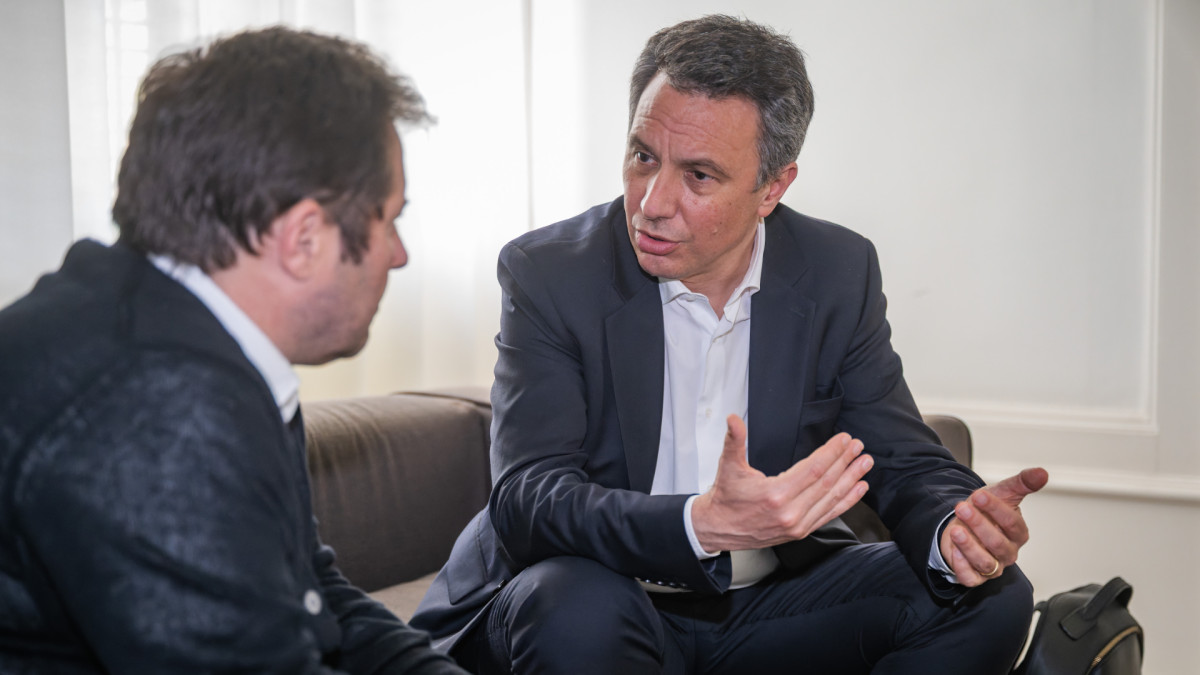
Europe discusses how to rearm, how to coordinate its defense industry, and how far it can gain strategic autonomy without breaking its ties with the United States. I spoke about all this in Barcelona, at the CIDOB international conference War and Peace in the 21st Century, with Camille Grand, secretary general of the Aerospace, Security and Defence Industries Association of Europe (ASD) and former Deputy Secretary General for Defence Investment at NATO: how to strengthen security without losing sight of either its industrial boundaries or its link to the United States. Throughout the interview, Grand challenges some clichés about fragmentation in the sector, argues that a “natural division of labor” is emerging between the EU and NATO, and focuses on the need to better coordinate demand, speed up production, and think more ambitiously about European capabilities. At the same time, the changes wrought by the war in Ukraine, the growing role of artificial intelligence, and the tension between strategic autonomy and Atlantic dependence cannot be ignored. Grand, who is also a professor at Sciences Po in Paris, insists that Europe has the industrial and technological base to adapt, but warns that the debate will only be useful if it is accompanied by investment, planning, and a clearer idea of what defense it aims to build in the coming years.
Camille Grand during his intervention at the CIDOB international conference ‘War and Peace in the 21st Century’. Photo: CIDOB
What would it take for the European defense industry to be less fragmented?
Fragmentation is a historical legacy, so it’s not easy to overcome. Most European countries have their own arsenals and their own national champions, and now that spending on defense is rising, they also expect those companies to benefit from that investment. It is understandable: policymakers want taxpayers’ money, whether national or European, to support domestic industry.
“The picture is not as fragmented as it is sometimes portrayed, and competition also has value, because it can help push prices down”
Duch as that, a lot has already happened. There has been consolidation in several areas. Militarily, Europe only counts a handful of aircraft manufacturers and a handful of tank manufacturers. So the picture is not as fragmented as it is sometimes portrayed, and competition also has value, because it can help push prices down.
Where consolidation is still needed is in demand and, to some extent, in supply. In some cases, a single call or a single joint bid can help reduce costs and allow the industry to focus on a single product rather than several parallel ones. We have already seen this in the missile domain, where Europe now has a clear champion, and over time we could see a similar evolution in other fields.
Ultimately, the objective should be to move faster and cheaper, because that is what defense ministries need from the industry. The European Union can play a useful role here by creating incentives for joint procurement, especially in more complex weapons systems where a single national customer is simply not enough. In those cases, several countries acting together are necessary, but there are already precedents such as the multinational fleet of tanker aircraft, operated jointly by eight European countries. Aerial refueling is a good example of a costly but critical capability: a few decades ago there was no real European option, while today there is, and even the smaller countries can participate in such projects.
What do you think about the debate on a “Europeanization” of NATO? The Prime Minister of Spain, Pedro Sánchez, has said that Europe needs its own military forces. In terms of defense and the defense industry, what makes more sense?
We have to acknowledge the strengths of both organizations. NATO today is strong at two things, setting politics aside for a moment. The first is command and control of operations. There are 15,000 officers and NCOs in NATO structures who are excellent at planning and directing operations. The second is capability planning, i.e., thinking about what is needed.
The EU, by contrast, is better at industrial policy. It is better at supporting research and innovation. It has money, whereas NATO does not have large budgets it can use in the same way. That is why I believe that, in the current context, a natural division of labor is emerging.
The statement by Mr. Sánchez, and I think it is truly interesting, in addition to not being alone in raising it, is whether, in today’s political and strategic environment, we need to go beyond this traditional division of labor.
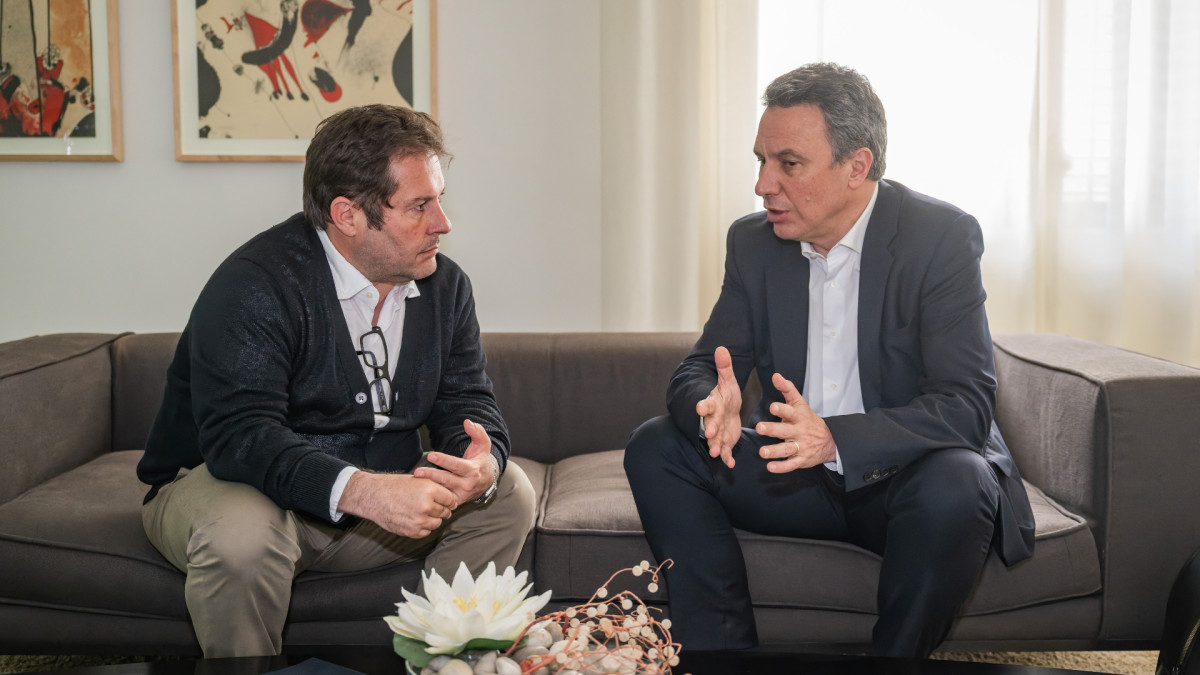
Lopez Planá and Grand discuss NATO’s role and the EU in Europe’s defense. Photo: CIDOB
What about Macron?
Yes, but Macron has been publicly arguing for strategic autonomy for about ten years. At the same time, he has recently also shown himself to be a firm advocate of the Europeanization of NATO. So I think we currently have an open and healthy debate, because we are in a very different environment.
The issue is that most Europeans, including Macron and Sánchez, are not arguing that NATO should disappear. Nobody wants NATO to cease to exist or to break the alliance with the United States. If anything is being challenged today, it is because of statements and decisions made in the United States.
But that does not mean we have to abandon the idea of deeper integration within the EU. Probably not. Probably we also want to be more capable of acting within the framework of the EU.
“The hard part will be balancing two trends that are on the table today, which can reinforce each other or compete with each other”
The hard part will be balancing two trends that are on the table today, which can reinforce each other or compete with one another. One is the transformation of NATO into a more European organization. That is already taking shape: more command posts are in European hands, and more responsibility in Europe’s conventional defense is being assigned to Europeans. But this is happening at a relatively slow pace and without very deliberate planning.
That is why we must seriously consider what a Europe with a less involved United States would look like. And if we can maintain an open conversation about it among allies, including the United States, and say: within five years we want to be here, within ten years we want to be there, and by then the United States will probably not be as present in Europe as it is today or has been for the last eighty years.
Alongside that is the EU path. Is there room for the European Union to add capabilities, to support the acquisition of weapons and ammunition, and perhaps to plan or deploy its own EU force, especially if NATO does not function well? In the last twenty-five years, since the launch of the Common Security and Defense Policy, the focus has been on crisis management outside Europe: helping African countries build military capabilities, peacekeeping, fighting piracy. So the next question is whether it makes sense to take on more responsibility within Europe.
I think that debate is important. It is demanding because the EU today is not fully equipped to do so. But it matters, even if only to ensure that, if things get very complicated within NATO, the EU is not taken by surprise.
In the end, all of this depends on Europeans investing enough in defense and developing the capabilities they need. Otherwise, we can have a purely theological debate about whether NATO or the EU is the best framework and end up failing altogether. If we do our homework —spending more, acquiring the right capabilities, identifying where we depend too much on the United States—then we can have this conversation on a more solid footing.
Finally, if we do not choose the NATO route, the EU will also have to seriously consider how to work with countries like the United Kingdom, Norway, and Turkey.
Can Europe absorb the current rise in defense spending without relying heavily on American suppliers?
Yes, but we must be realistic about the starting point. For more than twenty years, many European defense industries were relatively small, focused on national customers, under pressure on delivery times, and often oriented toward export markets. That reality has changed very quickly. They now need to produce faster, in larger quantities, and increasingly for European customers.
“I have no doubt that the European industry can respond to the demand from European defense ministries”
That is a new scenario for many companies, but I trust they can adapt. It is worth remembering that Europe also possesses top-tier industrial capabilities in related civilian sectors. The capacities exist and, in many cases, are present within the same companies. So I do not doubt that the European defense industry can respond to the demand of European defense ministries.
In some areas, that adjustment is already underway. Ammunition is a good example: Europe has managed to funnel the production of 155 mm artillery projectiles. In other fields it will take longer, because you cannot ramp up the production of fighter jets or advanced missiles in the same way you can increase the production of ammunition or cars. But that process has already begun, and I think Europe will reach that point in the coming months and years.
There are also some highly specific capabilities where Europe still needs time not only to boost production but to develop the product itself. In those cases, the horizon may be five to ten years, not a few months. In the short term, there may still be situations where a non-European supplier is used to cover an urgent need. However, that should not lead us to underestimate the European industry. Its challenges are real, but its rivals also face similar constraints, including in the United States.
RELATED ARTICLES
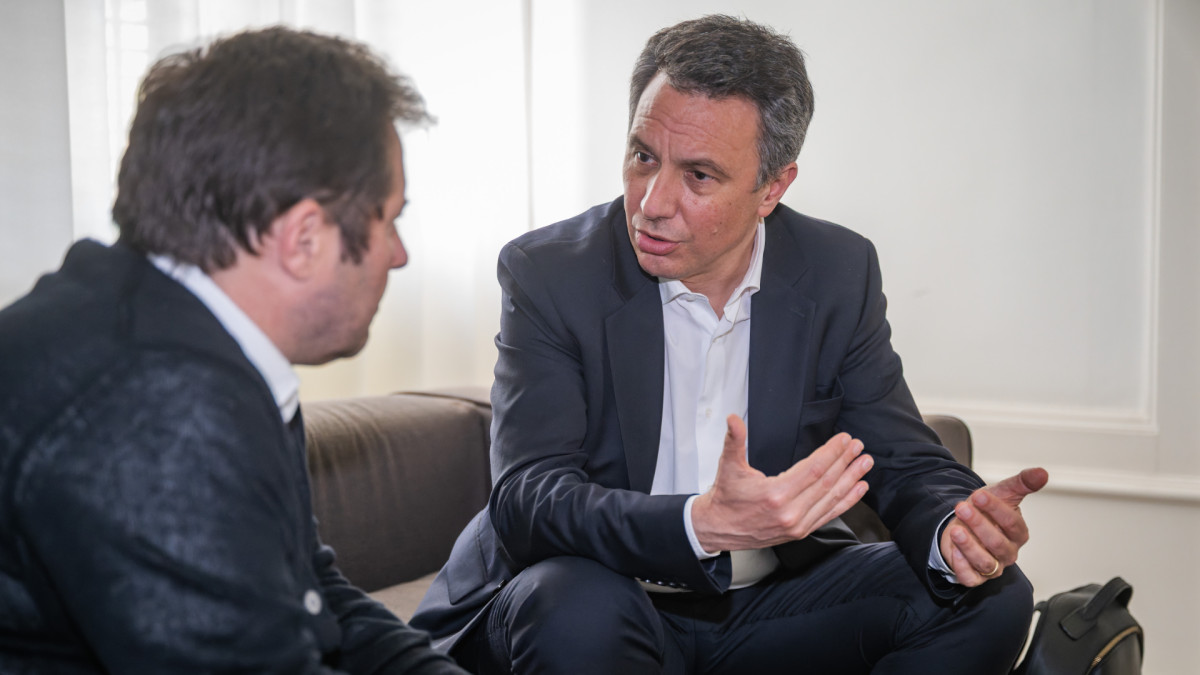
Camille Grand, Secretary General of ASD (right), and Marc López Plana, editor and director of ‘Agenda Pública’ (left).CIDOB
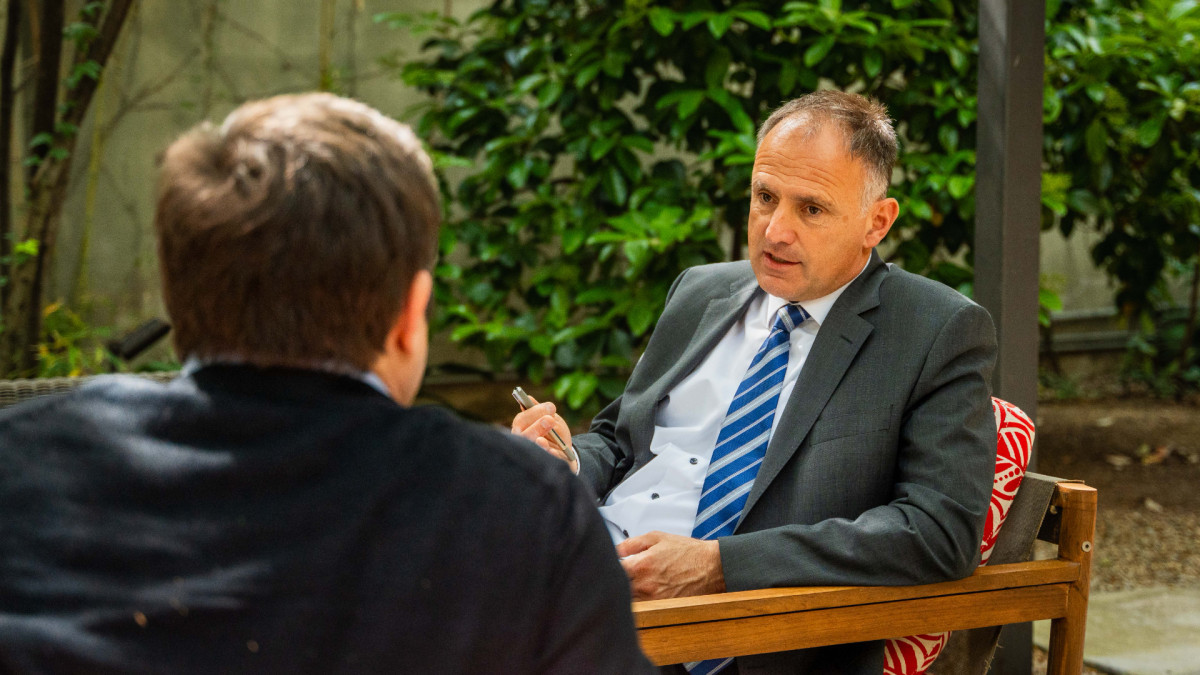
Denk converses with the director and editor of ‘Agenda Pública’, Marc López Plana.Agenda Pública / Tsun Ho
How should Europe combine a rapid increase in spending with the fact that the war itself is changing?
We have to do several things at the same time.
First, we must support Ukraine, because that is directly linked to our own security and it is urgent.
Second, we must rebuild the readiness of our own forces. That means ammunition, spare parts, training, and all the essential elements of military preparedness. Much of that still concerns conventional capabilities, but it remains absolutely necessary.
Third, we must build mass and the capacity to act with greater autonomy. That means investing in critical enablers such as air-to-air refueling, air surveillance, large drones, and space capabilities. They are expensive domains and require time, but the technology exists in Europe and we must move quickly.
Fourth, we must prepare for the future. The war in Ukraine has changed the nature of terrestrial warfare. Europe needs to understand the role that unmanned systems and artificial intelligence will play, so as not to limit itself to buying yesterday’s capabilities, but also to innovate for tomorrow’s battlefield.
That also requires a different relationship between governments and industry. Instead of buying a fixed number of systems in a single procurement cycle, governments may need to think in terms of maintaining industrial capacity and ongoing adaptation.
“The real question may not be whether 100,000 can be produced today, but whether 100,000 could be produced per month if necessary”
With drones, for example, the real question may not be whether 100,000 can be produced today, but whether 100,000 could be produced per month if necessary. In Ukraine, software is updated weekly and hardware evolves almost every month. Europe needs to become much more agile.
Are artificial intelligence companies becoming part of the defense industry?
Yes, in one form or another. Today in Europe there are two broad types of actors. On the one hand, there are established defense companies, especially those that were strong in electronics and cybersecurity, who are strengthening their AI capabilities and competing to attract the right engineers. On the other hand, there is a growing number of startups and new players developing very promising solutions.
All this continues to evolve and many of these solutions still need to be tested. Some are already being tested or used in Ukraine. Artificial intelligence will transform our lives and also transform defense.
“It would be prudent not to draw too sharp a line between the old and the new. Most traditional defense companies are already highly technological”
What is hardest to predict is whether the main winners will be completely new startups that scale up from the startup world or traditional defense firms that integrate AI into their existing systems. My sense is there will be a high degree of collaboration. Established companies will need the innovation of newcomers, and the latter will often need the industrial knowledge of traditional manufacturers when it comes to scaling up hardware production.
That is why it would be prudent not to draw too sharp a line between old and new. Most traditional defense companies are already highly technological. Very few are simply heavy industry firms in the classical sense; they depend significantly on electronics, software, and the integration of complex systems.
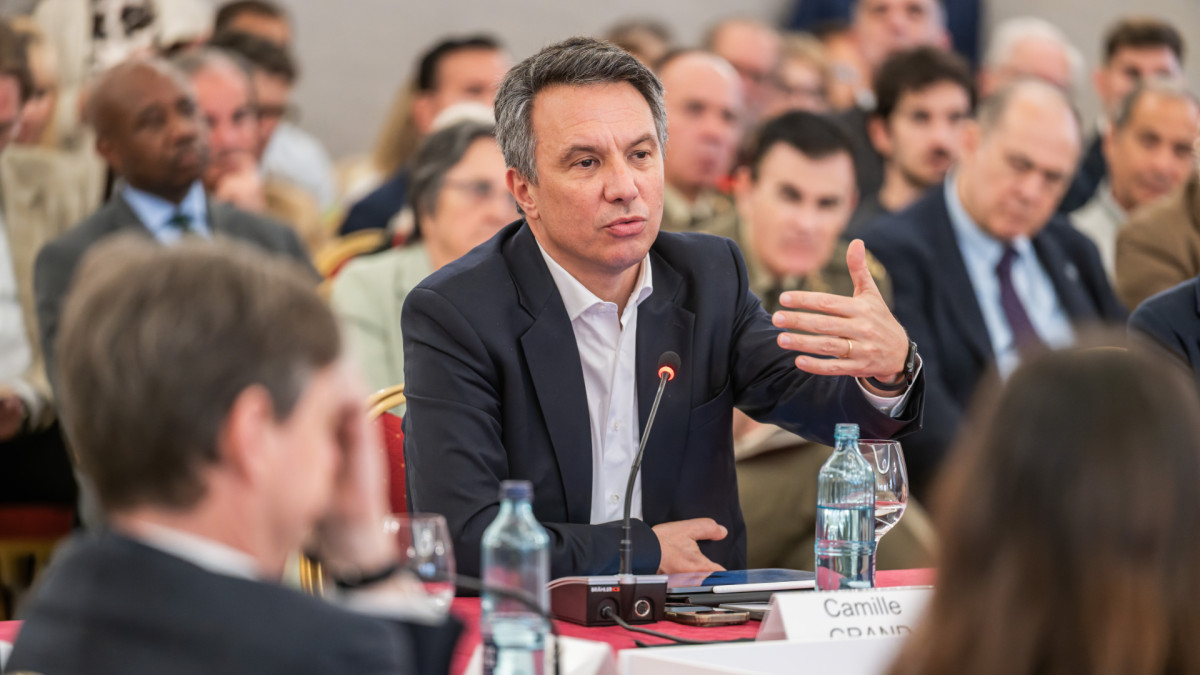
Well-versed in the European defense industry ecosystem, Grand urges not to underestimate it. Photo: CIDOB
How do you view the state’s role within the defense industry, especially after recent debates around companies like Indra and Leonardo?
Across Europe, the defense industry has changed a lot, though not everywhere at the same pace. In many countries, the sector was previously dominated by state-owned companies. Today, it is increasingly defined by private capital, private firms, and executives coming from the private sector. Purely state-owned actors in defense are much rarer than they used to be.
That said, there are still cases, especially in Southern Europe and parts of Central Europe, where the state retains some stake and influence. That does not automatically imply poor management. Being appointed by a government does not automatically mean someone lacks talent or ability. In many cases, these executives are very capable.
“The underlying issue is that companies should be allowed to operate as companies. Defense is, of course, a special sector, but political interference is never ideal”
The underlying issue is that companies should be allowed to function as companies. Defense is, of course, a special sector, but political interference is never ideal. If the government is a shareholder and has legitimate concerns, that is part of normal business life. But when decisions are made solely for political reasons, tensions arise.
At the same time, companies cannot ask the state to solve all their problems, shield them from competition, or intervene whenever it suits them. Overall, I think Europe has a relatively stable situation, although recent frictions show that governments still want to keep a close watch on big defense players.
Take France: not long ago, nearly the entire defense sector was state-owned. Today, public ownership is far more limited, often reduced to a small stake, and I do not recall recent direct political interference in appointing CEOs of the sector. Other countries are still somewhere along that transition.
Will we see more cross-border consolidation in the European defense sector?
Likely yes. We are currently witnessing a lot of consolidation within domestic markets, but I think cross-border consolidation is likely to grow.
“The real question is whether a merger strengthens Europe’s industrial capacity and its ability to supply capabilities, or whether it simply aims to eliminate competition”
I don’t have a specific case in mind, but the sector is dynamic and it is entirely possible that some of the large prime contractors identify foreign companies to strengthen their portfolios. The key is that governments should judge those operations on their merits, not from an ideological standpoint. The real question is whether a merger strengthens Europe’s industrial capacity and its ability to supply capabilities, or whether it simply seeks to eliminate competition.
Historically, there have been successful consolidation cases and others that did not work. Cross-border operations tend to be more difficult, but there are solid examples that show it is possible to build a large European champion that is also multinational.
That is probably the model we should keep in mind. If you look at companies like Airbus, Thales, or Leonardo, you will see they have a presence far beyond their home countries. In some cases, they are even considered national champions in more than one country. That is the direction in which Europe can increasingly move.
Thank you very much.
In alliance with