
Not even the minister himself wants generalized tax cuts, but he will have to push them through for political economy reasons. A week ago, a former senior official with government experience in Moncloa foresaw that despite the experts’ chorus against approving indiscriminate aid for the entire population, the Government was destined to present them to salvage the decree-law. The reports from the leading authorities—Bank of Spain, the National Competition Commission, ESADE, and the Economy Ministry’s own Expert Council—have determined that tax cuts that do not discriminate by income, especially regarding fuels, are: a) regressive, b) create perverse incentives.
“The highest incomes benefit more from the cuts in fossil fuels, and companies keep a large share of the reductions to boost their profits”
It is widely documented how higher incomes benefit more from cuts to fossil fuels, and also how companies keep a substantial portion of the reductions to improve their profits. And yet, the Government has once again approved this measure in its broad package of aid in response to the new energy crisis that came into effect following its publication in the BOE on Saturday.
Behind this decision lies the urgent pursuit of support from the Government’s parliamentary partners, the PNV and Junts, with a strongly pro-business orientation and particularly exposed, especially in the Basque case, to the major energy multinationals. Oil companies had already told the Government they preferred tax cuts, given that if they are to enjoy the so-called windfall profits —the sky-high gains from price increases that make them sell crude at high prices after buying it cheaper—the Executive also faces a windfall taxation, since taxes such as VAT apply a percentage and revenue soars as prices rise.
Cutting taxes is a very simple mechanism, although it is bound by the European Commission’s fiscal constraints, and the Treasury is also more inclined toward this measure than to the proposal urged by the experts: a negative income tax that compensates households according to their income. The ministry’s technicians have historically been reluctant to this kind of solution, which is a very common instrument in Nordic countries to target aid.
To ensure that companies do not siphon off part of the public aid, the decree places considerable emphasis on the CNMC’s capacity to monitor, gather information, and even sanction fuel suppliers to detect whether they skim reductions in their margins. The consulted experts remain skeptical about the actual power the supervisory body will wield.
“Experts warn about the consequences of generalized, non-redistributive aid that affects demand, i.e., they support continuing to use fossil fuels without saving”
In Agenda Pública’s analysis from last week, the experts already warned about the consequences of generalized aid that is not redistributive and that affects demand, i.e., it encourages continued use of fossil fuels without saving.
Spain’s green taxation is among the worst in the European Union. Spain has already been fined 1 billion euros for not equalizing the taxation of gasoline and diesel and stands on the brink of facing the European courts. While the International Energy Agency issued last Friday a report with measures to curb demand for oil and its derivatives, the Spanish government approved this package of measures so that drivers continue with their business as usual and refuel with the same gusto.
“Disappointing” is the word many experts use about these measures, which do not even contemplate, as was done in 2022, a boost to public transport as an ecological alternative to private car use—an initiative that also benefits lower-income groups.
Although macroeconomically the package is not designed with the right incentives, energy sector experts offer a positive reading of the portion that supports electrification, which in some sense offsets the pro-fossil message conveyed by these subsidies.
“Energy experts view positively the portion that supports electrification, which in some sense offsets the pro-fossil message conveyed by these subsidies”
Two Agenda Pública contributors, Pedro Fresco and Xaquín García-Muros, see positively the rollout of new supports to push electrification and renewable energies. Although García-Muros laments that the mistake of the blanket subsidy is repeated, he praises the strengthening of the electric social tariff or the electricity tax cut, which he believes are moving in a good direction.
Fresco also regrets that the fiscal portion of the package sends mixed messages by applying transversal measures across all energy sources, which fails to provide a clear price signal to consumers. Yet he highlights the positive surprise of the decree-law, such as the strong push for self-consumption by allowing users to benefit from installations located up to five kilometers from their homes game changer because it will open up a range of opportunities for towns or business associations in industrial parks to benefit from renewable installations without being limited by the physical constraints of their roofs. Fresco says this measure will be a game changer for the broader adoption of decentralised energy generation.
He also views very positively the deductions for heat pumps, charging points, and the numerous measures in the 143 pages of the document aimed at giving a strategic push to renewables and electrification.
“The Government has given a little of this and a little of that, aiming to cover the full political spectrum from left to right to ensure the decree-law passes”
It seems the Government has given a little of this and a little of that, attempting to cover the full political spectrum from left to right to ensure that the decree-law goes through. Although the effort to lay the foundations for the development and diffusion of electricity and renewables is notable, it is unfortunate that it has had to be tainted by the pragmatic pull of votes, introducing perverse incentives for fossil-fuel use.
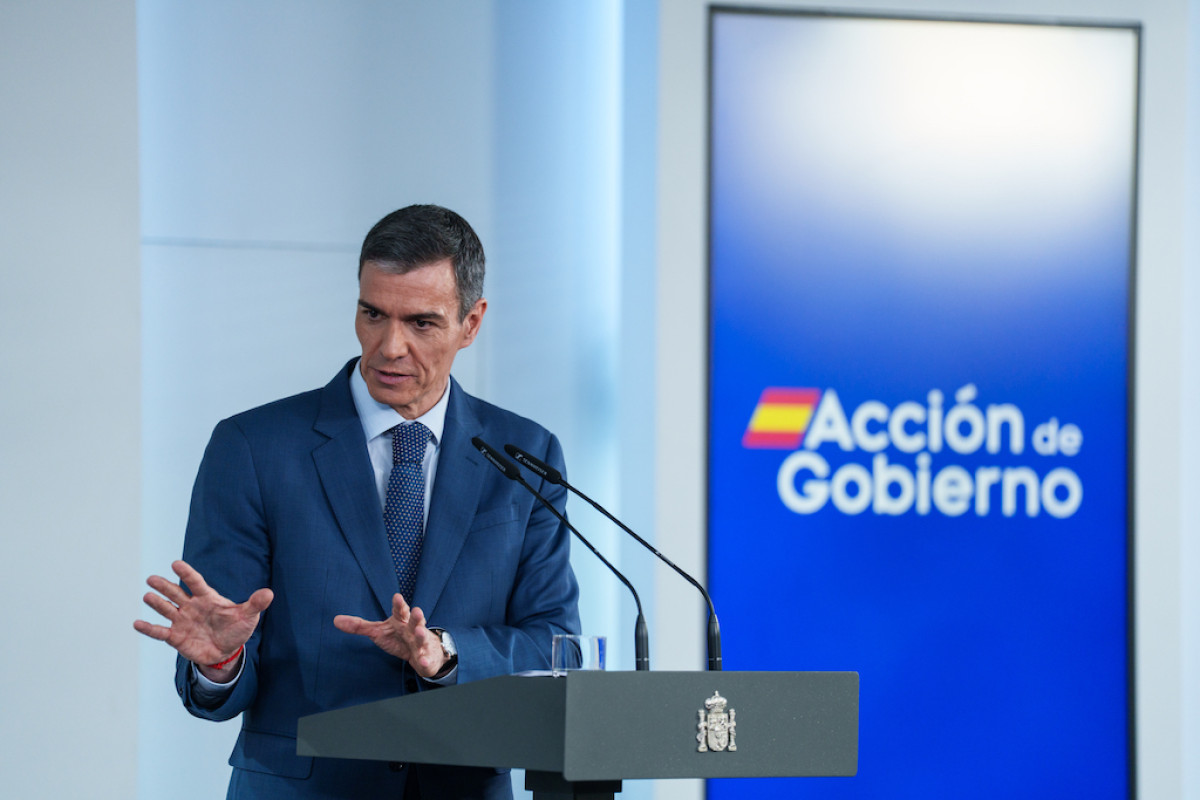
As the president, Pedro Sánchez, said, the only lasting formula to short-circuit the rise in prices is the immediate end of the war. But it is also about continuing to advance in increasing renewable generation and reducing the fuels for which neither Spain nor Europe possess the necessary raw materials.
