
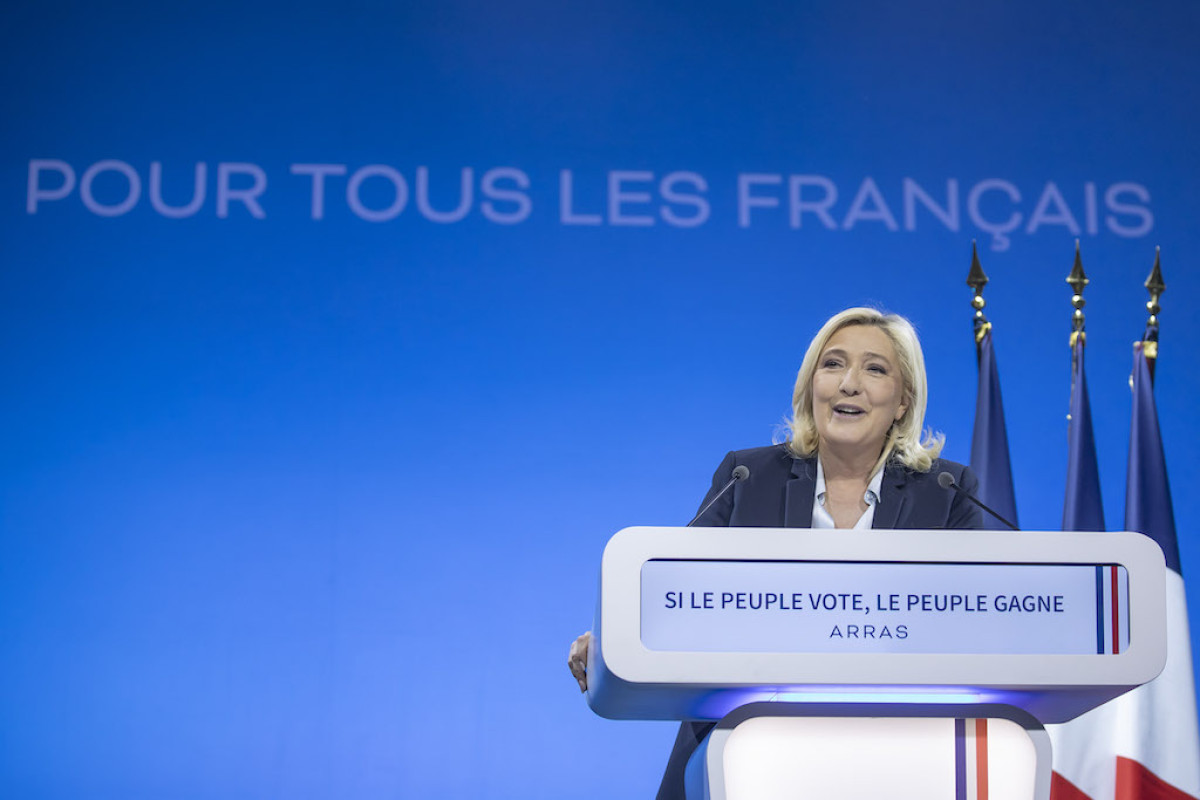
For the respectable men who lead the three largest countries in Western Europe, problems pile up upon problems. All preside over economies with stagnant living standards and waning global influence. In the United Kingdom and France, their far-right rivals are hungry for power (even the Alternative for Germany, or AfD, could win a couple of regional elections this year). And the United States, their principal ally, has just accused them of pushing Europe toward what it calls a civilizational erasure.
The three leaders also warn of catastrophe if populist-right parties win. Friedrich Merz, Germany’s chancellor, describes his government as the last chance for centrism. After his coalition lost the European elections, Emmanuel Macron, the president of France, spoke of the danger of civil war. This month, the British prime minister, Keir Starmer, told The Economist that Reform UK poses a challenge to “the very essence of who we are as a nation.”
“The doctrines of the far right contain many troubling elements, but talking in apocalyptic terms is doomed to fail”
The doctrines of the far right certainly contain many troubling elements. But speaking of them in apocalyptic terms is doomed to fail. For their own sake and the sake of their countries, conventional politicians and their supporters urgently need a different approach.
To begin with, all this catastrophe talk sounds like an attempt to distract from their own failures. In the United Kingdom, after 14 years of stagnation under the Conservatives, Sir Keir Starmer’s Labour government is spending more on social benefits and will implement record taxes, while rapid growth continues to elude them. In France, Macron’s plan to raise the retirement age has been withdrawn, while his fifth prime minister in three years is trying to pass a budget in the National Assembly. In Germany, Merz’s plan for an “autumn of reforms” fizzled out. If Europe’s fate is at stake, why don’t their leaders do more?
Moreover, their threats are not credible. Some far-right governments are dangerous; others aren’t. Giorgia Meloni has governed Italy in a way that’s very much like a conventional politician. Reform UK councillors in Britain have been fairly ordinary so far. It’s true that Viktor Orbán’s party captured and exploited Hungary’s institutions, but it could be ousted soon. That does not look like the end of democracy.
The apocalyptic style of European politics
It’s no surprise that calamity predictions aren’t landing. As the populists’ strength in polls shows, a large swath of European voters simply doesn’t believe what they are told. Meanwhile, the elites, aware of the turning of power, are drawing closer to the populists they once rejected. Jordan Bardella, of the National Rally, has quietly met with French business leaders. British Conservative politicians are crossing over to Reform, lending Nigel Farage much-needed legislative and ministerial experience. Only in Germany does the traditional bloc bar cooperation with the AfD. Its deputies, the second-largest bloc in parliament, even have the vice-presidencies of the Bundestag off-limits.
“When traditional politicians warn that populism will wreck their vision of what Europe should be, they embolden voters desperate to shake up the system”
All of this helps explain why demonization as a strategy backfires. Traditional politicians claim to defend tolerance and the working class, but when they brand a large swath of the electorate as intolerant, they themselves appear intolerant and conceited. And when they warn that populism will ruin their vision of what Europe should be, they energize voters who are desperate to shake up the system.
If demonization fails, what is the alternative? The answer begins with recognizing the impatience for change that the radical right channels so effectively. The next step is to examine how far populists can actually pull Europe from its complacency. An accord could improve poor policies if the populists are willing to change them; and if they refuse, it exposes their mistakes.
The most promising populist project is the economic one. When National Rally, Reform, and the AfD speak to business leaders, they focus on deregulation at both the national level and, in France and Germany’s case, at Brussels. They claim to want a smaller government and lower taxes. They appeal to the power of technology. And they complain that the state penalizes initiative and risk while overspending on social benefits.
All that is welcome, but it is only half the story. For the United Kingdom, France, and Germany, European economic integration remains the clearest source of growth. Yet the populists are on a collision course with the European Union, which would degrade the single market and destroy growth. Elon Musk’s Dogecoin fiasco shows how hard it is to shrink the state effectively. Bardella wants a wealth tax and opposed raising the retirement age. After criticism of grandiose spending promises, Farage now promises more realistic budgeting, but the details remain vague.
In other respects, the populists cling to discontent but offer nonsensical solutions. Many Europeans worry about immigration, fearing it will strain public services and alter national cultures. But the populists—and the warnings from the United States—are out of date: legal immigration has already peaked and, aside from the United Kingdom, illegal immigration into Europe is half of what it was in 2023. Moreover, the populists are cruel. Speaking of mass deportations or using rhetoric intended to make immigrants feel despised is xenophobic.
“If traditional politicians demonize populists loudly, they may feel better, but they will not help their countries”
Most Europeans do not worry about geopolitics, but they should. At a moment when the United States is increasingly unwilling to lead Europe’s collective defense, populists echo Donald Trump’s dangerous idea that the continent will be safer if it is less united and if each state pursues its own national interests. They also reveal a shortsighted weakness toward autocrats in Russia and China. Vladimir Putin must be egging them on.
National elections are seventeen months away in France, scheduled for March 2029 in Germany and as late as August 2029 in the United Kingdom. A lot can change in that time. If traditional politicians keep demonizing the populists so loudly, they may feel better, but they will not be helping their countries. They would do better to bring those waiting governments under democratic scrutiny and give them the scrutiny they deserve.
