
Carla Tavares is one of the voices that will most directly take part in negotiating the next multiannual financial framework. The Portuguese Socialist MEP and co-rapporteur of the European Parliament for the EU budget has on the table one of the legislature’s most delicate discussions: how to finance a Europe that aims to boost competitiveness, security, and strategic autonomy without draining traditional policies such as cohesion, agriculture, or the European Social Fund. This interview complements the one with the other MFF rapporteur in the European Parliament, the popular Siegfried Mureșan.
When the Commission’s proposal arrived, the Parliament did not hesitate to criticize it. Tavares explained to me that the problem lies both in the size of the budget and in the political architecture that underpins it: a significant portion of the funds would remain unallocated and could be distributed over the seven years of the framework at the Commission’s discretion. In the Parliament’s view, that flexibility shifts power from the budgetary authority to the executive and leaves too little room for citizens, municipalities, and regions.
The fundamental disagreement runs through almost all the major European portfolios. In the discussion appear new own resources, common debt, the Common Agricultural Policy, the role of regions, and the debate between cohesion and competitiveness. Tavares rejects that false opposition and argues that both must advance together. The negotiation also comes with an electoral calendar heavily loaded in several member states and a more fragmented European Parliament. The outcome will not only decide how much money the EU will have, but what political capacity it retains to act.
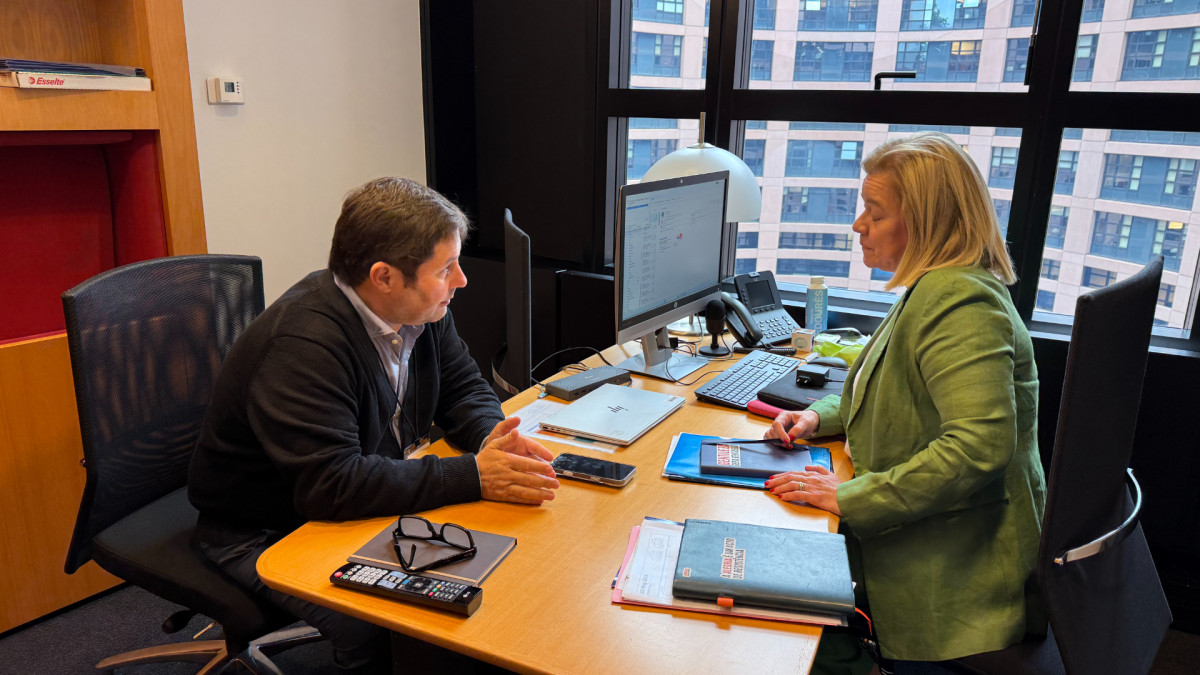
Marc López Plana talks with Carla Tavares about the negotiation of the next European budget. Photo: Agenda Pública
What is the European Parliament’s role and its initial impressions of the multiannual financial framework proposal received from the European Commission?
We received the Commission’s proposal in July 2025, and the Parliament’s initial reaction was very critical for several reasons.
First, the overall size of the budget is a major concern. The Commission proposed a budget equivalent to 1.15% of the EU’s GNI, plus an additional 0.11% tied to the repayment of NextGenerationEU debt. In practice, it sits roughly at the same level as the current multiannual financial framework.
At the same time, the proposal does not adequately respond to the needs of the outermost regions, which are extremely important for countries like Spain, Portugal, and France. The Commission also merged the Common Agricultural Policy and cohesion policy, reduced the European Social Fund, and, in our view, did not provide sufficient resources for new priorities such as competitiveness, security, and defense.
Another key issue for Parliament is the role of citizens, municipalities, and regions. In the Commission’s proposal, that dimension is largely absent.
“We agree that flexibility is necessary, but the flexibility proposed by the Commission is, essentially, flexibility for the Commission itself.”
We agree that flexibility is necessary, but the flexibility proposed by the Commission is, essentially, flexibility for the Commission itself. Around 25% of the funds remain unallocated and can be distributed over the seven-year period at the Commission’s discretion. The Parliament does not believe this is the right starting point for the next multiannual financial framework.
What we see in the proposal is, essentially, an architecture similar to that of the Recovery and Resilience Facility. The European Court of Auditors itself has criticized several aspects of that model.
That is why the Parliament began working internally to build a broad majority and prepare for negotiations. Over the past nine months, we have worked closely with all relevant committees and with pro-European political groups, in particular with The Greens and Renew Europe, whose alternative rapporteurs played an important role.
Last month we first voted in the Budget Committee in Brussels, and then in the Plenary in Strasbourg.
The Parliament’s proposal introduces several important changes. First, regarding the overall size of the budget, we propose increasing it to 1.27% of the EU’s GNI, in addition to the NextGenerationEU repayments. This would mean roughly €169 billion in additional funds. We distribute this increase across headings 1, 2 and 3, without transferring resources from one heading to another.
We also propose strengthening the Parliament’s role as budgetary authority and democratic oversight, while reinforcing the role of citizens and local actors.
Our proposal includes increases for cohesion policy, agriculture, the European Social Fund, and the Competitiveness Fund. We also propose strengthening programs such as LIFE and EU4Health, with around €10 billion more for health policy. The Commission’s proposal also includes new own resources, and this is now one of the central debates. Today, for example, the Parliament is debating in plenary about online gambling taxation.
The basic reality is simple: it is impossible to do more with less. Europe faces new challenges, and Parliament considers this the key issue at this stage.
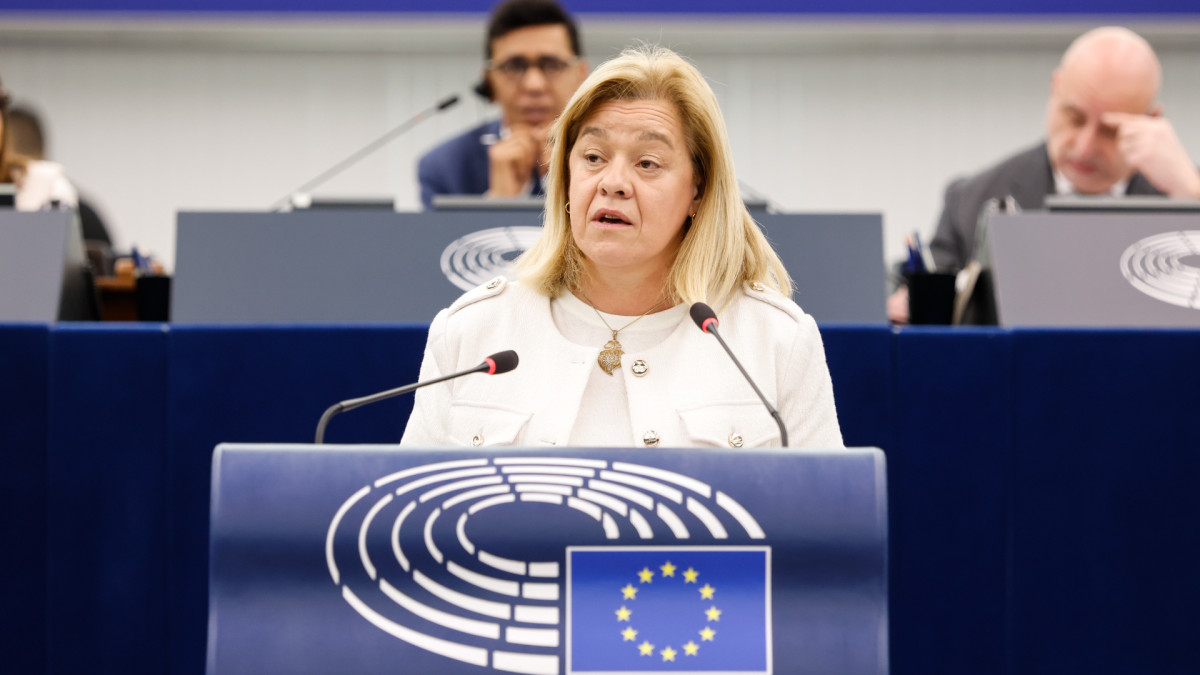
Tavares defends in the European Parliament the need to strengthen the Union’s own resources. Photo: European Parliament
What about common debt? Recently, Friedrich Merz argued that a permanent mechanism for common European debt is impossible. Could common debt continue to be a means to expand the EU’s financial capacity?
The Parliament’s position leaves room for common debt instruments, especially in areas such as security and defense. However, our priority is to push first the debate on new own resources. Before moving toward more debt, we must seriously address the revenue side.
The Commission’s proposal already includes several ideas in this area, and Parliament believes the Council should reopen the debate on own resources. We know it has been politically difficult since 2020, but it is inevitable.
The Parliament has put forward several new ideas, including digital taxes on platforms and online companies, taxes linked to online gambling, cryptoassets, and mechanisms connected to revenues from the Carbon Border Adjustment Mechanism and the Emissions Trading System.
“Common debt must remain an option. But before that we must exhaust the possibilities around new own resources”
The Commission also proposed taxes linked to cars and tobacco, although we know they will face strong resistance in the Council because unanimity is required. So yes, the Parliament believes common debt should remain an option. But before that we must exhaust the possibilities around new own resources.
Is there broad agreement among the pro-European majority — S&D, PPE, Renew, and The Greens — on these new resources?
Yes. If you look at the voting results of the past months, it is clear that both rapporteurs worked closely with The Greens and Renew Europe throughout the process. Among these four pro-European political groups there is broad consensus on the need for new own resources.
We all understand that without them it will be impossible to adequately finance competitiveness, security, and defense, while protecting traditional policies such as cohesion and the European Social Fund. Otherwise, there is a risk that those traditional policies suffer cuts.
The Portuguese MEP intervenes in the budget debate on cohesion, competitiveness and agriculture. Photo: European Parliament
There is currently a major debate in Brussels: cohesion or competitiveness?
In fact, cohesion and competitiveness are two sides of the same coin. I was mayor for many years, and I firmly believe there can be no cohesion without competitiveness, nor competitiveness without cohesion.
Of course, cohesion policy must evolve and modernize to respond to new challenges. But eliminating it or weakening it would be a serious mistake.
In many countries, increases in competitiveness were only possible because cohesion policies created the conditions for it. Germany is a clear example.
Therefore, for Parliament, the idea of pitting cohesion against competitiveness simply makes no sense.
And what about the future of the Common Agricultural Policy?
The Parliament is firmly committed to protecting agriculture and the CAP in the next multiannual financial framework. At the same time, agriculture must be more closely connected with competitiveness and food security. Today, food security has become a strategic issue for all Member States.
That means modernizing farming and giving farmers the tools they need to adapt. Europe must reduce its dependencies on external players, including the United States and others. Strategic autonomy also implies food autonomy.
That is why the Parliament proposes increasing support for agriculture in the next budget. The letter sent in the summer by the leaders of the PPE, S&D, Renew, and The Greens to President von der Leyen was very important in this regard, especially with regard to national and regional plans. The Commission’s response on agriculture was significant, particularly after the debates around Mercosur.
RELATED ARTICLES
Social Democrat MEP Carla Tavares welcomes Marc López Plana to Strasbourg.Agenda Pública
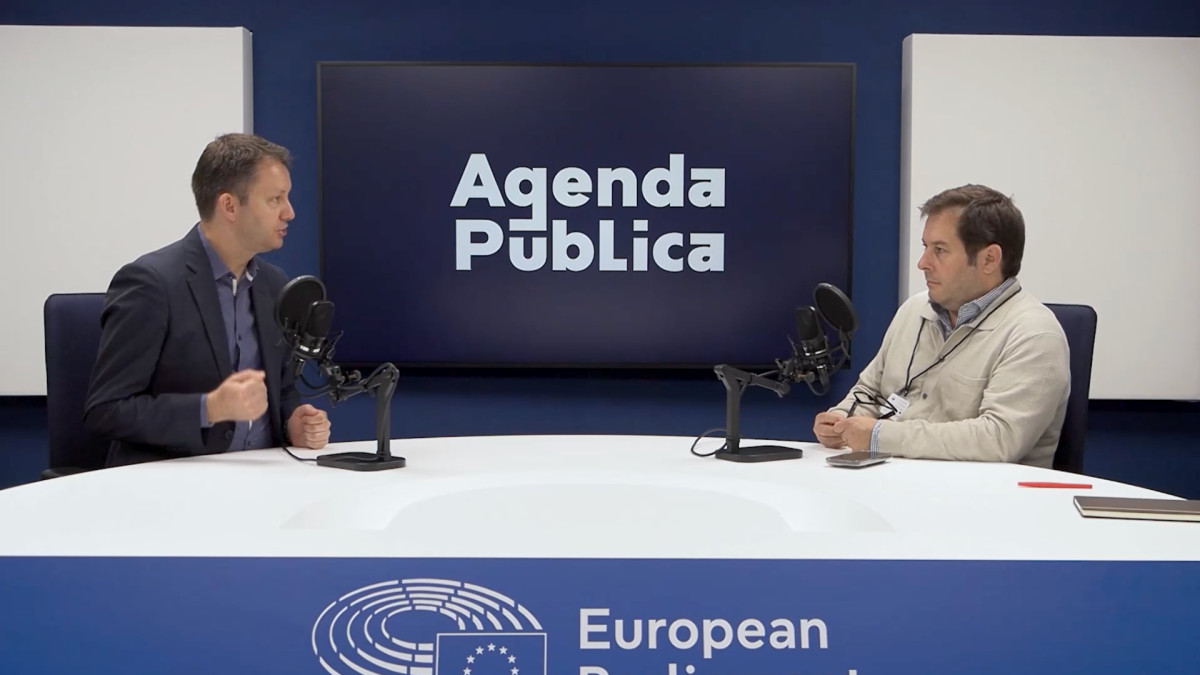
The Popular MEP and the director and editor of ‘Agenda Pública’ talk in Strasbourg.Agenda Pública
Another important issue is the role of regions in managing EU funds. Countries like Spain, Germany, Italy, and Portugal are concerned about a possible renationalization of the budget following the model of the Recovery and Resilience Mechanism.
The Parliament’s position on this issue is extremely clear. Interestingly, within the REGI Committee there was almost complete unanimity—from the radical right to the radical left—on the importance of regions.
Over the past months, the Parliament worked very closely with the Committee of the Regions, which helped build a solid institutional position. Municipalities and regional authorities across Europe were deeply involved.
For Parliament, it will be very difficult to give its approval to the next multiannual financial framework if the role of regions and municipalities is not clearly guaranteed.
“We do not support replicating the Governance model of the Recovery and Resilience Mechanism”
We do not support replicating the Governance model of the Recovery and Resilience Mechanism. The European Court of Auditors has repeatedly criticized that model, particularly the lack of territorial proximity and local participation.
As a former mayor, I worked extensively with both the multiannual financial framework and the Recovery and Resilience Mechanism. The mechanism was essential during the crisis, but its implementation often excluded local and regional authorities. And now, when we analyze execution rates, it is clear that something did not work properly.
In my country, involving municipalities and regions from the start would have significantly improved implementation.
There will be important elections in 2027 in Europe: Spain, France, Italy, Poland. Does that worry you that this could complicate the negotiations?
Yes. The Parliament is highly concerned about the electoral calendar. Elections always complicate negotiations because governments become more cautious and political uncertainty increases.
That is why Parliament wants negotiations to begin as early as possible. We are now awaiting the Council’s negotiation box with the figures, which we expect around June.
There is still a lot of informal work to be done before formal negotiations begin, but time is running out.
The combination of elections and a new multiannual financial framework architecture makes the process even tougher.
More generally, the relations between the PPE and S&D seem more difficult this term.
In the multiannual financial framework, cooperation has actually been very good. Working with Siegfried Mureșan, from the PPE, has not always been easy internally for either of us, but we both understand the importance of defending Europe’s general interests.
In other committees, the situation can be more complicated. In some dossiers, the PPE is clearly closer to the radical right than to the S&D.
“We need to constantly build bridges and seek consensus among pro-European forces”
But the Parliament increasingly reflects the political fragmentation we see in our Member States. In Portugal, for example, politics has shifted dramatically in recent years. That means we need to keep building bridges and seek consensus among pro-European forces. Sometimes it is hard and sometimes compromises are imperfect, but without majorities nothing is possible.
The regional elections in Germany at the end of this year could also significantly affect Merz and the CDU, with consequences for the entire EU.
Absolutely. The political situation inside the Parliament is becoming increasingly complex.
But personalities matter as well. Working with moderate colleagues makes a big difference.
Of course there are tensions and disagreements, but in the end we continue to work together because we understand what is at stake for Europe.
Thank you very much.
