
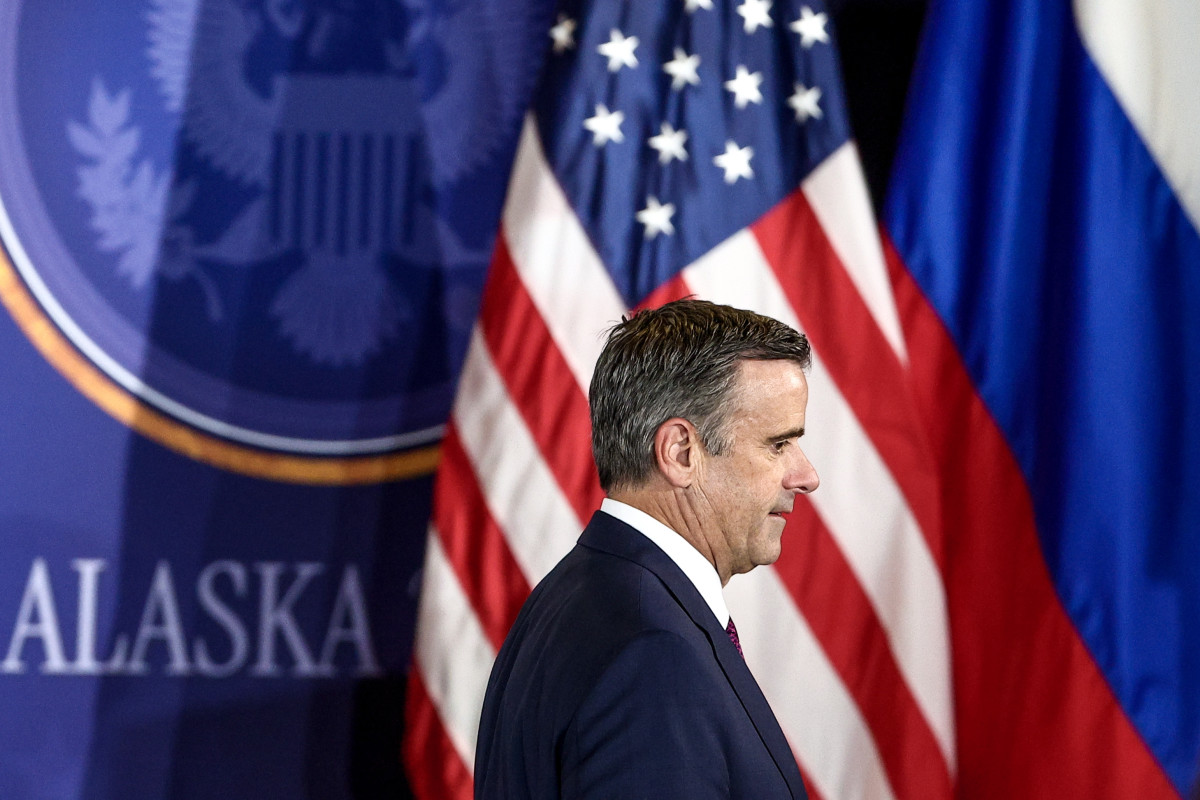
The unannounced visit by CIA Director John Ratcliffe to Moscow on August 25 drew headlines. The threat that seemed to have prompted the trip did not. According to later U.S. reporting, Ratcliffe used the journey in part to caution Moscow against military action on NATO territory. The significance of the visit does not lie in revealing a new danger, but in bringing into the public diplomatic arena a scenario that had been visible for months in Russian elite signals, propaganda, and policy choices.
Only a year earlier, most Western public assessments treated direct Russian military escalation against Europe as a mid-term risk. NATO Secretary General Mark Rutte spoke of a three-to-seven-year horizon in which Russia could become capable of striking Alliance territory if NATO failed to bolster its defenses. By spring 2026, that timeline had begun to shrink. The risk moved from years to months, not because Russia had grown stronger, but because the political logic inside Russia had become more dangerous.
“The risk moved from years to months, not because Russia had become stronger, but because the political logic inside Russia had become more dangerous”
Madrid-based, Russia-focused think tank EK Strategic Communications Center began charting this shift at least by April. A report published on April 25 found that Russia’s security bloc was not merely sharpening anti-NATO rhetoric but was openly advocating an expansion of the war beyond Ukraine, pairing accusations of imminent European aggression with concrete provocations in the Baltic region. On May 7, another report documented the next phase: Kremlin propaganda was preparing domestic opinion for possible escalation beyond Ukraine while preemptively laying responsibility for it on the West.
At the same time, an intra-elite struggle started to take shape between what EK Stratcom described as the “party of strategic pause” and the “party of permanent war.” The former included segments of the economic and civilian establishment and figures such as Sergei Chemezov and Oleg Deripaska. Their position was neither liberal nor humanitarian. It was pragmatic: a ceasefire or strategic pause could preserve economic and administrative stability and give the regime room to maneuver. The opposing camp, rooted in the security and political establishment, increasingly treated war not as a temporary instrument but as a guiding principle of the state.
By late summer, the balance seemed to tilt away from the supporters of a pause. The Kremlin had tested narratives that could frame a ceasefire as a victory, yet the trajectory that followed pointed elsewhere: preparations for possible mobilization, deeper securitization, harsher anti-Western rhetoric, and the systematic normalization of prolonged confrontation.
This alters the central question. It is no longer simply about how the Kremlin intends to end the war. It is whether Putin’s regime can afford not to.
Can Putin afford to end the war?
Russia is not teetering on the brink of economic collapse. The issue lies elsewhere. The wartime economy that helped sustain employment, military production, and certain household incomes is increasingly becoming a trap. The Central Bank trimmed its 2026 growth forecast to 0–1 percent while keeping the key rate at 14 percent. Ukrainian strikes on refineries and other infrastructure have also made the costs of war more immediate within Russia, contributing to fuel shortages and upward pressure on prices.
“The wartime economy that helped sustain employment, military production, and selected household incomes is increasingly becoming a trap”
The human cost of the war is also rising. Contract soldiers require ever larger regional stipends while the state expands the legal, digital, and administrative framework that could support another mobilization. EK Stratcom’s August assessment noted a tightening flow of contract recruits, rising recruitment costs, and accelerated legal groundwork for a potentially covert post-election mobilization scenario, though no final decision had been made.
Meanwhile, public sentiment is moving in the opposite direction. In February, a record 67 percent of Russians surveyed by the independent Levada Center said the country should pursue peace negotiations; only 24 percent favored continuing military action. By July, about two-thirds still backed negotiations.
For the Kremlin, that is precisely the challenge. Peace would lay bare every issue that the war has allowed the regime to mask with an external foe: stagnation, deteriorating living standards, budgetary pressures, casualties, repression, and the absence of a credible future. As long as war continues, the regime maintains a universal explanation for nearly everything that goes wrong, while the tools of repression, censorship, and other instruments of authoritarian control remain broadly accessible.
“As long as war continues, the regime retains a universal explanation for almost everything that goes wrong”
The Kremlin therefore no longer necessarily needs to win the war. It increasingly needs the war not to end. Ukraine, meanwhile, is becoming less effective at generating a fresh rally-around-the-flag effect, even among parts of the pro-war milieu. Russians show little appetite to fight themselves, while polling continues to show a persistent preference for negotiations.
A new cycle of political mobilization, and of pressuring Russians to accept continued aggressive policy without resistance, requires a different kind of threat. Not merely: the “special military operation” continues. Rather: Russia is no longer fighting Ukraine alone; NATO has entered the war against Russia.
The risk of limited escalation
This is where the Kremlin’s domestic logic ties directly to the risk of military escalation in Europe. Putin does not need to believe Russia can defeat NATO. He only needs to believe that NATO will hesitate to respond adequately.
“Putin does not need to believe Russia can defeat NATO. He only needs to believe that NATO will hesitate to respond adequately”
The most dangerous scenario, therefore, is not a Russian push toward Warsaw or Berlin, where Moscow would risk a decisive military response. It is a limited escalation that the Kremlin thinks it can keep below the threshold of a full Alliance response. The aim would be to probe collective defense, deepen fear and division across Europe, and revive siege psychology at home. The Kremlin has increasingly placed itself in a position where perpetual war becomes a factor in the regime’s survival.
The question Moscow would press European governments to answer is straightforward: are you truly prepared to enter a major war with a nuclear-armed power over a limited Russian action involving a Baltic state, for example?
The information environment is already being prepared for precisely that question. In July, EK Stratcom documented a coordinated escalation in rhetoric among Kremlin officials, security figures, propagandists, and pro-war channels portraying war with Europe as increasingly inevitable. In August, Kremlin-connected foreign information manipulation and interference, or FIMI, networks in Germany, Poland, and the Baltic states were building a pre-emptive justification model: Ukraine was recast as the source of the threat, European defense preparations as signs of aggression, and possible future Russian action as a forced response.
“In other words, audiences are being told before any potential incident why Russia should not be blamed for what happens next”
In other words, audiences are being told before any potential incident why Russia should not be blamed for what happens next. Russia’s hybrid war against Europe is already underway through sabotage, cyber operations, FIMI, political interference, and coercive pressure. European authorities have linked Russia to drone incursions, sabotage, cyberattacks, and other hostile activities across the continent. The question is no longer whether the Kremlin would have to start a completely new conflict with NATO. It remains a matter of when Moscow decides to turn a segment of the confrontation that already exists into open warfare.
A year ago, that risk was discussed mainly in terms of years. Since spring, the relevant horizon has increasingly been measured in months.
The CIA director’s trip to Moscow underscored that the iceberg visible since at least April in Russian elite signals, propaganda, and domestic regime dynamics has now surfaced in public policy.
The gravest mistake today would be to keep focusing on 2029 or 2030 while the threat is already pressing at Europe’s doorstep. Europe can no longer plan defense for some undefined future point. The choice is to prepare now, or risk discovering later that the opportunity to do so has already passed.
