
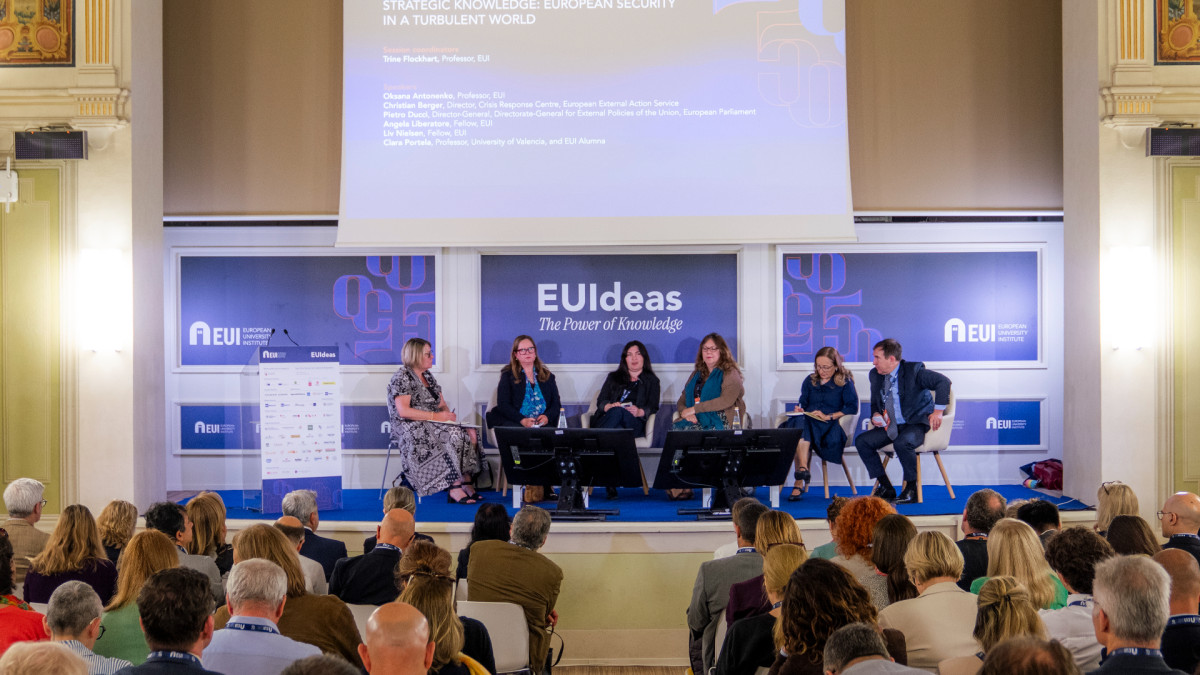
Clara Portela was the sole academic representative from a Spanish university at the 50th anniversary of the European University Institute. The professor at the University of Valencia, who has extensive experience in sanctions studies, participated in a panel ahead of our interview. In that debate, European security was addressed from several domains, disciplines, and institutions. Once again, the alliance between academia and politics sought to reinforce itself on a topic and at a moment that critically calls for this partnership.
Professor Portela has shared with Agenda Pública her panel intervention, in which she discusses the role of sanctions in scientific cooperation, and it is available at the end of this interview. In our conversation, approached with a critical and measured reading, we discuss sanctions from different perspectives. On one hand, she notes that “we must ask ourselves to what extent we should censor researchers whose analysis does not align with the official version”. On the other hand, she delves into a much more geopolitical reading of instruments such as the EU’s anti-coercion mechanism. About these and other tools she explains that “they are conceived as last-resort options, when everything else has failed”.
Finally, we also spoke about Israel. Portela is aware that public opinion is inflamed because it has had to witness “situations as unacceptable as famine among civilians”. And without denying the truth of the above, she asks us to reflect: “When imposing sanctions, we must also ask ourselves what we aim to achieve and what real effect they will have on the situation”. Her arguments, as interesting as they are well articulated, show that, in reality, any policy must be accompanied by studies, careful calculations and deliberations conducted with the utmost scientific rigor.
Clara Portela, specialist in International Relations. Photo: IUE
I wanted to ask you about how to frame sanctions in a way that does not give up on a strategy from both an academic and security standpoint. We talk a lot about security, but the link to academia may be overlooked.
Rather than being overlooked, I would say there has not been much reflection, neither from institutions nor, much less, from the public sphere, on what sacrifices we must make and what benefits we gain when we impose sanctions that affect the academic sphere and scientific cooperation.
Posing this question is especially urgent because, in the past, academic and scientific cooperation was affected in a more indirect way. With the countries under sanctions there was less cooperation, funding was reduced, and a signal was sent to those States that did not respect international norms: that conduct carried a cost in their relationship with the European Union.
“Within the framework of the European Union, we are including on blacklists universities, laboratories, research centers and scientists, even social scientists”
But today we find that barriers to academic and scientific cooperation are no longer just indirect consequences of sanctions. In the past it could be harder for scientists to move from one country to another, there could be less funding or financial sanctions that hindered payments. Now, within the European Union, we are including on blacklists universities, laboratories, research centers and scientists, even social scientists.
At first, the scientists who appeared on these lists were those involved in weapons of mass destruction development programs; for example, those who contributed to producing chemical weapons in Syria, or scientists linked to Iran’s nuclear program. Ten or fifteen years ago it was even prohibited for Iranian students to study nuclear physics in Europe.
That profile of scientist on a blacklist may be less surprising. But today we have universities sanctioned for their collaboration with military authorities and also social scientists accused of participating in narratives linked to disinformation. There we enter a gray zone: where does security motivation end and where does censorship of freedom of expression begin.
Because participating in a narrative that does not align with the European Union’s narrative, or even runs counter to it, can worry European institutions. But we must ask ourselves to what extent we should censor researchers whose analysis does not align with the official version. Even within the European Union there are researchers and authors who may not agree completely with the official line. The question is where exactly the boundary lies and how far we should go to curb or prevent the spread of narratives that do not fit that line.
Opening the focus a bit more, there is a very current issue: trade. Looking at the United States and the anti-coercion mechanism, how do you evaluate the development of this instrument by the European Union?
One thing is the design of the instrument and another its use. The European Union is always interested in ensuring that its action is fully in accordance with the law and the rule of law. That is why it wants to have mechanisms that allow it to defend itself.
A defense that is not based on instruments provided by European legislation and compatible with the treaties is not credible. The European Union has relatively little room for improvisation and, above all, when faced with action that is not completely legal, it does not execute it.
The first thing it considers before reacting is whether that reaction is compatible with its own legislation and with European and international treaties. If it cannot find that compatibility, it does not act. Therefore, for an organization of these characteristics it is especially important to have finished, well-regulated and well-crafted instruments. In their absence, it will not respond forcefully.
The existence of the anti-coercion instrument lends credibility to the possibility that the European Union will react. However, just because the instrument is ready and well designed does not guarantee that it will be used. The general attitude is to use these tools only in cases of necessity or even as a last resort. They are conceived as last-resort options, when everything else has failed.
“Using unilateral mechanisms like the anti-coercion instrument takes the European Union into less familiar territory that carries a risk of escalation”
Moreover, the European Union was very used to operating through the World Trade Organization. It was its preferred mechanism, the space it mastered best and where it felt most comfortable. Seeing it rendered less effective, even partially, generates a certain mistrust. Using unilateral mechanisms like the anti-coercion instrument takes the European Union into less familiar territory that carries a risk of escalation. A risk that, in general, it would prefer not to confront.
Continuing on this line, there is a lot of talk about whether unanimity in foreign policy remains useful or whether new formulas could be explored. How would sanctions be affected by a scenario without unanimity?
Although activating the anti-coercion instrument does not require unanimity, in the realm of foreign and security policy sanctions this proposal has been on the table for several years and carries significant advantages and drawbacks.
The advantage noted by those who defend moving to qualified majority voting is that it would transform the dynamics within the Council. Everyone would have to negotiate to try to build a blocking minority or to ensure their proposals go forward. It would also deprive blocking power from countries that have been highly obstructive, such as Hungary, though that situation now seems to be resolving.
Romania, Slovakia or the Czech Republic are also mentioned as potential change points.
Yes. At any moment there could be a series of candidates to adopt those same tactics, capable of causing real headaches and hindering the development of the common foreign and security policy. There could appear Slovakia or the Czech Republic, with populist-leaning governments likely to follow Orbán’s steps in foreign policy.
Even Cyprus, which does not belong to that bloc of populist governments, has shown few scruples about blocking certain foreign policy initiatives in exchange for attention to specifically Cypriot matters. As long as unanimity exists, that risk of blockage will persist.
“The advantage of all states agreeing every time sanctions are imposed is that they are truly willing to implement them”
But there is another side. The advantage of all states agreeing every time sanctions are imposed is that they are truly willing to implement them and to exert the effort to enforce them. If in the future the European Union imposed sanctions against third countries against the will of some member states, we could find ourselves with a Trojan horse inside the European Union, trying to undermine the implementation of those sanctions.
The advantage of the current system is that, when a sanctions regime is set in motion, including each of its designations, all states stand behind that decision or, at the very least, none has a serious problem with it.
RELATED ARTICLES
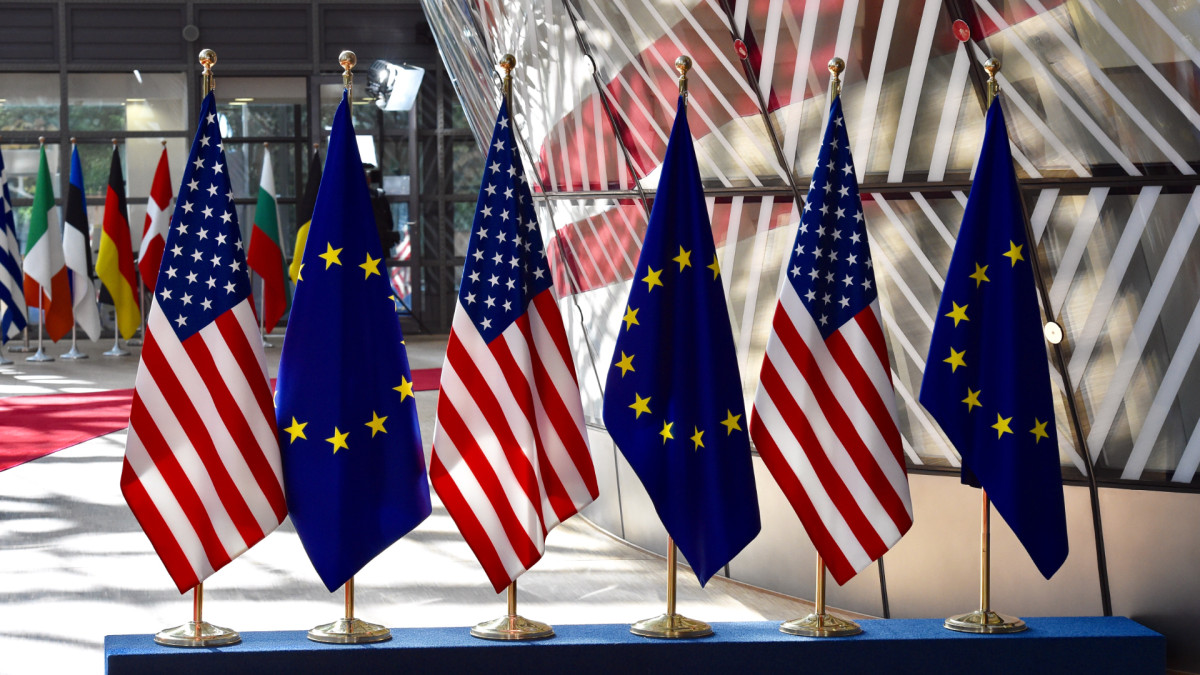
The relationship between the Twenty-Seven and the White House is going through tumultuous moments.© European Union – Source: Council of the EU
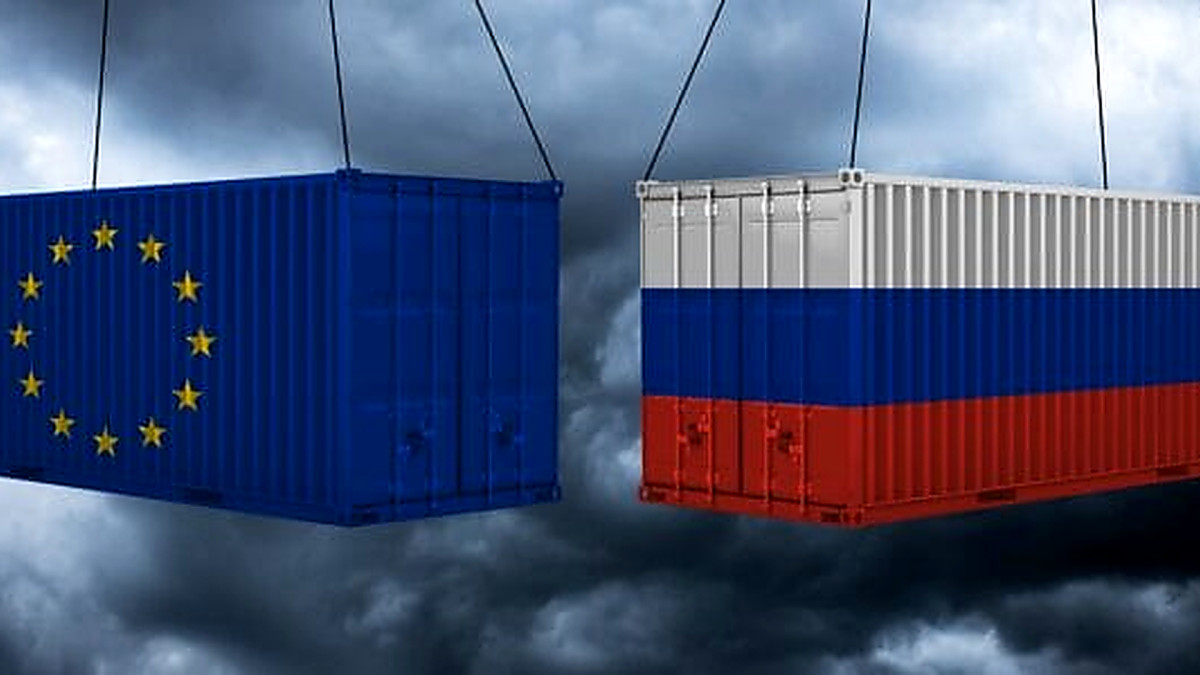
The European Union and Russia worsened their trade relationship after Russia’s invasion of Ukraine in 2022.ECIPE
The implementation of sanctions in controversial cases or during moments of crisis can be even more complex. Do you argue that unanimity, in these cases, makes even more sense?
Undoubtedly. In any case, Russia-related sanctions have revealed implementation problems, but not so much in the oil sector. In that case, what was imposed—together with the United States—was a price cap. In other words, Russian oil could continue to be imported, but at a limited price.
This has given rise to the so-called ghost fleet or shadow fleet, which is extremely dangerous because it consists of ships that are effectively decommissioned, with insufficient insurance. If they have an accident, no one covers it and they could cause enormous environmental pollution.
Technically, the price cap can be considered a sanction, but it is also an innovation. It is not part of the usual sanctions toolkit. It was a creative solution to prevent the oil market from collapsing and, at the same time, to stop Russia from continuing to fill state coffers with crude sales. It is a compromise between a total ban and unrestricted permission.
There are very critical voices, especially in Spain, about not having imposed sanctions or about the Association Agreement with Israel remaining in force. What is your opinion?
Suspending the Association Agreement requires collective consent; Spain, as an individual country, cannot trigger that possibility on its own. There are indeed some sanction options available to Spain, though we have seen that they are very problematic. An attempt was made to end arms trade with Israel, and it was found that beyond arms trade there is cooperation in the military industry and in armaments production that greatly complicates the implementation of that measure.
In any case, we must also ask what kind of influence these Spanish sanctions could have on the situation in Israel. It is hard to imagine the current government or the Israeli population altering their behavior because Spain stops collaborating with Israel in certain areas.
The movement in favor of sanctions is driven by the unease created in public opinion by months of witnessing military actions in Gaza against civilians and impediments to humanitarian aid, which have produced situations as unacceptable as famine among civilians. But when imposing sanctions, we must also ask what we intend to achieve and what real effect they will have on the situation.
“If the influence of the measures we adopt is weak or virtually nil in improving the situation of the Gazan population, it is worth questioning the necessity or usefulness of imposing those sanctions”
If the influence of the measures we adopt is weak or virtually nil in improving the situation of the Gazan population, one should question the necessity or usefulness of imposing those sanctions instead of seeking other forms of influence that do not involve canceling cooperation in specific areas.
During the panel I also spoke about the negative effects of canceling academic cooperation. It further isolates the population of the sanctioned country, makes it less exposed to other viewpoints, and further confines it to the narrative of those carrying out the actions we condemn.
A problematic aspect of some sanctions contemplated against Israel is that they would treat the entire population as if everyone supported the operations in Gaza. But there are dissenting voices, there are those who disagree. And those critical voices would also be penalized by the sanctions.
If we decide to impose some kind of sanction, we would need to ensure a differentiated approach. That is, to penalize only the actors responsible for the operations we condemn and not those who are not responsible or who, having positioned themselves critically toward those actions, have done so in a way that entails risks.
There are Israeli academics and segments of civil society opposed to these policies. They do not deserve to be doubly penalized: first inside their own society and then by external actors. From an academic and scientific standpoint, Israel is a state with capabilities even greater than ours.
Thank you very much.
Sanctions can have both direct and indirect effects on scientific and educational cooperation. In the past, indirect effects prevailed: reduced contact between scientific communities, lack of funding for joint projects, etc. However, today researchers, laboratories and universities named on the EU blacklist appear, and they are directly affected by these restrictions.
Should scientific and university cooperation proceed through the inclusion of these actors? It is important to bear in mind that this comes at a price.
When a scientific community is isolated, future elites lose in internationalization, as they are trained in an environment where they only know the government narrative. This also implies that the quality of their training suffers, and their exposure to the world beyond their state’s borders is reduced or eliminated.
However, as the EU, we need interlocutors educated everywhere, including sanctions-imposed countries, given that we tend to maintain a minimum level of cooperation, especially with developing countries.
On the other hand, sanctions in the scientific and educational sphere are not exempt from the problems posed by sanctions in any other field, such as trade or diplomacy:
Removing a scientific or educational context frees up space that can be occupied by another scientific-educational power. The actor who replaces us increases its influence while ours declines. And this actor who gains influence at the expense of the vacuum we leave behind does not have to align with our interests and values; on the contrary, it can be opposed to them.
As with any sanction, restrictions in the scientific-educational field are a “double-edged sword”; they harm the sender, albeit to a much lesser extent than the recipient. While they frustrate advances in research in the sanctioned country, they also prevent our scientists from operating, collaborating or exchanging findings with their counterparts in third countries, thereby interfering with the scientists’ overarching goal: their research agenda.
