
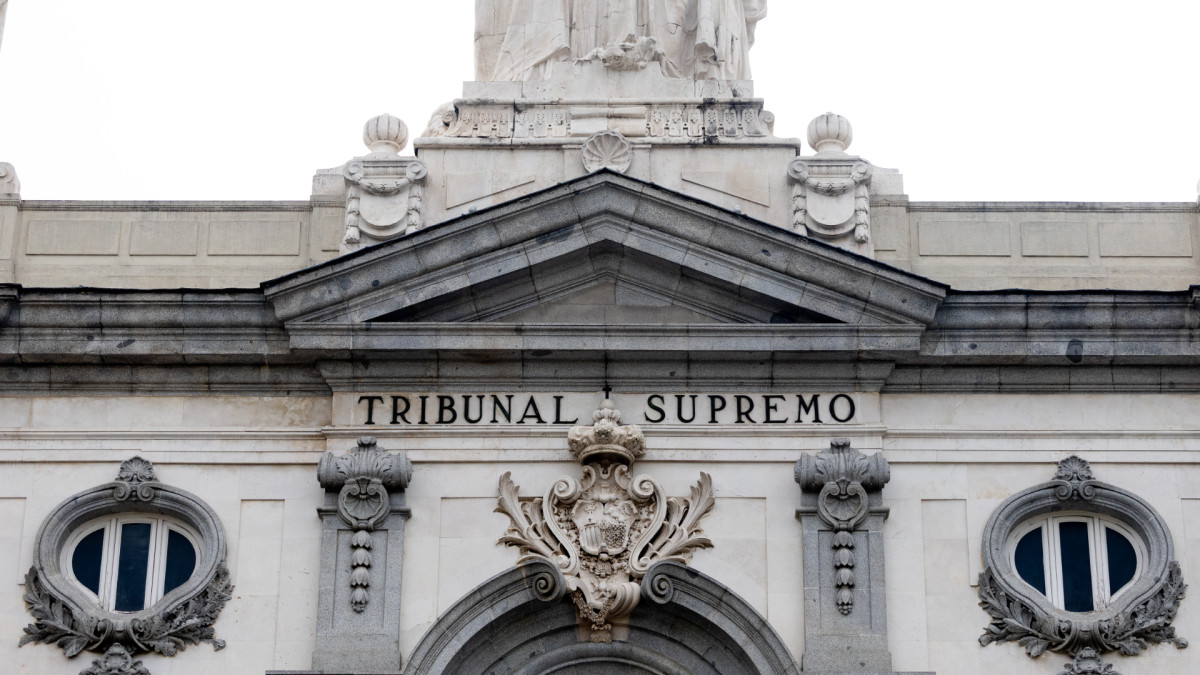
From the moment the Supreme Court issued in September the order adopting as a precautionary measure the prohibition of exercising the right to vote (Article 23 of the Constitution) to a group of Spaniards covered by the so-called “law of grandchildren,” some circumstances have changed, aggravating the restriction of rights then decreed. General elections have been called for November 29 and the Constitutional Court has dismissed the Ombudsman’s amparo as inadmissible, which sought to lift the effectiveness of the Supreme Court’s precautionary measure. These changes in context lead us to ask what protection can be obtained by those who retain their nationality, have the right to vote suspended and need an answer before the elections in order to be able to vote, since, in any case, the time to stand for candidacy (passive suffrage) ended on November 2 (without prejudice to any possible appeals in this regard).
The change in circumstances is not alien to the maintenance of precautionary measures, but the TS has already assessed that change, confirming, on October 12, the precautionary measures previously adopted. Although it might seem counterintuitive, the majority of the Chamber has not considered that the immediate electoral context requires any change in its reasoning on the proportionality of the restriction of the fundamental right, on the potential impairment of the public interest, or on any other circumstance, all while also assuming the lack of reliable data on the number of individuals individually affected by the measure. On the contrary, precisely the opening of the electoral process and its possible contamination reinforce the initial arguments of the Supreme Court.
“On the contrary, precisely the opening of the electoral process and its possible contamination reinforce the initial arguments of the Supreme Court”
But, despite the confirmation of positions, from a procedural standpoint, it seems that the scope of the suspension of rights remains open, and will remain so for an indeterminate period. Beyond whether such a conclusion can be drawn from the Constitutional Court’s order, which I will refer to shortly, on October 30, by means of a provision, the Supreme Court, in response to the applicants’ request, refused to extend the voting prohibition to the children and grandchildren who acquired nationality through the interpretive instruction of the “law of grandchildren” with residence in Spain, and at the same time opened a hearing on the request to extend that prohibition to the adult nationals who obtained Spanish citizenship after the acquisition of nationality by their parents in application of the law of grandchildren. In other words, the prohibition on exercising the right to vote could still extend to an indeterminate—but determinable—number of people.
This fact brings to the table the inconclusive, by nature, of the pieces of precautionary measures, which can be reviewed until a decision on the merits of the matter is taken. But what is consubstantial to the procedure for adopting provisional measures has become the procedural reason that has led the Constitutional Court to consider the lack of exhaustion or completion of the judicial process, of which the Supreme Court is aware, as a procedural obstacle justifying the inadmissibility of the amparo petition brought by the Ombudsman against the two precautionary orders, the September one and the confirming one of October 12. The Plenum of the Constitutional Court understood that the service to the affected parties, agreed by the Supreme Court after adopting and confirming the precautionary measures, could still obtain their modification if, once appearing, the interested parties requested the review of the measure. But, while procedurally this is true, the deadlines and the control of procedural deadlines that the Supreme Court holds make highly improbable that the Constitutional Court can rule again on the merits of this provisional issue before the general elections. And it seems unlikely that, after two coinciding resolutions, the Supreme Court will modify its arguments regarding the suspension of the right to vote of Spaniards registered in the Census Electoral de Residentes Ausentes (CERA), no matter how novel the arguments those registrants may raise in their hypothetical and future appeals, the final outcome of this procedural game is that the Constitutional Court, as the ultimate guarantor of the full exercise of the fundamental rights of citizenship, will not rule before the elections on the possibility that all the Spanish nationals not deprived of the right to vote by final judicial ruling can be electors (or eligible).
“The deadlines and the control of procedural deadlines held by the Supreme Court make it highly unlikely that the Constitutional Court can rule again before the general elections”
The Constitutional Court has played the card of extreme procedural rigidity and, although this is not new, it is the first time that such formalism is projected onto the possibility of electoral participation by a large number of citizens, and this within a framework of proceedings that, in its preliminary phase, are accompanied by a host of intense procedural doubts about the position of the Supreme Court. Put differently, the Constitutional Court has applied with rigor its own procedural rules and those relating to the standing of the Ombudsman, omitting that the Supreme Court has acted with extreme procedural flexibility when considering the admissibility of the appeal against the decision of the Central Electoral Board and at the same time assessing the concurrence of the elements necessary to adopt the precautionary measures suspending the exercise of the right to vote.
The Constitutional Court’s order (ATC) accepts that it is permissible to appeal precautionary decisions when they affect substantive fundamental rights and that delay can make the injury irreparable. But it considers that this exception does not prevent waiting for the outcome of the audience procedure opened before the Supreme Court. This procedure has now also included the proposal to extend the prohibition of suffrage to the adult children of those who obtained nationality as a result of applying the controversial instruction. The judges Campo and Sáez disagree in their separate opinion because the restoration against the first Supreme Court resolution was already resolved with the October 12 order, and a subsequent hearing is not a new appeal, but an additional procedural step, as would be the new element of assessment on the extension of the suspension. In other words, these judges consider that the subsidiarity of the amparo remedy, which is the characteristic of this type of procedural guarantee of the fundamental rights preserved by demanding the proper exhaustion of the prior judicial route, has already been guaranteed because the Supreme Court, the body of jurisdiction where the legal dispute is raised, has already had the opportunity to rule on the possible injury to rights and on the arguments of the parties in relation to that complaint. The possibility of modifying a precautionary measure due to subsequent circumstances does not erase the firmness of the resolution that confirmed it, and to understand the amparo petition against provisional measures in any other way would amount to effectively cancelling the possibility of appealing judicial decisions regarding provisional measures.
The Court seems to have confused subsidiarity of the amparo with the closing of the lower court proceedings, and in the realm of provisional measures, ordinary courts always have the opportunity to review and repair the rights initially violated. Provisional detention, for example, can be lifted if certain circumstances change before the trial, and from this it has never followed that the Constitutional Court does not admit amparo against preventive detention. In the case of the right to vote, the Supreme Court had already decided twice on the precautionary measures, the second with elections called. What effective capacity for redress does a subsequent hearing add whose resolution does not have a guaranteed date compatible with the electoral calendar? In my view, none.
“The Court seems to have confused subsidiarity of the amparo with the closing of the lower court proceedings”
The Constitutional Court’s decision now returns the initiative to those affected. Those who appear may ask the Supreme Court to lift the precautionary measures in light of the current injury to Article 23 CE. It can be argued that the electoral call changed the circumstances and that the certain loss of a voting opportunity must be weighed. But it remains in the hands of the Supreme Court to decide or not before November 29 and to articulate the administrative mechanisms, if any, for the Administration to reactivate the effects of the registration in the CERA. It is not impossible, but unlikely.
It could also be brought, by those who were not summoned in time and form before the suspension orders were issued and could not report the violation earlier, an exceptional incident of nullity under Article 241 LOPJ before the Supreme Court itself. But the problem would be the same from the point of view of deadlines and the low probability that the Superior Court would modify its prior stance. Moreover, nullity does not automatically suspend the challenged resolution. If the Supreme Court maintained the exclusion, those interested would use the route they used; then a new amparo could be filed once the remedies had been exhausted, because the underlying question remains open. And it is most likely that that or those amparo petitions will be filed at some point.
It does not seem, in any case, that the Spanish jurisdiction offers an effective solution for protecting the right to vote on 29N, so the problem could reach the European Court of Human Rights (ECtHR). A European complaint could have support in Article 3 of Protocol No. 1 to the European Convention on Human Rights (ECHR), which protects legislative elections and the right to vote, and the lack of an effective remedy could also be raised under Article 13 ECHR.
“No parece que la jurisdicción española ofrezca una solución efectiva de cara a la protección del derecho de sufragio el día 29N, de modo que el problema podría llegar al TEDH”
The problem would be to determine whether the Spanish system has offered a real opportunity to challenge the exclusion, taking into account the moment the right must be exercised. In turn, urgency would allow exploring a precautionary request under Rule 39 of the Rules of Court of the European Court of Human Rights. But it must be clearly acknowledged that its viability is very limited. Although its wording refers to the imminent risk of irreparable harm to a right under the Convention, its application is exceptional and mainly focuses on grave threats to life or integrity. The loss of the opportunity to vote does not guarantee that Strasbourg will adopt an urgent measure, and, in fact, prior jurisprudence does not allow imagining a scenario of intervention by Strasbourg. A priority in examining a complaint under Rule 41 could also be requested, but for that it is necessary to assess proper exhaustion of the prior judicial route, and the ECtHR could understand that the matter could still be resolved by the Constitutional Court through a future amparo petition.
It seems that the difficulty of obtaining a European precautionary measure increases the responsibility of the Spanish authorities to offer now an effective response. But at the same time, it appears that within the domestic system all avenues are gradually closing. From now on, one can imagine that any potential solutions in the future will arrive, if they arrive, too late for those who would wish to—and surely will not be able to—vote on 29N.
