
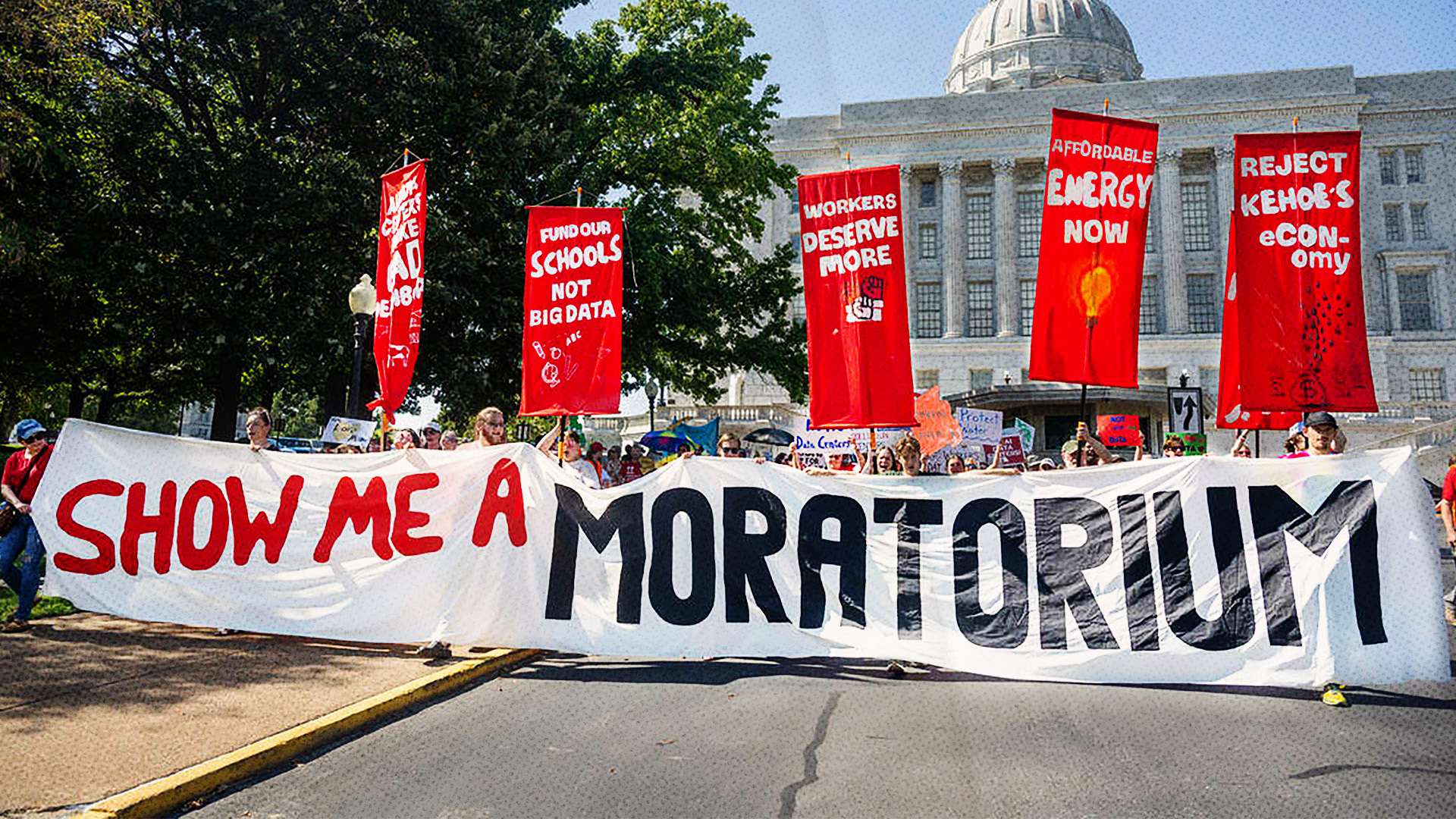
Regardless, suspending new data centers isn’t the most effective strategy for those pushing AI progress.
As a heated midterm election nears, with fewer than seven days remaining, a single issue has unified voters and candidates from all sides: slowing down AI.
A colleague who oversees tens of millions of dollars in midterm spending says he’s never seen a public concern about an issue surge so swiftly—AI in general. In July, Gallup reported that 39 percent of Americans believed AI does more harm than good, up from 31 percent in 2025. Conversely, only 9 percent of Americans felt the technology does more good than harm (down from 12 percent last year).
Public opinion has worsened since then. An October poll by ABC News/Washington Post/ Ipsos found that 57 percent of the public views AI as detrimental to society, while a striking 66 percent opposed expanding data center construction in the United States.
Political figures from both the left and right have seized on this mood, proposing their own today’s buzzword policies aimed at data centers. Yet, even a complete halt on building data centers would not substantially impede AI advancement.
In August, Arvind Narayanan, director of the Princeton Center for Information Technology Policy and co-author of AI Snake Oil: What Artificial Intelligence Can Do, What It Can’t, and How to Tell the Difference, argued that a moratorium on data centers would essentially fail to slow AI development.
Using a rough calculation with reasonable assumptions, he concluded that a one-year suspension of data center construction in a typical U.S. state would only delay AI progress nationwide by five to ten hours. If at least half of data center developers chose to evade the moratorium by relocating facilities, a one-year freeze in major states like New York would set back AI in the United States by less than a day, according to Narayanan.
My own modelling of this question arrives at a result essentially identical to Narayanan’s, though it treats future growth not as an uninterrupted rise in computing power but as contingent on how much capacity is actually built. I evaluated three hypothetical policy scenarios: a blanket ban on new data center construction and on upgrading depreciated GPUs; a blanket ban on new data centers only; and no restrictions at all.
The takeaway is that, as a federal policy, trying to block data centers outright does not deliver the outcomes that moratorium supporters claim. And while certain local rules could modestly hinder center growth, the only way to slow the progress of frontier AI models would be to implement an exceptionally harsh policy regime—one that goes beyond prohibiting new centers and even blocks GPU upgrades within existing ones—which no one is proposing or close to implementing.
So what does this imply for advocates of any stripe of AI policy?
For those who want to accelerate AI, the upshot is reassurance: even aggressive data center expansion is not a binding bottleneck on AI advancement. Yet on the flip side, the political energy currently directed at mobilizing backlash won’t remain focused on this issue forever; an area where more than two-thirds of people harbor at least some opposition to your “side” is not one that vanishes easily.
For the doom-and-gloom crowd, the conclusion is that if the aim is a pause on AI technologies — for instance, to shield people from job displacement — targeting data centers isn’t the most effective lever. It may serve as a rallying point in a broader policy debate, but it is unlikely to yield meaningful changes to the current trajectory of AI development—whatever you believe that trajectory to be.
The ineffectiveness of data center moratoriums does not, in itself, render the policy more or less reasonable. Yet if the protests against data centers are standing in for a wider anxiety about AI, from large-language models crowding out human activities to job losses or environmental concerns, those opposed will need to identify a different point of leverage.
