
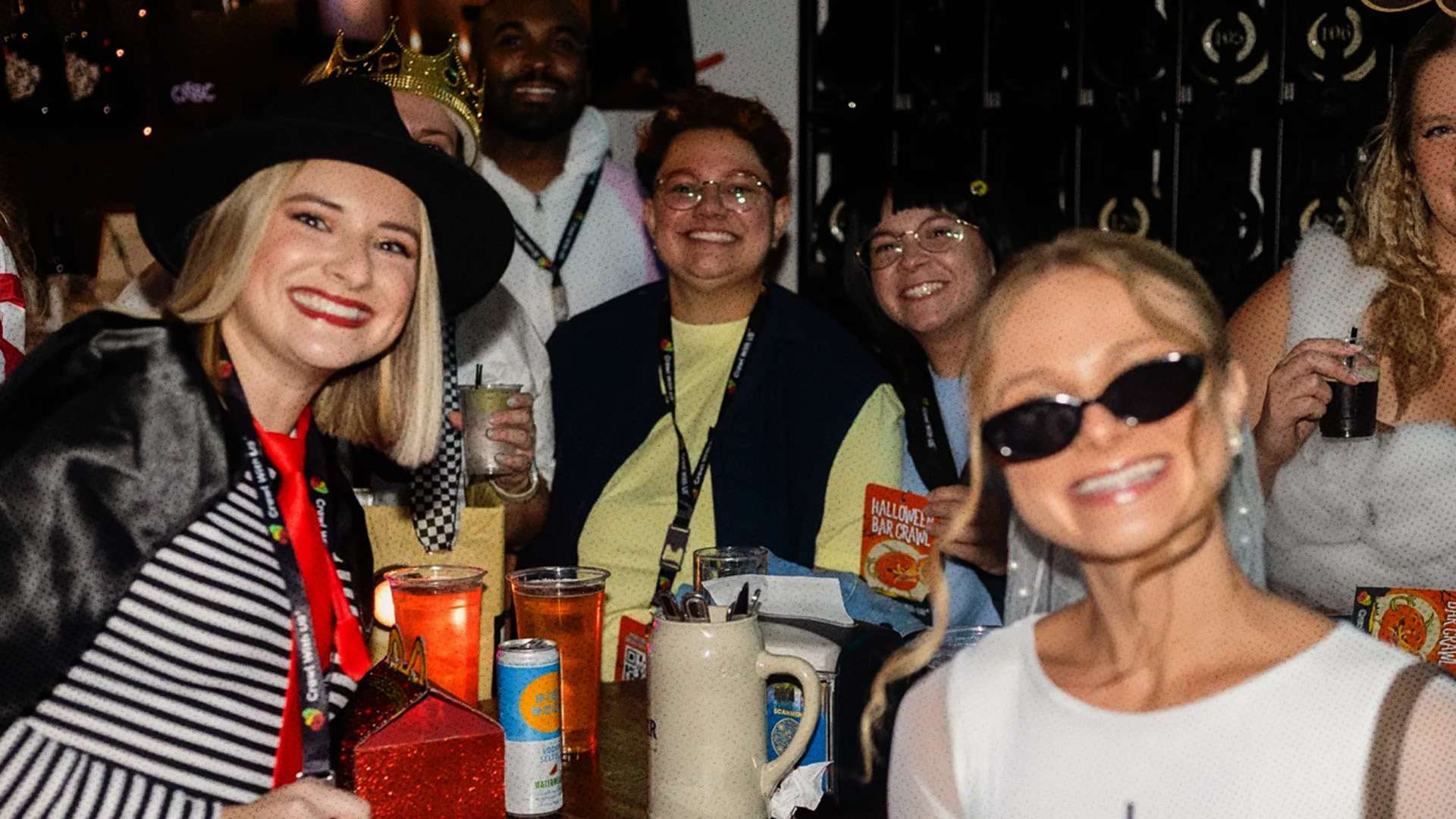
In Washington, D.C., coordinating a Halloween pub crawl can lead to substantial penalties for organizers.
Halloween is widely seen as a quintessential American holiday. While the tradition has spread to Europe, I—being British—was excited to mark my first real American Halloween by dressing as Cleopatra and celebrating in the capital. In European towns I usually spent evenings hopping across bars on organized crawls; this year, however, I couldn’t participate in a similar count because Washington, D.C., bans pub crawls on Halloween.
Legally, the District’s Alcoholic Beverage and Cannabis Administration is barred from endorsing Halloween pub crawls on October 31. The prohibition was set in place in 2016 after complaints about overcrowded streets, litter, and public intoxication during Halloween the previous year. The restriction also covers the Fourth of July and New Year’s Eve, meaning major American holidays can carry hefty fines for organizing a pub crawl.
That Halloween, a single organizer had to abandon its plans. The event, Mad City Bar Fest, was arranged by Versus, a local marketing firm, and was slated for last Saturday with tickets from about $20 each. In a September 2 email to the city’s Alcoholic Beverage and Cannabis Administration, Versus chief Vinoda Basnayake insisted the firm was not running a pub crawl but promoting separate Halloween parties at multiple bars: “We are NOT throwing a pub/bar crawl on 10/31!…What we’re actually marketing is 10 individual Halloween parties across Navy Yard venues, which Versus/Mad City acting purely as the marketing company behind them.”
“The listing clearly states this isn’t a bar crawl. It lacks the components that define a bar crawl—no map, no fixed route, no coordinated schedule among venues, and no common drink specials across venues,” Basnayake added.
Regulators were unconvinced. An investigation found the promotion included a map showing participating bars and promised wristbands enabling access to several venues. On October 7, the Alcoholic Beverage and Cannabis Board issued a ten-page cease-and-desist order against the organizer and eight participating venues, warning that enforcement action would follow if the event went ahead.
“An unapproved pub crawl constitutes a public safety risk and a public nuisance,” reads the order. “The Board finds that the undertaking of an unapproved and unsanctioned pub crawl causes immediate and irreparable harm to the public by the Respondents due to risks to public safety and the potential for other public nuisances.”
The danger, as they saw it, would be large numbers of intoxicated revelers traversing through public space—an elaborate way to describe revelers wandering from one bar to the next. The board also warned that, if allowed to proceed, they would be enabling the organizers to “profit from a willful and intentional disregard of the law” and “collectively engage in a public nuisance.”
America has a strange relationship with alcohol. Not only is the drinking age higher than in most European countries, but open-container laws mean that, in most of the country, consuming alcohol in public is illegal (unlike in much of Europe). Interestingly, state and local governments have recognized how unnecessary these rules are and loosened them for special occasions. This includes Boston, which relaxed its open-container laws during this summer’s World Cup, allowing visitors to drink on designated streets.
Luckily, partygoers in the District who wished to participate in a pub crawl over the weekend were able to take a short Metro ride over to Alexandria, Virginia, where Halloween pub crawls were plentiful. Of course, Virginia managed to survive the weekend’s festivities just fine, but D.C.’s already struggling hospitality sector will have missed out on the revenue.
Regulators are all too often glorified fun sponges, but this particular law is especially absurd. If the greatest threat to public safety is drunk people daring to have fun, D.C. regulators have rather peculiar priorities.
