
The world is changing abruptly. First, the number of democratic regimes is decreasing. The overall trend is toward autocratization and, in parallel, toward a reduction of full democracies. There had never been so many countries autocratizing at the same time, and the European Union is particularly affected. Second, the volatility of regimes stands out: around 35% of countries are in the midst of political transformation. Third, the great surprise is the democratic decline —and the deterioration of the political system— in the United States. In a single year it has fallen in the democracy ranking from 20th to 51st —out of 179 countries in total—. Currently, its democratic index has fallen to 57%. Fourth, Spain is one of the most democratic countries in the world: this year it ranks 21st, with a democracy index of 74% (the maximum is 88%). In 2019, Spain occupied 26th place in the world; in 2023, it rose to 23rd; and, today, it reaches 21st. It can thus be said that democracy in Spain is advancing, while in the United States it is sinking.
“The sinking of democracy in the United States is a historic event that is leading to a new world order”
Spain’s move from 26th to 21st can be regarded as a small step forward. But pursuing progress in democracy at the top of the list is challenging and demands a substantial effort. The race to achieve a fully democratic system is a huge undertaking. Moreover, Spain currently has a progressive government. On the other hand, the drop of the United States from 20th to 51st — representing a tremendous deterioration — occurs in a single year. The sinking of democracy in the United States is a historic event, that is leading to a new world order.
The World Democracy Report is produced by the Swedish institute Varieties of Democracy, known as V-Dem, and it is, surely, the best report on political regimes in the world.
The global outlook is not very optimistic. The world’s democratization process —the one we dreamed of in the 20th century— has halted. It has even regressed. By the end of 2025, the number of autocracies worldwide stood at 92 countries, above the 87 democracies. Currently, 74% of the planet’s population lives under autocratic regimes. Twenty years ago, it was 50%. Moreover, there are 44 countries that are autocratizing, meaning they are moving from incomplete democratic positions to autocratic regimes. Of the 179 countries, only eighteen are democratizing at the moment.
The political situation is deteriorating. In 2026, the level of democracy in Western Europe and North America is at its lowest point in fifty years. A fundamental factor is the substantial decline of democracy in the United States. For the first time, it has ceased to be a liberal democracy. Worldwide, only 7% of the global population now lives in liberal democracies. Twenty years ago it was 17%. 74% of the world’s population currently lives under autocracies, which means about 6 billion people are under authoritarian political systems.
Over the last decade, the democratization trend worldwide has taken a turn. Twenty years ago there were twenty-seven countries democratizing. Today there are only eighteen. A key factor, as is well known, is the electoral system. Twenty years ago, the electoral system improved in thirty-one countries; today, it improves in only seven. Freedom of expression is the factor that has changed the most: 44 countries retreat in this indicator. Twenty years ago only seven countries were deteriorating freedom of expression. Today, in 33 countries, torture or murder is used to control political opposition.
“This process of autocratization currently affects 43% of the world’s population”
The most notable aspect is the number of countries that are autocratizing. This autocratization process currently affects 43% of the world’s population. It is evident even within the European Union, where seven countries are autocratizing, in addition to two allies such as the United States and the United Kingdom. During 2025 the number of countries in the autocratization process increases by ten. The initial most frequent tactic is media censorship.
Four types of political regimes
Inequalities are substantial across the world. There are large differences in extent or size among countries. Population size or the number of inhabitants is also highly unequal. Developmental imbalances are considerable. Economic levels vary greatly. The same goes for differences in political regimes. The democracy index (x 100) ranges from 88% in Denmark to 1% in North Korea or Eritrea. The classification usually used is the following:
- Liberal democracies or full democracies
- Electoral democracies or incomplete democracies
- Electoral autocracies: regimes that are not democratic, but with some form of elections
- Closed autocracies or totalitarian regimes
The most democratically developed region is Western Europe and North America, where all countries are democratic. There is 58% of the population living in electoral democracies and 42% in liberal democracies. But last year 82% lived in liberal democracies. In other words, even in the best region the situation is deteriorating.
Liberal democracy entails elections between multiple political parties, with guarantees of freedom of expression and association, intrinsic features of electoral democracy. But, in addition, there is judicial and legislative oversight of the Executive, along with civil rights and equality before the law. Liberal democracy is the ideal type of political regime. But its number has only fallen: from 45 countries in 2009 to 31 in 2025. The ideal of living in liberal democracies only reaches 7% of the world’s population.
In contrast, electoral democracies, deemed incomplete, are increasing, from 46 to 56 countries. In this second group checks on the Executive erode and respect for civil liberties and equality before the law diminishes. This evolution should not be considered ideal. On the contrary. The number of democracies, complete or incomplete, has fallen from the 2016 peak to the current 87 countries.
“The global trend today is the gradual autocratization of countries, which for the first time includes the United States”
The global trend today is the gradual autocratization of countries, which for the first time includes the United States. The world is becoming increasingly autocratic. For a second year, there are more autocracies than democracies. Currently, three quarters of the world’s population (74%) lives in autocracies. There are more people living under totalitarian regimes (28%) than under liberal and incomplete democracies combined (26%). Autocracies of all kinds reached a low in 2004 and have risen to the current 92 countries. These cases account for more than half of the world’s countries: they are 51%.
The closed autocracy or totalitarian regime means there are no multi-party elections for the Executive, nor freedom of expression or association. There is high repression and, in fact, the elections are neither free nor fair. In electoral autocracy there are elections with multiple parties for the Executive, but freedoms are insufficient and the elections are not free. Moreover, autocracies are increasingly repressive. Totalitarian regimes have risen from 22 in 2019 to 35 today. That means thirteen countries that were electoral autocracies have degraded. Currently, electoral autocracies are the most abundant type of political regime in the world.
Variations of democracy
Reliable statistics exist for a total of 179 countries around the world. For all of them, the position in the democracy ranking is calculated, from 1st, Denmark, to 179th, Eritrea. In addition, six indices of democracy are calculated. The first is the liberal democracy index (LDI) or full democracy. The second is the electoral democracy index (EDI) or incomplete democracy. The indices, as usual, are calculated on a scale from one, i.e., from zero to one. Here I present them multiplied by 100, as if they were percentages.
In Table 1 I present these data for 33 countries representing the world’s regions. It is a sample, but the full detail of the 179 cases can be seen online, in the V-Dem Democracy Report 2026. This list runs from the top three countries, belonging to Northern Europe, to China and North Korea. After the Nordic countries come European countries such as France (9th) or Germany (15th). Spain ranks 21st. This places it above Canada, Japan, the United Kingdom, and even the United States. The neighboring countries’ standings —Portugal at 26th, Italy at 37th, and Morocco at 107th— are also less democratic.
Countries currently in conflict maintain very low levels of democracy: Iran, just before the war, is at 142nd place, with 10% democracy. Cuba appears at 161st, with 6% democracy, prior to the petroleum embargo. Venezuela is at 170th, with 4% democracy, and falling. The low levels of democracy in Russia (6%, declining) and China (4%) are striking. India is also very important due to its size —the world’s most populous country— and is at 105th, with 26% democracy, and declining.
“That Spain is more democratic than the United Kingdom or the United States is a significant social achievement”
We are not achieving the dream of democratizing all the world’s countries or homogenizing their indicators. Variability from 1% democracy to 88% is enormous. Spain is in a very good position, continually improving, within the top 12% of the most democratic countries on the planet. That Spain is more democratic than the United Kingdom or the United States is a significant social achievement.
The electoral democracy index, or incomplete democracy, is almost always higher than the liberal democracy index. Electoral democracy does not meet all the requirements of democracy, but it has elections that are partly free and fair. Denmark’s electoral democracy index rises to 91%. Also in Spain, it rises from 74% to 82%. The United States has a high electoral democracy index because the most recent general election, in 2024, was relatively clean. We will have to see how it changes in the next elections. An exception is Saudi Arabia, which has a liberal democracy index of 5%, but whose electoral democracy index falls to 2%. Countries with a very low liberal democracy index manage to raise the electoral democracy index quite a lot, such as Cuba, Russia, and Venezuela. In Asia, only three countries achieve acceptable levels of democracy: South Korea, Japan, and Taiwan. The former Formosa may be invaded by China around 2027.
United States and the new world order
The world order changes drastically. Country-by-country statistics do not account for huge differences in population. China, Russia, and India are very important in terms of world population. When viewed by population, the statistics show a decline to levels seen in 1978. The democratization progress achieved since the Carnation Revolution in Portugal, in 1974, has been undone. Today, highly populous countries are autocratic: India, China, Indonesia, Pakistan, and, increasingly, the United States. The reality is that large, populous, and economically powerful countries are authoritarian or autocratizing. It is not clear whether there is a negative relationship between size and democracy.
“The deterioration of democracy in the United States is without precedent. In the last sixty years, the erosion of civil rights, equality before the law, and freedom of expression are at their lowest levels”
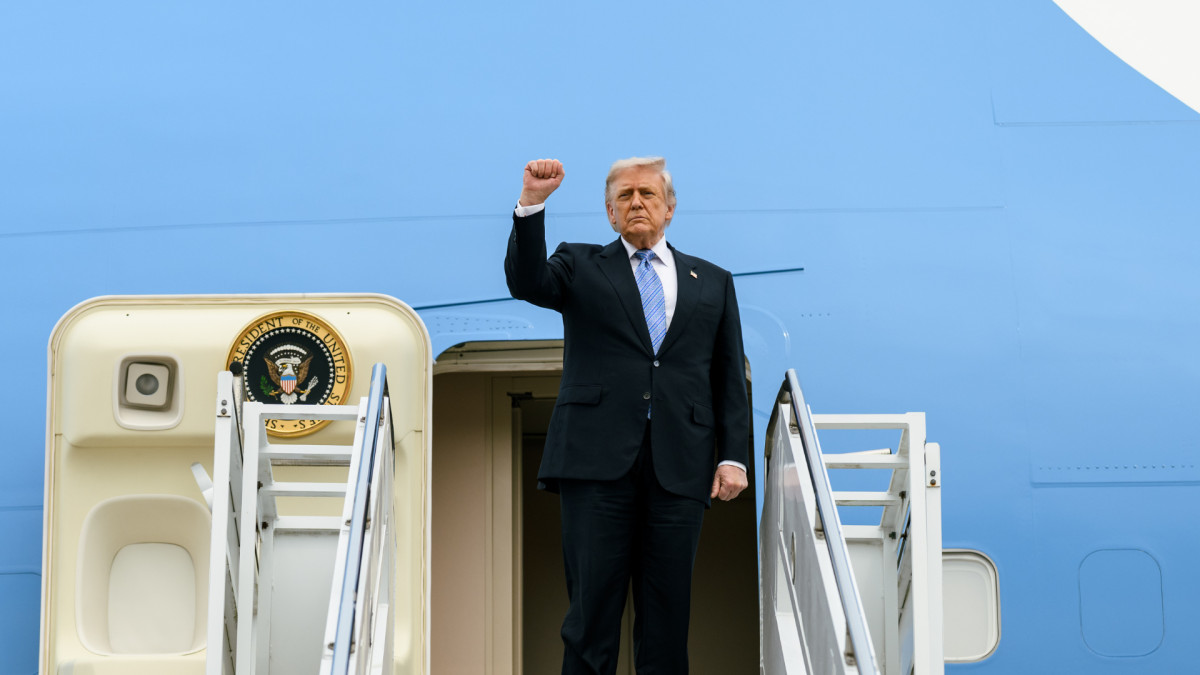
The most striking political change is that of the United States. The democratic level of that country has regressed to the levels of 1965. A aggressive concentration of power in the presidency, that of Donald Trump in his second term. The deterioration of democracy in the United States is unprecedented. In the last sixty years, the deterioration of civil rights, the equality before the law, and freedom of expression are at their lowest levels. That degradation of democracy in the United States influences many other countries around the world. Thus, world democracy has returned to the levels of 1978. The levels of rights and freedoms achieved in that era have been reduced significantly.
There is a chorus among political commentators and intellectuals about the situation in the United States and the new world order. From India, Arundhati Roy warns: “We do not even know what is going to happen. We do not even understand what is happening to us.” And about Trump she states: “Trump is the president of the most powerful country in the world, so his madness can affect other countries […] You can see the speed with which American institutions are falling.” The economist Dani Rodrik, a professor at Harvard University, asserts that “Trump is the main risk, the first source of uncertainty and instability in the world” and that “it is, above all, the greatest threat of our time”. He also argues: “His ability to sow chaos in geopolitics is brutal.” Writing about the United States from Spain, the excellent commentator Joaquín Estefanía insists on the same idea: “There is an aggressive concentration of power in the nation’s presidency and the speed with which democracy is being dismantled is unprecedented.” In the same article he acknowledges that “Spain is among the high-quality democracies”.
The most important change in 2026 is, then, the democratic degradation of the United States. It has been a sudden and unforeseen change. It has pulled down the quantity and quality of democracies worldwide. The United States loses —for the first time— its status as a liberal democracy or full democracy, moves to 51st place and is considered an electoral democracy, that is, a non-full or incomplete democracy. The speed with which the democratic system in the United States is being dismantled is regarded as the most dramatic decline in American history. Democracy in the United States is now at its lowest point in sixty years. It is believed that current democracy is collapsing. Executive power has increased while judicial and legislative checks diminish or even disappear. It is currently considered an authoritarian regime. The president has declared that the only limit to his power is “his own morality”. If Juan J. Linz were to lift his head from the grave!
During Trump’s presidency, democracy in the United States has returned to 1965 levels. But today it is not about civil rights episodes, but about an excess of executive power. Freedom of expression has deteriorated severely. There are also government attacks on the media, the university, human rights, and, in general, on dissenting opinions. In 2023, the democracy index (x100) was 79%. The 2024 elections marked the first step backward, although they were free elections. In 2025, the democracy index (x100) suddenly dropped to 57%. The important thing is not only this drop, but the speed with which it has occurred in the United States.
The most notable is the concentration of powers in the Presidency. Partly, the change stems from the transformation of the Republican Party, which currently supports nationalist, far-right policies and maintains an anti-pluralist agenda. Legislative and judicial checks have greatly diminished. The Congress, dominated by the Republican Party, has yielded to the demands of Trump’s presidency. The Congress does not investigate the Executive’s activities. Trump controls federal spending. He has eliminated a number of agencies and institutes created by Congress itself. He has taken the United States out of several international organizations and threatens NATO members. In 2025, Trump signed 225 executive orders to 49 laws passed by Congress. About 300,000 federal employees left the government in 2025. Trump fired many employees who were not loyal to him.
On the first day of his second term, Trump pardoned about 1,500 criminals convicted for the January 6, 2021 assault on the Capitol. There were several deaths among security forces. Trump contradicted Supreme Court rulings, arguing that “he who saves his country does not break any law.” With this presidency human rights have been violated. Pro-government demonstrations have been repressed. ICE police have been used for about 4,000 arrests and two murders. About 32 people died in custody in 2025. People or organizations considered “anti-American,” “anti-Christian” and even “anti-capitalist” have been pursued. The government is increasingly less secular and more Christian.
Equality before the law for the population weakens. Purges of officials occur. Trump explicitly calls the media “enemies of the American people.” He threatens to revoke broadcasting licenses from some media outlets that criticize, for example, the Iran war. There is censorship of those media and journalists, especially the most critical ones, are persecuted. Critical media are described as “corrupt and highly unpatriotic.” It is even suggested that being anti-Trump is “probably illegal.” Dissenting opinions are suppressed and protests are attacked. Immigration agents are deployed against cities governed by Democrats.
Cultural and academic freedom is another target of the Trump administration. Federal funding is used to control research, teaching, educational content, and, in general, to reduce university autonomy. Pro-Palestinian activities are restricted. Admissions guidelines are corrected. Trump’s confrontation with the most prestigious universities, such as Harvard or Columbia, is evident. There is, in general, repression of civil society. Policies are enacted against liberal or left-wing groups. Among other organizations, USAID is dismantled.
“The political practices of Trump’s second term would serve to write a manual for authoritarian government”
Regarding electoral practice, the closest thing is the 2026 midterm elections. In March 2025, Trump already ordered that in the next elections the population must show proof of citizenship; in addition, voting by mail was restricted and he proposed an anti-immigration police presence at polling stations. The political practices of Trump’s second term would serve to write a manual for authoritarian government.
Advancement of democracy in Spain
Spain’s position in the world democracy ranking is slowly improving. In 2019 it stood at 26th place and today, in 2026, it is already at 21st. In other words, Spain is one of the most democratic countries in the world and its democratic status is rising. This draws attention given the steady right-wing and far-right opposition. Debates in the Congress of Deputies and in the Senate are highly acrimonious. The fundamental reason is that the right (PP) cannot be a electoral alternative to the progressive government without the support of the far-right (Vox).
In Table 2 I compare Spain’s democracy indices, which tend to rise, with those of Denmark, the world’s prime country, and with those of the United States, which has suffered a sharp decline. I compare the liberal democracy indices with the electoral democracy indices. I also compare the components liberal, egalitarian, participatory and deliberative. Denmark is number one in four of these six indices. It needs to raise participation a bit. Spain —around 21st and 22nd— needs to raise its participatory and egalitarian levels a bit and, above all, its deliberative one. The same is true for the United States, but with much greater intensity. The egalitarian component is low in the United States. In fact, it is a highly unequal country. The participatory level of the United States is high, as high as Spain’s, with indices around 64%.
This table explains precisely the varieties of democracy that exist in the world, even among advanced and developed countries. It also indicates where each country should focus its public policies.
Future of democracy
The future of democracy is an unknown. We tend to believe that the liberal democracy model, the Western model, should dominate the world. But for now that is not happening. In the last decade, the global democratic decline is clear. Several of the basic indicators have worsened: freedom of expression, freedom of association, integrity of elections, censorship of the media — as well as self-censorship — and there has even been an increase in torture against political opposition. The first thing that is usually lost is freedom of expression. There is often also repression of civil society organizations.
“The erosion of democracy is observable in all regions. It is what is called the ‘third wave of autocratization’, affecting the entire globe”
There is particular concern for countries in transition, that is, those moving from one regime type to another. Some describe it as a “gray zone” that does not clearly indicate which direction the change will take. In transition are 35% of countries, i.e., 62 countries. Of them, 18 are democratizing and 44 are autocratizing. There is erosion of democracy in all regions. It is what is called the “third wave of autocratization” affecting the entire globe. It is a trend that has been visible over the last three decades, but has accelerated in recent years. It entails 105 episodes of autocratization in 75 countries, representing 42% of the world’s countries. We do not know where it will lead.
Current democracies face various challenges. The erosion of democracies and, by contrast, the growing autocratization is striking because until the early 21st century the prevailing trend was toward democratization. The peak was 1992, with a maximum of 73 countries democratizing. But in recent years the dominant trend is toward autocratization. There are exceptions, of course, such as Brazil or Poland. But since 1990 the growth in the number of countries that autocratize seems unstoppable. The peak was reached in 2021, with about 50 countries in the process of autocratization, a 28% share of the world’s countries. At present, the 44 countries undergoing autocratization account for no less than 41% of the world’s population and 26% of the planet’s territory. Some are large countries, such as India, the United States, Indonesia, Pakistan, the Philippines or Mexico. They are countries that exert a strong influence in their surroundings. It should be noted that some transition countries end up in stable authoritarian situations, such as Russia or Turkey.
The important thing is not a static view of the world —the situation in 2026—, but how things are changing and, above all, where they are heading. It is useful to analyze how the cases of Greece, Italy, the United Kingdom, and the United States are evolving, so close to Spain. Spain, for now, resists, but with heavy wear, sometimes personal. Among Latin America’s sister countries, at least six deteriorate: Argentina, El Salvador, Haiti, Mexico, Nicaragua and Peru. Among the 44 countries currently autocratizing, there are several Europeans: Croatia, Italy, Slovakia, Slovenia and the United Kingdom.
The magnitude of the deterioration in the United States is considerable. But it is also evident in Hungary, India, Mexico, Peru, Greece and Argentina. In just one year, the United States ranks fourth in democratic deterioration. The electoral system has not changed much, but freedom of expression, especially in the media, the existence of political checks, and human rights have. Against late-20th-century expectations, the world barely democratizes. There have been fifteen years of relative paralysis. Currently, there are only eighteen countries democratizing.
“Even the United States is taking on part of that autocratic model. We are witnessing the dawn of a new world order”
Democracy is eroding. It is possible that in the near future, democratic countries will become fewer and autocracies more numerous. Even liberal democracies are already facing problems. There are far-right and populist movements increasingly frequent. In that dark context, there are countries —like China— trying to convince the rest of the world that the Western democracy model is untenable. An authoritarian, totalitarian model, without plural political parties or general elections, together with a substantial dose of repression, may be more productive and economically successful. Even the United States is adopting part of that autocratic model. We are witnessing the dawn of a new world order.
In this panorama, Spain’s current model —a high-quality democracy with a progressive government— is an exceptional case. As T. S. Eliot suggests: “Humankind cannot bear very much reality”.
