
Florida law enforcement agencies have long expanded their toolkit with drones, facial-recognition technology, and license-plate readers.
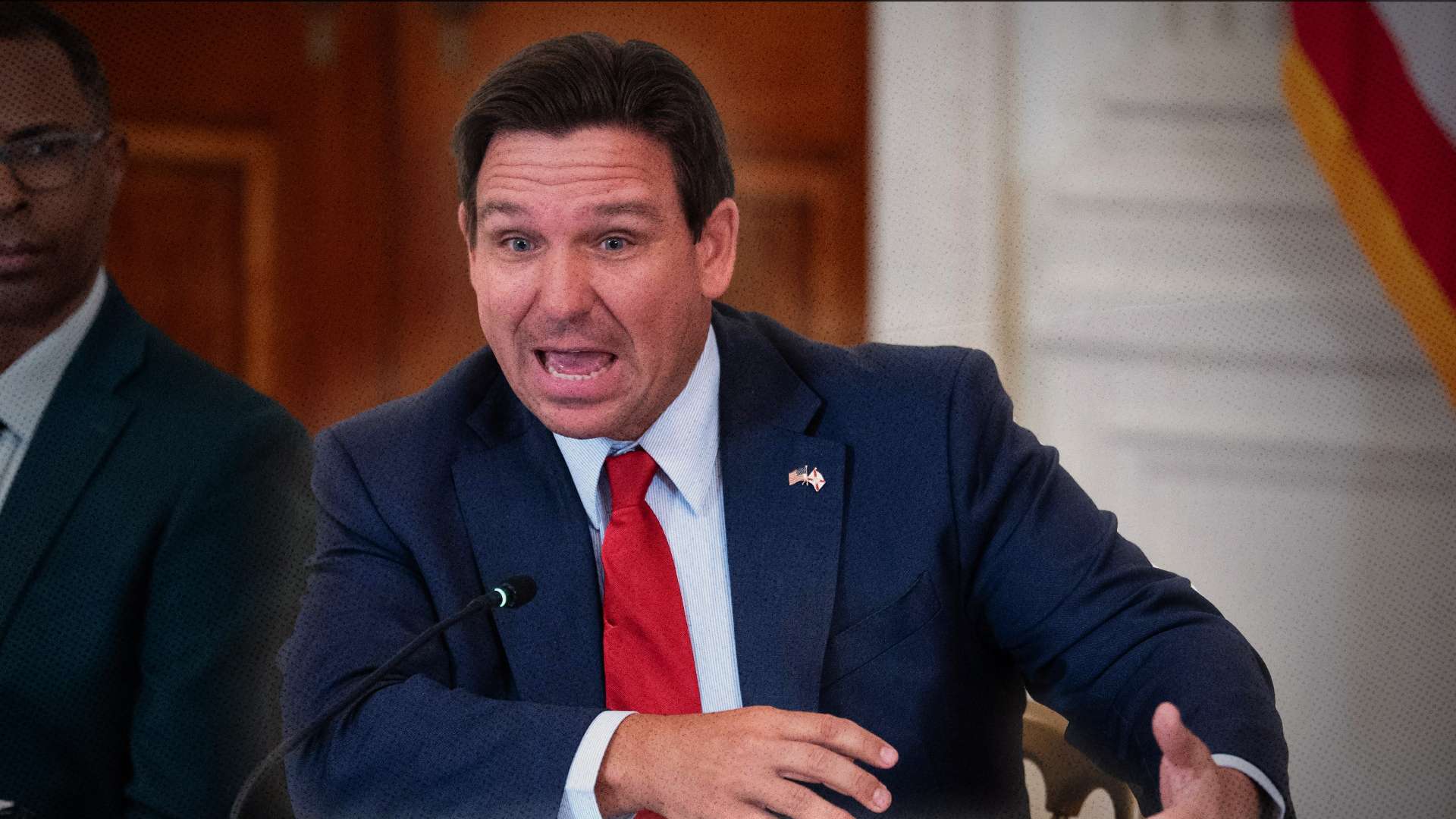
At a Wednesday press briefing, Florida’s Republican Governor Ron DeSantis asserted that automated license-plate cameras like Flock have spiraled beyond acceptable bounds in the state and pressed for fresh privacy protections, citing broad public backlash against AI-powered surveillance technology.
“I’m all about law enforcement having tools to hold criminals accountable,” DeSantis told reporters at Florida International University. “I think that’s important that we do that, and no one’s been stronger on law enforcement than me, but I don’t want to have this become a surveillance state.”
It’s already too late.
Florida is already saturated with police surveillance technology, a trajectory that began in the post-9/11 era and accelerated in the past couple of years as the DeSantis administration supported the White House’s broad deportation agenda. The Electronic Frontier Foundation, a digital privacy advocacy group, publishes an “Atlas of Surveillance” showing Florida agencies widely have access to automated license plate readers, facial recognition technology, third-party investigative services, and “predictive policing” software.
For example, the Florida Highway Patrol leaned heavily on Flock’s surveillance network last year to identify targets for a joint state and federal immigration enforcement operation.
The Florida Phoenix reported in February that DeSantis and his cabinet approved $40 million in immigration grants to local law enforcement. The funding included support for additional license plate readers, biometric eye scanners, and AI-powered mobile surveillance towers.
While much of the public concern over Flock cameras has stemmed from stories of officers misusing the technology to stalk women, arrest the wrong people, and generally act inappropriately, police already have access to similar information—and frequently abused it before Flock existed. Flock cameras are merely another, more powerful instrument.
In Florida, officers may access the state’s Driver and Vehicle Information Database (DAVID) system to look up information on residents, but only for legitimate law enforcement purposes. Officers are regularly disciplined or terminated for illegal DAVID searches.
Florida has laws regulating access to automated license plate reader (ALPR) information and limiting retention of data to three years.
However, critics of state and local officials in Florida have found themselves subjected to the very surveillance state that DeSantis decries.
Environmental activists recently discovered that the Florida Fish and Wildlife Conservation Commission spied on their driving records using the DAVID system after they spoke out in public opposing the agency’s policies.
Reason has covered numerous other cases of alleged First Amendment retaliation in Florida: A 77-year-old Florida veteran was investigated by state law enforcement for sending a postcard to Florida Chief Financial Officer Blaise Ingoglia that simply read, “You lack values!”
Likewise, a Miami Beach woman was interviewed by detectives for writing a Facebook post criticizing the Miami Beach mayor’s stance on the Israel-Palestine conflict.
Last year, the Hendry County Sheriff accused Captains for Clean Water, an environmental advocacy group of Florida fishing guides, of inciting threats against public officials.
In 2024, the Pasco County Sheriff’s Office ended a “predictive policing” program to settle a lawsuit alleging that targets on the algorithm-based list were subjected to unconstitutional harassment by deputies.
DeSantis criticized the Florida legislature for not passing an “AI bill of rights” that he proposed last year, which would have enacted sweeping regulations on AI technology and data centers.
“I think it’s going to get a lot worse unless we have some protections for the people in Florida and so it’s going to need to be there,” DeSantis said at the press conference. “But the only way it could be dealt with is legislatively.”
