
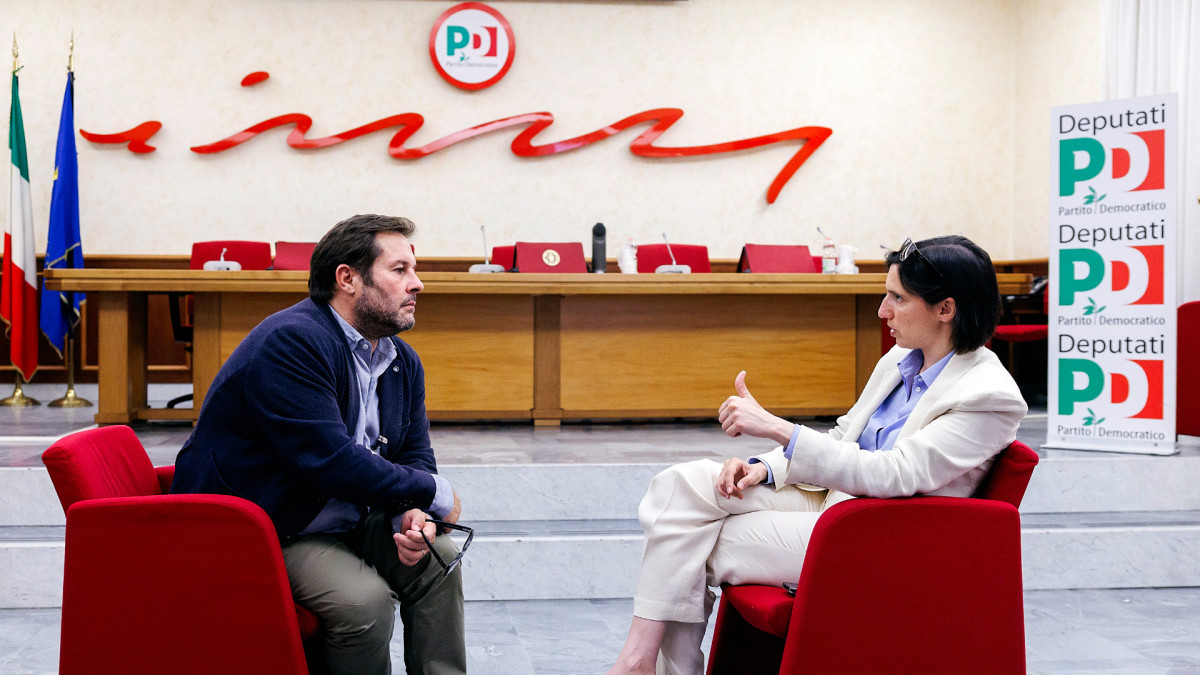
Elly Schlein is today the main reference of the opposition to Giorgia Meloni in Italy. She receives me in Rome, at the Camera dei Deputati, specifically in the Sala Enrico Berlinguer of the parliamentary group of the Partito Democratico. The conversation takes place on a particularly meaningful day: Schlein speaks in the plenary session dedicated to shaping Italy’s position for the upcoming European Council. She also invites me to attend the debate from the gallery. It is a healthy practice in Italian politics that deserves to be highlighted: Parliament debates the Government’s priorities before European Councils and not afterward, as happens in Spain, when decisions have already been made.
The leader of the Partito Democratico faces the interview in a direct, no-nonsense tone with clear ideas about the challenges confronting Italy, Europe, and the left. If there is one issue that worries her particularly, it is the evolution of wages. “Not only have they not grown in thirty years, but they have even fallen three percentage points“, she laments. In her view, that reality explains a large part of the social discontent that plagues the country.
After three years of reconfiguration and reunification within the progressive space, Schlein appears optimistic about the prospects for the opposition. “Within the progressive camp we see concrete advances and we will continue working to defeat this right“, she says. She believes that the internal tensions within the governing coalition will eventually take their toll. “More and more it is becoming difficult for Meloni to keep this majority cohesive, and the problem is that those paying the price are the Italians“, she asserts.
The conversation also touches on the frustrated judicial reform pushed by the Government, the debate over a potential electoral reform, and the state of Italian institutions. But it is when addressing the international arena that Schlein makes her strategic vision clearest. She considers that Italy is losing influence at a decisive moment for Europe. “Today France, Germany and the United Kingdom are engaging with Russian representatives. Italy is not“, she notes.
She also criticizes the Government’s reaction to the attacks launched by Donald Trump against the Pope Leo XIV. According to Schlein, the Government members preferred to avoid conflict and “hid behind silence“. About the future of the European Union, she leaves no room for ambiguity: “I believe in a federal Europe. And I think we must continue along that path. Meloni is not fighting those battles“.
Throughout the interview emerges a leader convinced that there is a progressive alternative to the current Government and that the debate about Europe’s future will be one of the main political battlegrounds in the coming years.
Elly Schlein is a deputy and secretary-general of the Democratic Party. Photo: Agenda Pública / Francesco Fotia
How can Meloni be defeated with the fragmentation that exists in the Italian left?
Unity is built not so much —or not only— against Meloni’s Government, but around the things we want to do together for Italy. That is the strategy we launched since I took over the leadership of the Democratic Party.
When I arrived, after the electoral defeat, the party was at historic lows in the polls, around 14%, and the center-left had practically disappeared. With a lot of work and a substantial unitary effort we have rebuilt, step by step, a unity around concrete issues.
The first battle in which we managed to unite the entire opposition was the fight for a minimum wage in a country where four million workers are poor despite being employed. In Spain there is already a minimum wage and the Government of Pedro Sánchez has increased it by more than 50%. That has helped to sustain the purchasing power of workers and families even during the energy crisis and inflation.
In Italy, by contrast, wages have not only failed to grow in thirty years, but have fallen three percentage points.
Moreover, in the last four years ISTAT (Istituto Nazionale di Statistica) certifies that Italians’ real wages have fallen by nine percentage points, precisely as food prices rose. This means that a person goes to the supermarket with the same salary as before and can no longer buy the same things.
“With a lot of work and a great unitary effort we have rebuilt, step by step, a unity around concrete issues”
After that we built unity around public health. We presented proposals to reduce waiting lists. Because if you want to dismantle public health, as the right is doing, you do not need to change the laws. It is enough to cut resources. Then there are shortages of doctors and nurses, hospitals empty, and those who have money turn to private health care. Those who do not have it give up on treatment.
Today more than six million Italians, more than one in ten, forego medical care because they cannot afford to wait or pay for a private alternative. Between 2023 and 2024 that figure rose by one and a half million during the Meloni Government. That is why we proposed, together with the rest of the opposition, allocating resources to hire doctors and nurses immediately and reduce waiting lists.
What we are trying to build is a broad progressive alliance based on the principles we share: defense of public health, decent work, industrial policies to accompany the ecological and digital transition, education, university, research, rights and democracy.
Over these three years we have driven legislative initiatives, proposals, and joint mobilizations. Today we can say that there is a competitive progressive alliance, capable of defeating Meloni in the next elections. We have already built it in numerous cities where we have won together. Also in the regions: last year elections were held in seven regions and the progressive alliance ran united, something that had not happened for twenty years.
Therefore, within the progressive camp we see concrete advances and we will continue working to defeat this right.
What happened after the referendum on justice? My analysis is that problems within the right itself are beginning to appear. More people participated than expected. Do you think Meloni is now in a position of greater weakness?
What happened is very simple. Giorgia Meloni’s and her Government’s propaganda collided head-on with the reality lived by millions of Italians.
We have almost three consecutive years of a fall in industrial production, stagnant economic growth, wages too low, endless waiting lists, and a tax burden that has reached its highest level in twelve years.
So did people vote not only for the referendum on justice?
Exactly. Such a high turnout also had a political meaning.
People went to vote to stop a justice reform that did not improve citizens’ lives, but aimed to place judges under government control, just as other nationalist-rights in Europe and around the world are trying to do.
They also went to defend the Italian Constitution, an antifascist constitution to which Italians are deeply attached. And they also voted against this Government, against its submissive attitude toward Trump and Netanyahu.
“People went to vote to stop a justice reform that did not improve the lives of citizens”
The fifteen million negative votes were possible for a combination of reasons. However, the Government’s difficulties did not begin with the referendum. They began months earlier, when we clearly won the regional elections in Campania and Apulia.
They held Veneto, somewhat predictable, but something relevant happened there. Matteo Salvini achieved in Veneto a result that doubled Meloni’s thanks to the candidacy of the former regional president. That generated immediate tensions within the coalition.
We also saw those tensions when I had reached an agreement with Meloni on a basic law protecting women: the “only yes is yes” standard. That is, any sexual act without consent is considered sexual violence. Many European countries, including Spain, have already approved such rules.
We had voted the text unanimously on a Thursday in this Chamber. On Monday the sessions ended and on Tuesday the majority scrapped the agreement because Salvini no longer wanted it. It was the first real moment of weakness I observed in Meloni: she could not impose an agreement that she herself had closed with me.
Then began the budget disputes, to the point of risking the approval of the accounts before December 31. And they have also argued intensely about foreign policy, because they actually do not have a single foreign policy: they have three.
“The ‘only yes is yes’ rule was the first real moment of weakness I observed in Meloni: she could not impose an agreement that she herself had closed with me”
In the resolution approved today by the majority, which criticized the opposition for its divisions, all contentious issues disappear. For example, it speaks of extending the European Union to the Balkans, but not to Ukraine. It is easy to hide divisions when the uncomfortable words are removed from the documents. They even reached a ridiculous point: they debated military support for Ukraine and resolved the conflict simply by removing the word “military” from a decree that still sent military aid.
That is the level of tension that exists within the majority.
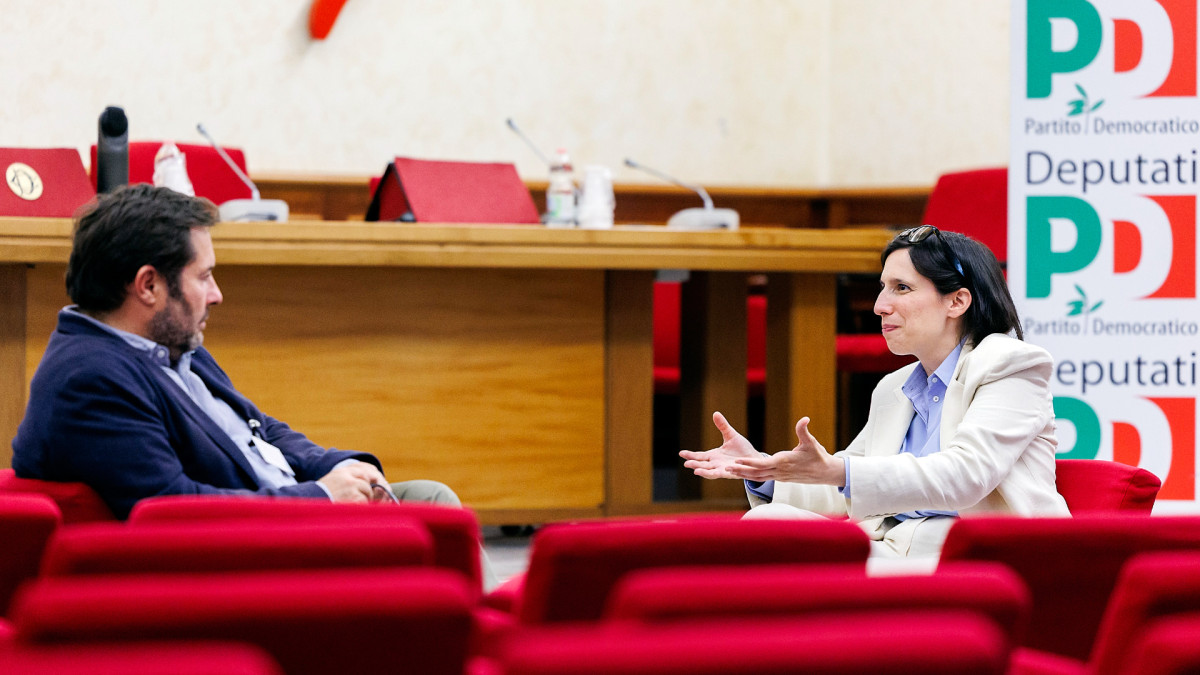
Schlein responds about the first signs of wear in Giorgia Meloni’s government. Photo: Agenda Pública / Francesco Fotia
The governing coalition wants to change the electoral law. In what sense are they planning it? And, in relation to the above, do you think that after the referendum it will be harder to push forward that new electoral law?
With regard to the second: yes, also because they are divided on that issue. Not everyone is enthusiastic about the reform.
In fact, a week before the referendum, while Italians were paying gasoline at double the price due to the illegal war pushed by Trump and Netanyahu, the Government convened an urgent summit. We thought it would be dedicated to wages or the cost of energy, which is reducing the competitiveness of our companies, but no—the meeting was about the electoral law.
Meloni wanted to seal a written agreement before the referendum because she knew that afterwards it could be more difficult. Why do they do this? Because they fear losing. They aim to safeguard a victory through a law that we deem unacceptable, as it establishes a very strong majority premium that would allow the majority to almost single-handedly reach certain institutional safeguard quorums.
In reality, this electoral reform is a kind of preview of the premierato project, Meloni’s grand institutional reform, which she has now paused on because she probably does not want to face another constitutional referendum. What keeps this majority together is not a shared vision for the country, but a power pact.
“This electoral reform is a kind of preview of the ‘premierato’ project, the grand institutional reform of Meloni, on which she has now paused”
They are much more divided than us, but they stay united by power interests and by an agreement among different reforms: the differentiated autonomy defended by the League —which risks fracturing Italy and increasing regional inequalities—, the reform of justice historically pushed by Berlusconi and Forza Italia, and the premierato project of Fratelli d’Italia.
The first was partially dismantled by the Constitutional Court because it was unconstitutional. They are trying to circumvent that ruling, but we will oppose it. The second has been rejected by fifteen million Italians. And about the third, they have paused for now, though they are trying to introduce it indirectly through the electoral reform.
That is why we have joined forces with the rest of the opposition to prevent it.
What role has Trump played in Meloni’s weakening? It was said she was a very important ally for Trump within Europe. Now it seems Meloni is changing position.
It seems so. Yet, even after the referendum and the defeat, and also after Trump’s unacceptable attacks, we have not seen real changes. I personally denounced those attacks in Parliament.
Something that, by the way, the leader of the opposition in Spain did not do.
It was a duty to respond when a foreign head of state attacked the Italian Government. We may be political opponents in this Chamber, but we remain representatives of Italians. We cannot accept threats or attacks coming from another head of state, especially from a country historically an ally.
Similarly, it was also necessary to defend Pope Leo against the unprecedented attacks unleashed by Trump.
All that generated a significant political fracture. But in fact, we have not seen any change in the Government’s foreign policy. After Trump’s attacks, they took refuge in silence. In part because they do not have a coherent foreign policy and in part because they fear a new reaction from Trump.
That means betraying Italy’s diplomatic tradition, a country that has always been at the forefront when it comes to peace. Peace is written in our Constitution. Today France, Germany and the United Kingdom are engaging with Russian representatives. Italy is not.
A few days ago there was talk of European expansion toward Montenegro and Italy was not involved either. It is becoming increasingly difficult for Meloni to keep this majority cohesive, and the problem is that those paying the price are the Italians.
“[Meloni] wanted to present herself as the bridge between Europe and Trump. However, that bridge collapsed under Trump’s bombs, including the trade ones”
When Trump returned to power, Meloni was one of the few European leaders present at the investiture ceremony. She wanted to present herself as the bridge between Europe and Trump. However, that bridge collapsed under Trump’s bombs, including the trade ones. Then Meloni found herself in a very tricky position. She has been the only European Government to downplay the impact of tariffs in a country heavily dependent on exports.
Meanwhile, Pedro Sánchez acted quickly, mobilizing 13 billion euros to protect workers and companies. The Italian Government announced a 24 billion plan, but in reality it was redistributed existing funds. It was not even carried out as promised.
This is also the only European Government that called “legitimate defense” a unilateral military action in Venezuela. It is the only Government that has agreed to participate as an observer in the Board of Peace while Netanyahu consistently violates international law. They are not working toward a just peace, which in Gaza can only exist if illegal settlements end and the Palestinian State is clearly recognized.
They are also the only Government unable to utter a very simple phrase: “Greenland should not be touched.” Meloni’s subordination has cost Italy dearly. I have seen no change, except the defense of the Pope.
And frankly, I would have preferred the confrontation with Trump to be about a war that is gravely harming the global economy and also Italy’s. What we are witnessing is the attempt by a new global nationalist right to substitute international law with the law of the strongest and wealthiest.
That is precisely what we discussed in Barcelona, at the global progressive mobilization summit alongside Pedro Sánchez, Lula, and more than a hundred progressive movements from around the world. We want to rebuild an international order based on peace, dialogue, cooperation and respect for international law. There can be no double standards.
We unite for a reason to defend Ukraine against Putin’s criminal aggression because it violated international law. But we cannot remain silent when crimes occur in Gaza or when a historic ally like the United States acts unilaterally. If we accept those exceptions, we legitimise others to do the same.
A few days ago I was in Canada and met with Barack Obama and Mark Carney. Carney said something very interesting: that the international order will be rebuilt because we are not willing to accept a more brutal world, and that Europe must play a central role in that reconstruction.
To do this, Europe must change. It must move beyond unanimous decision-making —which Meloni opposes—. It must advance through reinforced cooperation when reforming treaties is not possible. It must drive shared European investments. Only then can we avoid being crushed between the military and trade pressures that surround us.
We need a grand European industrial plan, investments in innovation, social cohesion, the ecological transition and common defense. Meloni also opposes European common defense.
“If you accept Trump’s demand to raise military spending to 5% of GDP, but reject integrated European defense, the only thing you are doing is buying more American weapons”
If you accept Trump’s demand to raise military spending to 5% of GDP, but reject integrated European defense, common command structures and a stronger European military industry, all you are doing is buying more American weapons. That does not increase European strategic autonomy, but reduces it.
Besides, on energy, while Spain accelerated for years the investments in renewables and managed to drastically reduce electricity costs, Italy continues paying much higher prices.
I recall that after the attacks on Iran, there were days when Italy’s wholesale energy price reached 180 euros per megawatt hour, while in Spain it was barely 18 euros. Ten times less.
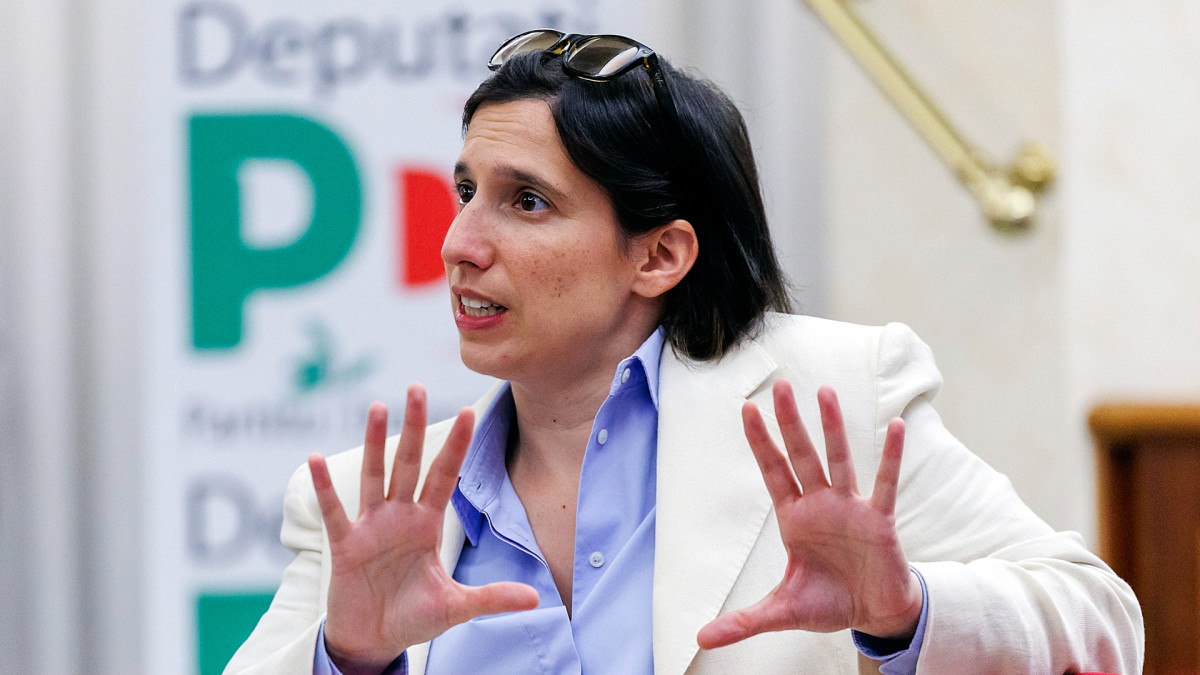
The Democratic leader advocates a progressive way out of Italy’s wage and social crisis. Photo: Agenda Pública / Francesco Fotia
You said today in the Camera dei Deputati that Italy is not growing. But Italy has received Next Generation funds. What has happened? Can it be said that, unlike Spain, Italy has not managed to resolve some structural problems that hinder productivity and growth?
That’s a great question. In fact, it’s a question I keep asking economists, businesspeople and experts. Because the money did arrive.
And one thing is clear: without the PNRR (National Recovery and Resilience Plan), which Giorgia Meloni’s party did not even vote for in Brussels, Italy would already be in recession today. Therefore, yes, it has had effects. The question is why those effects have not been sufficient to spur stronger growth.
In my view, this Government has not carried out the necessary reforms because it lacks a strategic vision and is internally divided when facing corporate interests and deeply rooted structural problems. Moreover, they act in a highly ideological way. When they came to power, there was a mechanism that worked very well: Industry 4.0. If you visit any Italian company, you will find advanced machinery purchased thanks to those incentives. It was a stable, well-known and valued system for the business fabric.
But since it wasn’t their initiative, they decided to remove it to substitute it with “Transition 5.0”. And what happened? They announced a reform and took nine months to implement it. Result? Investment paralysis. The same happened with the PNRR.
“This government has not carried out the necessary reforms, because it lacks a strategic vision and is internally divided”
As it wasn’t a plan designed by them, they insisted on modifying it. But they wasted a lot of time. The modifications were presented more than a year after taking office and largely consisted of centralising resources. They cut funds from municipalities and regions that were implementing projects well to shift them to the ministries, which tend to spend more slowly.
They did it because a large part of those municipalities are governed by the Democratic Party. Meanwhile, they still don’t understand that productivity rises through research and innovation. Italy continues to devote a very small share of GDP to research. Today, research is precarious and this Government has made it even more precarious. We train excellent researchers who then move abroad.
It is also very interesting what is being done in Spain with reducing the working week. You have passed a law that promotes pilot experiences and agreements between companies and unions. We have presented similar proposals, but the Government does not even want to discuss them. Yet, wherever it has been implemented, productivity has increased. That undermines many neoliberal discourses that remain stuck thirty years ago.
With artificial intelligence and digital technologies, it is evident that we can work better and perhaps even fewer hours. But the social pact must involve redistributing the added value generated by these technologies. Because if we do not, inequalities will rise and we will see an ever greater concentration of wealth, power and knowledge in a very few hands.
I always say it, even when I do not have Spanish media in front of me. Spain has shown that there is a progressive recipe to grow while reducing inequalities. And I discussed that with Pedro Sánchez in Barcelona as well.
Spain has raised the minimum wage and strengthened workers’ purchasing power. It has also implemented European funds well and on time, which has generated growth, employment and productivity.
On the other hand, Sánchez and Yolanda Díaz reached agreements with unions and companies to drastically reduce temporary employment. Meanwhile, in Italy more than half of those under twenty-four know only precarious work.
If you have a contract that lasts a month and you don’t know if you’ll be working the next, you cannot become independent. You cannot rent a place in Rome, Milan, Florence, Bologna, Naples or Venice. You cannot start a family. And that has direct consequences for birth rates. Precarious work hits hardest on young people, women and the south of the country.
Furthermore, there are shortages of public care services for children and the elderly. And in the end it is women who disproportionately bear this invisible work.
“Sánchez and Yolanda Díaz reached agreements to reduce temporary work. Meanwhile, in Italy more than half of under-24s know only precarious work”
In Spain there is a serious debate about the distribution of care. We presented a unified opposition proposal to expand parental leave. If in Spain the leave is three months, we propose five months also for parents, financed 100%. We do not want to force women to choose between work and family. But the Government has blocked this proposal, just as it blocked the minimum wage.
It used part of our initiative and called it the “fair wage”, but without establishing an obligatory minimum threshold. And thus we still have workers earning five euros an hour and needing three jobs to survive.
Spain has also developed interesting policies to attract talent. We have recently presented a proposal partly inspired by those experiences. Moreover, I consider very valuable some of the proposals in the report prepared by my predecessor, Enrico Letta, on the future of the European single market. In particular, I find the idea of the so-called “28 regime” interesting, a formula to simplify and harmonize rules at a European scale.
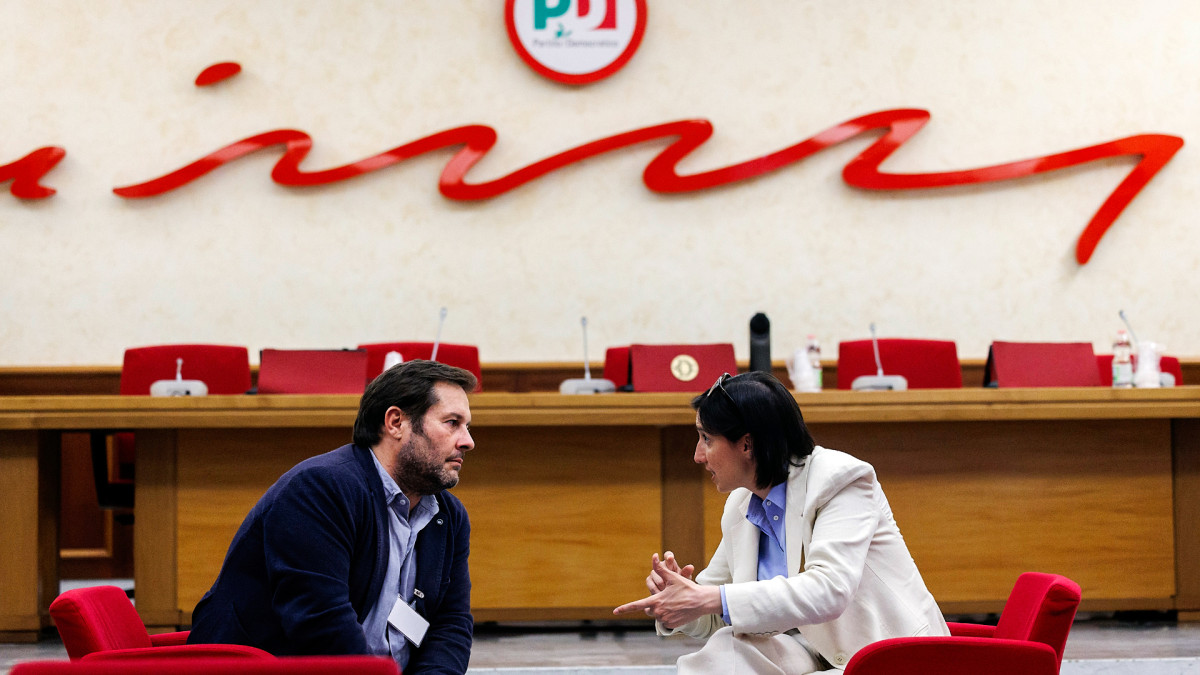
Schlein analyzes the relationship between Meloni, Brussels and the turn in European migration policy. Photo: Agenda Pública / Francesco Fotia
What is happening between Ursula von der Leyen and Meloni? There seems to be some kind of special political relationship. Last week Italy obtained more budgetary flexibility.
First of all, I want to say that we have always defended greater fiscal flexibility. What we criticize is the new Stability Pact, because it repeats past errors.
The pandemic experience showed that expansive policies work. And today the geopolitical context is even more complicated than back then. If Europe does not continue with common investments, it will be trapped between the United States, Russia and China.
The only possibility for Europe is to take a leap forward. What I miss is the political courage that we did see during the pandemic. Then the European Commission suspended the Stability Pact, launched common instruments and launched the largest shared investment program in European history.
I am a convinced Europeanist. I believe in a federal Europe. And I think we must continue along that path. Meloni is not fighting those battles.
“If Europe does not continue with common investments, it will be trapped between the United States, Russia and China”
That said, it is normal that there is an institutional relationship between the Commission and the Italian Government. And it is logical that some flexibility was granted. However, I also believe the Commission responded intelligently to the attacks Meloni had launched against Brussels.
As Meloni cannot present good economic results, she has returned to an old argument: blaming Europe.
The Commission replied: “Here you have fiscal room. Use it.” But not to patch energy bills temporarily, but to invest in renewables, power grids and energy storage. It was a politically savvy response.
Now, we belong to the European social-democratic family and we will not accept a policy of variable alliances in the European Parliament. If there is a pro-European majority that sustains the Commission, that majority cannot be ignored when debating issues such as the ecological transition or immigration.
“As Meloni cannot present good economic results, she has returned to an old argument: blame Europe”
Meloni boasts of having changed European migration policy. In reality, she has done just the opposite. She has abandoned the battle that really mattered to Italy: a solidaristic distribution of reception responsibilities among all the Member States. That is written in the Treaties. Solidarity and the sharing of responsibilities should be basic principles.
Today, seven countries bear around 80% of all asylum requests in Europe. That was the battle we had always defended. I myself worked on the Dublin reform between 2014 and 2019 for the European Socialist group. We argued that whoever reaches Italy, Spain, Greece or Germany actually arrives in Europe. Therefore, all countries must shoulder their share. Meloni completely abandoned that position, and did so for ideological reasons as well as because she did not have the courage to confront Viktor Orbán.
She also cannot continue using the famous migrant center in Albania as an excuse. It has not become any European model. European rules and the Court of Justice rulings made clear that it could not be used to deport asylum seekers as she initially planned.
That is why they had to transform it into a detention center for irregular migrants. They transfer them from Italy to Albania, keep them there and then have to return them to Italy to proceed with expulsion because they cannot be expelled from Albania. It is an absurd system.
According to our calculations, nearly 800 million euros of public money have been spent that could have been used to strengthen security or hire more police. The agents end up guarding centers that are practically empty.
In two years only 536 people have passed through them. Meloni promised they would be 36,000 a year. Let’s do a simple check: if about 200 million was spent to manage 536 people, the cost exceeds 370,000 euros per person. With that amount, you could fund decades of reception in Italy.
Thank you very much.
