
The billionaire’s hard-earned wisdom was illustrated by one midterm race after another.
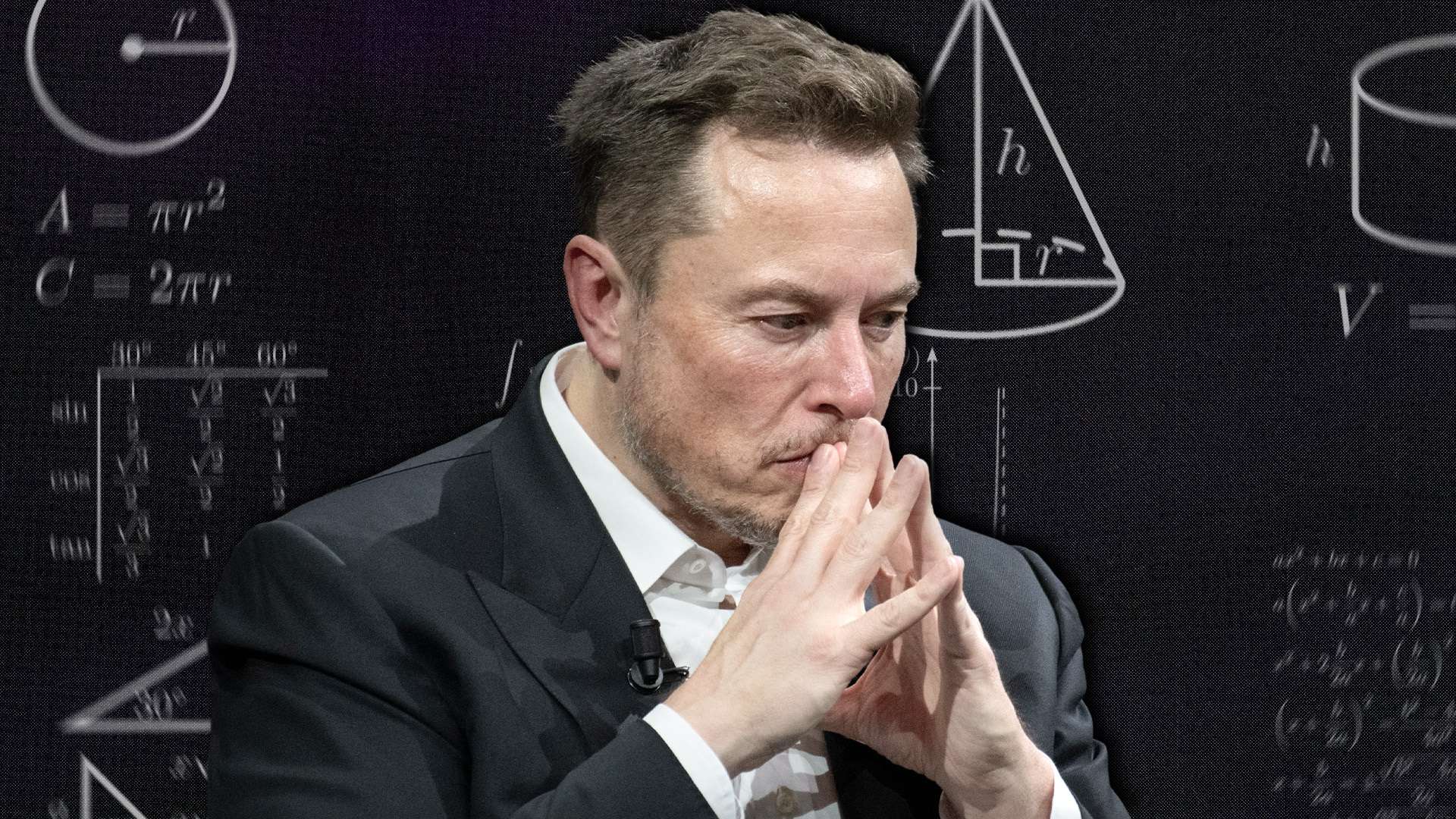
Elon Musk, the richest person on the planet, injected nearly half a billion dollars into efforts to aid GOP candidates in this month’s midterm elections, a wager that yielded little to celebrate. “I feel rather foolish about spending so much money and not seeing much to show for it,” he told The New York Times last week.
Contrary to the message pushed by proponents of tighter campaign-finance rules, Musk argued that “American elections are not decided by money alone.” That assertion was borne out repeatedly by midterm races in which Republicans faltered despite enjoying sizable financial advantages.
“Republicans have an enormous financial edge in this year’s midterms,” The Times journalist Shane Goldmacher noted in October. In the seven U.S. Senate races that the Cook Political Report labeled toss-ups, Goldmacher reported, “Republicans are outspending Democrats on advertising by $947 million to $625 million”—”a breathtaking edge of more than $320 million in the critical contests that could determine which party controls the Senate.”
Democrats took all of those Senate seats, plus fifteen others. In Texas, for instance, James Talarico defeated Ken Paxton by 12 points, even though pro-Paxton spending, including $212 million that Musk contributed, outpaced pro-Talarico spending by about 35 percent.
Money clearly did not suffice to offset the obvious flaws of Paxton, a candidate mired in scandal who also faced the disadvantages of his close ties to President Donald Trump. By contrast, those ties helped Paxton prevail over incumbent Sen. John Cornyn in the Republican primary.
In a race dominated by MAGA loyalists, Trump’s favor easily outweighed Cornyn’s far larger financial resources. Although Cornyn and his backers outspent Paxton’s side by more than three to one, Paxton defeated Cornyn decisively in their face-to-face matchup, winning by more than 27 points.
Beyond Paxton’s victory in the general election, Democrats won every other statewide post in Texas, including the governorship, the lieutenant governorship, and the attorney general’s office. The sweep was notable enough to stand out in recent Texas political history, and it was especially striking given that Republicans overall outspent Democrats by more than five to one, and by nearly eight to one in the gubernatorial race, where Gina Hinojosa defeated the incumbent, Greg Abbott, by seven points.
Going beyond Texas, heavy spending did not guarantee success. In Ohio’s gubernatorial contest, Republican Vivek Ramaswamy and his supporters outspent Democrat Amy Acton and her allies by nearly three to one, yet Acton captured the victory by eight points.
Georgia’s race featured Rick Jackson, who poured more than $200 million of his own money into his gubernatorial bid. By October 20, spending on his behalf stood at roughly $235 million, compared with about $30 million for Democratic nominee Keisha Lance Bottoms. Despite an eight-to-one spending advantage for Jackson, he lost the race by more than eight points.
Even with such conspicuous counterexamples, a 2024 study of House elections covering 2000 to 2018 found a positive association between campaign spending and victory. Yet, as in earlier research, the link was stronger for challengers than for incumbents.
In broad terms, a 1 percent uptick in campaign spending correlated with a 6.5-point increase in winning probability. But for incumbents, the marginal effect was negative, particularly when contributions came from special-interest groups.
The researchers echoed explanations offered by others: while incumbents enjoy substantial advantages—name recognition, media exposure, sprawling support networks, and the pork that comes with office—they face diminishing returns from campaign expenditures, meaning more money does not significantly boost their odds of securing a seat. By contrast, challengers experience rising marginal returns with every dollar spent as they strive to erase the advantages of incumbency.
Given that disparity, imposing limits on campaign spending is unlikely to curb the persistently high reelection rates for members of Congress, which averaged about 93 percent in the House and 88 percent in the Senate from 2010 through 2024. Rather, such restrictions could undermine competitiveness by making it even harder to dislodge underperforming incumbents.
© Copyright 2026 by Creators Syndicate Inc.
