
Europe’s battered economy has had to deal with nothing less than three gigantic shocks in barely six years. The pandemic, the energy crisis stemming from Ukraine, and now the Persian Gulf crisis, which is no longer greeted with the same fiscal margin in exhausted capitals. One could even argue that there is a fourth crisis, this one induced by Donald Trump and his weakening of NATO, as it has compelled many EU countries to incur extraordinary defense spending comparable in magnitude to any COVID-19 aid package deployed.
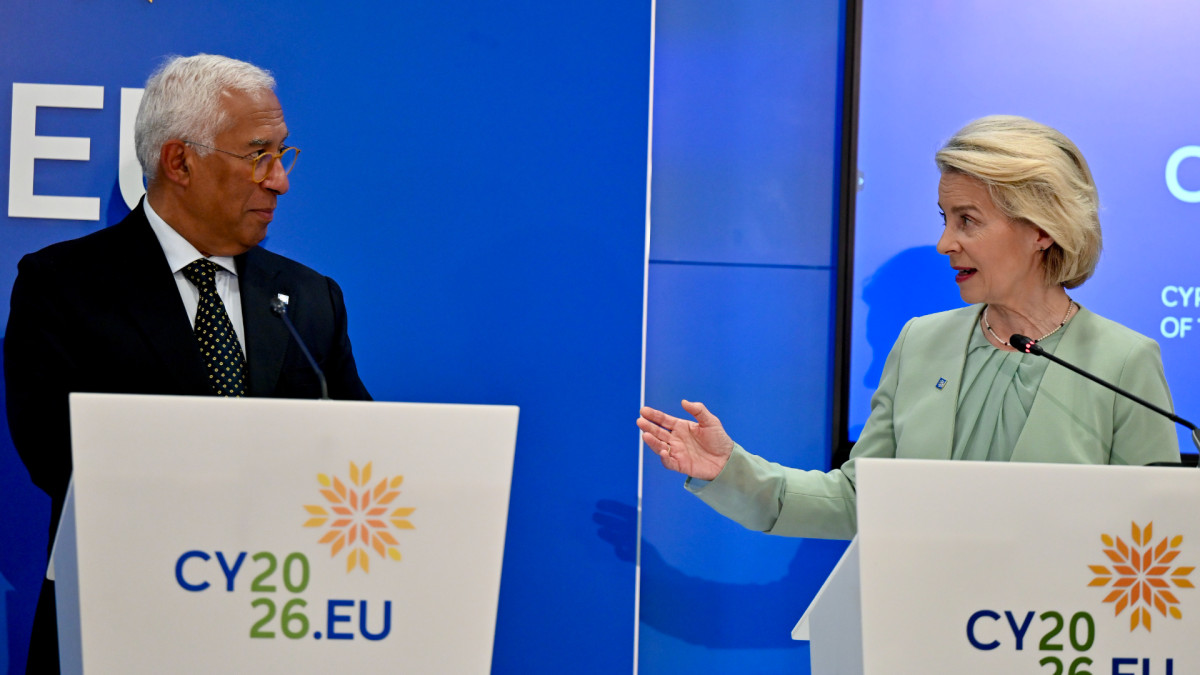
The exhaustion in public finances is felt in the lack of ambition in responses, such as the attempt last week in Cyprus, in an informal Council to deal with the energy crisis. From the Council came some good news about the EU’s strength, such as the approval of the Ukraine credit that Hungary had blocked for years or the decision to study a common defence clause. But economic decisions are scarce.
“When facing a common plan, the lack of fiscal headroom leads many countries to be more cautious in their response”
Some capitals, such as Madrid, which enjoys the privilege of entering this crisis with growth above 2%, have rushed to approve aid packages that many others cannot afford. Facing a common plan, the lack of budgetary headroom makes many countries more cautious in their response, a good sign for the efficiency of these aids. France has fourteen percentage points more debt than before dealing with the pandemic, in a broadly swollen environment of high public indebtedness. But Spain and also Poland lament the tepid European response. In the capitals they fear the electoral impact that EU inaction — or that of its leaders — has on their bases.
In another one of those rare programmatic coincidences we’ve been seeing in recent weeks, Giorgia Meloni and Pedro Sánchez jointly called for the suspension of fiscal rules to address the effects of energy price increases as a result of the Iran war, something rejected by the Council, which has limited itself to urging savings measures.
“I understand and share the approach,” says Judith Arnal, researcher at Elcano and CEPS, about the decision not to allow these escape clauses for the current shock energy crisis. “We are not yet sure of the duration and intensity of the energy crisis, but I find it incongruent with what has been done in defense, where for a structural increase in investment the escape clauses have indeed been allowed“.
Arnal had already pointed out in this last year’s article the incoherence of allowing escape clauses in the face of a structural situation such as Europe’s need to rearm and to invest in defense more consistently. The bloc resorted to this measure in desperation, and now that another unrequested and unanticipated crisis arrives, it is not in a position to keep patching up the fiscal rules and allow state debt and deficits to grow out of control. The step from an energy crisis to a fiscal one is within a hair’s breadth.
“A hot summer with high prices will force the European Union to broaden its range of responses”
The summer will be decisive to measure the real impact of the crisis on citizens in such fundamental questions as the use of air conditioning or the prices of plane tickets. Moreover, it is the refilling season in which the sparse reserves of European countries must be replenished for the winter. A hot summer with high prices will force the EU to broaden its range of responses.
As a solution to compensate for the lack of fiscal headroom, Sánchez insisted on the need for a coordinated tax on extraordinary profits of the energy sector to finance the measures proposed by the Commission to address the energy crisis. The government had previously attempted a similar measure on its own during the 2022 crisis, which failed due to a lack of parliamentary support from PNV and Junts. If Europe imposes the levy on energy companies, it would give the government the freedom to reapply this measure.
The good news is that budgetary constraints are pushing countries not to spend as haphazardly as during the 2022 crisis, with indiscriminate subsidies. “Every euro spent in suppressing price signals is a euro spent prolonging the crisis,” Arnal concluded in a recent column for Euronews.
“The farther the war advances, the less likely that that dreamed big budget will materialize”
So, at yet another tepid summit, the EU has only voiced its commitment to green policies as a central pillar of energy sovereignty and little else. Discussions about the community budget, for which several countries — including Spain — want to equip with more own resources to make it stronger and more responsive, were poisoned precisely by the fiscal tightness of the capitals’ treasuries. The more the war advances, the less likely that that dreamed big budget will materialize. France, one of the countries with the least fiscal space, urged just hours after the meeting to continue betting on joint debt issuance as was done to finance post-COVID plans.
Europe thus winds itself into yet another loop of rules with exemptions, competition shackles and doubts, many doubts, about how to move forward and respond to the blocs that squeeze it and shrink its space, leaving the continent like a bonsai: very pretty, but encapsulated.
