

European technological autonomy has its limits. Europe depends on third parties in areas such as cloud computing or artificial intelligence, but it preserves leadership positions in technologies essential for the economy and security. For Juan Olivera, president of Ericsson Spain, the answer lies in strengthening those capabilities and deciding which dependencies the continent can assume. “What we have to generate are controlled dependencies”, he says. In this debate, he also places emphasis on regulating providers considered high risk and the need for Europe to protect its strategic assets and its own companies.
In our conversation, Olivera also surveys the state of European telecommunications, R&D investment, Spain’s role within Ericsson, and the evolution toward 6G. The head of the company in Spain acknowledges that “5G has not fully met the expectations placed upon it”, while defending that networks are part of a country’s security. He also recalls that “without communications there is nothing”. In his view, Spain holds a relevant position due to its talent and its research capabilities: “It is no longer a cheap country and we are not here for costs”, he explains.
Juan Olivera talks with Marc López Plana at Ericsson’s offices in Madrid. Photo: Agenda Pública / Tania Sieira
Is it possible to have European digital sovereignty without European companies capable of controlling the physical infrastructure on which or which artificial intelligence operates or will operate?
The technological stack is very broad. When we talk about technological infrastructure and sovereignty, I think we still live in a globalized world where, fortunately, there continue to be strategic dependencies. Europe has them, but so do the United States. That is the reality.
When analyzing a technological stack and looking at the cloud layer, the artificial intelligence layer, or the connectivity layer —which runs across the rest— connectivity is European. In the United States there are no U.S.-based providers in that area.
Europe cannot be completely autonomous. But in reality, no actor can be. I think we have to understand sovereignty differently. Perhaps talking about sovereignty is taking it too far. Europe must strongly bet on the technologies where it is today a leader and not neglect them, and invest decisively where it thinks having dependencies could generate risks.
There is progress in that direction. We can discuss whether it is being done well, but there are concrete initiatives such as IRIS², in the satellite domain.
“Europe has to bet strongly on the technologies in which it is today a leader and not neglect them”
Will we have completely European models? No. I am optimistic and I think this geopolitical context will not last forever. At some point we will return to multilateralism and perhaps things will become more flexible. They are long cycles. But I cannot conceive of a world that is isolated: technology is global.
Europe is a market of 450 million people. No one can forego that, not the Americans nor the Chinese. What we have to generate are controlled dependencies.
It is clear that the current geopolitical situation is not the same as it was ten years ago. We do not know how it will evolve, but we have to be prepared. We must reinforce what we lead in and invest, with a strategic plan, where we think dependencies could generate risks. IRIS² is an example.
He has spoken about investing where having dependencies could generate risks. Where do you think there is a greater risk and where should Europe invest more?
I think we are taking the right steps. I would link it to the Digital Networks Act and to the Cybersecurity Act. Both make sense and are the result of thinking over the last few years, from the Draghi report and the Letta report, which arrived a bit earlier.
The conclusion is that Europe must gain scale. We are talking about technology and telecommunications, but also finance and energy. All of these matters are relevant.
Connectivity is transversal and fundamental, because without connectivity there is nothing.
Connectivity is a strategic asset. I mention it because Ericsson focuses on connectivity; others will talk about the cloud. Today connectivity is the backbone of society, of companies, of services, of public administrations and of national defense. It is everything. And there is consensus that it is a strategic asset that must be protected.
Moreover, it is an area where European providers exist. We are here and we are leaders on a global scale. If Europeans do not protect what is theirs, who will protect it?
That does not mean closing doors or aiming for complete autonomy. That is not the approach. At Ericsson we defend that there exists a European actor, which has been in Spain for 104 years and this year marks 150 years worldwide, and which is a leader.
It is a key technology. Can we be autonomous in artificial intelligence or in language models? Not right now. Can we be autonomous in cloud technology? Neither. But where we can be autonomous, we have to strengthen ourselves.
Where we cannot be autonomous, we have to invest. Not to reach complete autonomy, but to maintain controlled dependencies. That requires a long-term strategic plan. Europe is moving in that direction.
Today, when we talk about competitiveness, from my point of view we have to talk about the ecosystem. It will not work if an ecosystem is not created.
“Connectivity is the backbone of society, of businesses, of services, of public administrations and national defense”
That means everyone must move in the same direction: public administrations, where there must be a process of administrative simplification both in Spain and the autonomous communities as well as in Europe; startups; and funding.
I recently read a report that stated that by 2025 27,000 startups had been created in Europe. The problem is that they then leave.
They leave because of complexity and the difficulty of scaling to allow an integrated European market. In Europe we have twenty-seven regulations, and when you descend to the next administrative level, in our case there are also seventeen autonomous communities.
Added to that is the lack of funding. That is why many companies move to the United States. We need the whole ecosystem to be aligned. Energy is also part of that ecosystem.
Silicon Valley does not produce what it does solely because of good ideas, but because there is a functioning ecosystem. That is what must also happen at the national level.
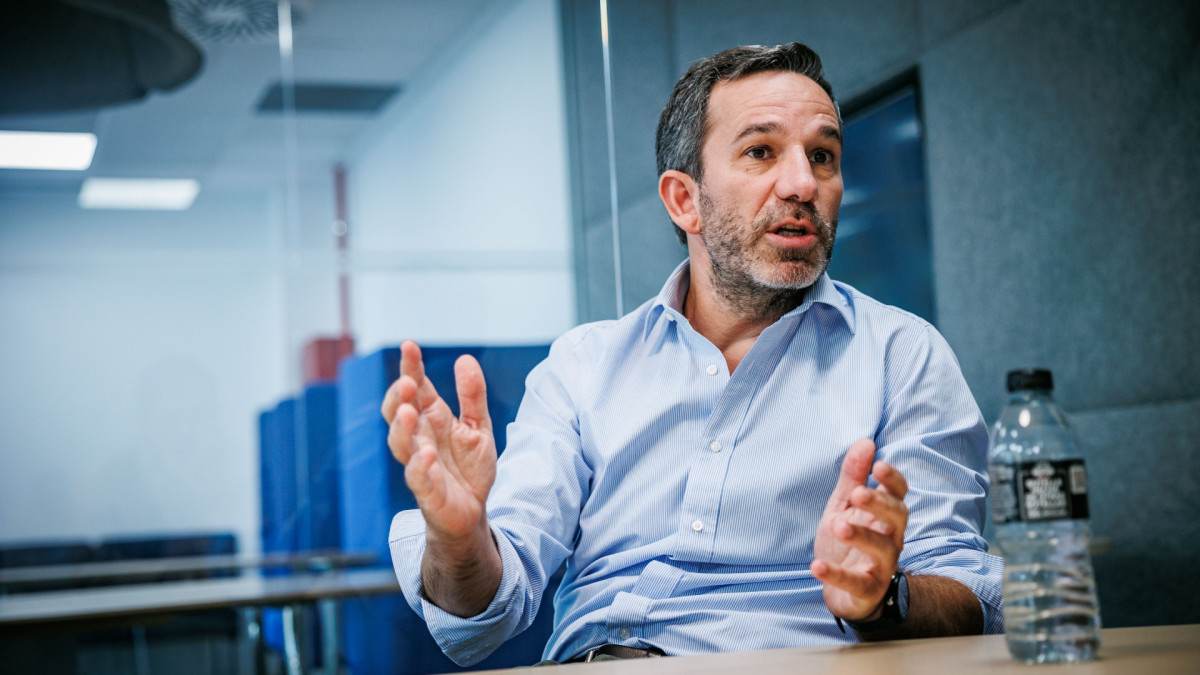
Juan Olivera defends a common European regulation to protect strategic infrastructures and reduce risks. Photo: Agenda Pública / Tania Sieira
We have talked about the United States, but you still haven’t mentioned China. Is Europe protecting its companies sufficiently from the entry of technically advanced and powerful Chinese companies in this field?
I’m not going to talk about specific nationalities. Since 2019-2020 there is the 5G Toolbox recommendation. It is not my place to name nationalities. There is an assessment by the European Commission and then by each government to determine which providers are considered high risk.
Accordingly, decisions are made. Some countries have made them, some have done them partially, and others have not done them at all. Now there is the Cybersecurity Act, with the aim of adopting a European-scale decision.
From our point of view it makes sense. First, because we are talking about protecting a strategic asset of European citizens, of our way of life, of our societal values, of business and of national security.
It also makes sense because, if we are asking for scale, we need a common regulation and not twenty-seven different ones. It cannot be considered that a provider does not pose a certain risk in one country and that, crossing the border, the situation is different. To have a market capable of scaling, we need a common regulation.
The cybersecurity regulation of technological assets is very important. We think it makes a lot of sense, but it is not for us to say who should and who should not.
Moreover, we believe Europe has an obligation to defend European companies, just as Spain defends Spanish ones, France defends French, and China and the United States defend their companies. We’re not saying anything unusual.
“You cannot consider that a provider does not pose a certain risk in one country and that, crossing the border, the situation is different”
There are European countries that have already made decisions of this kind. And there are countries where technology from certain markets has not been present for many years without this causing a delay. It happens in the United States, Japan or Korea.
It is not about taking aim at anyone. It is about asking ourselves what we want as a European society and under what values we want these technologies to operate. Our values, the ones chosen by European citizens.
Returning to what I said at the beginning: where there are no alternatives there are dependencies, at least temporarily. Investment cycles are long. But where there are alternatives, why depend on third parties if it is not necessary and if it is a strategic asset? I find it quite obvious.
Here also arises a question related to price. To achieve greater strategic autonomy, even if dependencies persist, do Europeans have to accept paying more for certain technological products because other providers can offer them cheaper?
I don’t think there is a need to pay more. That is not what we see.
In countries where decisions have already been made regarding certain technologies or high-risk providers, there has not been a negative impact on consumers.
When we talk about mobile technology we are not saying: “This provider is bad and we will remove it tomorrow.” We are not talking about that. There is a decision process and an evaluation of existing assets. We understand there may be some impact, but the lifecycle of a mobile network can be six, seven, or eight years.
When certain decisions have to be made, there will be an adaptation period. I do not see why that should translate into an impact on consumers. We operate in 180 countries and have experience in all those markets. We see prices and we do not observe that effect.
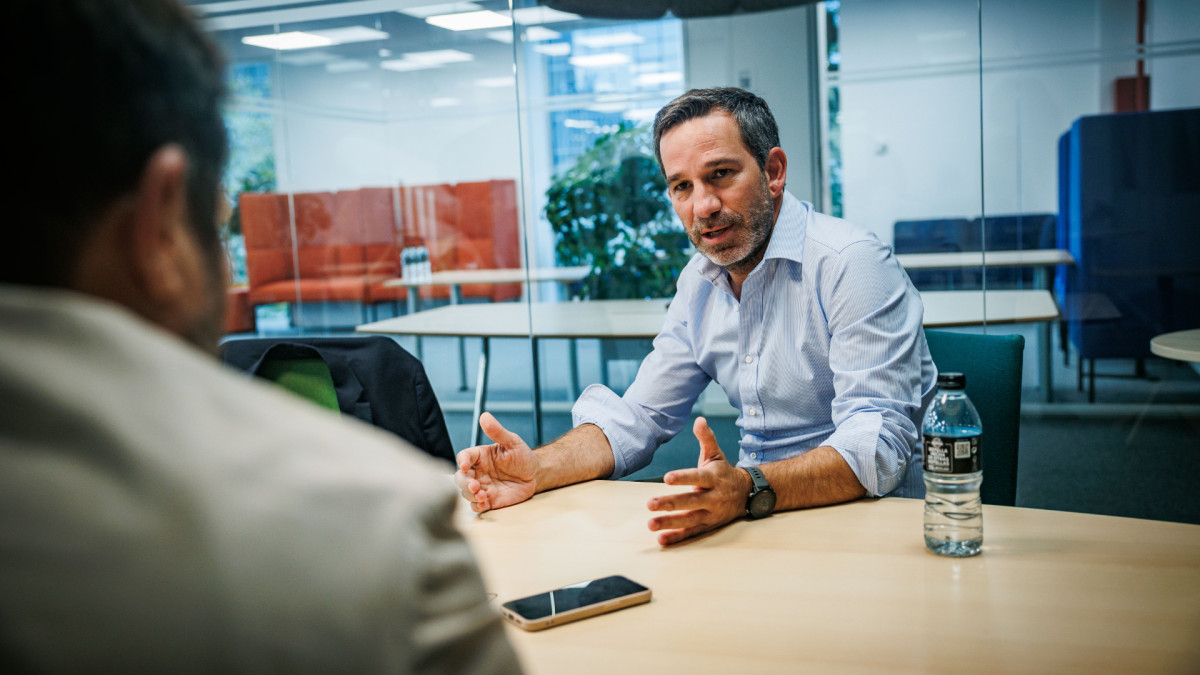
Olivera addresses the cost and timelines of reducing dependencies on providers considered high risk. Photo: Agenda Pública / Tania Sieira
Ericsson operates two R&D centers in Spain, in Madrid and Málaga, employing around a thousand people. What capacity does Europe have to innovate compared to the other two major tech hubs, China and the United States?
As a country, innovation is fundamental. There are statistics that, if I recall correctly, place Spain’s R&D at around 1.5% of GDP, with a target to reach 3%. Moreover, a very large portion of funding remains public. Private funding should represent two-thirds, and today, if I recall correctly, it accounts for about one-third. There is a lot to do.
Our experience is that the Madrid R&D center, the largest, has been in operation for almost forty years. Here, core network solutions are developed that are sold worldwide. They are made in this building. And here more patents per employee are filed than in any other country in the world within Ericsson.
Within Ericsson?
Yes. An R&D center like this is an asset that every country wants to attract. We can bring our clients here and, when we talk with the Government, we address all these issues.
We need regulation that favors this kind of investment. We can discuss whether the current one is sufficient or not. We are talking with the government and conveying issues that would help us: clearer rules or no disparities between the Ministry of Science and the Ministry of Finance about what is considered R&D.
We have conversations in which we convey our problems and I believe they listen; indeed, I know they do.
We do it here because there is talent. Spain is no longer a cheap country and we are not here for costs. The hourly cost is not what it used to be forty years ago; that has changed a lot.
We are here because there is talent and because the number of patents produced in Spain and their relevance give us significant weight within the Ericsson universe.
We return to the ecosystem I mentioned earlier. We need regulation that allows us to grow and we need Europe to help us as well.
When you look at how China and the United States act toward their companies, it seems to me —and I’m speaking about Ericsson, but I could be talking about other European companies— that Europe does not do the same. Europe should protect its companies, because we employ many people.
“When you look at how China and the United States act toward their companies, it seems to me that Europe does not do the same”
We live in a world where, on both sides, there is a clear understanding that companies that generate employment and constitute strategic assets must be protected. Those are some of our requests.
The Spanish R&D center is a benchmark within Ericsson and Spain is also one. I don’t have the exact figure, but I am sure there are not many foreign companies that have been doing R&D or investing in innovation in Spain for a hundred years.
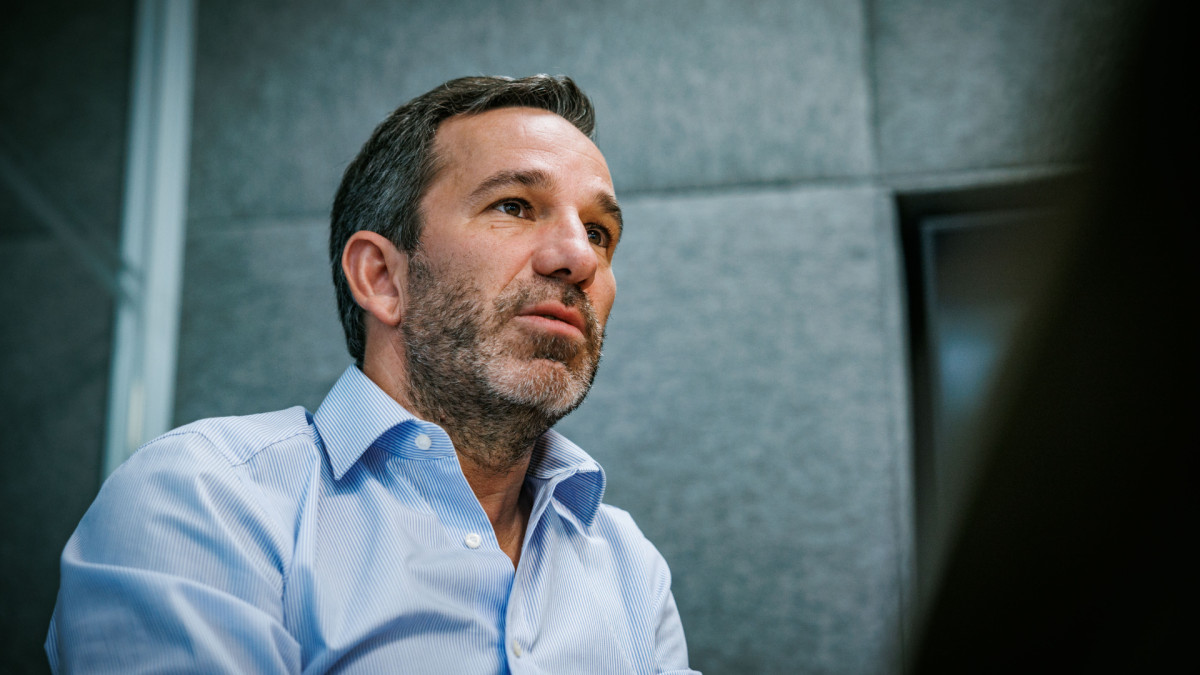
The president of Ericsson Spain highlights the weight of talent and R&D in the company’s position in Spain. Photo: Agenda Pública / Tania Sieira
What does the 6G challenge mean for Ericsson and for the world?
I don’t want to talk too much about 6G. I’ll explain why: we are still discussing 5G. I think there is a certain consensus, and we also perceive it, that 5G has not fulfilled the expectations placed on it, or at least not yet. There is still much to do.
The same architecture is now evolving toward 5G Advanced, which incorporates more advanced capabilities based on artificial intelligence, energy efficiency, and other improvements. After all that, 6G will come, but it won’t be immediate. The standard is still under development. We are conducting tests on the 6 GHz band and there is not yet a final agreement.
How do we envision 6G? As an architecture native to artificial intelligence. 5G was not born that way, though it is being adapted.
We talk about an “intelligent fabric”: connectivity —5G Advanced and, later, 6G—, the cloud layer and the artificial intelligence layer, all working together for different applications and real-time AI uses, enabling differentiated services.
There is still a long way to go with 5G. There are talk of concept tests perhaps by 2029 and spectrum available for auctions by 2030. Several years remain, and six years in technology is a long time. These cycles last roughly a decade.
Should telecommunications networks be protected and considered instruments of a country’s security?
Absolutely. When we talk about security I’m not only thinking of a tank on the border. We are also talking about cybersecurity.
Mobile networks underpin the connectivity of energy networks that supply us with electricity and also that of hospitals. If all that collapses, we are facing a 21st-century type of attack.
“Mobile networks underpin the connectivity of energy networks that supply us with electricity and also that of hospitals”
The public networks we rely on are the foundation of all connectivity. Governments understand this. Since the blackout that Iberia experienced, Spain has been considering a resilience project for networks that addresses, among other things, their autonomy during certain hours. There is consensus that the network must be resilient and cannot fail. The reason is that it sustains essential services.
Moreover, we think that networks such as those used by police or the army will evolve from current systems like TETRA or Tetrapol toward 4G and 5G networks. They will be able to use part of the public infrastructure and also have their own private infrastructure.
When we talk about increasing defense spending and meeting certain expenditure targets, a portion of all that is also in communications infrastructure. Without communications there is nothing. Ukraine showed us to what extent they are and will be essential.
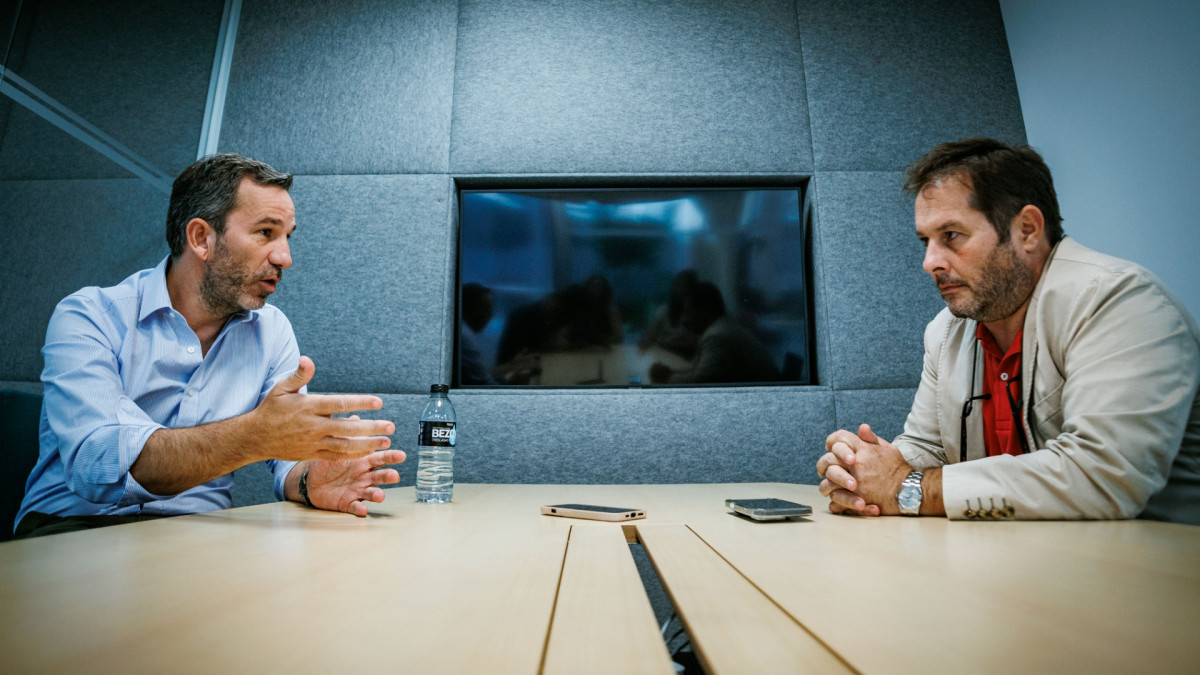
Olivera and López Plana discuss 5G, the forthcoming 6G, and the role of networks in national security. Photo: Agenda Pública / Tania Sieira
And why is it important that this decision be clear?
Because until the rule is clear, investment is stalled. Before investing, it is necessary to know the rules.
When they are clear, investment should be encouraged and one should rely on the scale we already have. There you have the spectrum and everything related to the Digital Networks Act: that the spectrum is accessible and has a sufficient duration, or the debate about the consolidation of the major operators. In Spain we have already seen a merger and we are also witnessing moves in France.
Progress is being made, albeit slowly.
Europe must be capable of operating at the scale it already possesses. It is the second-largest integrated market in the world. In the United States there are three large operators. That scale is important because it gives them the capacity to invest.
For a small operator, the price of technology weighs more. An operator with scale has the ability to invest, offer innovative services and keep the network up to date.
Beyond business interests, how can we better convey to the public the importance of the issues we’re discussing?
I wouldn’t say we have failed, but we have not been able to communicate to society the importance of those invisible networks that are the backbone of the economy and society. I’m speaking about the sector in general. People assume they have connectivity. But technology is complex and costs money. In R&D and in technology one must work every day. Everything moves very quickly. Perhaps we have not sufficiently explained the importance of infrastructure.
Since the blackout, people talk about it more. If the mobile stops working, if there is no electricity, the network stops too. People are not always aware of all those dependencies.
It also happens with artificial intelligence. There is a lot of ignorance. Five years ago everyone talked about the metaverse, and now it’s almost forgotten. People even spoke about buying islands or vacationing in the metaverse.
We have entered artificial intelligence, but not the metaverse.
Other sector colleagues use the concept of “invisible infrastructure,” and I think that is apt. It is fundamental. We have to use it responsibly, control it and protect it, because our lives depend on these infrastructures.
Not only in conversations with friends or family. I speak about companies, data, and the importance of that data.
All these issues must be on the table. If there is no trust in the infrastructure, one cannot trust the artificial intelligence that operates on it.

Marc López Plana and Juan Olivera, at Ericsson’s offices in Madrid, at the end of the conversation. Photo: Agenda Pública / Tania Sieira
The answer could be: “I don’t know who is behind it.”
It isn’t known. It may have been technically verified that the provider A’s infrastructure has no backdoor, but then one must ask: who controls it? Who owns it, and what capability could it have tomorrow over it? That also has to be verified.
Traditionally we have spoken of two layers of security: the product and the services. Now we add a third layer, governance: who controls all this. That is key.
Thank you very much.
[advertising off]
