
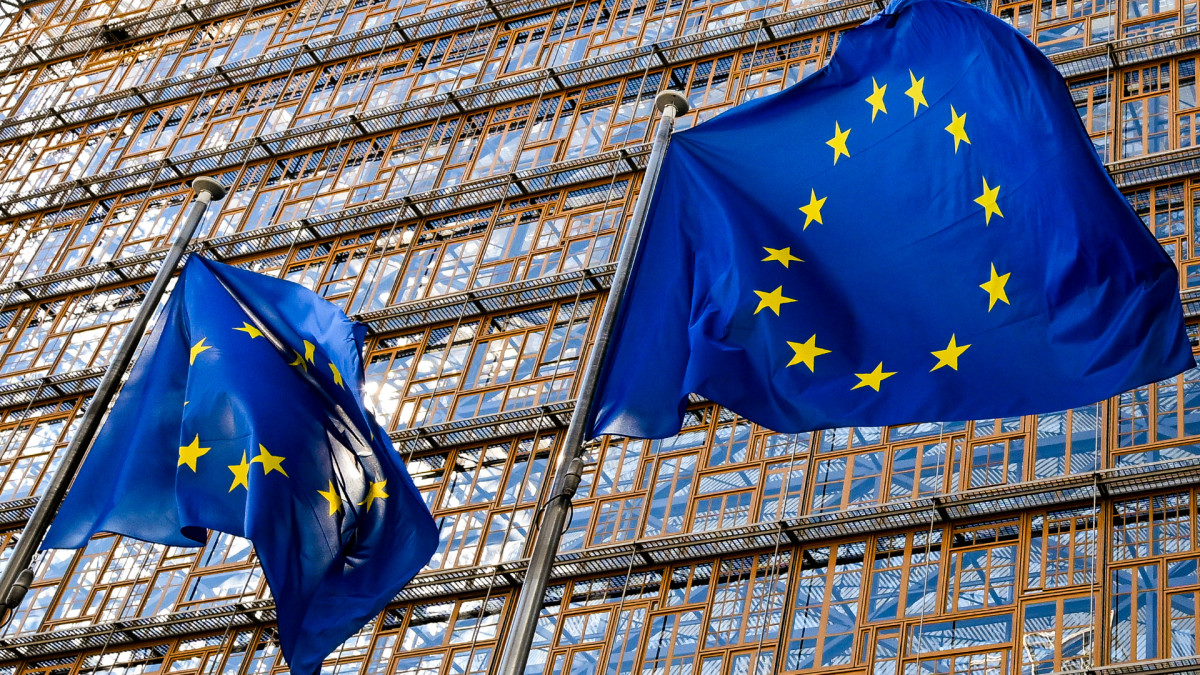
The European Union has progressed throughout its history in response to the challenges it faced. Jean Monnet noted this in his memoirs, published in 1976: “I always thought Europe would be built in crises.”
This time, the impetus to rethink the project might not come from an external event, but from political debate within the member states themselves. Vox advocates “a Europe of sovereign nations that cooperate freely” and calls for “reclaiming sovereignty” against Brussels. Giorgia Meloni argued this month in the Italian Senate for “a confederal Europe” of “free nations.” Marine Le Pen announced in Brussels, on October 14, her proposal to subordinate the Commission to the governments, and the German AfD proposed, a week later, replacing the direct election of the European Parliament with national delegates.
With Le Pen’s National Rally (RN) leading in the polls for the 2027 presidential elections, that idea could reach the European Council on the shoulders of a founding state.
The proposal deserves analysis, not caricature, because it lays bare the question the Union has dodged for decades: what kind of political community do Europeans want to be and who decides within it.
Seventy-five years of a common project
The Schuman Declaration of May 9, 1950 proposed to place the production of coal and steel of France and Germany under a common authority, open to other countries, so that a war between them would be “not only unthinkable but materially impossible.”
From that European Coal and Steel Community, founded in 1951 by six countries, the Roma Treaty of 1957 emerged and, over time, a Union of 27 States. Integration progressed in stages: a customs union completed in 1968, a single market in force since 1993, after the 1986 Single European Act, and a common currency since 1999. Common policies expanded from four—agricultural, trade, competition, and transport—to areas such as the environment, energy, the digital market, migration, or the defense industry.
“Marine Le Pen presented in Brussels her proposal to subordinate the Commission to the governments, and the German AfD proposed, a week later, replacing the direct election of the European Parliament with national delegates”
The single market, which in 1993 encompassed 345 million people, now brings together about 450 million consumers and 34 million companies. With a GDP of 23 trillion dollars, according to the IMF, the Union is the second-largest economy in the world. The Commission estimates that the single market has raised its GDP by between 3% and 4% and has created 3.6 million jobs since 1993. More than 18 million people have participated in Erasmus since 1987, and, according to the 2026 Eurobarometer by the European Parliament, 74% believe their country has benefited from belonging to the Union.
Integration has also brought its members closer together. In nominal terms, the euro forced convergence in inflation, debt, budget deficit, and long-term interest rates. In 1995, inflation was 9.7% in Greece, 5.2% in Italy, and 4.8% in Spain, compared with 1.9% in Germany; by 1998, inflation in the future euro area had fallen to 1.1%, and the gap between ten-year bonds of the participating countries was about 40 basis points. In real terms, the 2004 enlargement sparked a strong convergence process. GDP per capita in PPP terms for Poland, Lithuania, and Romania stood at 47%, 48%, and 32% of the EU-25 average; in 2025, with the EU-27 as reference, it was 81%, 87%, and 78%.
Challenges and responses
The Union has not progressed in a straight line. In 1965, De Gaulle vacated France’s seat in protest over agricultural subsidies and the advance of qualified majority, and he paralyzed it for six months until the Luxembourg Compromise established de facto a national veto in vital matters in January 1966. In 1992, Denmark rejected the Maastricht Treaty with 50.7% against, and only an exceptions system allowed its entry into force. In 2005, the French and Dutch rejected the European Constitution, the latter with 61.6% no. The Lisbon Treaty recovered much of its content in 2007, a departure some interpreted as a way to sidestep voters.
The 21st century accelerated the pace. The euro crisis led to the creation of the European Stability Mechanism, a common banking supervision and Mario Draghi’s “whatever it takes.” In 2015, the Union recorded more than 1.2 million asylum seekers for the first time, a challenge that divided partners up to the Migration and Asylum Pact of 2024. The Brexit of 2016 produced no imitators. The pandemic gave rise to NextGenerationEU, 806.9 billion euros financed with common debt, and the Russian invasion of Ukraine brought sanctions, joint military aid, and the status of candidate for Kyiv and Chisinau.
“In 2015, the Union registered more than 1.2 million asylum seekers for the first time, a challenge that divided partners up to the Migration and Asylum Pact of 2024”
Each of these challenges has left the Union with more tools and more powers, but not always with more perceived legitimacy. Many steps were taken at extraordinary summits or through intergovernmental treaties, with the European Parliament’s role limited, which in 2025 brought the Council before the Court of Justice for approving defense loans without its participation. Sovereignists describe this as a continuous transfer of sovereignty to Brussels, although many of these decisions were taken by the governments themselves.
A long-running debate about the future
The Union has long faced several fundamental challenges: the difficulty of reaching agreements among 27 governments with divergent interests, how deep to deepen economic integration once the common currency exists, and a citizenship that demands more say in European decisions. None of these is new, and for all of them the institutions themselves have proposed reform.
In June 2015, the presidents of the five major European institutions signed the Five Presidents’ Report, which proposed completing by 2025 the Economic and Monetary Union with a financial union with a common deposit guarantee, a euro-area fiscal union with a Eurozone treasury, and a political union with greater accountability. The deadline expired last year without being met.
The two most ambitious components reveal why. The European system of deposit guarantees was never approved, stuck between those who wanted to share risks and those who demanded reducing them first. And the common debt, which Merkel had dismissed “as long as I live,” only arrived with NextGenerationEU and for defense loans, always as an exception. Integration advances when it distributes benefits and stalls when it forces risk sharing.
“La integración avanza cuando reparte beneficios y se atasca cuando obliga a compartir riesgos”
Institutional debate ran a similar course. In 2017, the White Paper on the Future of Europe proposed five scenarios, from sticking to the internal market to doing much more together. The Conference on the Future of Europe closed in 2022 with 49 proposals and 326 measures, whose implementation has been uneven. In 2023, a Franco-German group of experts proposed extending qualified majority voting and preparing the Union for expansion by 2030, and the European Parliament approved a reform of the Treaties that extended qualified majority to areas such as foreign policy, reduced the Commission to 15 members, gave Parliament initiative status, and expanded European competences in health, industry, energy, or defense. The European Council, which has the power to convene the convention necessary to discuss this reform, has not done so.
The proposals have been on the table for more than a decade; what has been lacking is political will. Governments have preferred to maintain the status quo rather than open a fundamental debate about the model.
The limits of the current architecture as seen by the sovereignists
Every reform proposal starts from a diagnosis of what is failing. The sovereignist parties’ diagnosis points to the Union’s architecture and boils down to two questions: how much decision-making goes to Brussels and how it is decided. It is worth examining them carefully, because some of the limits they identify are also acknowledged by the European institutions themselves.
The first is the scope of its competences, which have continued to grow since the fifties. Part of that expansion has occurred indirectly: the internal market’s legal basis, which allows decision-making by qualified majority since 1987, has been interpreted more and more broadly, to the point that its critics and some national constitutional courts have accused the Union of acting beyond what the Treaties authorize. This critique is joined by another, distinct one about the volume of rules. Between 2019 and 2024, the EU adopted around 13,000 acts, compared with around 3,500 federal laws in the United States, though the European figure includes implementing acts. The Commission itself acknowledges the problem and has begun a regulatory simplification process, with ten reform packages since 2025 and the aim to reduce administrative burdens by 25% and burdens on SMEs by 35% before 2029.
Monitoring mechanisms have also failed to provide checks. National parliaments have produced more than 500 opinions in which they objected, under the subsidiarity principle, that a European proposal should be regulated at the national level. But only on three occasions since 2009 have they gathered the necessary support to trigger the so-called “yellow card”, and only one led the Commission to withdraw its proposal.
The second is the way decisions are made, and in particular, who has the last word. The majority of legislation is now adopted by qualified majority, i.e., backing from at least 55% of the States representing 65% of the population, in addition to the European Parliament. A country can thus be compelled to apply rules it voted against. Unanimity remains only in the most sensitive areas, such as reform of the Treaties, taxation, foreign policy, or the budget, something these parties consider insufficient. Vox, for example, calls for restoring it where sovereignty requires, and the Patriots advocate keeping the veto right.
“The unanimity remains only in the most sensitive areas, such as treaty reform, taxation, foreign policy or the budget, something these parties consider insufficient”
From their perspective, the veto is the last guarantee of national interests. Since 2011, 15 States have used 48 vetoes on 40 issues, led by Hungary, followed by Poland. To its detractors, it is a tool of pressure that paralyzes the Union. For the sovereignists, it is proof that States can still defend themselves against decisions they deem contrary to their interests. Hence they view with suspicion the Brussels workarounds that circumvent these blockages, such as reinforced cooperation to fund with common debt the 90 billion in aid to Ukraine, excluding Hungary, Slovakia, and the Czech Republic, or the emergency clause of Article 122 to freeze Russian assets. They interpret them as shortcuts to imposing decisions that, in their view, undermine the Union’s democratic spirit.
Why the parties that want to reform the Union are growing
The starting point is paradoxical. Never in two decades had so many Europeans supported some of the Union’s major policies: 81% support a common defense, and 74% support the euro, their all-time high, according to the Eurobarometer of spring 2026. In France, support for the EU has risen from 38% in 2016 to 52% in 2026. Yet that support does not translate into solid trust in its institutions: trust in the Union, while at its highest since 2007, barely reaches 51% of citizens.
“The trust in the Union, while it is at its highest since 2007, barely reaches 51% of citizens”
And the parties questioning its course have never had so much weight. The 2024 European elections left Patriotes pour l’Europe, Conservatives and Reformists, and Europe of the Sovereign Nations with 187 of the 720 seats. In the European Council, parties critical of the Union’s trajectory or some of its flagship policies govern in Italy, Slovakia, and the Czech Republic. And where they do not govern, they are gaining ground. Alternative for Germany leads in voting intention with 26%, ahead of the CDU/CSU’s 23%; the RN leads the polls for the French presidential elections with between 33% and 36%; the Austrian FPÖ hovers around 36%; Chega has become the second force in the Portuguese Parliament since 2025; and Vox reaches 17.1% in the CIS poll.
These parties do not declare themselves anti-European, but rather opposed to its current design. Since Brexit, the promise of leaving has yielded to the promise of reforming the Union from within. You can support the EU and, at the same time, vote for those who promise to change it.
There are several reasons behind that vote.
Economic. Between 2019 and 2025, the real GDP of the Union grew by around 7%, less than half the growth of the United States, which approached 15%, and EU productivity per hour worked stands at about 78.5% of the American figure. The gap is felt in real incomes: in purchasing power parity, EU GDP per capita is about 73% of the US level, according to the IMF. And wages did not keep pace. Between 2020 and 2025, real wages per hour fell by 3% in the EU, because prices rose faster than wages, and in Italy, Spain, France, and Germany they remain below 2020 levels, according to Eurostat data.
Small enterprises live this up close. They account for 99.8% of the business fabric and employ two out of every three workers, but for many, growing or exporting outside their country remains a hurdle. The IMF equates internal barriers of the single market to tariffs of up to 44% in manufacturing and 110% in services, and operating with 27 different legal frameworks is costly for those without a legal department. According to a 2025 Eurobarometer, 70% of SMEs sell only in their national market and nearly two-thirds cite regulatory complexity as their main obstacle to growth. The sovereignists attribute much of this stagnation to Brussels’ overregulation and promise to ease it by returning competences to the States, a message that resonates with those who feel the promise of shared prosperity of the single market is fading.
Industrial and energy sectors. The dual transition, green and digital, reduces dependence on imported fuels, attracts investment, and can place Europe at the forefront of sustainability. But its timelines and its regulatory density, not only climate-related, have weighed on the competitiveness of industry, and their effects have been felt in employment. The automotive sector is the clearest example: suppliers announced 104,000 layoffs between 2024 and 2025, compared to only 7,000 new jobs in 2025. The Commission has adjusted course along the way: it loosened 2025 emission targets, proposed in December to soften the ban on selling combustion-engine cars from 2035, and has postponed some obligations of its AI Act to 2027 and 2028.
The price of energy transfers these problems to households. The Union imports almost 60% of the energy it consumes, and its industry pays electricity at more than twice the price of the United States and China, and gas at about four times more, according to the Commission. That cost ends up in households: in September 2026, EU inflation rose to 3.8%, driven by an 18.9% rise in energy, and the cost of living is now the main personal concern for 52% of Europeans, according to the latest Eurobarometer. In industrial regions, where layoffs are concentrated and energy bills weigh more heavily, those who attribute the costs of the transition to Brussels find resonance in this view and promise to return control of their energy and industrial policy to the States.
Migratory policies. First-time asylum applications fell by 27% in 2025, to 669,400, but the perception of disorder persists: eleven Schengen states have reinstated controls at internal borders, a national response to a problem the common system has not resolved in the eyes of voters. For a portion of the electorate, concerned about security and preserving their cultural identity, the sovereignist promise of regaining border control is particularly appealing.
Policies. The party system that built the Union has eroded. In 2019, the center-right and social democrats lost for the first time since 1979 the joint majority they had in the European Parliament, and the space left to new formations. That same year, the Twenty-Seven rejected as Commission president the leading candidates that the European parties had presented in the campaign, a further indirect link because each citizen votes for national lists rather than the candidate, which fed the idea that the European vote weighs little. The rule-of-law procedures — open against Poland in 2017, closed in 2024, and open against Hungary in 2018, still pending closure — have been seen by some as a defense of common values and presented by others as interference in national affairs. The normalization of these new forces, who govern in several countries and achieve parliamentary majorities at times in the European Parliament, has reduced the cost of voting for them.
“The normalization of these new forces, who govern in several countries and achieve parliamentary majorities at times in the European Parliament, has reduced the cost of voting for them”
Social and territorial concerns. Convergence between countries has coexisted with divergence within them. 28% of Europeans live in regions with per-capita GDP below 75% of the average, and around a third of regions had not recovered to 2008 levels by 2021, according to official data. The Commission warned in 2024 that this situation “fuels frustration that is increasingly turning into political discontent,” and the European Committee of the Regions now estimates 135 million Europeans live in stagnant or declining regions. On issues that matter most to citizens, such as housing, wages, or social protection, the Union has few instruments. The sovereignist vote is, to a large extent, the vote of the regions that feel left behind.
Different versions, a single direction
The parties that advocate a united alliance of sovereign states do not share one model. Meloni’s Conservative and Reformist group claims from the Prague Declaration “the sovereign integrity of the nation-state,” but with a pragmatic approach, influencing from within the institutions without blocking common decisions. The RN focuses on reducing the common budget, albeit preserving some shared instruments. Vox emphasizes the legal dimension, demanding the restoration of unanimity where sovereignty requires it and the primacy of the Constitution over European law. The AfD proposes the deepest institutional reform: return power to the European Council, abolish the direct election of the Parliament, and require a referendum on Germany’s continued membership if that reform fails.
There is no single text or roadmap detailing which competences would return to capitals, which institutions would stay, or what financing that alliance would require. They share a goal, but not their content.
Under one banner coexist national interests that clash with one another. Italy, the main beneficiary of NextGenerationEU, would have little to gain from a permanent ban on common debt proposed by Germany’s AfD. The budget presents the same tension: the Institut Montaigne warned that Le Pen’s proposed cut in French contributions would clash with the interests of net providers such as Poland or Hungary. And in foreign policy, Russia and Ukraine have pitted Polish and Hungarian sovereignists against one another. The sovereignty that all claim does not mean the same thing for everyone.
Nevertheless, the direction is common: fewer competences for Brussels, a Commission with less influence, more power to the capitals, and primacy of national law. Even if that alliance does not materialize, the trend already shapes the debate.
What would a alliance of sovereign nations entail
Without a common text or roadmap, the effects of the proposal can only be inferred from precedents. Three of them allow us to anticipate what would change for citizens and businesses.
“Russia and Ukraine have confronted sovereignists in Poland and Hungary. The sovereignty that everyone claims does not mean the same thing for each one”
The first relates to who has the last word. Vox defends the primacy of the Constitution in matters of general interest, and the AfD wants to turn the Court of Justice into an arbitral tribunal. Since the Costa v. ENEL ruling of 1964, the primacy of European law ensures that the same rule is interpreted identically across all 27 member states. Thanks to it, a relocated worker, a consumer who buys in another country, or a small or medium-sized enterprise that exports can invoke the same rights in any member state. Without this primacy, the expansion of competences through the judicial route would be blocked, as desired by the sovereignists, but each national court would apply the common rules in its own way. As summarized by analysts at the Institut Jacques Delors, “if national law prevails, European law ceases to exist.”
The second concerns the market. An alliance of sovereign nations would not so much mean leaving the single market as redefining it, and its effects would depend on how much integration remained. Countries that approach the Union from outside offer a reference.
At one extreme, Norway, Iceland, and Liechtenstein participate in the single market through the European Economic Area. They adopt its rules without voting on them and accept that a body and a separate court monitor their compliance. Switzerland sits at a middle point, with sectoral bilateral agreements that give it access to parts of the market and, until now, had to be negotiated and updated one by one. The new package signed with Brussels in March 2026, awaiting ratification, provides that it dynamically adopts the evolution of European rules.
“An alliance of sovereign nations would not amount to leaving the single market so much as redefining it”
On the other end, the United Kingdom regained regulatory control in exchange for customs checks, certificates of origin, and less cross-border exchange. A study by Stanford researchers, the Bank of England, King’s College London, and the University of Nottingham estimates that by early 2025, the UK’s GDP was between 6% and 8% lower than it would have been had it remained in the Union, and business investment was between 12% and 18% lower.
The more the alliance moves away from common rules and arbiters, the more it will resemble the latter model. Trade policy follows the same logic. It remains an exclusive EU competence because a market with no internal tariffs requires a common external tariff. No party has formally proposed reclaiming it, but if each state negotiated on its own, it would lose the weight of a bloc of 450 million consumers.
The third concerns how decisions are made. With more unanimity, the rest of policies would operate as today—foreign policy and taxation, where a veto can stall a decision. For the sovereignists, it is the guarantee that no country is forced to act against its will. In practice, it would also mean more blockages and a Commission tasked mainly with coordination. This Commission is the body today safeguarding competition and state aid, and without it the weight of each capital would lean more on its size. If the Union cannot reach consensus, it tends to decide separately, which weakens its ability to negotiate with the United States or China.
“That Commission is today the guardian of competition and state aid, and without it the weight of each capital would rely more on its size”
The balance for citizens would depend on what is kept. The proposal would grant more national control over borders and migration and a smaller contribution required from net contributors. By contrast, rights such as free movement, Erasmus, or the European Health Insurance Card depend on the same common framework that is meant to be lightened. And a smaller budget would chiefly cut cohesion policy, on which the most lagging regions rely.
What Europe project and when
However one views it, the proposal for an European Alliance of Sovereign Nations expresses a demand that goes beyond its voters: to explain what the Union is for, who decides in it, and what outcomes it offers.
As a reform, it has a difficult path. Transforming the Union into an alliance of states would require altering the Treaties, and that requires unanimity of the 27 and ratification in each country, a bar that no significant reform has surpassed since Lisbon. Yet its relevance does not depend on its approval. What matters is the direction it signals: less competences for Brussels, more power to the capitals, and greater distrust of common solutions.
“What matters is the direction it signals: less competences for Brussels, more power to the capitals, and greater distrust of common solutions”
After Spain’s elections on November 29, 2027 looms with presidential elections in France and legislative elections planned in Italy, Poland, Greece, Finland, and Slovakia that could alter the composition of the European Council. If that direction gains weight at the table, the Union will not need to change its Treaties to change how it functions: it would suffice to have more governments willing to use the veto, to curb decisions by majority, or to block the solutions that today enable circumventing it.
The Union has overcome the empty chair, the No votes of 1992 and 2005, the euro crisis, Brexit, and the pandemic, and almost all of those challenges ended with greater capacity. The debate about what Union Europeans want could open sooner rather than later, not by a decision of the institutions, but by governments arriving at the table with a different vision of the project.
