
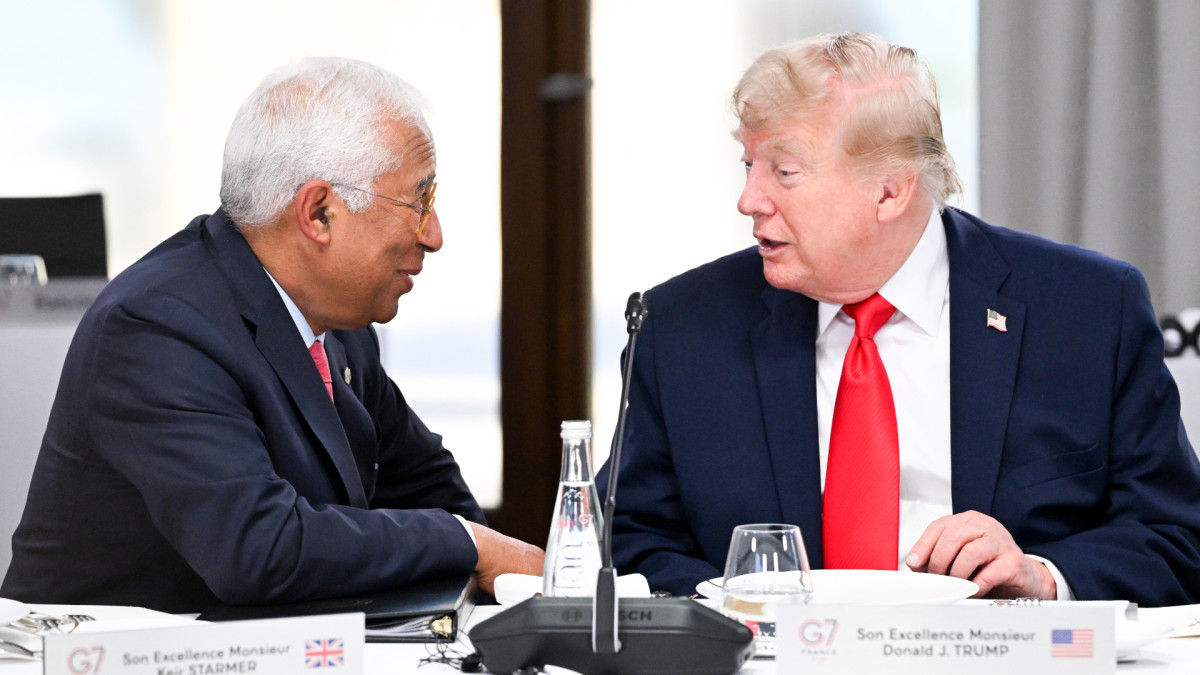
El orden internacional atraviesa una fase de endurecimiento en la que la fuerza vuelve a presentarse como atajo, la legalidad como obstáculo y la seguridad como justificación casi ilimitada. Las guerras se encadenan al tiempo que las instituciones multilaterales pierden capacidad de contención y las grandes potencias actúan desde la ansiedad de un mundo que ya no controlan por completo. Ese es el escenario del Consejo Europeo que se celebra esta semana en Bruselas. Europa, que continúa preguntándose qué lugar ocupa entre los grandes actores globales, también debe decidir qué clase de poder está dispuesta a ejercer en un momento en que la política internacional parece deslizarse hacia una normalización de la brutalidad.
Su agenda —Ucrania, Oriente Medio, defensa, ampliación, competitividad, marco financiero plurianual y seguridad económica— remite a una misma cuestión: si Europa posee los medios, la unidad política y la coherencia normativa necesarios para defender su modelo democrático en un contexto de auge de la coerción.
“Europa, que continúa preguntándose qué lugar ocupa entre los grandes actores globales, también debe decidir qué clase de poder está dispuesta a ejercer”
That question evokes an old literary intuition: the possibility that an entire community ends up navigating under the obsessions of someone who has mistaken their wound for everyone’s fate. In Moby-Dick, Herman Melville does not merely portray a captain driven mad by the chase of a whale. He shows how a closure to the outside can force its own logic upon an entire crew. In the work, Captain Ahab turns danger and loss into an absolute mission for which every restraint seems secondary.
Europe in the face of Trump: a transatlantic alliance without subordination
The image sheds a clear light on the present moment. A power that reads the world through the anxiety of its own decline tends to turn every conflict into a stage for self-assertion. Each adversary becomes an existential threat, each ally a piece to be aligned, and each institution an obstacle if it does not serve the immediate objective. The second Trump administration has elevated that logic to a level that compels Europe to rethink its stance. Under his leadership, the United States has become a source of unpredictability, pressure and disorder.
Its foreign policy responds to the will to restore a primacy based on military pressure, economic coercion and disdain for multilateral mediation. Against Washington, China stands as the great mirror of American fear of historical displacement, while Iran appears as a barrier to the reordering of the Middle East. In Latin America, Venezuela and Cuba are again placed within a hemispheric doctrine never abandoned. And, finally, Gaza and Lebanon are the territories where the alliance with Israel drags Washington into a complicity increasingly hard to defend legally, politically and morally.
“A power that interprets the world from the anxiety of its own decline tends to transform each conflict into a scene of reaffirmation”
It would be a mistake to read these scenarios in isolation. The rivalry with China reorders the gaze on Latin America, while the confrontation with Iran conditions policy toward Gaza, Lebanon, Syria, Iraq, the Gulf and the Strait of Hormuz. At the same time, near-unconditional support for Israel erodes Western credibility by invoking international law in Ukraine while pressure on Cuba and Venezuela revives memories of intervention that undermine any democratic discourse subordinated to the old imperial reflex.
In Cuba, the policy of stranglehold is not delivering a democratic transition. It may, however, consolidate a siege mentality, weaken civil society, worsen the migrant crisis and turn the population into a hostage of external pressure. In Venezuela, institutional decay does not make external intervention a legitimate solution either. Democracy cannot be exported as a capture operation nor substituted by the strategic design of a power.
A mature European policy must reject the false choice between silence in the face of internal repression and endorsement of external intervention. It must defend democracy, human rights and the sovereignty of Latin American peoples simultaneously.
That same problem reappears in Iran. Reducing the country to an abstract threat simplifies the military logic, but impoverishes the analysis. War, or its permanent threat, tends to harden positions and allows any internal critique to be absorbed by the narrative of the external enemy.
“A mature European policy must reject the false choice between silence in the face of internal repression and endorsement of external intervention”
Tensions in the Strait of Hormuz further illustrate a central contradiction of Trump-era policy. Behind maximalist rhetoric, the United States ends up needing what its own discourse claims to disdain: mediation, guarantees, verification and commitments. Even the mightiest military power must return to politics when it finds that material superiority alone cannot order a region.
Hormuz is one of the points where energy, inflation, trade, European vulnerability and geopolitical rivalry intersect. Europe must safeguard freedom of navigation, but not turn a prospective naval mission into an automatic extension of another war. Its action must be connected to international law, a defined mandate and a strategy to de-escalate tensions. Otherwise, strategic autonomy would be reduced to supplying its own resources to objectives set by others.
The Middle East condenses this interdependence even more starkly. Gaza is a humanitarian crisis and, at the same time, a global test of the real value of international law. Israel’s security cannot function as a perpetual excuse to suspend the basic limits of warfare, to render an entire population suspect, or to degrade civil protection to the point of becoming unrecognizable.
No episode of violence authorizes the devastation of Gaza, the collective punishment of the Palestinian population, the systematic destruction of civilian infrastructure or the blocking of humanitarian aid. A peace without Palestinian sovereignty, rights and accountability would be nothing more than an administration of ruins.
The occupation, territorial control and the destruction of living conditions lose their exceptional character when they persist for years. They become a system. The American stance aggravates this drift by politically shielding Israel even when its actions exceed legitimate self-defense and drift into a logic of impunity.
Europe cannot merely add humanitarian language to a power architecture that keeps the fundamental asymmetry intact. Reconstruction without self-determination would not repair injustice: it could institutionalize it.
The West Bank requires a broader focus. The expansion of settlements, violent settlers, land confiscations and territorial fragmentation erode daily the viability of a Palestinian state. Defending the two-state solution without drawing consequences for its dismantling amounts to rhetorically endorsing a horizon while tolerating its disappearance.
Europe has at its disposal commercial, diplomatic and legal instruments. The dilemma is no longer the capacity to act but the willingness to use it against a government that has turned impunity into a method and the prolongation of the conflict into political strategy.
“The expansion of settlements, the violence of settlers, land confiscations and territorial fragmentation erode daily the viability of a Palestinian state”
The tragedy spills over to Lebanon. Israel cites the threat of Hezbollah. Hezbollah appeals to occupation and resistance. Iran uses its allies as strategic depth. The United States preserves its preferred alliance. The Lebanese state weakens and civilians are caught in a border turned into a zone of sacrifice. Each actor finds in the excess of the other the justification to widen their own.
Security without a horizon of political possibility becomes a Moebius strip: each operation lays the ground for the next. Israeli policy, sustained by military superiority and American cover, seems to have confused security with domination of the surrounding environment. That confusion is not a long-term protection. It encloses everyone, including Israeli society, in a war with no political exit.
Ukraine, Gaza and the problem of Western double standards
Here emerges one of the West’s great contradictions. Europe rightly defends Ukraine against Russian aggression because no power can redraw borders by force or impose another people’s political destiny. But that normative defense loses force if the West looks the other way at the devastation of Gaza or the occupation of Palestinian territories.
International law cannot become a selective language, spoken solemnly toward Moscow and treated with administrative caution toward Tel Aviv or Washington. Ukraine and Gaza function as simultaneous tests of the same idea: force cannot create rights.
If Europe accepts a peace in Ukraine based on freezing territorial dispossession and tacitly rewarding aggression, it will weaken the principle it purports to defend. It will also weaken it if it condemns Moscow while avoiding any consequences for the destruction of Gaza. Systemic inconsistency wrecks any authority.
Any legitimate negotiation on Ukraine will have to involve Kyiv, safeguard its sovereignty and offer credible security guarantees. A peace that rewards occupation would not end the war: it would institutionalize violence as a precedent. Supporting Ukraine also requires thinking about its reconstruction, economic integration and future European accession.
“If Europe accepts a peace in Ukraine based on freezing territorial dispossession and tacitly rewarding Russian aggression, it will weaken the principle it claims to defend”
Expansion toward Ukraine, Moldova and the Western Balkans is a matter of security and credibility. But expansion must be accompanied by reform. A Union with more members will need to revise its budget, its decision-making procedures and its capacity to guarantee democratic standards. Enlargement must be a strategy of peace, convergence and shared power, far from an indefinitely postponed promise.
China stands as the challenge that runs through all others. For Washington it is the great strategic obsession: technology, trade, critical minerals, artificial intelligence, sea routes and industrial capacity. Europe cannot afford naïveté. China’s political model, its subsidies and its growing influence present real challenges. Simply accepting the American bloc logic would represent, however, another surrender of European autonomy.
The imbalances arising from excessive China’s industrial capacity justify antidumping measures and controls on sensitive investments. Yet trade defense must be integrated into a broader strategy: identify vulnerabilities, diversify supply chains and anticipate retaliation. Replacing one dependence on Beijing with another on Washington would be like trading one tutelage for another.
“Europe cannot afford naïveté. The Chinese political model, its subsidies and its growing influence pose real challenges”
That is the danger of any strategic obsession: real threats become the sole interpretive principle. Europe needs a policy toward China that blends firmness, prudence and its own judgment. Reducing dependencies and demanding reciprocity does not require breaking all cooperation in areas like climate, global health or technological governance.
The alternative is to escape both yesterday’s mercantile fascination and tomorrow’s automatic confrontation. A mature Europe must compete without letting itself be dragged into a cold war organized from the anxiety of a power afraid of losing its place.
Strategic autonomy, European defense and democratic power
That is why this European Council touches a fundamental question: whether Europe is willing to become an adult political actor or whether it will continue to oscillate between the comfort of the transatlantic bond and the impotence of its own divisions.
Europe does not need to break with the United States. It must stop confusing alliance with subordination, especially at a time when its principal ally demands more loyalty and less deliberation.
The second Trump administration compels Europe to ask whether it can keep delegating its security to a power that frequently flouts the rules it claims to defend. The answer cannot be reduced to raising spending percentages or hastily buying American matériel. Strategic autonomy requires industrial capacities, common planning, air defense, cyber security, intelligence and protection of critical infrastructure.
“A mature Europe must compete without letting itself be drawn into a cold war organized from the anxiety of a power that fears losing its place”
More European defense must translate into more cooperation and more decision-making power of its own. A militarization detached from strategy would not suffice. The multiannual financial framework will be a test of historical will. Europe cannot aspire to an autonomous voice without funding it. It needs resources to sustain Ukraine, invest in common defense, strengthen its industry, ensure critical technologies and finance enlargement.
Competitiveness cannot be captured by a narrow deregulation agenda. If Europe answers the United States and China by sacrificing workers’ rights, environmental standards or social cohesion, it will have lost before it starts. Its project must demonstrate that productivity, innovation and industrial sovereignty can coexist with public services, social rights and the ecological transition.
In a world that treats dependence as a weapon, industrial policy is democratic policy. So is the energy transition. Every crisis in the Strait of Hormuz reminds us that decarbonization acts as both a climate obligation and a security policy. Reducing dependence on fossil fuels means reducing vulnerability to wars, blockades and decisions made outside Europe.
The Union should draw from this diagnosis a practical doctrine: alliance without obedience, autonomy without hedging, strength without impunity, security without dehumanization and multilateralism without naivety.
Europe should cooperate with the United States when interests and values align, but be ready to dissent when Washington chokes Cuba, imposes tutelage in Venezuela, pushes the Gulf toward war, whitewashes Israeli excesses or makes the China rivalry the organizing principle of the world.
This voice must not be uttered from a stance of presumed moral superiority. Europe has accepted dependencies, reacted late to humanitarian crises and applied international law with varying intensity. Its maturity will be measured by its capacity to act with greater coherence. Credibility does not demand purity, but the willingness to reduce its own double standards.
“Europe must cooperate with the United States when interests and values align, but be ready to dissent”
An adult Europe must know how to speak to several interlocutors at once. To Russia, to tell it that aggression will not be normalized. To Ukraine, that its future will not be a bargaining chip. To Israel, that its security does not justify devastation, occupation or impunity. To Palestine, that its rights will not be postponed until they become unrecognizable. To Iran, that regional stability cannot be built on permanent threat. To Cuba and Venezuela, that their future should not be decided from outside tutelage. To the United States, that friendship does not equal subordination. To China, that interdependence cannot become coercion.
The challenge requires escaping two traps. The first is impotent moralism: believing that Europe can influence outcomes through declarations alone, without resources, shared industry, common diplomacy or leverage. The second is cynical realism: assuming that a harsher world obliges abandoning principles to be taken seriously.
Both lead to irrelevance. One cannot act, the other, by acting like others, ceases to offer something distinct.
The task is to build democratic power. Power to sustain Ukraine without relying on Washington’s fatigue. To demand rights and a political horizon in Palestine. To contain escalation in Lebanon and Iran. To support democracy in Latin America without endorsing interventions. To compete with China without becoming trapped in a foreign cold war. To defend oneself without losing the social soul of the European project.
In a world where great powers normalize force, Europe can act as a counterweight if it turns its principles into capabilities and its capabilities into legitimate policy. That legitimacy will arise from a more demanding proposition than the nostalgia for the old liberal order, always partial and unequal: international law with less double standard, collective security with democratic control and strategic autonomy without imperial subordination.
This week’s European Council could be remembered as one more summit, wrapped in the predictable language of its conclusions. Or, conversely, it could mark a moment of awakening. Although it will not solve everything, decisive moments rarely offer complete answers: they simply change the way of looking at things.
Europe needs to stop seeing itself as a mere companion of a transatlantic power that does not always guarantee stability. It must stop treating its budget as accounting and start treating it as sovereignty. It must stop treating enlargement as a deferred promise and embrace it as a peace policy. It must stop invoking values without asking what means make them possible.
“Although it will not resolve everything, decisive moments rarely offer complete answers: they simply change the way of looking”
Melville knew that not every voyage is lost all at once. Some deteriorate slowly, as those aboard grow used to a direction that no longer leads to a safe port. The world today is full of signs: wars chained together, institutions weakened, alliances turned into dependencies and powers acting from fear.
But the novel does not end with Ahab. There remains Ishmael, not as a triumphant hero nor as an naïve promise, but as a witness capable of recounting what happened and drawing from catastrophe a form of conscience. His survival does not erase the disaster. It prevents the disaster from being the last word.
There is, in that figure, a sober hope: the hope of someone who knows the sea will always be dangerous, but also that no community is obliged to surrender its course to those who confuse resolve with pursuit.
Europe should recognize itself in that conscience more than in the grandstanding of command. If it can transform that gaze into decisions — unity, budget, external coherence, strategic autonomy and defense of international law —, perhaps it can open a different route.
Against the illusion of an ocean pacified by decree or an impossible innocence, there remains a clearer and more humane navigation. An Europe capable of looking at the storm without obeying its worst captains. Able to remember that even after disaster there can still be a voice that narrates, warns and allows us to begin again.
Because if Europeans finally acknowledge that our destiny does not lie in following the obsession of others, but in sustaining our own democratic promise, we can still make the open sea something other than the place of shipwreck: the space of a shared voyage, the hope that endures beyond Moby-Dick.
