
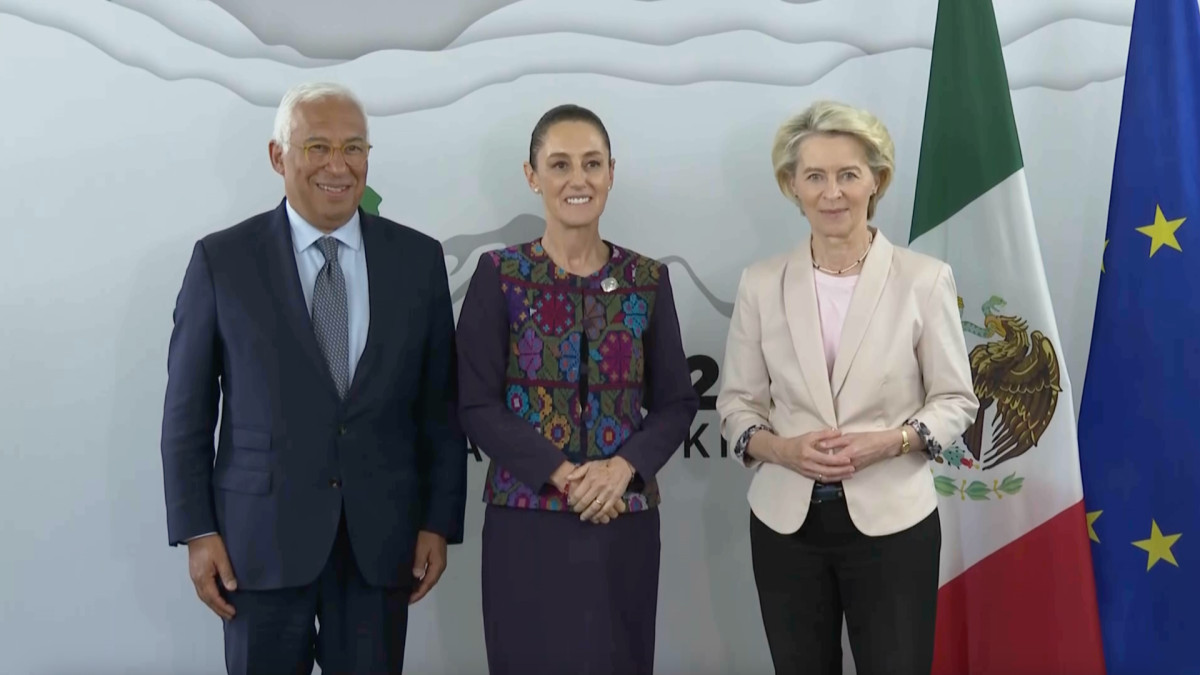
The European Union and Mexico have completed the modernization of their Global Agreement—the political, economic, and cooperation framework that has steered their relationship since 2000—at a moment that is especially pivotal for the global economy and international politics.
After a decade of talks, the signing of the updated EU-Mexico framework (at a decisive summit in Mexico City) carries heightened political significance. It marked the first bilateral summit of such a high level in ten years. The result goes beyond a mere trade pact; it spans much further, signaling the parties’ readiness to deepen their strategic partnership, with both sides embracing an open, cooperative, and rules-based vision of the international order.
The new geo-economics boost the strategic value of the EU-Mexico alliance
Over the last ten years, the global economy has undergone profound changes. It is no longer governed solely by efficiency or cost-cutting; today it is shaped by concerns such as economic security, industrial resilience, technological autonomy, and geopolitical rivalry. Sectors once considered purely economic have become elements of a broader global strategic struggle. Semiconductors, artificial intelligence, digital infrastructures, supply chains, cloud computing, and critical minerals have all emerged as instruments of power, while the lines between economics and geopolitics have blurred.
Precisely for these reasons, agreements like the newly signed EU-Mexico pact are more relevant today than they were a few years ago. This agreement cannot be viewed merely as a commercial instrument; it has an economic dimension, but it also carries an increasingly important strategic and political scope.
An economic and political relationship between reliable partners
Europe must fortify ties with dependable partners that offer institutional stability, industrial capacity, substantial economic weight, and a commitment to an open international system. It seeks allies that enable risk diversification, reduce over-dependency, and help build more resilient supply chains in an ever more fragmented, volatile, and conflict-prone global environment. Few partners today meet those prerequisites as clearly as Mexico.
Mexico stands as the second-largest economy in Latin America; it is a G20 member and one of the continent’s principal industrial hubs. Its deepened integration with the United States and Canada has positioned it at the core of the North American economy, especially in sectors such as automotive, advanced manufacturing, electronics, aerospace, and medical devices.
“Many companies are looking beyond production at the lowest possible cost and are seeking stability, proximity, preferential access to markets, and legal certainty”
Moreover, the reshaping of global supply chains has further bolstered Mexico’s international standing. The rise of nearshoring and the imperative to bring production capabilities closer to secure and predictable environments are attracting capital to Mexico. Many firms are seeking not only the lowest production costs but also stability, proximity, favorable market access, and legal certainty. Mexico offers that combination.
Its broad network of trade agreements, its export capability, and its growing technological sophistication place it among the primary potential beneficiaries of the new global economic landscape. This is why the modernization of the Global Agreement between the European Union and Mexico carries an especially significant economic dimension.
The EU is already the second-largest foreign investor in Mexico and one of its principal trading partners. More than 2,000 European companies operate there, and the modernized agreement will deepen economic integration and create new avenues for both financial inflows and industrial cooperation.
The new framework will lower trade barriers, broaden market access, and update regulatory disciplines essential to the contemporary economy. It will facilitate digital commerce, strengthen protection of investments, improve access to public procurement, and create more favorable conditions for small and medium-sized enterprises. It will also enhance cooperation on standards, intellectual property, and technical regulation.
Above all, the agreement will enable the consolidation of a more strategic partnership in sectors deemed decisive for the future of both economies.
Europe must diversify its supplies, strengthen industrial chains, and reduce dependencies in sensitive domains. Mexico can be an especially suitable partner for this strategy in fields such as clean mobility, batteries, renewable energies, digital infrastructure, advanced industrial components, and certain strategic minerals.
“Europe and Mexico defend multilateralism, international law, and the need to preserve institutions capable of managing global problems”
At the same time, Europe represents a remarkable opportunity for Mexico to diversify economically, even as the United States remains a dominant influence within its trade framework. Reinforcing ties with the European Union allows Mexico to attract new investments, expand its economic autonomy, and strengthen its position in high-value-added sectors. This logic of mutual benefit stands as one of the agreement’s main strengths, but restricting its scope to the economic sphere alone would be a mistake. Its significance is also political.
Europe and Mexico share convergent views on certain principles that should guide the international system. Both partners advocate for multilateralism, the rule of law, and the preservation of institutions capable of managing global problems in a context of rising tension between major powers.
In a moment when protectionism, unilateralism, and power politics are gaining traction, bolstering alliances among open democracies takes on obvious strategic importance.
The agreement will also invigorate political cooperation in areas such as human rights, the rule of law, international security, the fight against transnational organized crime, and climate collaboration. It will enable a deeper coordination between the two sides in multilateral forums like the United Nations, the G20, and the World Trade Organization—precisely when many such institutions are navigating a particularly difficult phase.
Mexico is not only an economic, cultural, and political force but a democracy of more than 130 million people with growing capacity to influence regional and global affairs. Its geographical position, economic heft, and ability to connect with Latin America, the United States, Europe, and much of the Global South render it a particularly significant player on the new international stage.
The ascent of Claudia Sheinbaum to the presidency coincides with a decisive moment for the country. Mexico faces a historic opportunity to establish itself as one of the most dynamic and influential economies in the new global geo-economic cycle. Its institutional stability, continued appeal to investment, and foreign policy that commits to multilateralism have all been acknowledged by Europe and observed by the international community.
“The EU-Mexico agreement reflects a deeper issue: the need to reinforce spaces for cooperation and trust”
In essence, this EU-Mexico pact reflects a deeper objective: the need to strengthen spaces for cooperation and trust among actors who remain committed to a global order rooted in respect for international law and the United Nations Charter.
Amid growing global fragmentation, Europe cannot simply react. It must intensify economic and political ties with partners who share a compatible vision of economic openness, stability, and international cooperation.
In a landscape characterized by bloc competition and a rising use of economic power as a tool of influence, the modernized Global Agreement between the EU and Mexico also delivers a clear political message: democracies committed to peace still have the capacity to cooperate, generate shared prosperity, and defend a rules-based international system.
That ability to forge durable alliances with trusted partners will be among our main strategic strengths in the decades to come.
