
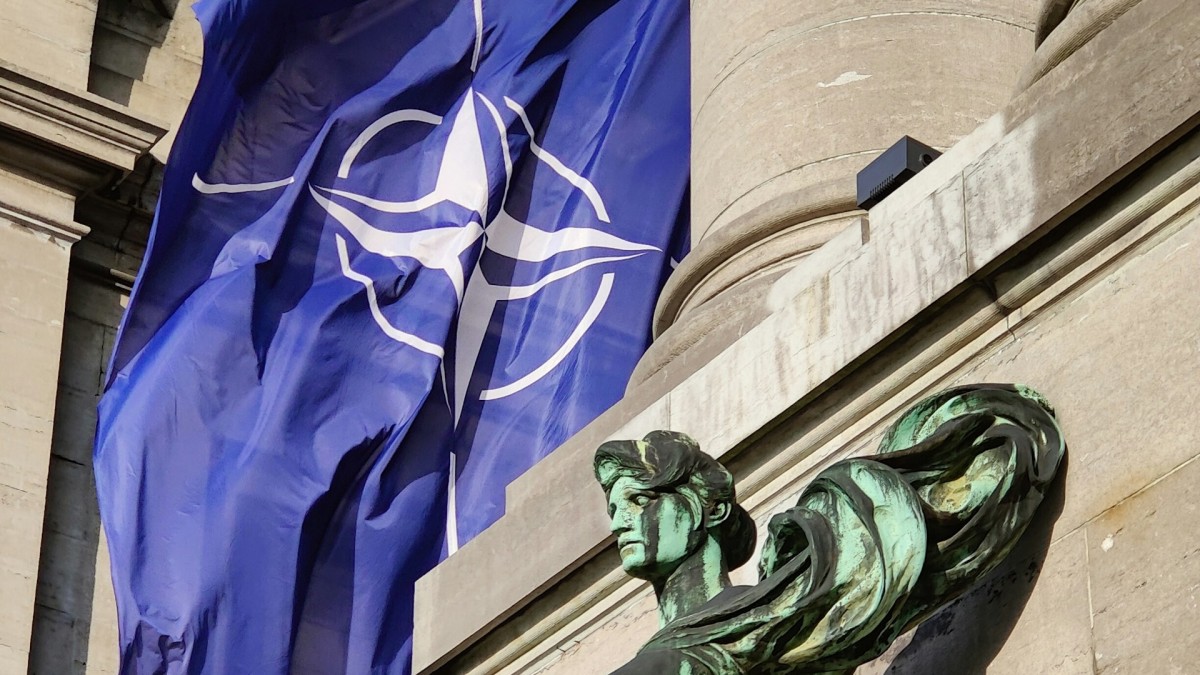
With Trump’s return to the White House, organizing a European defense is no longer an option but a necessity. Europe cannot continue to rely indefinitely on the United States for its security, even if it manages to placate the U.S. president with the promise to spend five percent of GDP on defense within the NATO framework. An input-based approach, on the other hand, is impractical, since that percentage also includes salaries and pensions, and because the sensible approach is to first determine capabilities and then calculate their cost. In any case, Trump’s sympathy for Putin, his trade policy, and his erratic and unpredictable temperament do not permit confidence in the maintenance of any commitment on his part.
Needs and Costs
In the current moment, EU member states spend on defense about a third of what the United States spends, but they possess only about ten percent of its capabilities, due to fragmentation among national armed forces, the lack of a unified European defense market, the proliferation of equipment and the resulting interoperability problems, and national procurement that drives up costs.
The armies of the member states have a long list of deficiencies; intelligence, surveillance, and reconnaissance, particularly signals intelligence capacity, satellites, and drones; heavy transport aircraft and aerial refueling aircraft; air defense and missile defense; advanced command-and-control capability for operations, and cyberdefense. In these areas, Europe is especially dependent on the United States, to which nuclear deterrence must be added. As for tanks and combat aircraft, there is a problem of obsolescence and lack of interoperability, and a lack of capacity in artillery ammunition production.
In the event of aggression on European soil, the EU armies could mobilize a maximum of 200,000 soldiers, alongside the 100,000 currently deployed by the US, to face between 300,000 and 500,000 Russian soldiers. Without the American contribution, about 300,000 additional soldiers would need to be mobilized to compensate for the fragmentation of our armed forces and the absence of a European chain of command.
The total defense spending of the member states reached 326 billion euros in 2024. If the United States were to withdraw its security umbrella, it is estimated that EU countries would have to increase their military expenditure to compensate for the lost capabilities by 250 billion euros per year. Other studies estimate an investment of 950 billion euros over fifteen years. And yet, with twenty-seven national armies doubling capabilities, without real interoperability nor a common chain of command, it would be an inefficient expenditure. It is estimated that current fragmentation causes an annual waste of between a minimum of 25 billion euros and 125 billion euros per year, depending on the dimensions considered.
“With a system of joint purchases, up to 30% could be saved in the acquisition of military equipment, not to mention if at least the armies were integrated into a single chain of command”
With a system of joint purchases, up to 30% could be saved in the acquisition of military equipment, not to mention if at least the armies were integrated into a single chain of command. The problem, therefore, is not only a budget issue, but one of institutional architecture and, above all, political will.
The Mélange of Ongoing Initiatives and Other Proposals
In this context, initiatives and proposals to advance the construction of a European defense have proliferated. However, far from converging, these projects point in multiple directions. Some focus solely on capabilities, whether on a national, community, or intergovernmental basis; others are institutional in nature, yet they skip ab initio the solutions laid out in the Treaty on European Union. There is a lack of an overall view, a clear strategy, and a common political framework.
First, there is a trend toward national rearmament, with the inefficiency that this entails, symbolized by the almost comical competition between Germany and Poland to possess the continent’s largest armed forces. But it is also accompanied by the exemption from the deficit rule of the Sustainability and Growth Pact amounting to 1.5 percent of GDP offered by the European Commission for defense spending during the 2025-2029 period without tying it to European projects. It is expected to mobilize up to 650 billion euros in additional defense spending, but of course not all states will use this possibility due to limited fiscal room.
Second, the European Commission wants to promote the development and joint procurement of military capabilities, with existing initiatives such as the European Defence Fund in the field of collaborative research and development, and new ones like EDIP and SAFE.
SAFE, in particular, offers member states loans totaling 150,000 million euros aimed at financing joint procurement projects in defense. Among the requirements is that at least sixty-five percent of the project’s value come from companies based in the EU, the European Economic Area, or Ukraine. Although this approach points in the right direction, so far both the Commission, the High Representative, the Council, and the European Council have notably abstained from proposing any dimension of the political, strategic, and operational aspects of a European common defense, unlike the European Parliament.
Furthermore, the European Investment Bank in March 2025 expanded its mandate to facilitate the financing of defense-related projects. It is no longer limited to dual-use (civil and military) purposes, but can now finance infrastructure, vehicles, radars, cyber technologies, and R&D projects in defense, provided they do not involve the production of weapons or ammunition. Additionally, the EIB has integrated defense as a permanent strategic objective, has launched credit lines for sector SMEs, and has strengthened its cooperation with the European Defence Agency.
Third, there are new intergovernmental initiatives, of an armaments nature, such as the project of the European Sky Shield Initiative (missile shield) promoted by Germany, added to other existing ones, such as the European Eurofighter consortium.
More problematic, due to its institutional dimension, would be proposals for a European Defence Community outside the Community framework and always with the fixation on British founding participation, or the European Defence Mechanism. This Mechanism would act as a “rearmament bank,” issuing bonds to finance joint armament acquisitions, with the aim of overcoming market fragmentation and reducing dependence on American systems, and would include the United Kingdom and Norway. This proposal seeks to avoid the “political and legal obstacles associated with EU treaties”.
This anti-communitarian tendency may seem pragmatic in the short term, but it risks fragmenting the Union, generating multiple circles of defense integration, and weakening the democratic legitimacy of any military action undertaken. Moreover, how can a common European defense be articulated with non-EU actors who do not share either the normative heritage or the EU’s institutional framework?
Likewise, a common defense system is not built simply by buying tanks or aircraft. A shared strategic doctrine, a unified chain of command, and above all, a political framework that legitimizes the use of force in Europe’s name are needed.
Conclusion
European defense cannot be limited to rearmament, and certainly not on a national basis, nor to political-institutional projects or coalitions of volunteers outside the EU framework.
“Until this question is answered [what should be the ultimate objective], all other discussions will be partial, technical or simply irrelevant”
The core of the problem is the lack of strategic clarity. There is no political consensus on what the ultimate objective should be: an intergovernmental defense Europe focused on rearmament with minimal coordination structures, or a true defense union with a common command, integrated forces, and European democratic control? Until this question is answered, all other discussions will be partial, technical or simply irrelevant.
It is time to go back to fundamentals. The legal basis for a European defense already exists: it is in Article 42.2 of the Treaty on European Union. There the explicit possibility is foreseen to establish a common defense policy that would ultimately lead to a common defense. This article is not a mere rhetorical wish: it is a political instrument, but it requires the unanimity of the European Council.
Until consensus conditions are met to fully develop Article 42.2, the most appropriate instrument is the Permanent Structured Cooperation (PESCO, Article 42.6 TUE). PESCO remains the constitutional framework of reference for advancing integrated defense projects among member states that share a higher level of ambition. But for PESCO to be effective, it must stop being a platform almost exclusively dedicated to launching dispersed industrial projects, and become a real embryo of military integration, with strict criteria of interoperability, specialization, the creation of a General Staff, a territorial defense plan, etc.
Only if the various avenues offered by Article 42 of the TUE prove impracticable, should one consider as ultima ratio the signing of an ad hoc intergovernmental treaty.
Ultimately, moving toward a common defense requires three things: strategic clarity, political will, and democratic legitimacy. None of the current proposals include these three pillars. Without a common vision of where we want to go, technical initiatives will be ineffective. Without a clear anchor in the Treaties, any ad hoc cooperation will be fragile and reversible, and the EU will not be the reference actor. And without a European political dimension, the common defense will lack legitimacy in the eyes of citizens.
