
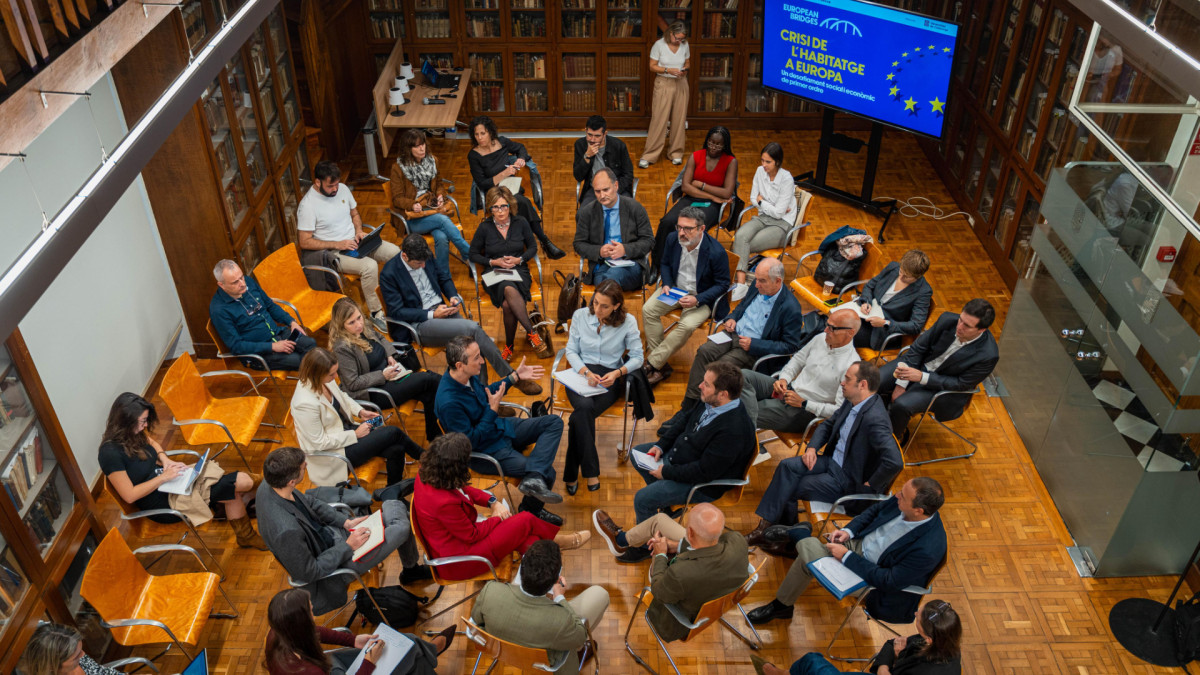
Housing access is today, above all in the eyes of the public, one of Europe’s biggest challenges. Given that it is a colossal challenge across the continent, and knowing that it concerns Spain in particular, Agenda Pública —in collaboration with El Periódico-Prensa Ibérica— brought together this Friday, October 31, in Barcelona the chair of the European Parliament’s Special Committee on the Housing Crisis in the European Union (HOUS, by its English acronym), the Italian Socialist MEP Irene Tinagli, with about thirty institutional leaders, academics, private sector representatives and members of youth organizations to analyze what is happening and point to potential solutions.
The participatory gathering, which was introduced by the deputy director of El Periódico de Catalunya, Gemma Martínez, and moderated by the editor and director of Agenda Pública, Marc López Plana, is part of the European Bridges initiative to foster a serious and informed debate on European matters. Following the session held in July in Brussels with Enagás president Antonio Llardén, and this one in Barcelona, the next meeting will take place in barely two weeks with Stefano Sannino, the European Commission’s Director General for the Middle East, North Africa and the Gulf.
Marc López Plana, editor and director of ‘Agenda Pública’, moderated the dialogue. Photo: Agenda Pública / Tsun Ho
Demand rises and “the housing supply is very rigid”
Although the ad hoc commission created ad hoc to address this problem will extend its work six more months than originally planned because it must analyze and debate more than 1,500 amendments, Tinagli shared “the experience and the lessons learned.” An economist by training, she detailed that before it might have seemed to her that “a price increase” like the one experienced by homes across Europe was nothing more than a question of “supply and demand” and that, therefore, “the answer was very simple,” since it was enough to “increase the supply”. But “it is not a conventional market.” While “demand has risen enormously due to changes in society” —she lamented—, “the housing supply is very rigid”: “The market needs time, it doesn’t change from one day to the next”, as “the increase in supply through construction takes years to arrive”.
As she explained, society has changed: the population is aging, labor mobility and tourism are increasing, and this has generated “a lot of pressure and more housing needs”. For example, twenty years ago, “six-person families could live in the same house, but now they need three because the grandparents live alone and the parents are divorced”. However, there is a reduced public stock, a stock of social housing on the decline and a market increasingly inaccessible to the middle classes.
“Families of six could live in the same house, but now they need three because the grandparents live alone and the parents are divorced”
As a short‑term response, the Italian MEP outlined measures implemented in different EU countries such as offering “tax incentives to facilitate bringing houses onto the market”, developing “incentives to discourage leaving homes vacant”, or defining “strained areas” and regulating the short-term tourist rentals, though without criminalizing all tourist rentals. Still, she stressed that this cannot be the “definitive solution” and emphasized that “we need investments and new projects, renewal and construction of social housing.” “We need to involve the private sector, because we cannot do everything with public money. The model must also be sustainable, because no private party will come to lose money. One can aim for the private sector to earn perhaps a lower margin, but more stable and long-term.”
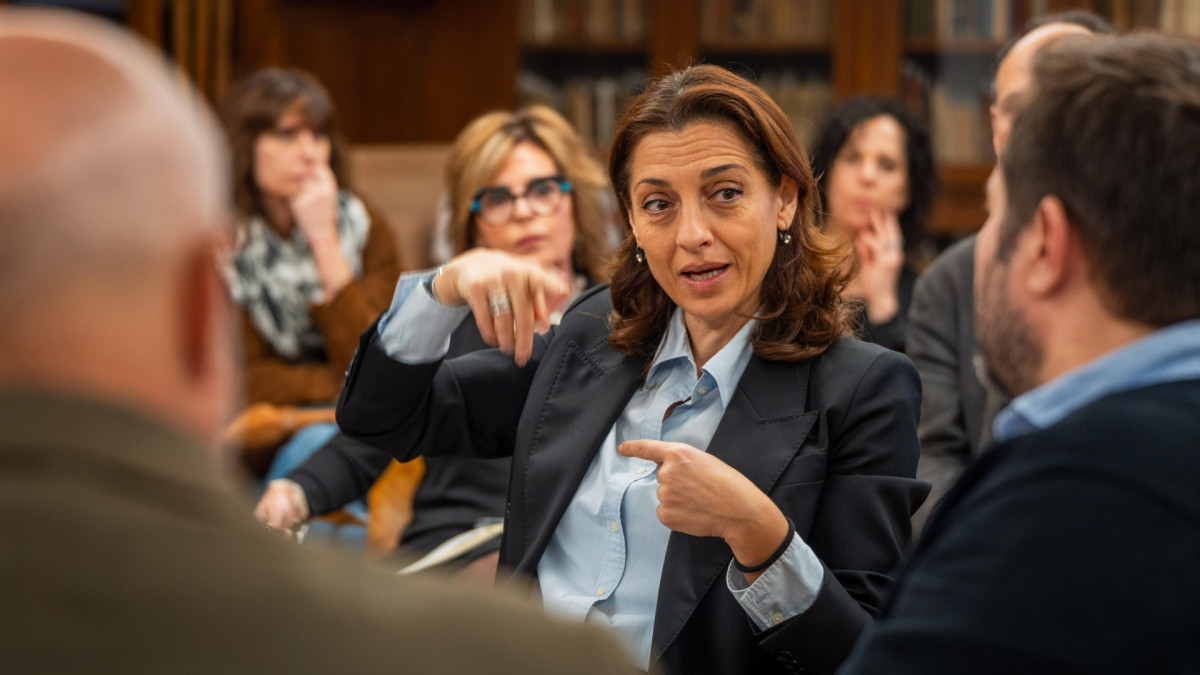
Irene Tinagli, MEP of the Social Democratic Group, kicked off the interventions. Photo: Agenda Pública / Tsun Ho
“In Spain we build half of what we need”
“Constructing today is very progressive. Construction today is not left or right,” said José María Raya, professor at Tecnocampus-Universitat Pompeu Fabra, standing beside her. According to him, the scarcity problem is not the same across European countries: “In Spain we are in the league with the highest scarcity because we build each year only half of what we need for housing. The ratio is 0.5. A league similar to Italy or Ireland, but very different from Sweden or Finland, or France.”
“Besides building, we also need accompanying measures to counter scarcity
He, also a regular contributor to Agenda Pública on housing issues, explained that “in the last twelve or thirteen years” the places where housing prices have increased the most are precisely those with the lowest ratio. Therefore, he called for building housing, but “housing for ownership, housing for private rental, housing for social rental,” and that there should also be “accompanying measures” to go “against scarcity”.
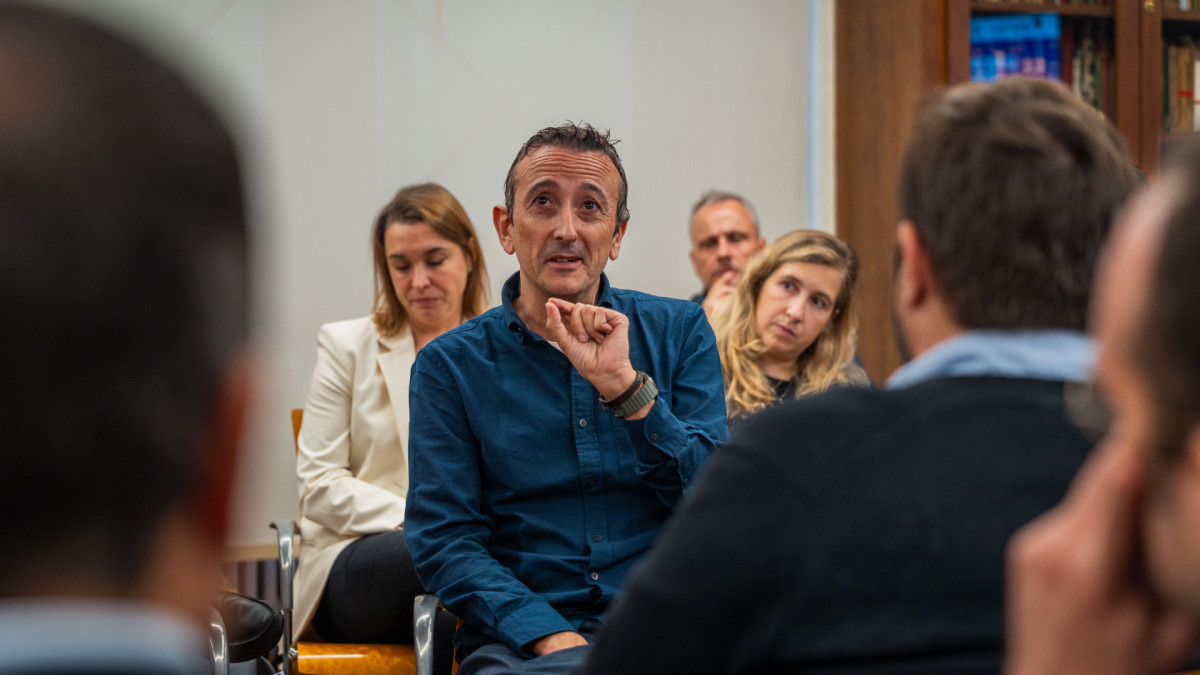
The UPF professor José María Raya is also a regular contributor to Agenda Pública. Photo: Agenda Pública / Tsun Ho
Innovative policies and collaboration with the private sector
Already at the panel, the UPF economics professor José García Montalvo has called for ambition from the administration, to pursue “innovative policies” and to tread carefully when promoting short-term policies that “pull back the supply” because “mistakes cost money.” Among other ideas, he has raised the need for “less bureaucracy”, eliminating construction taxes, especially when housing is affordable, and adopting “artificial intelligence to process licenses”.
In this vein, several representatives from the real estate sector in the room reiterated the need for public-private collaboration and urged not to demonize the sector because it is a necessary ally. “The private sector has the capacity to adapt and be part of the response,” said Marcel Prunera, president of the Guinot Prunera-Althena real estate firm. “Doing things without the private sector is a utopia,” echoed lawyer Carlos Muñoz, who also called for “legal certainty” and an end to the “drunkenness of regulation”.
Yet, Prunera acknowledged that on this issue consensus is difficult because people hold more entrenched positions than on other topics and “there are more differences.” “If you gather five experts in Spain, it’s easy to agree, but we drift when the discussion moves into the public debate.”
More radical voting options among the most vulnerable
In this regard, Joan Rodríguez Teruel, director of the Centre d’Estudis d’Opinió (CEO), has complemented economic data with the public’s sentiment: “Three out of four people consider housing access a vital goal.” Beyond apathy and the limited optimism that exists, he pointed to another set of problems: “Governments must anticipate that there will be a portion of demand they will not be able to satisfy.” According to his data, in Catalonia the concern is concentrated among young people, while beyond ages 40 or 45 the issue is perceived as something distant.
“Those who feel greater residential vulnerability are also the most willing to vote for new or more radical options,” he added, opening another very important frame linked to housing: trust that institutions will be able to respond to citizens’ demands.
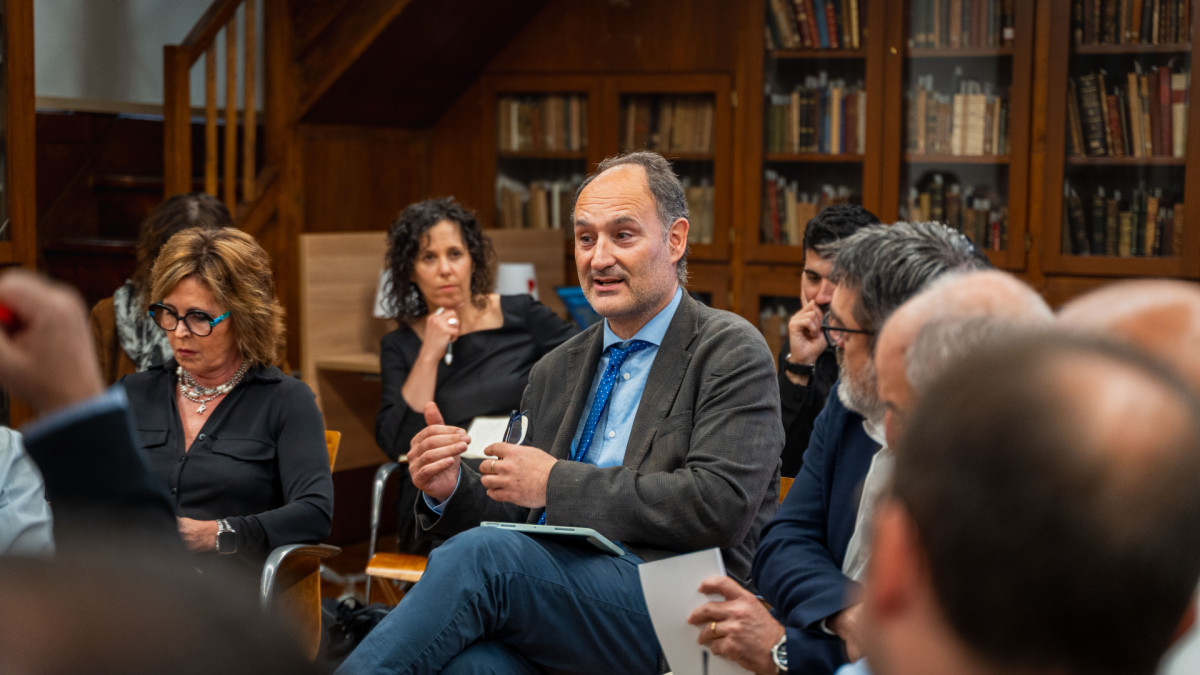
Joan Rodríguez Teruel, director of the CEO, offered interesting data on Catalan public opinion. Photo: Agenda Pública / Tsun Ho
The inside perspective from these administrations was provided by Rosa Sanz Sánchez, coordinator of the Urban Planning, Housing and Urban Regeneration Area of the Diputación de Barcelona. With more than twenty years of experience, she has reaffirmed the need for “multilevel governance”.
To the voices of experience have joined those of younger cohorts, which, as the CEO director’s data showed, are a group particularly concerned about housing. Within that age range, participants included members of associations such as Talento para el Futuro, Deba-t or Equipo Europa. “”They ask us in job interviews where we see ourselves in ten years, but no one can say what will happen to housing in ten years. What plan do you have?”, one of them said.
At the meeting, held in the Ramón y Cajal classroom at the University of Barcelona with support from the Generalitat de Catalunya, were also present the general director of Prensa Ibérica Catalunya, Félix Noguera, and Agenda Pública’s trustees Marta Pascal and Rodrigo Pinedo. To all participants, López Plana thanked them for their presence and contributions to tackle the housing crisis: “This is about learning and sharing ideas. We must promote these debates and the necessary spaces.”
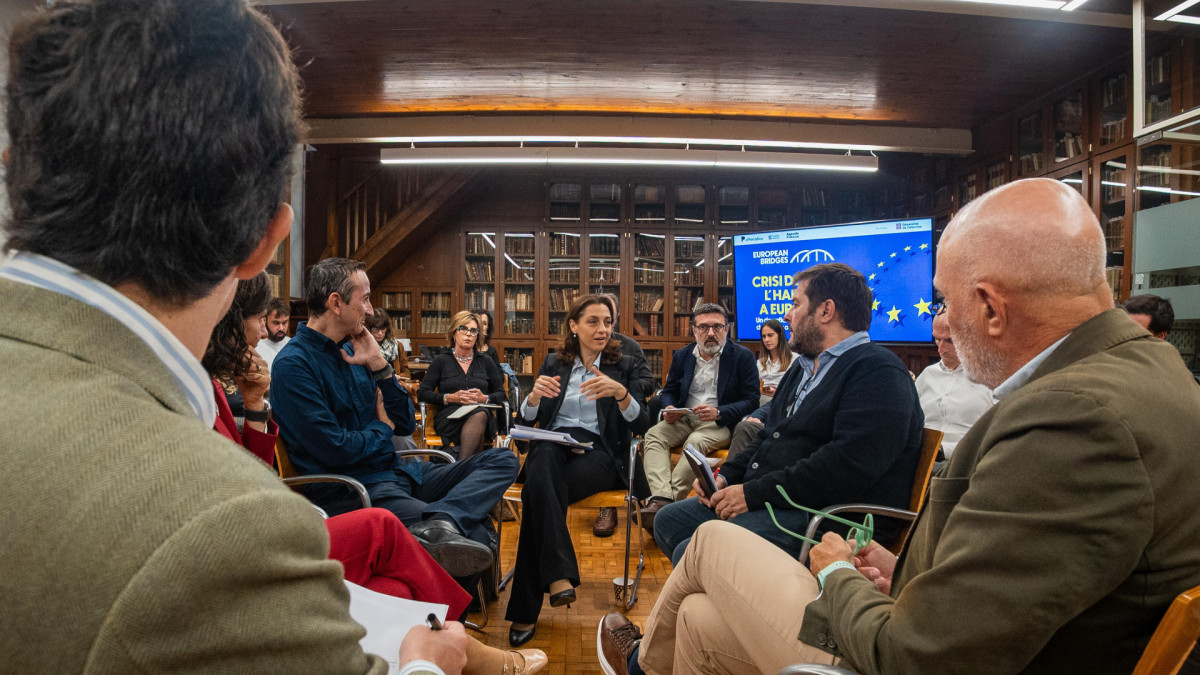
Irene Tinagli during her explanation alongside several participants. Photo: Agenda Pública / Tsun Ho
