
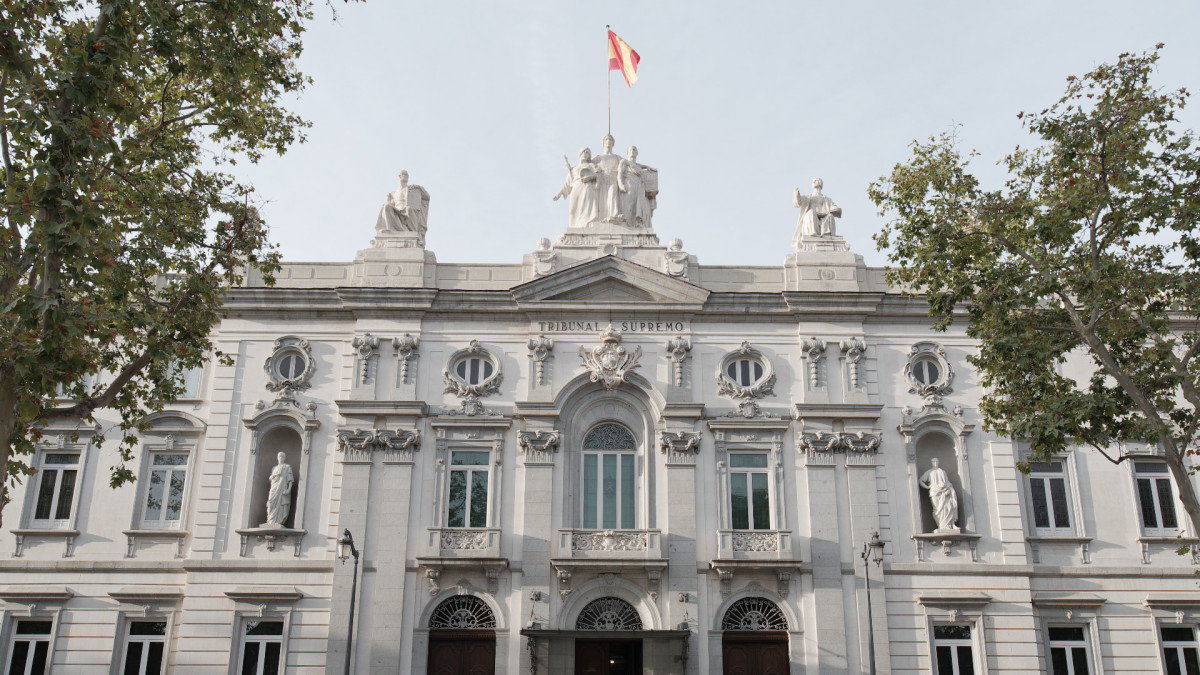
The project for a new Criminal Procedure Law, which entrusts the investigation of crimes to the public prosecutor, accompanied by the reform of the Public Prosecutor’s Statute —which disconnects the tenure of the attorney general from the Government’s term and extends it to five years— constitutes “a significant advance” for the Spanish judicial system, according to the draft of the EU’s 2026 Rule of Law Report. The Spanish chapter praises other government reforms that, however, the judicial and political right criticise as dysfunctional or partisan. The report prepared by the Commission, of which Agenda Pública has had exclusive access ahead of its official publication on July 17, 2026, applauds the launch of Courts of First Instance and the creation of five hundred new judicial posts and two hundred prosecutor positions to raise one of the EU’s lowest rates of judges per inhabitant.
“The Spanish chapter praises other government reforms that, however, the judicial and political right criticise as dysfunctional or partisan”
“There has been significant progress in strengthening the attorney general’s statute with a bill that’s being discussed in Parliament,” the year’s report states. The document values two government reform initiatives currently underway, which, however, do not seem likely to be approved due to the short remaining legislative time, the opposition of the PP and Vox, and the government’s lack of support. The first is “that the attorney general remains in office for a non-renewable five-year term that no longer coincides with the Government’s term”. The second is “that the responsibility for directing criminal investigations passes from judges to prosecutors,” something that will make criminal proceedings “more effective”.
Alongside the reinforcement of the independence of the Public Prosecutor’s Office, the report also highlights in its concluding part another aspect of the draft new Criminal Procedure Law: the limitation of popular action. The initiative “seeks to prevent the abuses that are perceived” and “attempts to restrict the catalogue of crimes in which this accusation can be wielded, requiring a direct, relevant and substantial connection with the public interest to be defended in the process.” The Commission emphasizes that the legal modification provides to prohibit access to this institution, which exists only in Spain, to “political parties, their affiliated associations, judges, prosecutors and their respective groups.”
The Commission also highlights especially the government’s creation of five hundred new judicial posts and another two hundred for prosecutors. The Ministry of Presidency and Justice and the General Council of the Judiciary have already agreed on the schedule of selection processes to fill the new vacancies. “These measures will increase the number of judges per inhabitant, which is currently one of the lowest in the EU,” states the report, which recalls that the judiciary’s governing body, prior to the government’s announcement, had estimated 431 vacancies for judges and magistrates to be created. The document also stresses the reform of access to the judiciary and the prosecutor’s office, against which right-wing associations carried out an illegal strike in 2025. That initiative “seeks to reform access to those careers and stabilize the situation of substitute judges and prosecutors.”
“These measures will increase the number of judges per inhabitant, which is currently one of the lowest in the EU”
Among all the reforms pushed by the Government, the Law on Efficiency, which replaced the traditional one-person courts with Courts of First Instance, is the only one that has come into force. The State of the Rule of Law 2026 report asserts that the rule “has already shown positive results”, including “a one-third reduction in civil jurisdiction cases thanks to the new obligation to first resort to alternative dispute resolution methods,” such as conciliation. The Commission, however, cautions about the resource challenges involved in managing the changes brought by the rule and its “uneven implementation among the regions, especially in the larger municipalities”.
In the latest European Justice Indicators Chart, which analyzes the quality and independence of the judicial systems of the Twenty-Seven, one of the areas where Spain posted the best results was digitalization, one of the few areas in which our country led Europe. The State of the Rule of Law report, however, warns of the limited interoperability between the various systems and national and regional applications. The regulation of artificial intelligence in the courts, the digitization of the Civil Registry and the creation of the Justice Folder —an online space for citizens to carry out procedures related to this public service— are among the advances that it highlights.
The latest renewal of the CGPJ, two years ago, brought with it the obligation that the new governing body of the judges draft a reform proposal for the system of electing the twelve career-based members. The Council unanimously approved two proposals in February 2025. The first, supported by conservatives, proposes that they be chosen by the judges themselves without Parliament’s involvement. The second, supported by the progressive bloc, defends the current parliamentary election—chosen from a list preselected by the profession—to ensure pluralism in a body heavily tilted to the right.
“New steps are needed to complete the process of adapting the appointment system for the Council’s career-based members” Brussels notes that the Judiciary has sought support in this process from the Venice Commission, a body of the Council of Europe. Its members stated that only the election of the twelve judicial members “by their peers” was in line with the standards of that European institution, although they warned of the risks of politicization through judicial associations. The European Commission accepts the criterion of that international organization. “New steps are needed to finalize the process of adapting the appointment system of the Council’s career-based members,” the report reflects.
