Europa has returned to speaking about industry. After years in which a large part of the economic debate was dominated by the green transition, digitalization, or market regulation, growing international competition has brought productive capacity back to the center of European strategy. The diagnoses of recent years have left little doubt about the continent’s relative loss of competitiveness and about the need to recover investment, productivity, and strategic autonomy. As Miquel Sàmper, Councillor for Enterprise and Labour of the Generalitat de Catalunya noted, the next step is to stop accumulating diagnoses and start executing: to turn that new industrial ambition into decisions and investments at the pace demanded by competition with the United States and China.
The session Industrial Accelerator Act: regions in the European Union, organized in Brussels by Agenda Pública with the support of the Generalitat de Catalunya, addressed the territorial dimension of this new industrial impetus. Institutional leaders, regional representatives, companies, experts and civil society debated how to make European reindustrialization effective and, in particular, the role that regions should play both in the development of legislation and in its on-site implementation. Beyond the Industrial Accelerator Act itself, the conversation thus raised a broader question: how to incorporate the knowledge, productive specialization and execution capacity of regions into the design of European industrial policy.
From diagnosing the loss of competitiveness to executing
Europe seems to have conceded that industrial policy can no longer be reduced to setting long-term objectives. The comparison with the United States or China introduces a variable increasingly determinant: speed.
European regulation remains one of the Union’s main tools. But an industrial policy constrained by excessively lengthy procedures, administrative fragmentation or regulatory uncertainty risks losing investments even before its incentives can unfold. Hence a significant portion of the debate around the Industrial Accelerator Act (IAA) is not only about what to do, but about how to do it faster.
“Institutional leaders, regional representatives, businesses, experts and civil society debated how to make European reindustrialization effective”
Sàmper placed this need for execution in the context opened by the Letta and Draghi reports: Europe has regained awareness of its industrial position, but it needs to turn that awareness into decisions able to compete in real time with other economies.
This acceleration does not necessarily imply less regulation. The challenge is rather to find mechanisms that preserve European safeguards without turning them into a hurdle for investment. At the meeting, for example, the possibility of moving toward forms such as positive administrative silence or faster procedures for strategic industrial projects emerged.
The core question is particularly relevant for regions and local administrations. They are often the ones who must translate big European decisions into authorizations, industrial land, infrastructures, permits, training or business support. An ambitious legislation can lose much of its effectiveness if there is no administrative capacity to implement it where a factory or a new productive ecosystem will finally be established.
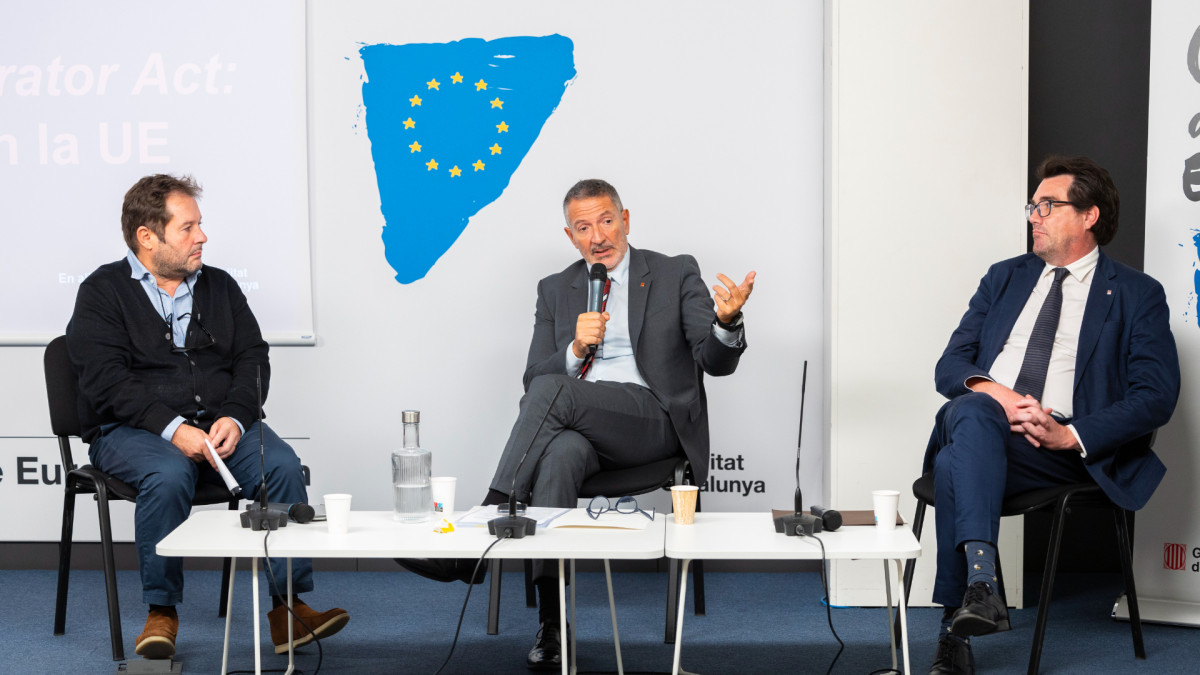
The government’s EU delegate, María Rodríguez Parareda, led the institutional welcome. Photo: Agenda Pública / BR&U Agency
Industry as territorial policy
Industrial recovery, however, poses not only a question of external competitiveness; it also opens an internal debate about how growth is distributed. One of the most relevant ideas of the dialogue was precisely to understand industry as a tool for territorial bonding. Against economic activities that tend to concentrate in large metropolitan areas, industrial projects can mobilize investment, employment, infrastructure and knowledge in territories far from the main urban centers.
“One of the most relevant ideas of the dialogue was precisely to understand industry as a tool for territorial cohesion”
Jaume Baró, Secretary of Enterprise and Innovation linked this logic to the Catalan objective of raising industry’s weight to 20% of GDP and the rollout of the National Pact for Industry. The program, organized through cross-cutting actions and measures targeted at specific sectors such as semiconductors, also provides a reference on how to ground an industrial strategy from a regional administration.
Its relevance goes beyond economic growth. Industrial policy can contribute to territorially balance a country: generating opportunities outside the big cities, reinforcing mid-sized cities, improving employment prospects in certain areas and reducing part of the pressures derived from economic and demographic concentration.
In that sense, reindustrialization cannot be considered solely a corporate policy. It has implications for employment, housing, infrastructure, training, innovation or territorial cohesion. It can thus become one of the tools with the greatest capacity to spread growth across different parts of Spain.
The approach connects with a broader debate that Agenda Pública had already tackled when analyzing the different Spanish economic poles: future competitiveness depends less on every region replicating the same model and more on leveraging their different productive specializations and connecting them with each other.

López Plana, Sàmper y Baró analizaron la perspectiva de los territorios en el ámbito industrial. Photo: Agenda Pública / BR&U Agency
European ambition, regional specialization
From there probably emerges the formula that best summarizes the discussion: “European ambition, regional specialization”. Europe can set strategic priorities, establish major industrial objectives, and mobilize regulatory and financial instruments, but it is the regions that know with greater precision their value chains, their companies, their technological capacities, their infrastructures and their deficits. The industrialization of Asturias does not start from the same conditions as Catalonia, Andalusia, Castilla-La Mancha or the Basque Country and it would not make sense to require all territories to compete in exactly the same sectors.
“Regions know their value chains, their companies, their technological capacities, their infrastructures and their deficits”
This specialization also makes it possible to identify more concrete opportunities in a scenario where Europe will hardly be able to regain leadership in all technologies. The accumulated distance to China or the United States in certain areas forces prioritization. Against technological races where the competitive edge may already be difficult to recover, there are niches —as raised during the meeting regarding photonic chips— in which specific scientific, business or industrial capacities can generate high value-added positions. Therefore, incorporating the regional variable into the design of European policies does not mean fragmenting industrial policy, but making it more precise.
This issue also appeared when addressing future industrial acceleration zones. From regions with a long productive tradition, such as Asturias, Paz Palacio, the representative of the autonomous community in Brussels, warned that its design constitutes an opportunity to reflect on the relationship between industry and territory: which ecosystems should be reinforced, which infrastructures can be shared, to what extent should existing concentration be favored, or should the emergence of new hubs be encouraged and what criteria should determine the strategic character of each area.
There is not necessarily a uniform answer. An industrial territory that is mature may need to modernize and decarbonize existing capacities, while another may require new infrastructures, attract supply chains or develop still-incipient sectors. Horizontal industrial policy has limits when territorial needs are deeply different.

The editor and director of Agenda Pública highlighted the work of territories as laboratories for innovative industrial policies. Photo: Agenda Pública / BR&U Agency
Regions must also be part of European design
The discussion on the IAA also points to a broader institutional issue. Regions play a clear role in implementing European policies, but they also demand greater participation in their design.
“Regions play a clear role in implementing European policies, but they also demand greater involvement in their design”
The concern grows regarding financing models structured essentially through national envelopes, in which European resources are channeled through the Member States before reaching the territories. From a regional perspective, this evolution could reduce Brussels’ ability to directly identify existing industrial specializations and the concrete opportunities of each territory.
A true regional industrial snapshot of Europe would allow knowing where certain knowledge, suppliers, infrastructures, energy resources or technological capacities exist and to better steer investments. It would not be about pitting the State against the regions; the issue is to find the right scale for each decision. Europe can define common priorities; the States can provide national coherence; and the regions bring proximity and on-the-ground knowledge.
This multi-level governance is particularly important in Spain, where much of the competences that condition industrial implantation depend precisely on autonomous communities and local administrations.
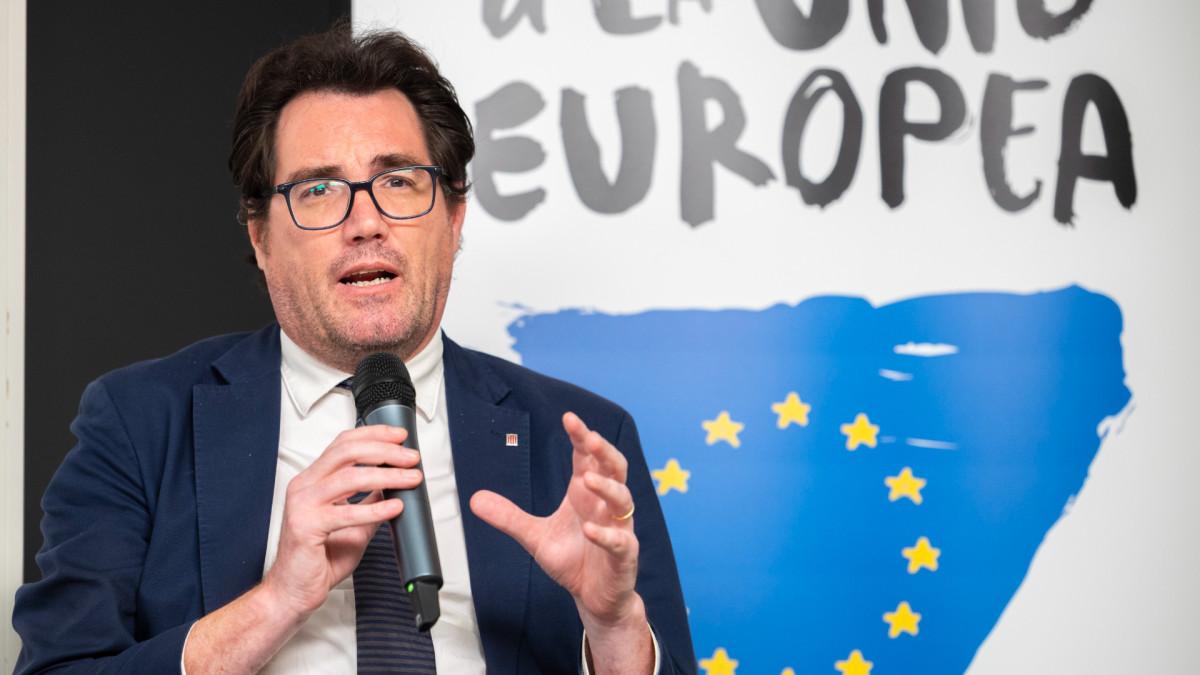
Jaume Baró, Secretary of Enterprise and Innovation. Photo: Agenda Pública / BR&U Agency
A green industry that stays industry
The new European industrial policy cannot either be detached from the climate transition. However, the relationship between the two agendas is beginning to take shape differently. European industry can hardly be conceived anymore apart from decarbonization. As summarized during the meeting, “industry can no longer be not green”. But that transformation must occur without forgetting the second part of the equation: it must continue to be industry.
Climate competitiveness loses sense if the costs or procedures associated with the transition end up displacing productive capacity to economies with less stringent standards. The balance is to use clean energy, innovation and decarbonization as factors to attract industrial activity, rather than turning them into unintentional vectors of offshoring.
“The balance is to use clean energy, innovation and decarbonization as factors to attract industrial activity”
Spain starts here with relevant assets. The availability of renewable energy can become an advantage for attracting certain energy-intensive projects, provided it is accompanied by grids, infrastructures, land, talent and administrative frameworks capable of turning that resource into productive investment.
Meanwhile, European strategic autonomy cannot be measured solely in terms of factories or supply chains. Its legitimacy will depend on its ability to translate into well-being, stable employment and quality work.
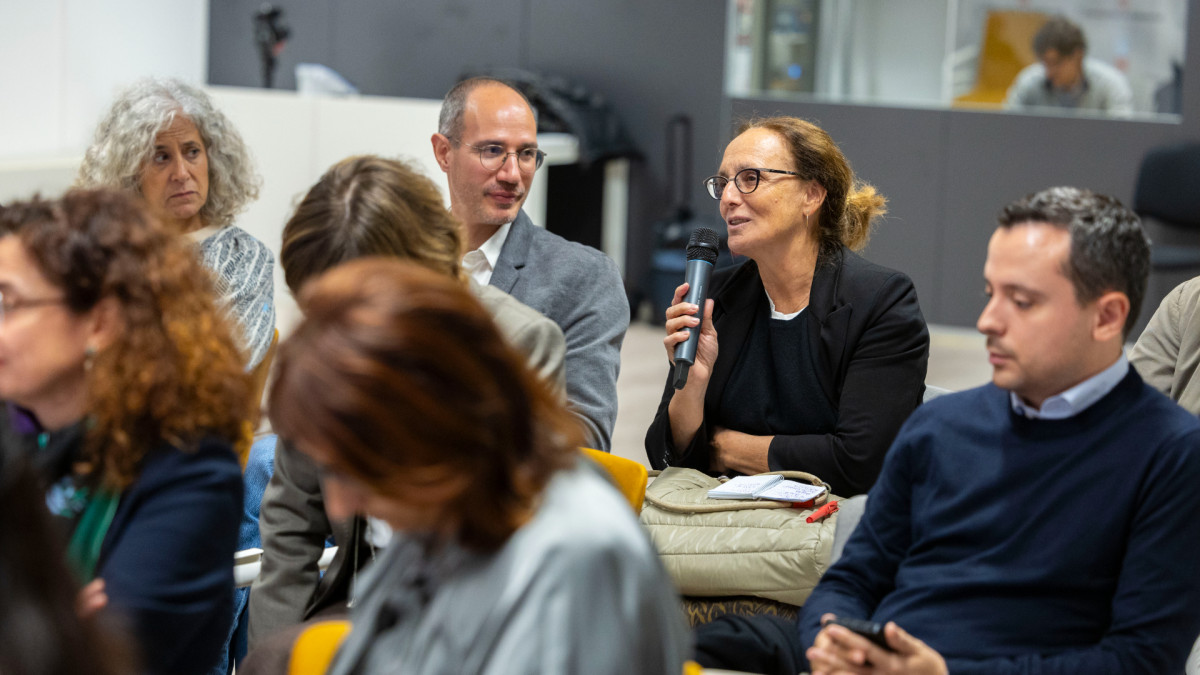
Paz Palacio, representative of the Principality of Asturias in Brussels, spoke in the micro-session. Photo: Agenda Pública / BR&U Agency
Foreign investment, but with strategy
That pursuit of autonomy does not imply closing Europe to the outside. The debate on relations with China reflects this tension well. An open economy like Europe can hardly adopt a logic of isolation or renounce foreign investment and international trade. The issue is to set the conditions under which that investment helps strengthen the European productive fabric.
The idea of a “protected investment” summarizes that balance: attracting international capital, but doing so while preserving productive capacities, employment, competition rules and European standards.
Moreover, Europe retains attributes difficult to reproduce —institutional quality, rights, stability, quality of life or access to a large market— that continue to make it attractive compared to other world regions. Spain, given its economic and cultural position, can add to this a unique capacity as a bridge between Europe and Latin America. Open trade does not have to be incompatible with its own industrial policy, provided that openness does not translate into dependency.

The meeting sparked interesting exchanges of perspectives on how to improve industrial competitiveness and attract new investments. Photo: Agenda Pública / BR&U Agency
From regulation to factory
The Industrial Accelerator Act could become an important piece of the new European industrial architecture, but the initiative’s success will not be measured solely by the ambition of its text. It will also depend on its scope—and to what extent it incorporates complete value chains and not only certain productive segments—, the clarity of the criteria to identify strategic sectors and territories, and, especially, the ability to translate its instruments to the ground.
Regions are not a secondary actor, but, as Marc López Plana, director of Agenda Pública, reminded, laboratories where industrial policies can be tested, administrations capable of identifying specializations and the institutional level at which many investments move from a paper project to actual economic activity.
Europe needs an industrial policy broad enough to respond to the scale of global competition, but also precise enough to recognize that this industry will not be built in the abstract. It will be built in concrete territories, leveraging concrete capacities and solving concrete problems. The ambition should be European. Specialization—and much of the execution—will necessarily be regional.
Con el apoyo de