
With a Positive Attitude Toward Uncertainty. That was the stance of the four Spanish MEPs on Wednesday, after Ursula von der Leyen’s address in the State of the Union debate. With the Canadian prime minister serving as a luxury witness for the day, Adrián Vázquez, Jonás Fernández, Javi López, and Hana Jalloul unpack from Strasbourg how they view the European moment and what remains of the term.
Although in some respects they detect a lack of ambition, they are also aware that commitments must be aligned with both the political reality of the chamber and the resources available. As representatives of the two political families that have articulated the majorities in the European Parliament for decades, they bring positions closer when it is necessary, but they do not hide their differences on the budget, migration, or the response to the Ceuta crisis.
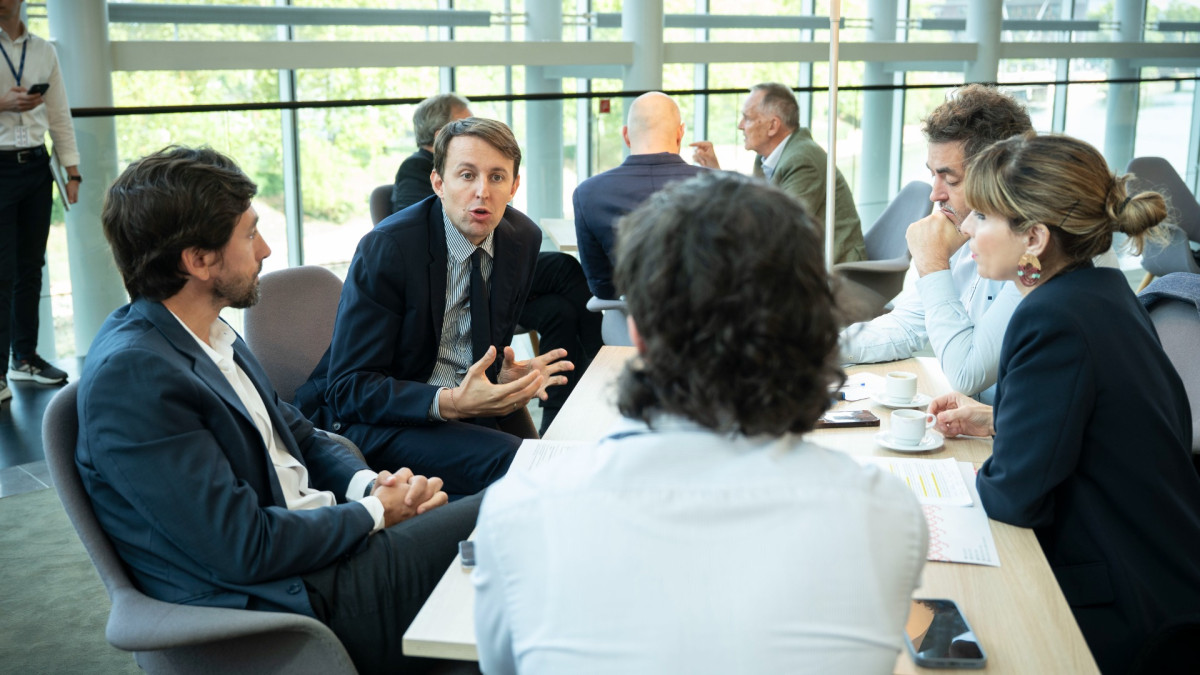
The four MEPs talk with Agenda Pública at the European Parliament in Strasbourg. Photo: Agenda Pública / Dorothée Parent
What feelings did they approach this week and von der Leyen’s speech with? It seems there is a somewhat pessimistic atmosphere.
Hana Jalloul (H. J.): Our stance must be positive, especially given everything that surrounds us. Today’s speech felt too general, with not many concrete measures. We would have liked more specificity on certain issues. For instance, on the Israel–Palestine matter, there should have been mention of including the Houthis on the list of terrorist organizations. We have pushed for that from the S&D, and it is already gaining some traction in the Council. That is what we understood yesterday from High Representative Kaja Kallas. Given the movements of the Houthis in Bab el-Mandeb and what they imply for terrorism, it seemed to me that this was something that should have been stated.
“The speech has been too general, without many concrete measures. We would have liked more specificity on certain issues”
It is important that she spoke about critical raw materials and the need to have a permanent agenda in this area, although it’s true there is no financial allocation. Still, we cannot let pessimism overwhelm us. And the Canada part has been very well handled as well.
What strikes me is what she said about China. It is important in a Parliament that sometimes leans toward a confrontational stance with Beijing, because she spoke of dialogue. She also cited one of the major successes we have brought to the table: trade policy and all the trade agreements we have secured. She named them one by one, including the India agreement, one of the biggest.
She closed the speech with full support for Spain in the Ceuta crisis.
Adrián Vázquez (A. V.): We are almost halfway through the legislature. It is the speech that can no longer hide anything, because we know how the legislative procedure works and that it is not immediate to tackle a problem through a new regulatory framework. I am more optimistic today than yesterday, but I still think it lacks ambition. Probably not so much — and I don’t want to defend von der Leyen either — because she can’t push very direct proposals, but due to the institutional architecture and the situation among the member states. That also limits the level of ambition we are asking of her. But she did address the big challenges ahead and was concrete on a couple of things that I consider a very good starting point. In terms of security, she has been concrete: she will launch what we have been asking for from the People’s Party with this new European Security Council. She has also been very clear with Ukraine, something important that we cannot lose track of.
“She will launch what we have been asking for from the People’s Party with this new European Security Council”
The presence of the Canadian prime minister and the proposal that Canada become an associate member will have to be bedded down and passed through the member states, something I believe has not yet happened. I am in favor. On the protection of minors in the digital space, with this package of child protection, I think he has been very specific and has hit the mark with the new proposals he has launched. We will have to study them in detail later. On migration, which is probably one of the issues that most influences our societies today, I am waiting for him to be more specific with that European emergency response framework. I think we still lack there.
To highlight two more elements: electrification seems fine to me, but the problem we have is more one of infrastructure than production; we will see how we address it. And competitiveness, which he did put on the table. The omnibus packages are advancing and will save almost 17 billion euros a year. In the end, he touched on almost everything. I still want a bit more ambition, but as I said at the start, I am more optimistic today than yesterday.
Jonás Fernández (J. F.): I don’t think the word is so much pessimism as uncertainty. None of the challenges we face has been resolved since last year, and there are more and more challenges ahead where, in general terms, even though there is a reasonable instinct to steer policies properly, they do not come to fruition. Regarding the speech, I think it was more of a lecture than a political speech proper to a State of the Union debate. We have had several speeches, as Adrián said, and probably, by forcing promises of plans and programs that have not landed or have landed only a few things, today we had more of a reflection than of executive responses.
“None of the challenges we face has been resolved since last year, and there are more and more challenges”
On the measures he did announce, there is little to say: they are reasonably good, though we will have to see how they are implemented. Some of them raise a certain incredulity. What does exactly the corporation he proposed to procure critical raw materials mean? There are many other proposals that stem from a deeper problem, rightly pointed out: with the budget we have, we will be able to do little. The Hanseatic League is trying to cut the budget even more, and the debate over own resources remains pending. We all talk about it in this house; Manfred Weber did as well in his speech, and of course Iratxe García. But we are still in the red. Without a clearer overall framework in which the Commission can do its job, we return to a debate full of announcements whose outcome remains to be seen.
Javi López (J. L.): This is a moment of enormous uncertainty. Everyone is acutely aware that this could be the moment of greatest risk for Europe and for European integration since its creation. There are external risks due to a very hostile geopolitical context for the Union: a direct threat from Russia, but also a deep shift in transatlantic relations and a geopolitical and economic context hostile to our interests. And there is a precarious internal situation, a weakness, especially due to the electoral advances of the far right, which weaken the European project as we knew it. That is the context we find ourselves in, and that uncertainty and those risks run through any discussion about Europe’s future today.
“This is probably the moment of greatest risks for Europe and for European integration since its creation”
The analysis von der Leyen offered, the diagnosis and the vision she expresses in the speech are correct. I am satisfied with the vision expressed in the speech; it is a diagnosis generally shared by the pro-European forces. The problem is that it is not accompanied by the measures, the resources, and the decisions that translate that vision into reality, nor by the ambition needed to turn it into reality. It is probably the result of the internal balance of forces, because this speech is not spoken into a vacuum: it is delivered in a Union that today has very weak governments in both Berlin and Paris, for different reasons, and that is also on the eve of a major electoral cycle in Europe in 2027.
I agree with the issues and the vision she has proposed: European strategic autonomy, European sovereignty, fully and autonomously taking charge of our security, industrialization and reindustrialization of Europe, climate action, diversification of our alliances and alliances with democracies, electrification and regulation of artificial intelligence. I share that agenda, but it is incompatible with building majorities with those who want to split or weaken the Union. That is also a major elephant in the room.
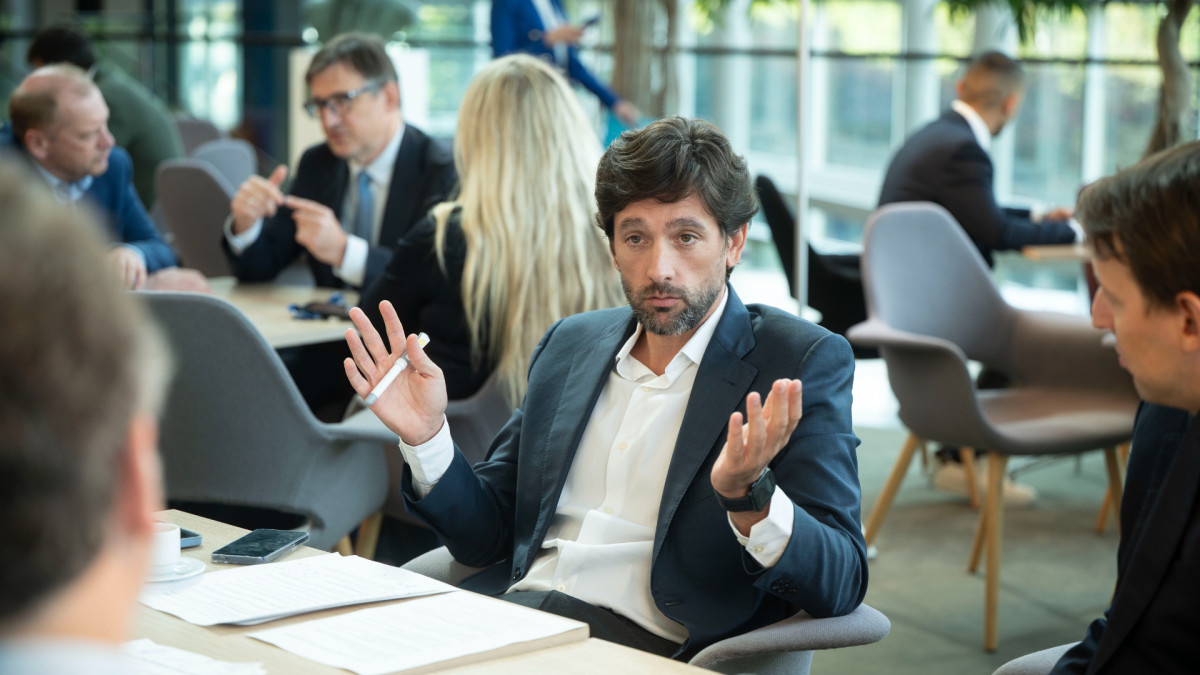
The MEPs discuss pro-European majorities and the political orientation for the second half of the term. Photo: Agenda Pública / Dorothée Parent
What is the current relationship between the European People’s Party and the Group of the Progressive Alliance of Socialists and Democrats? The mid-term leadership renewals are pending, and there are a little over two and a half years left in the term.
H. J.: Those negotiations are driven much more by delegation heads and those within our political groups who negotiate specific posts: vice presidencies, committees, etc. It is very important that there be negotiation and that each can defend what most benefits their formation. But I also think we should detach a bit from what we want to achieve in Parliament from some personal agendas. We have made big bets here. For example, we have Javi here, who is our vice president, and we are delighted. I think he is doing and has done a great job. He is a reliable, consensus-building person.
Our leader has delivered a great speech, and the main pro-European forces who have participated in building this Parliament since 1948 must be in agreement. I don’t think there will be any general problem. Everything will go well.
A. V.: Citizens in Europe and Spain are not interested in who holds each position in this debate. Our responsibility is to try to provide solutions, within our competencies, to the demands and challenges we face as a society, regardless of who holds each post. Democracy works as it does, and majorities are consolidated as they are. We must work to try to turn our political agenda into laws and legislative proposals.
This Parliament keeps a very down-to-earth approach for the legislator, especially for those of us from countries where lists or majorities are usually built differently. Here, in the end, you have to reach agreements and sit down at the table, as we are doing today, with people who think differently to find a middle ground. For that, there must be fewer red lines. What we must do is secure majorities that allow us to advance those challenges. And, if you ask me, those of us who have Europe in our heads and hearts should try to do it with pro-European forces.
“In the European Parliament you have to reach agreements and sit down at the table, as we are doing today, with people who think differently to find a middle ground”
But we must not kid ourselves: there are issues we consider vital for Europe to keep surviving, such as competitiveness and the ability to maintain a productive fabric, which is sometimes very hard to push forward with other pro-European forces. Beyond that, we must also be flexible.
J. L.: The mid-term should be used to think about the general political direction of Europe. It is not a debate about responsibilities or posts, but about which majorities pivot and what political direction Europe will take during the second half of the mandate. It is evident that it represents an opportunity to revitalize a pro-European majority that is now more fragile than at the start of the term. If the discussion, reflection, and negotiation about mid-term serve to revitalize that pro-European majority and give continuity to the European Commission’s mandate, then let it be, because it is also the only way to guarantee institutional stability for the remainder of the term.
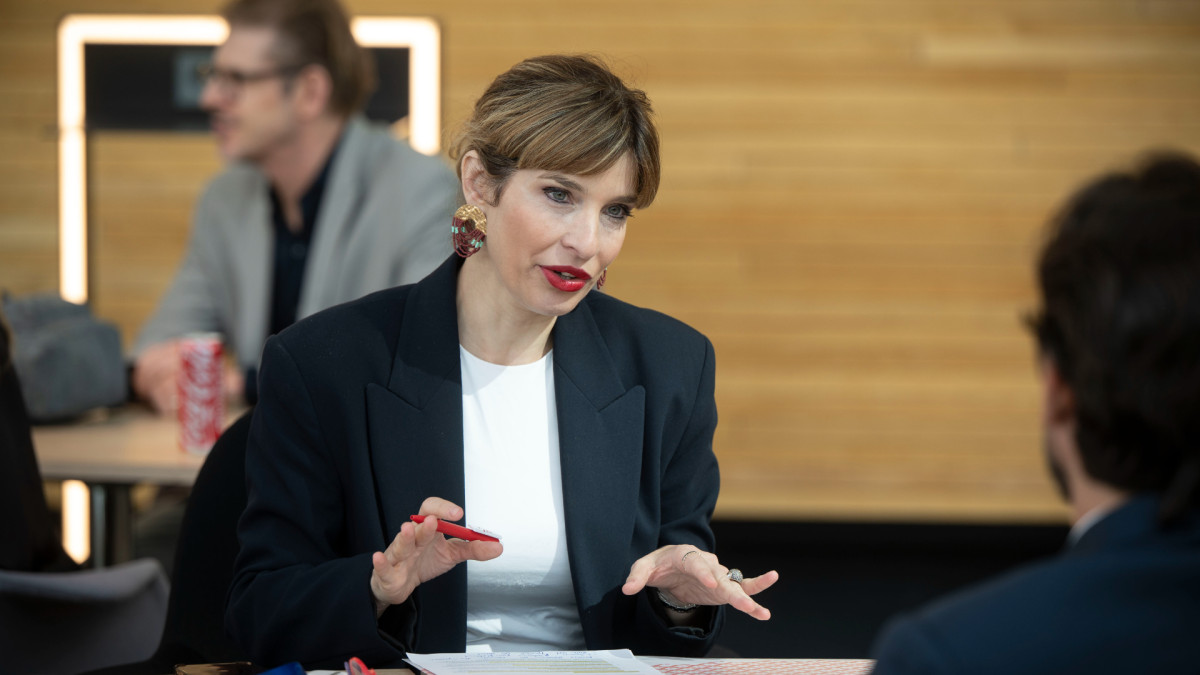
The conversation focuses on the need to accompany Europe’s new priorities with political will and sufficient resources. Photo: Agenda Pública / Dorothée Parent
Each of you specializes in different issues. Among them, what are your priorities?
H. J.: To begin with, we must deliver on commitments. Today the Commission president again cited commitments, with much less force than in her last speech, without having fulfilled the objectives. I’m talking, for example, about Israel and Palestine.
She sent a message to the major groups in the chamber: you must agree, because not reaching an agreement on issues like the Middle East does not solve anything. We have not been able to agree on central questions, especially the Parliament’s position on Israel and Palestine. That was a clear message. But it is true that last year she spoke of sanctions and the EU–Israel Association Agreement, and this time she has said nothing at all. If in a mandate’s early speech or last year’s, you set commitments and you do not fulfill them, the first thing you must do is fulfill what you say.
Then, political will is required. For example, there is a proposal to create a European corporation that would handle procurement and stockpiling of critical materials. You can announce an agency that is already proposed and that you want to put in motion before the year ends, but if you do not give it a budget allocation, it will be very difficult.
With electrification, the same thing happens. It is a matter on which no one will object. We also need to talk about power grids and remember what happened in France. Spain has regulated a lot as a member state, unlike other countries, but we must also examine European regulation. If that happens, we will all support it. This Commission needs more political will and more budget allocation for many of the projects on the table. The general speech and the ideas are good, but they must be translated into money and political will.
J. F.: I return to what I said at the outset about the budget and own resources. One of the structural problems of these debates, or of the Brussels conversations in general, since we began to reclaim industrial policy and certain sectoral ambitions — artificial intelligence, data centers, the digital agenda, or automotive — is that you see a government agenda tied to policies that necessarily need funding, and the underlying problem is that there isn’t any. In many cases, these promises end up as plans or strategies that may be fine or debatable, but which the European Commission does not implement. Each member state applies them as it sees fit, and the financial capacity of each is very different. That opens up further fragmentation in the single market, because some countries can develop those strategies with more force than others. Therefore, I listen with some distance to the year-after-year rhetoric on a multiplicity of sectoral policies, not because I don’t share the objective, which I do, but because I am aware of the difficulties the Commission will face in doing anything even if it designs a plan.
The budget negotiations for the period starting in 2028 are quite tricky. A large group of countries, led by Germany, are calling for additional cuts to a budget that, in nominal terms, is similar to the one for the current legislature but which benefits from 750 billion euros less (Next Generation financing). The Union’s financial capacity as a whole, including Next Generation, is almost 40% lower than in the period ending in 2027. At the same time, there is inflation of proposals justified by urgency and need, but with no funding to implement them. In addition to requests to reduce the budget, there are also challenges in creating own resources, which are necessary to amortize Next Generation debt.
“The Union’s financial capacity as a whole, including Next Generation, is almost 40% lower than in the period ending in 2027”
Until someone takes this seriously —and I think they are taking it seriously, even though we still have no results— it will be difficult to move forward. I want to highlight António Costa’s work during this summer and in the recent months, visiting all the capitals and trying to reach an agreement. He is making a remarkable effort from the Presidency of the European Council. Until this is resolved, we can talk about many strategies and plans; I hope they are fulfilled, but there is an inflation of proposals tied to needs without real support.
A. V.: While partly agreeing with what Jonás says, I think the delegation of sovereignty must be accompanied by a budget transfer. I do not consider this the moment to open the can of worms of own resources for a very straightforward reason: we are at a moment where we could break the pot and, within a year, perhaps the budgets will be negotiated by Bardella or Alternative for Germany. We must at least secure a minimum budget agreement as soon as possible. I agree that we do not have the capacity to develop many of the proposals the Commission brings, but if we demand too much and prolong or complicate the negotiations, next year’s situation could be infinitely worse.
J. F.: I am not talking about demands here, but about acknowledging a reality. The Commission’s proposal for the financial framework is more or less the same as the previous legislature’s, which implies nearly a 40% cut if we exclude Next Generation. Those are the facts. On top of that, we have to start amortizing Next Generation debt. If we are to keep roughly the same budget and begin amortizing that debt, we should leave some debates for another moment. We are conveying to public opinion that we will respond to their needs and, in many cases, we will not be able to. Therefore, I think it is better not to promise things that are beyond our reach.
J. L.: The budget represents the tools Europe has to act. If we want Europe to take charge of its security and have a true industrial policy, we cannot keep a skeletal budget. If we tailor those ambitions to the current resources, at a minimum we will end up dismantling the common agricultural policy and cohesion policy. That would cause huge political damage, because these are very sensitive allocations we want to protect. If we want to protect them, we can forget about new resources for the other two priorities, which we also share: industrial policy and security. In today’s debate it was said: you cannot do more with less. Europe now has more needs because it faces more risks and threats, but it is asked to act with fewer resources. That will only generate frustration and contradictions.
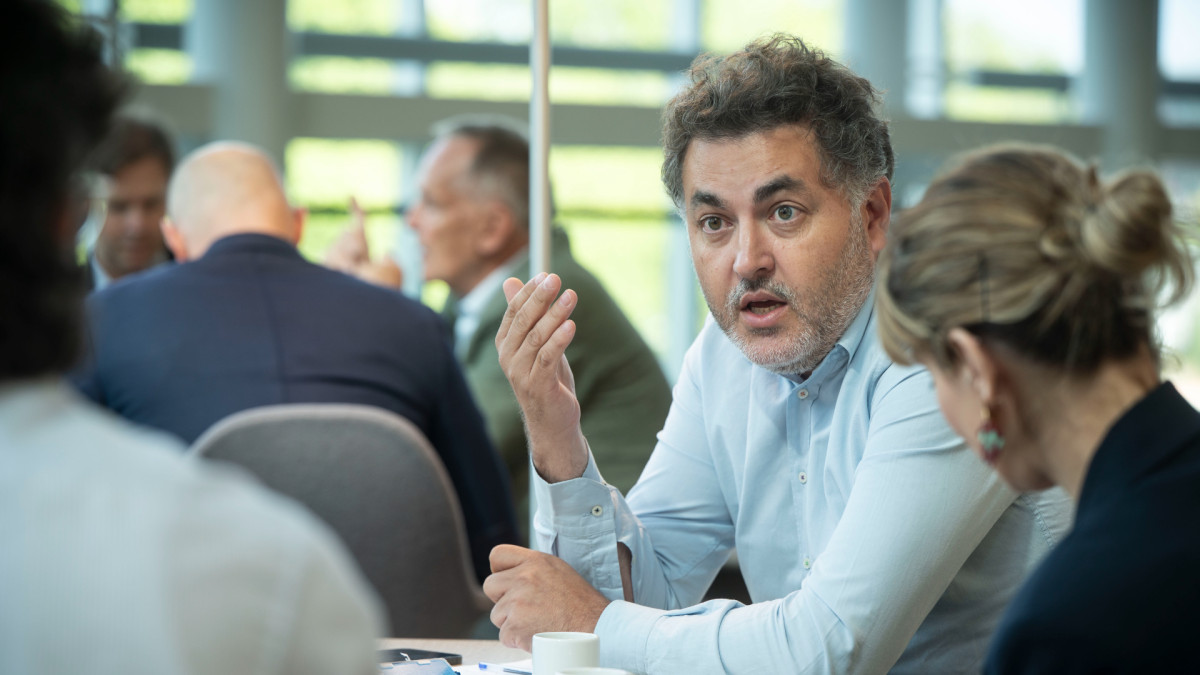
The debate on the European budget confronts the Union’s new ambitions with resources the MEPs consider insufficient. Photo: Agenda Pública / Dorothée Parent
To what extent has the Ceuta crisis affected the European agenda? It touches many sensitive issues: immigration, hybrid threats, foreign relations, minors…
H. J.: We have suffered a crisis that has affected our sovereignty. 70,000 people entered and about 95% returned to Morocco in under seventy-two hours. You cannot do that if you do not have good relations with Morocco. We have repatriation agreements with Morocco that work well, and also other policies that tend to be unspoken, in matters of terrorism and crime. Moreover, between 2024 and 2025 irregular immigration fell by 42%. It is true that what happened did happen, but a very high percentage of those who entered returned to Morocco in record time.
The president has always been clear: there is no conclusive evidence that Morocco has anything to do with all this. Police reports indicate that, before July 30 and the mass entry of people into Spain, there were about 180,000 people communicating via networks. That does not prove beyond a doubt that Morocco was behind it. It is a country with which we also must get along, even if we and they must strengthen our borders. If it were not so, Commissioner Magnus Brunner would not have pursued that line yesterday, nor would the Commission president have said today that more resources must be allocated, which is what we have been asking for a long time. Ceuta is the Union’s southern border, it affects migration and asylum and constitutes a European problem. This does not mean there are no particular actors who have benefited from what happened. We have already seen messages from Donald Trump and Elon Musk. But for us, Morocco is our neighbor and we are obliged to maintain a good relationship.
“Ceuta is the Union’s southern border, it affects migration and asylum and constitutes a European problem”
We have faced other crises before, such as those in 2020 and 2021, and we resolved them. We work together not only on migration policy but also on security, intelligence, and counterterrorism. Morocco is a country that also bears migratory pressure and acts as a containment for the rest of Europe. What must be done is to collaborate financially and understand that outsourcing borders is not a solution and that migrations are unstoppable. We must manage them through a comprehensive policy. We also must understand that we need economic migrants and a legal, safe, and orderly migration, in addition to working with origin and transit countries. Many will seek to instrumentalize migration. It already happened in Belarus. It is part of hybrid wars and one of the big problems we face.
A. V.: In general, when someone is in a hole and, in order to get out, instead of climbing they choose to keep digging, I tend to warn them. Then, let everyone do what they want. I just came from a debate with Laura Ballarín about disinformation. There we discussed this issue, and we both agreed that, obviously, we must curb disinformation on social networks, but the primary responsibility for not generating it lies with those who address public opinion.
All the information is clear. Here I have, ordered chronologically, the messages that were sent and the police reports. We have just heard something that is not true about where the WhatsApp groups with 180,000 people were organized. Trying to sell the story that Morocco has nothing to do with it… If someone can sell books with that, go ahead, but people are not fools. Moreover, even though surveys do not determine the truth, 89% of Spaniards, according to 40dB., think Morocco is at the origin of this.
Morocco is not only a migration issue. What happened in Ceuta is a security problem, a hybrid conflict in which, for one reason or another, as has happened many times over the last twenty years, an explicit pressure has been attempted in exchange for something I do not know. It is a European problem. Frontex could have been there from the start, upon the member state’s request. The European Interior Commissioner could have been there in August, but no minister wanted to accompany him, and therefore he could not go. A much more immediate response could have been given using the Army, but this was not done. I don’t understand why, but evidently things were done poorly. I don’t think we should treat it as a national issue, but as a European one. Belarus did exactly the same at the early stages of Russia’s aggression against Ukraine.
“I don’t think we should treat it as a national issue, but as a European one”
That the debate has turned into a free-for-all battle in Spain has led Europeans to once again see it as a Spanish issue, when in fact it is a purely European matter in terms of security and it affects us all.
We still do not know what will be done with the thousands of Moroccan minors who remain settled in Ceuta. Today, in Congress, Mr. Sánchez was asked as he left the chamber what will happen to those minors and his answer was: “Ask Mr. Vivas.”
H. J.: I totally disagree. As for what the Prime Minister said, the figure of the legal representative for the minors has been mentioned. That is why many remain in Spain: although work is being done on their parentage and the possibility of returning them to their families, first they must be identified and they need that legal representation. That is the reason for the Prime Minister’s response. We have no problem with Mr. Vivas; we have always maintained a good relationship. I was Secretary of State for Migration, faced two crises, and the treatment was always cordial. He is a very well-mannered man.
J. L.: Beyond what happened this summer in Ceuta, for Spain the relationship with Morocco is more than foreign policy: it is a national security relationship. It is so because of the management of our borders and migration, because it affects our sovereignty and because it is entangled with the fight against terrorism. It is a fundamental relationship that must be based on both cooperation and accountability.
Secondly, that relationship is developed within the European framework. We must take good note of the signals sent by the other capitals and European institutions. During this plenary and in recent weeks, the capitals, given their sensitivity to migration, and European institutions have reminded Spain how important it is for everyone to maintain a relationship with Morocco based on cooperation and accountability.
“For Spain, the relationship with Morocco is more than foreign policy: it is a national security relationship”
If you listen to what Brussels and the capitals have said, it is clear that we must effectively manage a border that is Spanish and European. I hope, obviously, that our partners do not endorse any logic of confrontation. We must be very clear about that. And, to seek their support and help regarding something that affects our sovereignty, we would do well to generate broad internal consensus among all of us, because that allows us to provide an organized and effective response to concrete situations.
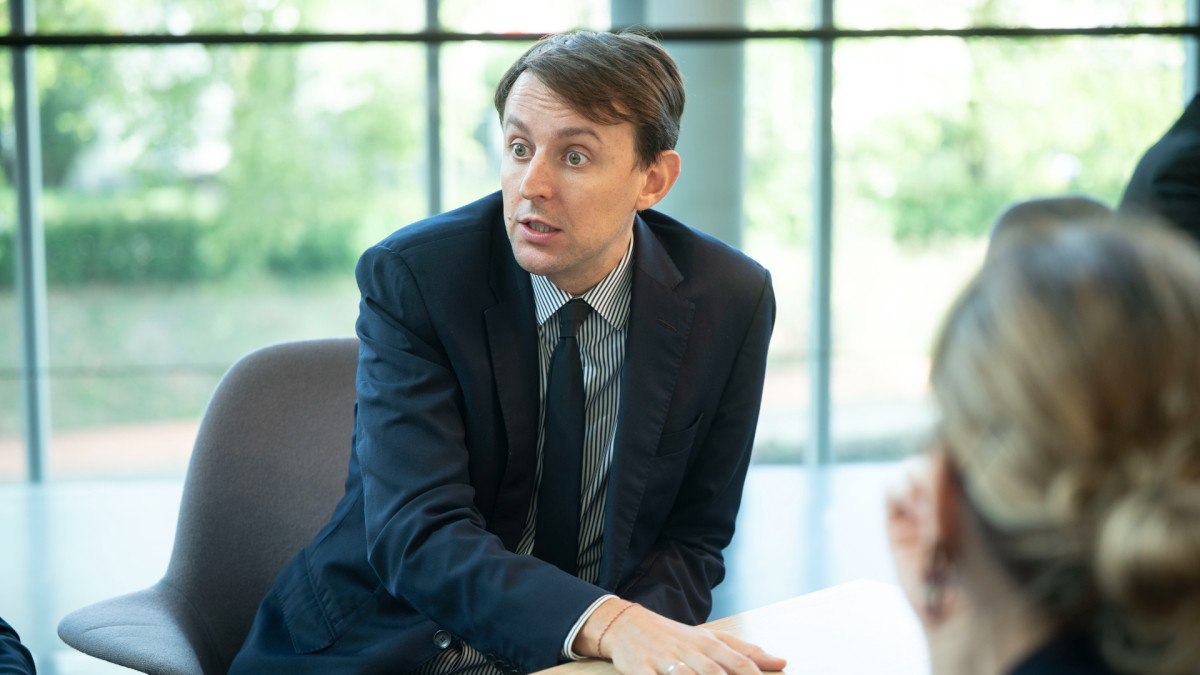
The MEPs analyze Ceuta’s crisis as a challenge that blends migration, security, and relations with Morocco. Photo: Agenda Pública / Dorothée Parent
In light of what was debated today about the State of the Union, please each point out a concrete advance you would like to see before the end of the term and a risk that particularly concerns you.
A. V.: I’m going to focus a bit on my niche: the child protection package. Von der Leyen has presented a concrete and very specific proposal. It is something that nearly all groups have been asking for throughout the whole legislature, something we were already expecting before the summer, and which finally shows that the European Union is taking the protection of minors seriously. It also provides a counterweight against large tech and digital companies that monetize through addictive mechanisms aimed at our minors and also at adults, because it happens to all of us. I don’t just think it will get through: I know it will. I believe it will garner a very broad consensus in this chamber and it is absolutely necessary for our society.
“Finally, the European Union is taking the protection of minors seriously”
Regarding concerns, I really liked what Jonás said about expectations and the budget. The problem we’ve been having lately is that we sell things the European Union cannot reach. I try to curb expectations. The member states bear the greatest responsibility here: often they use the institutions as scapegoats and, when the institutions achieve successes, they take the credit. It’s natural and human, almost normal. But I fear we may raise expectations and then not be able to deliver because we lack the means, the capacity, or the powers to do so. It’s a recurring theme. Sorry, and thank you very much.
H. J.: For us, it is important, above all in what concerns me, the European corporation for critical raw materials, which must have a budget allocation. We also need to keep investing in trade agreements. The center of all this can be summarized as strategic autonomy, and that means fulfilling what has been announced in defense and trade.
What worries me is that we stop working on international law and international maritime law. I worry that we forget international law and that we do not continue to work on it. I’m talking about what is happening in Gaza, about the two-state solution, about actions in Lebanon, and about the Houthis’ terrorism. We must continue to work on all of this because we must also be a peace actor with political influence. If we want to have influence, we must keep investing in our foreign policy.
There has also not been much mention of the European External Action Service. We strongly advocate for it. It was not mentioned today and I think we should also put it on the table. I’m disappointed that it wasn’t cited, because it is part of what we must keep investing in. It also worries me that it might not be done.
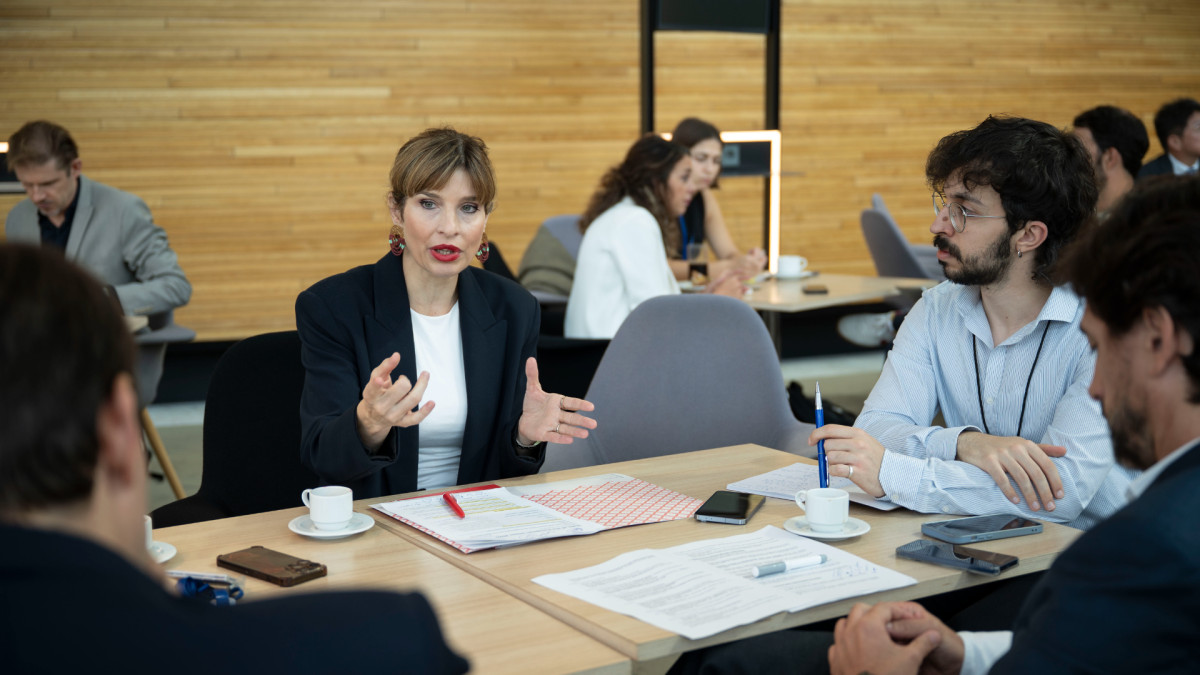
The closing stretch focuses on strategic autonomy, foreign policy, housing, and the single market. Photo: Agenda Pública / Dorothée Parent
France and Germany are there, with proposals to reform the European External Action Service.
H. J.: Our ambassadors abroad are our eyes out there and they do a great job. You cannot aspire to politically influence places where you are not present, because the reality is different. We already have enough problems with representatives who vote on issues they have not seen or do not know. How are we going to talk, for example, about the Global Gateway in Africa without being present through our embassies and without verifying whether their projects are being carried out?
J. L.: What I hope is that progress is made on the association with Canada as a sign of a new impulse in our relationship with democracies and with middle powers of the world in the face of Trump and Putin. That is the symbol.
And my fear is that our housing policy will fall short. A housing package has been announced, one of Europeans’ biggest concerns. We need ambitious and forceful actions: regulate short-term lets, curb real estate speculation, and facilitate and finance public authorities’ housing policy and the construction of new housing. It is absolutely necessary in Europe.
J. F.: I join the good intentions of my colleagues. Implementation of the One Europe, One Market plan is beginning to take shape, because the single market has serious problems. The International Monetary Fund and the European Central Bank published last year reports estimating the costs of internal friction within the single market. They calculate shadow tariffs of between 40% and 60% for goods and between 100% and 110% for services. Those are unbearable figures. When we complain, rightly, about the tariffs negotiated, for example, with the United States, we must remember that we bear internal costs substantially higher than those faced by European firms when selling outside the Union itself.
That requires implementing Letta’s recommendations and much of Draghi’s related to the single market. We are talking about telecommunications, the digital sector, energy, banking and finance. These are still highly fragmented markets, and there is no way to restore European economic competitiveness unless we push forward that agenda.
“How are we going to talk, for example, about the Global Gateway in Africa without being present through our embassies and without verifying whether their projects are being carried out?”
What I would not want to happen, in line with my previous intervention, is that Europe, its institutions, or its majority parties —we will see what happens in the upcoming elections— end up consolidating a position on immigration that I find inhumane and farcical. We saw this spring with the Return Regulation vote, where the PP and the far right secured a majority. I would not want that path of irresponsibility in policy design to lead us toward scenarios that, to a large extent, are already visible.
Thank you very much to all.
