
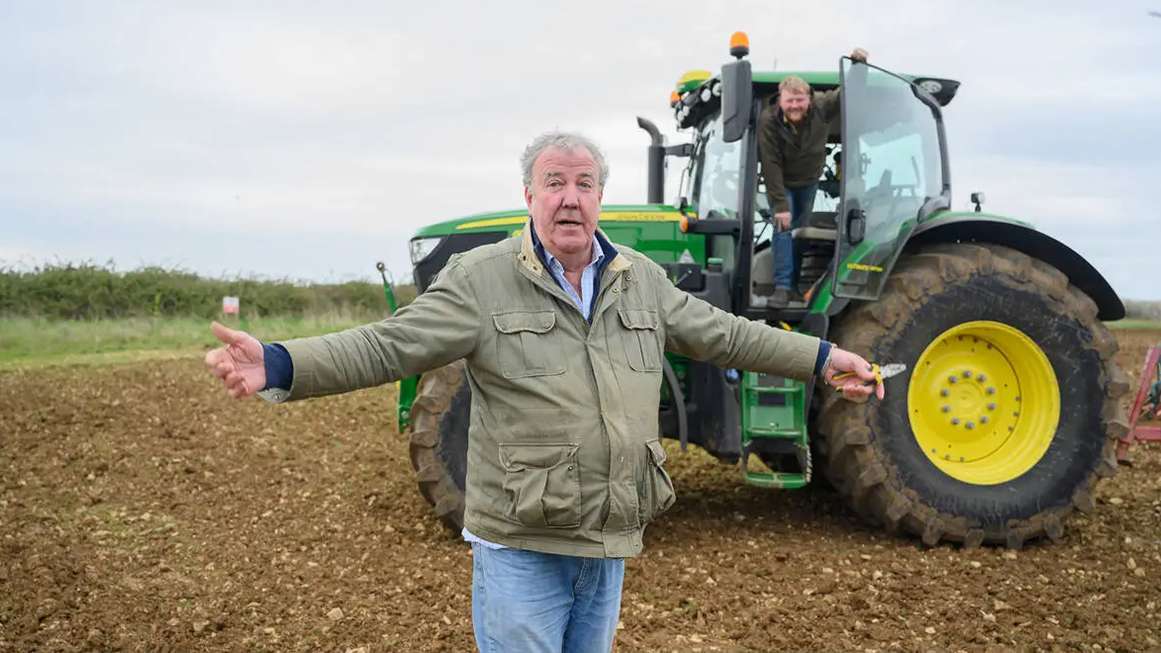
On Clarkson’s Farm, the Top Gear star finds himself at odds with local authorities.
In the British documentary series Clarkson’s Farm (Amazon’s Prime Video), former Top Gear presenter Jeremy Clarkson, a self-described libertarian, attempts to manage a 1,000-acre farm in West Oxfordshire, England, despite having no prior farming experience.
From turning soil and sowing crops to assisting with a calf’s birth, Clarkson offers viewers a remarkably intimate—sometimes rather graphic—glimpse into how food is produced. Clarkson’s Farm also demonstrates that the strenuous task of running a farm is made even more challenging by the government.
Across the series, state bureaucrats become Clarkson’s main source of frustration. In one episode, he seeks planning permission to convert an existing lambing shed into a restaurant. “We have been told as farmers to diversify, and that is exactly what this proposal is,” he argues at the council meeting. The planning application is examined by a lengthy list of consultees, including the Cotswolds Conservation Board, the Thames Valley Police, West Oxfordshire District Council’s environmental health officers, and Oxfordshire County Council’s ecology, archaeology, transport, and drainage teams. Council officials require a flood-alleviation scheme for the proposed restaurant, even though, as Clarkson notes, the farm sits “800 feet above sea level, miles from a river.” One lawyer at the council meeting states that granting permission for the restaurant “conflicts with the statutory objective of conserving and enhancing the area of outstanding natural beauty.” The application is rejected.
Clarkson’s Farm brings the audience into a farmer’s struggles, so that viewers too can vent their ire at the state.
