
Yet defenders of free speech are pushing back.
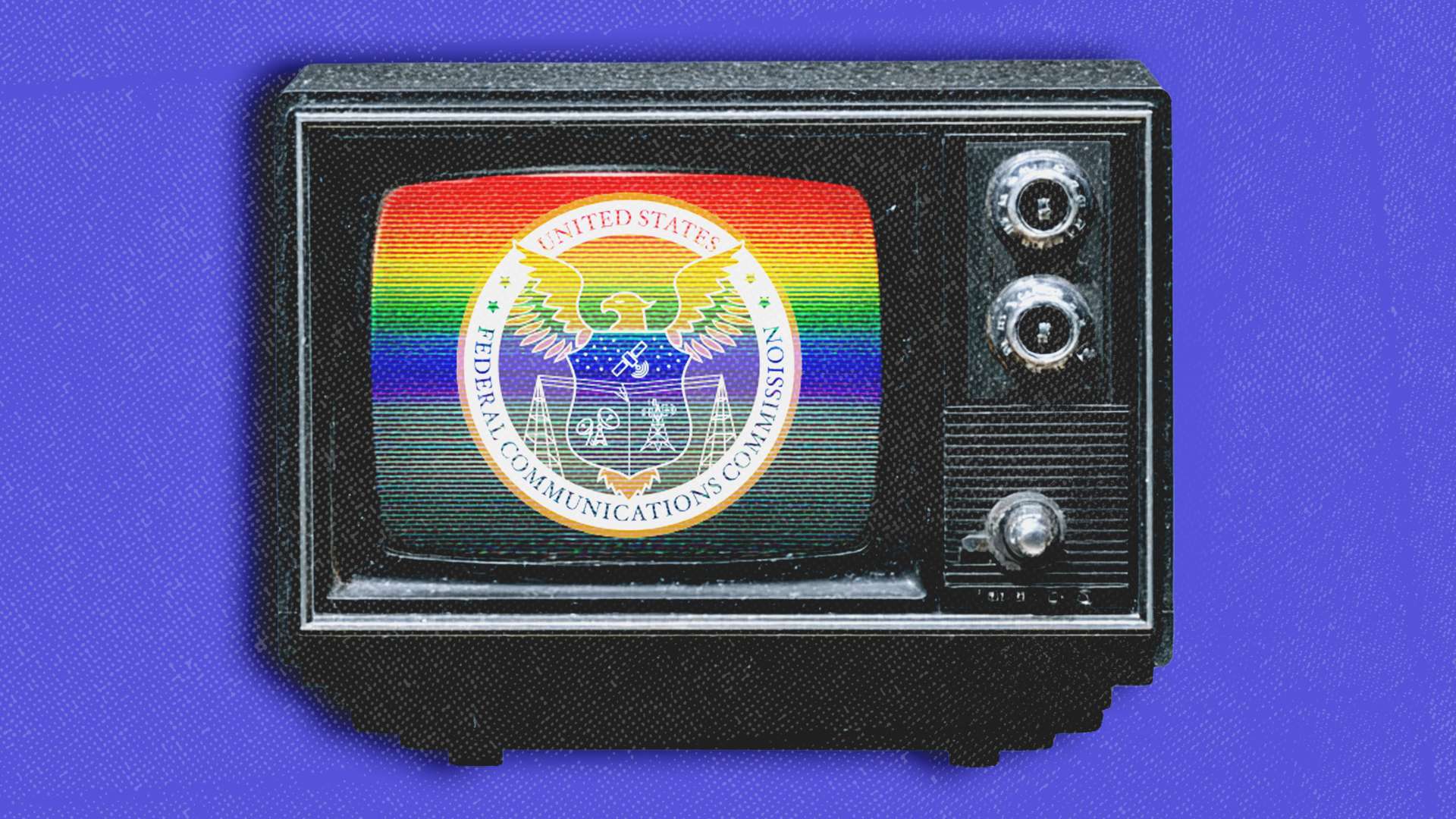
The Federal Communications Commission (FCC) is weighing the introduction of new content ratings for television programs that portray or discuss gender identity. Implementing such ratings would exceed the agency’s statutory powers, and several free-speech groups warn that it could infringe the First Amendment.
Following the Telecommunications Act of 1996, broadcasters created TV content ratings modeled after film ratings. The scheme ranges from TV-Y (appropriate for all children) to TV-MA (mature audiences only) and includes precise labels for suggestive dialogue, profanity, sexual material, and violence. A watchdog body, the TV Parental Guidelines Oversight Monitoring Board (TVOMB), was set up to oversee these guidelines.
Now the government contends that these warnings no longer meet the mark.
“Recently, parents have expressed concerns that provocative gender identity topics are being included or promoted in children’s programming without any disclosure or transparency to families,” the FCC stated in a public notice filed in April. “Specifically, the industry guidelines that families rely on rate transgender and gender non-binary programming as appropriate for children and young children, and doing so without informing parents, thereby undermining the ability of families to make informed choices.”
As a result, the notice continued, “We seek comment here on any changes that can or should be made to the current ratings system to ensure that it is responsive to the issues that parents confront today.”
There are several problems with the memo—beginning with the fact that the FCC lacks the authority to create or require new content labels.
The 1996 law did call for the government to create a “television rating code” and an “advisory committee,” unless the private sector “established voluntary rules” to do so within a year of the law’s passage. As the FCC acknowledged in its April memo, “Industry representatives chose to set up their own voluntary system, and the Commission in 1998 found that industry’s approach met the relevant statutory criteria.”
Even setting that aside for the moment, the memo’s phrasing also suggests any “transgender [or] gender non-binary” content is potentially inappropriate for children—after all, why else would it matter if parents were sufficiently warned about it?
This broad scope has First Amendment implications. “If what the Commission is in substance proposing is that any program featuring or discussing transgender and gender non-binary persons be flagged with a content warning, that is the stigmatization and marginalization of an entire segment of the population through the machinery of the ratings system, and it is the kind of viewpoint targeting forbidden by the First Amendment,” according to comments filed to the FCC by The Future of Free Speech, a nonpartisan think at Vanderbilt University.
“The FCC’s notice is so vague that it is impossible to determine what programming would actually trigger the kind of labeling the agency appears to be contemplating,” adds Ashkhen Kazaryan, a senior legal fellow at The Future of Free Speech who wrote the comments filed to the FCC. “That lack of clarity is itself a serious First Amendment problem because it invites arbitrary enforcement and political pressure around protected expression.”
“The agency’s fishing expedition here clearly sets out to eliminate or discourage specific content, invoking incurable First Amendment concerns,” advocacy group Free Press agreed in its FCC filing. “By inviting comment from the public over programming that purportedly ‘include[s] or promote[s] […] controversial gender identity issues,’ the FCC insinuates that such programming may be obscene, indecent, or profane material. This is a misguided and false attempt to wedge alleged parental concerns into these limited categories that the agency can regulate to some small degree.”
Supporters say there is no First Amendment violation because the proposal would not dictate a show’s content; it would simply label it. “Gender ideology programming could still be broadcast without restrictions. It would just carry a label that would allow parents to spot it at a glance and filter it out of their homes,” Angela Morabito wrote at the Washington Examiner. “The FCC’s proposal would simply give parents more information to make choices about what is best for their children. Anyone who wants to rob parents of that opportunity does not have children’s best interests at heart.”
“Labeling is a form of compelled speech, which the government has extremely limited ability to mandate,” retorts the nonpartisan think tank TechFreedom in FCC comments of its own. “Even if the Commission never prescribes its own rating guidelines, this inquiry will chill speech about politically controversial topics around gender identity. Warning parents that ‘gender identity themes’ might be present in children’s programming implicitly suggests that the Commission considers some gender expressions inappropriate for children.”
Restrictionist complaints like the FCC’s are nothing new.
“To the detriment of children, gender dysphoria has become sensationalized in the popular media and television with radical activists and entertainment companies,” according to a 2022 letter from five Republican senators to the TVOMB. “In light of parents raising legitimate concerns on sexual orientation and gender identity content on children’s TV shows, we expect the Board to fulfill its responsibility in updating the TV Parental Guidelines to reflect these concerns.”
In the late 1990s, with gay characters on primetime shows like Ellen and Will & Grace, some social conservatives called for warning labels for “homosexual content.”
And conservatives aren’t the only ones who have clutched their pearls over the things on television: In 1997, then-Sen. John Kerry (D–Mass.) suggested a “pre-see,” in which TV scripts were “printed in the papers” for parents to screen the content ahead of time. (Talk about a spoiler alert!)
But apart from the First Amendment implications and the proper scope of FCC authority, adding labels for gender-related content is just off-loading part of parenting to someone else.
Though the FCC gave no specific examples, there are certainly parents who would prefer their kids never see any “transgender and gender non-binary programming.” But that should not be the government’s purview. After all, the government can’t forewarn parents that they’ll encounter a nonbinary person at the grocery store or the post office—why should it warn them about one on TV?
