
This ruling goes further than other recent decisions of a similar kind.

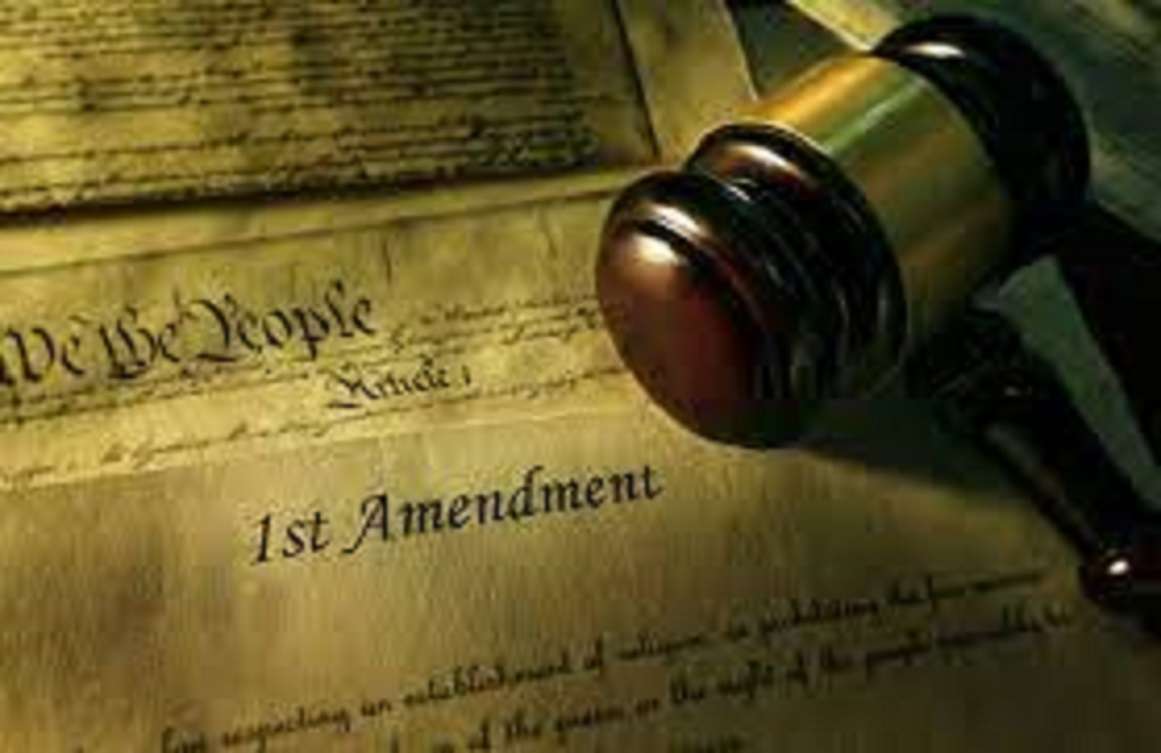
This past day, in Stanford Daily Publishing Corp. v. Rubio, federal district Judge Noel Wise concluded that deportations based on speech directed at non-citizens run afoul of the First Amendment. The ruling mirrors earlier decisions addressing the Trump administration’s attempts to expel non-citizen scholars and students over speech that officials found objectionable. Yet this decision goes further by holding that the statutes the administration cites are themselves unconstitutional, because they vest the Secretary of State with near-absolute authority to deport non-citizens should he determine their speech to clash with a purported compelling US foreign policy interest. Judge Wise’s reasoning resembles that of the late Judge Maryanne Trump Barry (Donald Trump’s sister), who in 1996 found one of these laws excessively vague and therefore unconstitutional.
Here is an excerpt from yesterday’s ruling:
[T]he Challenged Portion of the Deportation Provision is an intentionally broad delegation providing the Secretary of State leeway to suppress opinions that he deems harmful to foreign policy. The Secretary of State has wide latitude to enforce the provision with no limiting principles on how enforcement priorities are determined. The Challenged Portion of the Deportation Provision provides unlimited (and, in the government’s view, unreviewable) discretion to the Secretary of State to decide which “beliefs, statements, or associations” endanger foreign policy. 8 U.S.C. § 1182(a)(3)(C)(iii). This cannot be squared with First Amendment protections…
Freedom of speech is illusory if we are only “free” to express complementary views about the government and its leaders. The true freedom in the United States is our “profound national commitment to the principle that debate on public issues should be uninhibited, robust, and wide- open, and that it may well include vehement, caustic, and sometimes unpleasantly sharp attacks on government and public officials.” New York Times Co. v. Sullivan, 376 U.S. 254, 270 (1964).
I agree with Judge Wise’s reasoning on these points. He also rightly strikes down the relevant laws based on their unconstitutional vagueness.
The decision also includes a massive compilation of evidence showing that the administration does indeed have a speech-based deportation policy, particularly when it comes to students and academics expressing pro-Palestinian or anti-Israeli views. I am, to understate the point, no fan of many of these views. But the First Amendment protects speech we (or the party in power) disapprove of no less than speech we like, and awful views no less than benign ones.
Like other similar recent rulings, this one – following Supreme Court precedent – distinguishes between speech-based initial exclusions and speech-based deportations (allowing greater scope for the former). I recognize lower courts’ hands may be tied on this point. But I would argue both are equally unconstitutional.
I do wish Judge Wise had devoted a bit more effort to addressing the argument that the First Amendment doesn’t cover non-citizens or protects them only to a very minor degree. This issue was better covered by Judge Young in AAUP v. Rubio (decided last September).
I have myself explained why there is no immigration exception to the First Amendment in earlier writings (e.g. – here, here, and here). Most importantly, as I have pointed out previously, the First Amendment – like most constitutional rights is phrased as a generalized limitation on government power – not a privilege limited to a specific group, such as citizens. And the First Amendment bars speech-based deportations even if the federal government can exclude non-citizens for other reasons:
A standard response to [my] view is the idea that, even if non-citizens have a right to free speech, they don’t have a constitutional right to stay in the US. Thus, deporting them for their speech doesn’t violate the Constitution. But, in virtually every other context, it is clear that depriving people of a right as punishment for their speech violates the First Amendment, even if the right they lose does not itself have constitutional status. For example, there is no constitutional right to get Social Security benefits. But a law that barred critics of the President from getting those benefits would obviously violate the First Amendment. The same logic applies in the immigration context.
Judge Wise’s decision also covers a range of procedural issues that I will not attempt to comment on here.
In a forthcoming chapter in an Oxford University Press book on Academic Freedom in the Era of Trump, I explain why speech-based immigration restrictions violate academic freedom, as well as freedom of speech; and that includes the academic freedom of US-citizen students and researchers, as well as non-citizen immigrants.
In February of this year, I explained in testimony before the US House of Representatives Judiciary Committee’s Subcommittee on the Constitution and Limited Government, why religion-based immigration restrictions also violate the First Amendment. This precludes proposed legislation to bar or deport all or nearly non-citizen Muslims.
Finally, I would like to commend the Foundation for Individual Rights and Expression (FIRE) for successfully representing the plaintiffs in this case. In a world extensive partisan bias and double standards, FIRE deserves respect for consistently defending freedom of speech and expression, regardless of whether the threat to it comes from the right or the left.
