
The habitually dishonest department uncritically accepted a narrative that video and physical evidence immediately contradicted.
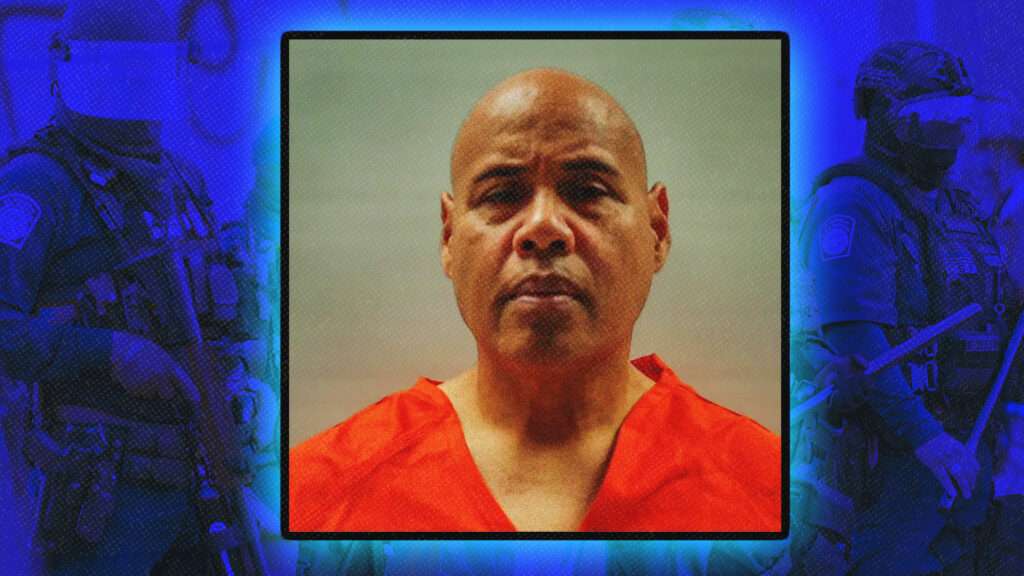
Following an incident on January 14 in Minneapolis in which ICE officer Christian Castro discharged his weapon at Julio C. Sosa-Celis, the Department of Homeland Security (DHS) framed the use of force as entirely warranted. “Feeling his life and safety at risk as an ambush by three people unfolded,” DHS stated in a follow-up release the next day, Castro “fired a defensive shot in defense of his life,” hitting Sosa-Celis in the leg.
According to DHS’s account, Castro had been attempting to detain Sosa-Celis, described as “a criminal illegal alien from Venezuela,” who allegedly began resisting and assaulting the officer. While Castro wrestled with Sosa-Celis on the ground, two others emerged from a nearby apartment and attacked him with a snow shovel and a broom handle. Then Sosa-Celis purportedly broke free and struck the officer with the shovel or broom. Kristi Noem, who was serving as DHS secretary at the time, framed it as “an attempted murder of federal law enforcement,” claiming Castro was ambushed and assaulted by three individuals who beat him with snow shovels and broom handles.
But a federal grand jury’s indictment, approved on Wednesday, found that none of those particulars happened: Castro had fabricated the entire account. To make matters worse, DHS accepted his version without question, and Noem amplified the tale by inflating the number of supposed weapons employed by the attackers.
Such conduct is typical for the DHS, which has a record of defending its personnel reflexively, often leaping to conclusions before full facts emerge. This is not the only instance in which the government’s initial portrayal of a DHS shooting has been contradicted by later evidence. What makes this case distinctive is that the government ultimately acknowledged that its narrative rested entirely on a DHS employee’s self-serving falsehoods.
So what occurred that day? The DHS release described a targeted traffic stop in Minneapolis aimed at Julio Cesar Sosa-Celis, who allegedly fled in his car, struck a parked car, and then ran away on foot. Yet the following day, FBI agent Timothy Schanz filed an affidavit in support of federal charges against Sosa-Celis and Alfredo A. Aljorna, a resident of the same duplex, who were said to have joined in attacking Castro.
Schanz’s account states that Castro and another ICE officer spotted “a silver/gray Ford Focus” bearing a plate registered to Joffre Barrera, who records indicated was illegally present in the United States. The officers misidentified the driver as Barrera, even though the man behind the wheel—Aljorna—was heavier by about 50 pounds, taller by roughly five inches, and younger by about a decade. Regardless, it was Aljorna rather than Sosa-Celis who fled as authorities attempted a stop, crashing into a light pole on North 24th Avenue after a chase lasting roughly 15 to 20 minutes, and then heading toward his residence.
While pursuing Aljorna, Castro reportedly observed another Hispanic man, later identified as Sosa-Celis, on the duplex’s front porch. When Aljorna fell, Castro closed in and engaged him on the ground. At that moment, Sosa-Celis seized a red-handled broom and struck Castro in the face with it, allegedly shouting something like, “Let him go.”
A third Hispanic man then approached wielding a snow shovel and joined in striking Castro with it. As Aljorna managed to break free from Castro’s grip, the officer cried out for assistance from a partner who, he later realized, was not present.
Castro, by his account, had been grappling with Aljorna for about three minutes, becoming exhausted, isolated on the ground, and fearing for his safety, according to Schanz. Sosa-Celis allegedly handed the broom to Aljorna, who then tried to strike Castro in the face or head. Castro, taking blows from the broom, used his left hand to shield himself, resulting in a cut to his palm. While preventing further blows with his left hand, Castro reportedly fought to draw his service pistol with his right hand and aimed it at the attackers.
As soon as the attackers observed Castro drawing his firearm, they dropped the broom and snow shovel and fled toward the duplex. Castro fired a single shot toward the area where the assailants were, and they retreated inside the residence, closing the front door behind them.
If three individuals were involved, why were only two charged? Schanz offered no explanation. Yet the video and physical evidence contradict Castro’s version; surveillance footage shows no broom- or shovel-wielding assault, nor any extended struggle matching Castro’s portrayal.
The clash with Aljorna lasted roughly 12 seconds, and Castro “did not sustain any blows from a shovel or a broom,” according to Hennepin County Attorney Mary Moriarty. “In fact, he was not struck,” she stated. After Aljorna and Sosa-Celis retreated inside the duplex, Moriarty said they posed no harm to Castro or anyone nearby. In opposition to Castro’s account, it was after they retreated that he discharged his weapon, as a bullet hole in the front door testified.
Following charges filed against Aljorna and Sosa-Celis for assault and related felonies, federal prosecutors gradually recognized inconsistencies in Castro’s narrative. On February 12, almost a month after the shooting, U.S. Attorney Daniel N. Rosen told U.S. District Judge Paul A. Magnuson that newly uncovered evidence contradicted the allegations against Aljorna and Sosa-Celis. The next day, Magnuson approved Rosen’s motion to dismiss the charges with prejudice, preventing re-filement.
Acting ICE Director Todd Lyons stated on the day of the dismissal that “video evidence shows Castro seems to have made untruthful statements.” He added that “lying under oath is a serious federal crime” and that the U.S. Attorney’s Office was actively investigating these false statements.
The investigation led to an indictment issued this week, sealed at the moment, that reportedly accuses Castro of six counts of making false statements to FBI agents, a felony carrying up to five years in prison. This charge suggests his use of deadly force against Sosa-Celis was not justified and could imply willful violations of Sosa-Celis’ Fourth Amendment rights under color of law, a federal felony punishable by up to ten years if bodily injury results.
According to reports, federal prosecutors in Minnesota “pushed for more serious civil rights charges but said that their Washington counterparts had so far been unwilling, limiting the indictment to accusations of lying,” The New York Times notes, citing two people familiar with the case. A Justice Department official told the Times that prosecutors are still examining the shooting and have not ruled out pursuing civil rights charges.
ProPublica later reported that Assistant U.S. Attorney Matthew Evans, the prosecutor handling Castro’s case, stated in an email that he objected in the strongest possible terms to Rosen and “Main Justice” blocking charges that Castro violated Sosa-Celis’s constitutional rights. CBS News notes that Evans was terminated following that disagreement.
In May, Moriarty announced state charges against Castro, asserting that he faced no physical threat at the moment he fired, or even beforehand. She explained her decision to charge him with four counts of second-degree assault and one count of falsely reporting a crime.
The case has stalled. Following the shooting, ICE moved Castro to Texas, where Governor Greg Abbott initially refused Minnesota’s extradition request, stating he needed more time to weigh it. Although Castro was jailed under that request, he was released last week after three months in detention, the maximum permitted under state law for extradition cases.
Whether Castro will be held to account for the unjustified use of force or for his deception remains unresolved. Regardless, the case underscores the risks of accepting DHS statements at face value after its personnel discharge their weapons.
A week before Castro’s shooting, ICE officer Jonathan Ross fatally shot protester Renee Good in Minneapolis. A couple of weeks later, DHS employees fatally shot Alex Pretti, another Minneapolis protester. In both cases, the DHS narrative portrayed Good and Pretti as would-be murderers, a depiction that conflicted with video footage of the events.
Even though the consequences here were not as dire, DHS employed the same approach, painting Aljorna and Sosa-Celis as intent on killing, a claim also refuted by video evidence. Beyond the question of justification, the department showed a troubling sloppiness in presenting the core facts, mixing up Sosa-Celis and Aljorna, and misidentifying Aljorna as the original ICE target.
The DHS not only swallowed Castro’s fabricated account but also embellished it, citing more than one broom and more than one snow shovel than described. It suggested that Aljorna and Sosa-Celis had a history of violent conduct, labeling them as “criminal illegal aliens.” In reality, Aljorna’s only offense was undocumented entry into the country, while Sosa-Celis’s record consisted of a license-violation conviction and an arrest for providing a false name to a peace officer.
In a sense, the federal action helps correct the record. Yet rather than apologizing for misleading the media and the public, DHS has not taken steps to retract or amend its account of the shooting, which continues to appear on the department’s site with the initial inaccuracies intact.
As Reason’s CJ Ciaramella observed last October, DHS has demonstrated, “case after case nationwide,” a tendency to release untrue information to the public and never rectify it. The department appears unable to shed this hazardous habit, which breeds mistrust and invites skepticism with every misleading and opinionated press release.
