
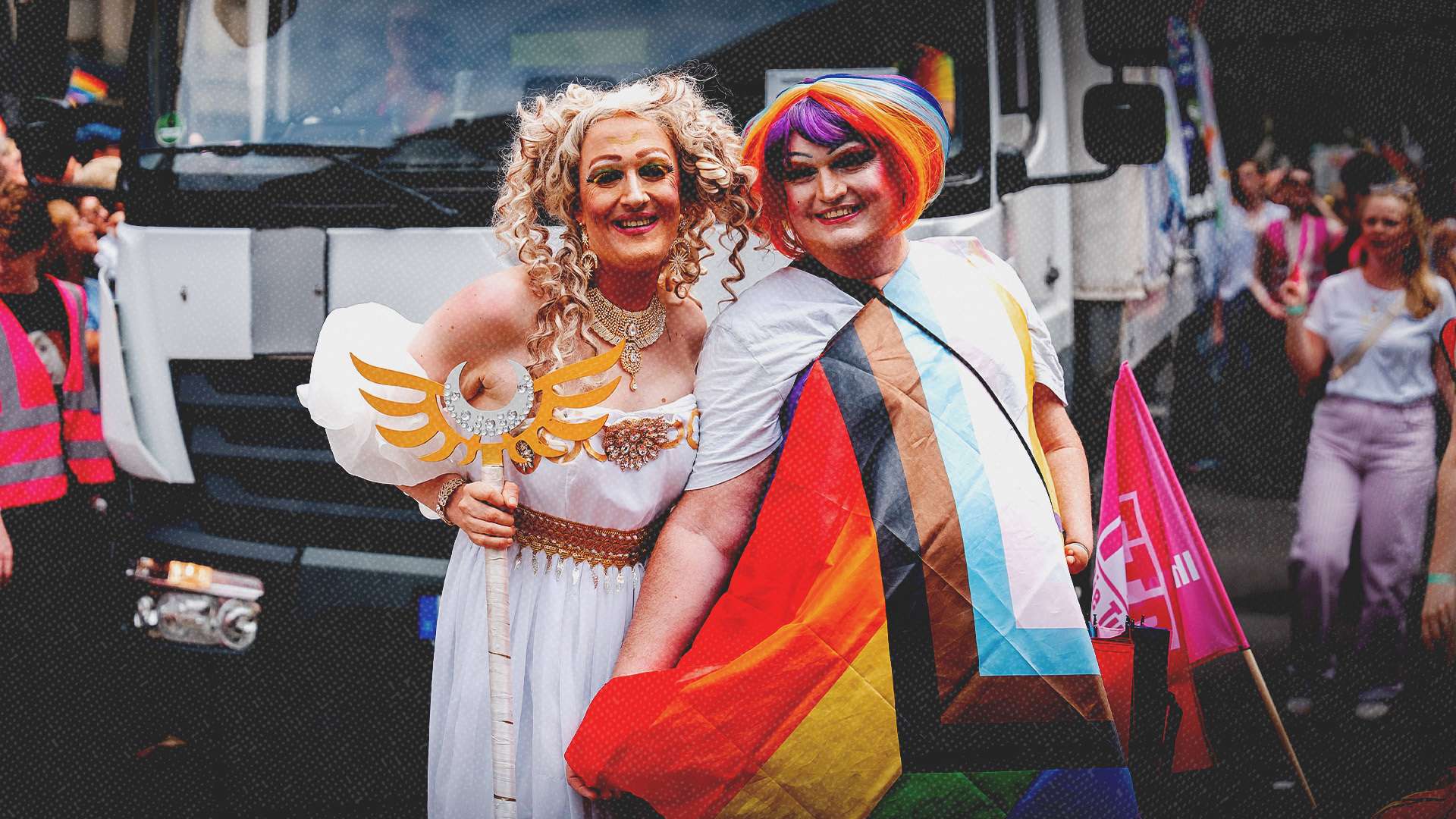
A Texas statute restricting “sexually oriented performances” was struck down after a federal judge said it could be read to cover everything from cheerleading to karaoke to performances by Dolly Parton, Elvis Presley, and Miley Cyrus.
In a fitting tribute to Tim Curry, a federal judge has ruled against a Texas ordinance aimed at curbing drag performances.
On Tuesday, Judge David Hittner of the U.S. District Court for the Southern District of Texas held that a 2023 state statute prohibiting “sexually oriented performances” in the presence of minors violated the First Amendment.
Prior to the decision, organizers hosting events in violation of this law faced fines reaching up to $10,000. Entertainers could be charged with a Class A misdemeanor, the most severe category of misdemeanor in Texas, which could carry a $4,000 fine, up to a year in jail, or both.
The district court held that the statute’s definitions were excessively broad, noting that they could encompass “countless exhibitions and events with an audience, including sports matches, cheerleading and dance contests, karaoke, musicals, art displays, dressing in potentially provocative outfits at comic book conventions, ballet, and more.”
The ruling also notes that, because the law does not specify who must determine whether a performance “appeals to the prurient interest…a single moment of eroticism could condemn an entire performance to criminal or civil penalties.”
The decision cites Dolly Parton “as a voluptuous sex symbol because of her big hair, flamboyant clothes and breast exposure,” Elvis Presley’s “signature hip gyrations” as a “display of male sexuality,” and Miley Cyrus’s “twerking” during the 2013 MTV Video Music Awards as examples of performances containing “erotic” elements that could fall under criminal penalties under this law.
Tuesday’s ruling caps a yearslong legal fight that began in 2023 when the American Civil Liberties Union of Texas and Baker Botts LLP filed a lawsuit on behalf of drag companies, LGBTQ groups, and an Austin-based drag performer named Brigitte Bandit, challenging the statute. As Reason reported at the time, the district court had declared the law unconstitutionally overbroad that year. Yet more than two years later, the Fifth Circuit Court of Appeals ruled that the statute could still be enforced and sent the case back to the district court, allowing the law to take effect last year.
Texas is among several states that enacted measures to curb drag performances, only to see those laws struck down in court. In 2023, federal judges invalidated anti-drag statutes in Tennessee and Florida on First Amendment grounds. In Florida, where the law was touted as protecting children from allegedly harmful live shows, District Judge Gregory Presnell ruled the statute was “specifically designed to suppress the speech of drag queen performers.”
Likewise, in Montana, a federal judge blocked the enactment of House Bill 359 in 2023. The injunction was upheld by the Court of Appeals for the 9th Circuit earlier this year. The measure sought to bar “drag story hours” and “sexually oriented performances” in various locations, but the court found that it had deterred plaintiffs—including drag performers and LGBTQ groups—from exercising protected speech due to fear of prosecution. The court concluded that there was “no evidence before the Court to indicate that limiting children’s exposure to speech and expression critical of gender norms or by gender non-conforming people bears any relation to promoting children’s welfare.”
Hittner on Tuesday echoed a similar sentiment: “For those who find such activities as described in this case offensive, the solution is relatively simple…just don’t go.”
