
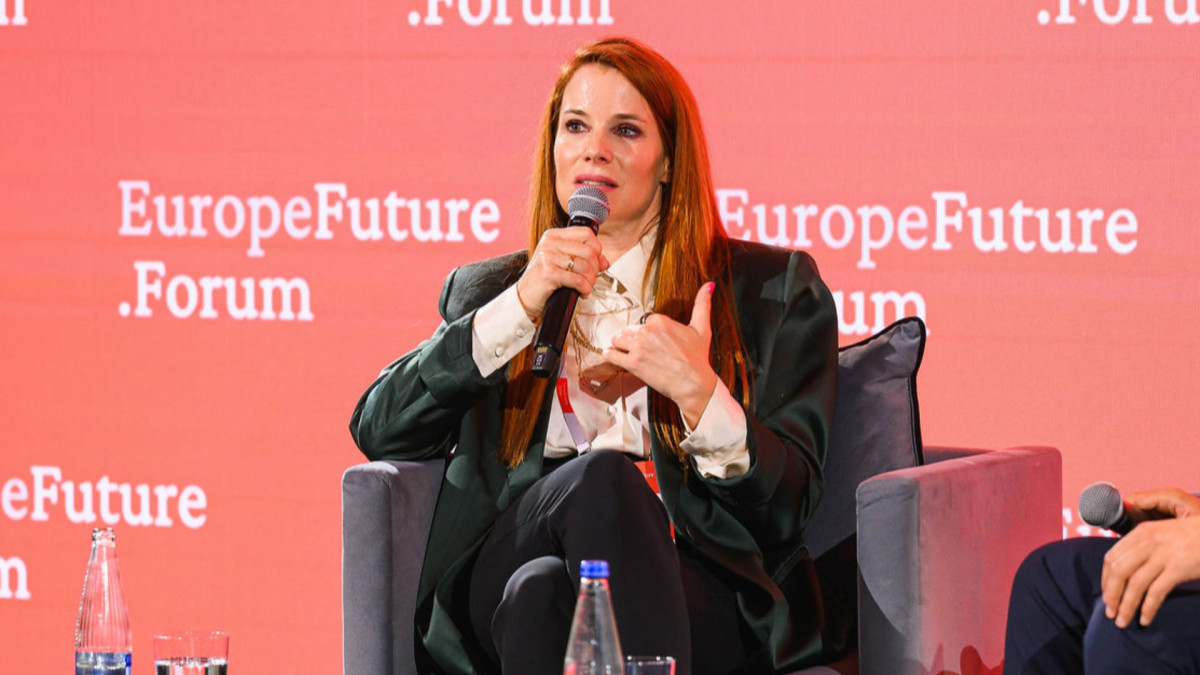
Florence Gaub leads the Research Division at the NATO Defense College, where she contributes to shaping the Alliance’s strategic thinking. Challenging the usual expectation of a Russian push specifically aimed at the Baltic states or Poland, she cautions that a miscalibration or unintended escalation in the Arctic, the Mediterranean, or the Black Sea could ignite a broader confrontation: “To me, the conventional scenario is not the most likely one”.
I had the opportunity to sit down with her during the EuropeFuture Forum hosted by Visegrad Insight this week in Warsaw. Gaub expands on how governments can adopt long-term planning, the influence of psychological biases, and the ways to counteract groupthink. From a Spanish vantage point, she highlights a Mediterranean increasingly influenced by Russian presence and the fragility of critical infrastructure: “There needs to be a strategic shift in how we perceive NATO’s southern flank”.
Florence Gaub has served at the General Secretariat of the Council and as a visiting professor at the College of Europe. Photo: Courtesy photo
Let me begin by asking about your current role at NATO. What exactly does it involve?
I oversee the Research Division at the NATO Defense College, which, within NATO’s institutional framework, sits inside the military command structure. We report to the Military Committee, so they are effectively our supervisors. The North Atlantic Council stands as the ultimate authority, and beneath it the Military Committee brings together the highest-ranking officers from all member states. We provide input to them.
Practically speaking, though, the Research Division aims to inform strategic thinking across NATO. We collaborate with the Office of the Secretary General, with ministries in member countries, with Allied Command Transformation, SACEUR, and so on. Our mission is to contribute to strategic-level thinking throughout the Alliance.
And you lead a team?
Indeed. I lead a team of ten in total, a mix of military personnel and civilians, drawn from about seven different countries at present. We’re growing—like everything at NATO. I often say I have the best job in NATO.
Is it feasible to work with long‑term scenarios when political mandates are often four years?
When you measure political systems against an index called intergenerational solidarity—which gauges how far into the future a government tends to plan—you see that democracies are perfectly capable of doing so. They are typically tied to their people, and people care about the future. Leadership might not always be invested in it, but citizens usually elect and back leaders who campaign on an optimistic, forward-looking vision. Pedro Sánchez is a clear example.
Nevertheless, there has been a trend, especially over the past two decades, toward shorter horizons. A noticeable dip around 2008—the financial crisis, perhaps, or the rise of smartphones—made the present moment feel far more dominant.
All too often I hear the refrain: “We have so many crises; we must deal with the crisis first.”
Yet I don’t see it as an either/or choice. It’s possible to manage the crisis while still steering things in the right direction. It’s true, though, that many bureaucracies struggle to do both.
“You have to be able to handle the crisis while also steering the boat in the right direction”
There’s also a trick to this. The quickest way to lose a leader’s attention is to lay out fifteen different scenarios and say, “All of this could occur.” Our job as futurists serving policymaking is to make their lives easier. It isn’t about telling them everything that could happen, because more events are possible than will actually occur.
My rule of thumb is that the higher the level of the decision-maker, the fewer scenarios they should be shown. For a prime minister, give them two scenarios. Don’t overwhelm with fifteen. A minister might manage three, but that’s about it.
More importantly, a scenario isn’t merely a forecast of what could take place. You must also outline what decision-makers can do to avoid that scenario. After all, politicians want to act; they want to take steps.
Thus you must supply ideas on how to alter the scenario. Many foresight practitioners resist this, arguing, “This is the future; now you go and deal with it.” But the whole aim of future thinking is to do something about it.
Do politicians feel compelled to react to everything? Is it still possible to think in terms of scenarios when daily reactions are required to countless events?
You have to. There’s no alternative.
There’s a term for this phenomenon: future discounting, the tendency to devalue the future. If you fixate on the present too much, you’ll pay later. The parallel is clear: party hard today and you’ll pay tomorrow; fixating on the current moment will eventually exact a toll.
Of course, I’m not suggesting you obsess over the future every single day. I usually advise that a government—depending on its remit—might set aside time to think about the future once a year. For instance, during the first week of January, when crises are typically quiet, pull your team aside and ask: What do we want to happen? What don’t we want to happen? What safeguards can we put in place? And then let that reflection cascade through the system.
I don’t believe it’s hard. It isn’t as if you can’t spare half a day to convene your team.
To illustrate, Jens Stoltenberg’s team, during his tenure as Secretary General, met monthly to reassess their assumptions about Russia. They would spend an hour together, asking: “To avoid surprises, should we recheck our assumptions?”
It’s a form of intellectual hygiene that’s actually quite straightforward to practice. When people say, “I don’t have time for this,” it’s a bit like saying, “I don’t have time to brush my teeth.” It’s not that there isn’t time; it’s that people aren’t willing to make it.
If Germany had engaged seriously with scenarios years earlier, would it have reduced its reliance on Russian gas?
There’s a notable hurdle here, one not unique to Germany. You can possess excellent foresight, but if psychological resistance undermines your conclusions, it becomes useless.
Often, what unfolds isn’t a genuine black swan. Think of the pandemic, the Ukraine invasion, or 9/11. There are almost always people who predicted it in some form.
“You can have the best foresight in the world, but if there is psychological resistance to your findings, it is useless”
Even something akin to September 11 appears in a Tom Clancy novel. It isn’t that a single person, holed up in a hut somewhere, was the only one thinking about it. In most cases, someone had foreseen it. Yet at higher political levels, resistance prevailed.
In Germany’s case—and I say this as a German—the deep-seated attachment to a world in which one could be on good terms with Russia was extraordinarily strong, partly due to the Cold War and Germany’s division.
Growing up in Munich, I was acutely aware that if war broke out between the Soviet Union and the United States, this is where it would likely erupt. We lived under the looming threat of conflict, and that relief ended in 1990.
So I believe the emotional pull of that sense of relief was simply too powerful. People—even Americans—said, “Don’t do this.” But the bias was stronger. I don’t think it could have been overcome by foresight alone.
That’s why we always stress checking your biases, verifying your assumptions. If you are deeply invested in a belief, set in advance the conditions under which you would be willing to revise your mind. Many people don’t do that.
In many cases, politicians want to surround themselves with people who don’t criticize the leader. If you want to engage seriously with scenarios, you must confront a degree of groupthink. How can that be achieved?
I think you’ve pinpointed the core issue. Too often, people assume that better forecasting simply requires more money, more data, or more personnel. Nobody would object to any of that. Yet the real challenge is psychological: the suite of biases we carry, with groupthink itself being one form of bias.
“The real problem is psychological. It is about all the different biases we have, and groupthink is itself a form of bias”
What works is cultivating an environment where dissenting opinions are allowed. That’s challenging, especially in highly hierarchical systems—the military, for instance—but also in cultures with strong hierarchical norms. It becomes even tougher when there is a deep personal stake in a particular outcome, as has been the case in Germany.
I’d argue the best approach is to assemble a genuinely diverse group. And by diversity I mean more than gender or other surface traits; it can mean differences in age, political orientation, professional training. Economists see the world differently from political scientists. Personalities matter as well.
The more varied your team, the more likely it is that members will learn from one another and challenge one another.
And of course, all of this must happen in an atmosphere of equality. Groupthink emerges when one dominant individual stifles dissent.
I often point to the Research Division as a good model: we’re a small, highly diverse team. Within it, disagreements arise, but it’s a safe space. People are free to disagree. No one is punished for expressing an alternate view.
That would be my recommendation. And if you can’t foster that atmosphere within your immediate unit, then create a small, protected team somewhere else in the organization—a group with both the trust and the mandate to disagree.
Is the European Commission currently incorporating scenario planning?
I would expect so. When I worked for the EU, foresight was well established—ESPAS and the Global Trends Report, for instance. So yes, I’d say they are engaging with various scenarios.
But different institutions and bodies can pursue different scenarios, and that’s perfectly acceptable. There isn’t a need for a single, universal scenario. So I’d imagine the EU is conducting its own scenario work as well.
ARTÍCULOS RELACIONADOS
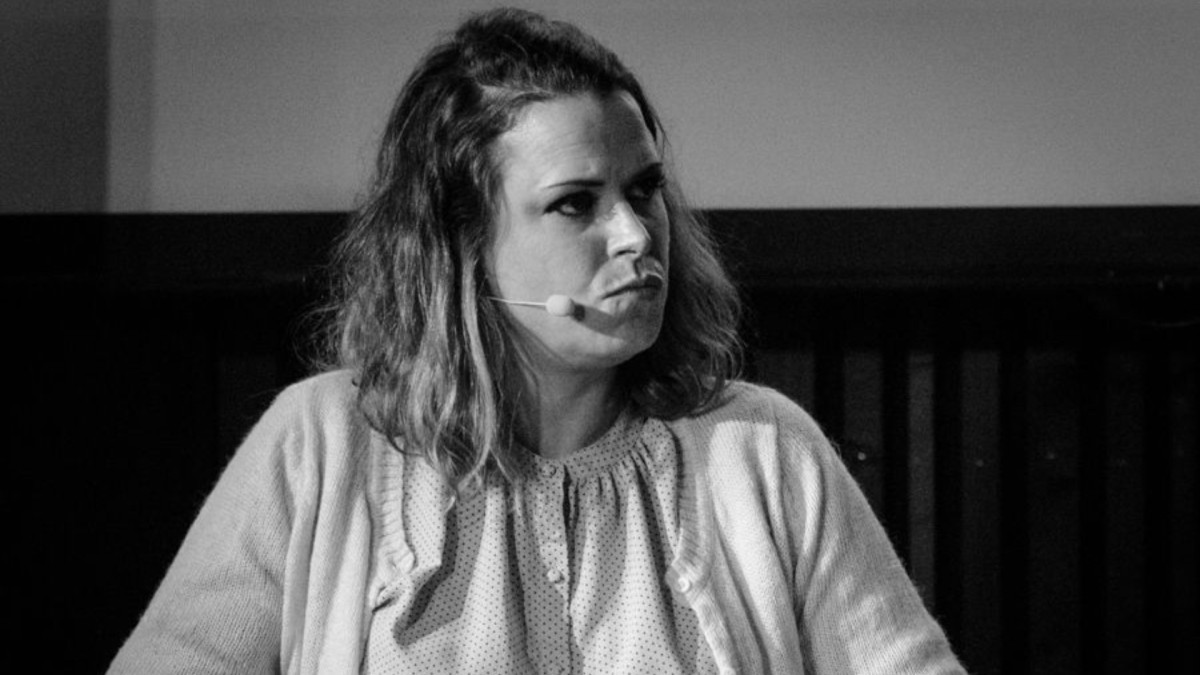
Hedda Langemyr, directora de UTSYN, el Centro para la Seguridad y la Defensa Total noruego.Imagen cedida
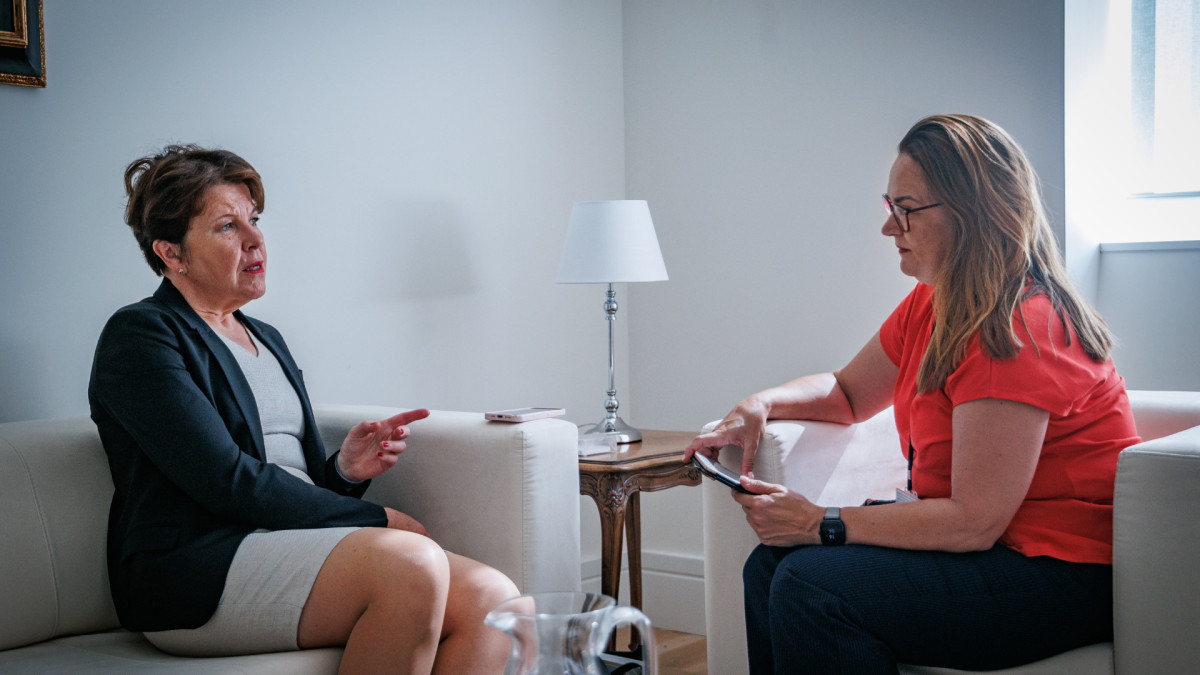
Teija Tiilikainen y Ruth Ferrero conversaron en Madrid sobre las funciones del ‘Hybrid CoE’.Agenda Pública / Tania Sieira
If I asked you to outline the scenarios involving Russia, what would they be?
I view there being a conventional scenario. The commonly accepted scenario—the one everyone expects—posits Russia attacking the Baltic states, Poland, or a neighboring area. In essence, it resembles Ukraine: armored units crossing borders, drones, and the usual sequence of events.
Yet when you put it together, you realize it’s largely a reuse of earlier war paradigms. Ukraine is very much in recent memory and thus prominent in our minds, but the pattern also echoes the old Cold War playbook. Back then the front line was further to the west, but the structure of the scenario looks similar.
That is largely what NATO is training for today. Still, there is a fundamental flaw in our reasoning. NATO’s military scenarios tend to begin with the initial volley. But wars begin before the first shot is fired.
“NATO’s war scenarios tend to begin with the first shot being fired. But wars begin before the first shot”
You mentioned escalation. I don’t think we spend enough time thinking about escalation in the sense of when you first notice it is happening and what steps precede it?
What worries me now is that we don’t devote enough attention to those early stages, and that makes a misstep into war more likely.
For me, the conventional scenario isn’t the most probable. The more plausible scenario could unfold in the Arctic, or perhaps in the Mediterranean or the Black Sea. Let’s focus on the Arctic for a moment. Imagine a British vessel; a satellite fails; the ship drifts into Russian waters; something triggers a volley of shots.
Under the Arctic conditions, the North Atlantic Treaty would extend over vessels north of the Tropic of Cancer, creating an Article 5 situation that neither the U.K. nor Russia would want.
This prospect of accidentally slipping into war is far more alarming to me. The situation is so tense that something could go wrong at any moment. Consider the dynamics that helped spark the First World War.
And suddenly you have a tangled mess: it might begin in the Arctic and then spill over into space as satellites become involved. It might look nothing like the war we’ve prepared for. To me, that is the more likely scenario.
And it’s less about Russian tanks crossing borders than about how both sides perceive one another. Each side increasingly expects the other to take a step first.
And when both sides anticipate action, an incident is more likely to be interpreted as intentional.
“This possibility of accidentally stumbling into a war worries me much more. The situation is now so tense that something can simply go wrong”
Describing a situation where we already seem to be at war with Russia doesn’t help, because it also amplifies this tension—the assumption that whatever Russia does is deliberate or hostile. I’m not judging the accuracy of that assumption; I’m noting that this is how the discourse tends to unfold.
Russia, paradoxically, believes that fostering a warlike atmosphere can help avert actual war. We don’t think in those terms, so the two strategic languages are effectively talking past one another.
From a Spanish vantage point, the Russian threat can feel remote, while Ceuta, Melilla, and other North African areas present more immediate vulnerabilities. Do you think Europe and NATO give adequate attention to the Mediterranean as a strategic scenario?
Here’s a telling anecdote. After the Cold War ended, Joint Force Command Naples conducted a study on how the Soviets might have fared if they had attacked from the south. They concluded that the southern theatre could have been more advantageous for the Soviets than the east, precisely because NATO was already focusing eastward and neglecting the south.
There are several reasons behind NATO’s “southern blind spot.” But it is not justified. It wasn’t justified then, and it isn’t justified now.
“There are a variety of reasons why NATO has this «southern blindness». But it isn’t justified. It wasn’t justified then, and it isn’t justified now”
I think it is crucial for NATO as a whole—and for Europe in general—to recognise that the Mediterranean is not merely a pleasant sea linking Europe with its Middle Eastern and North African neighbors. It is not just about Mediterranean Dialogue, nation-building, and capacity-building. All of that matters, of course, but there is a broader strategic reality as well.
Russia maintains a port in Syria and has relatively good ties with Egypt. It is likely present in Libya and possibly elsewhere in Africa. It has recently acquired a shipyard in Morocco. Nobody can say for certain what they intend to do with it, but I would keep an eye on it. There is also an increasing presence of Russian ships in the Mediterranean, including aggressive shadowing—following vessels from NATO countries, for example.
So it is high time we recognised that the Mediterranean is not just a friendly inland sea between Europe and North Africa. It also hosts critical infrastructure, including underwater cables, and will be affected by climate change, submarine activity, storms and other factors.
Even when focusing solely on naval, military, and maritime dimensions, there is a lot happening there. It’s essential that people grasp this reality. A strategic shift in how we interpret NATO’s southern flank is overdue.
Thank you very much.
