
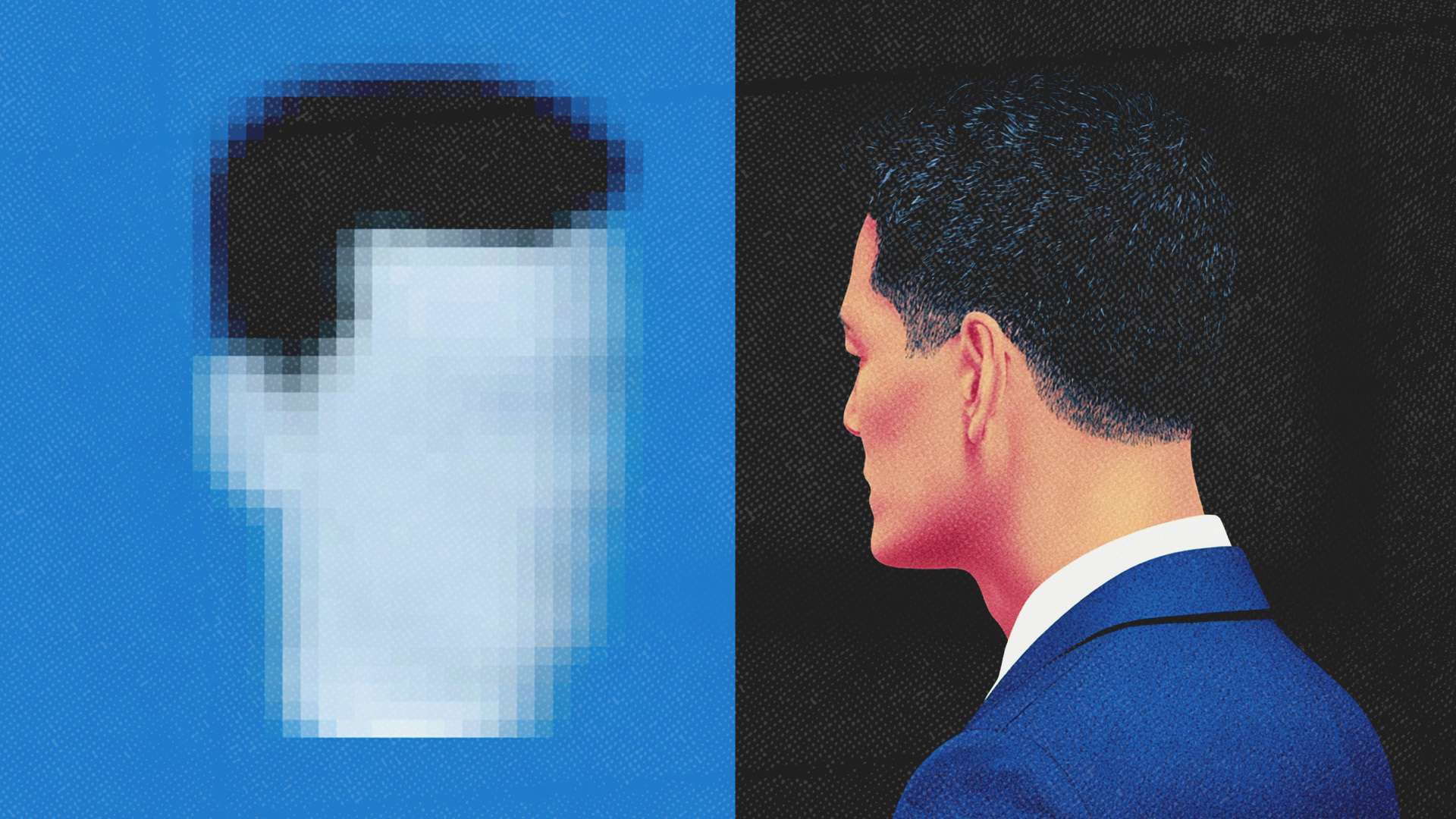
Police in Florida have detained at least fifteen individuals in recent years after facial recognition matches that proved unreliable. A man was arrested and kept in jail for nearly three months because of a flawed facial recognition result, and this is not the first time such an error has occurred—indeed, it appears to be at least the second instance involving the same sheriff’s office, according to Action News Jax.
In April 2025, a Jacksonville, Florida resident bought a car from a seller he met in a grocery store parking lot. After discovering the vehicle had been stolen, he notified the Jacksonville Sheriff’s Office. Investigators, using surveillance footage from the parking lot, ran the suspect through facial recognition software, which returned an 85 percent match for Jalil Richardson.
The case was fraught with complications. Richardson lived in Charlotte, North Carolina—about 400 miles away. Moreover, payroll records indicated Richardson was on the clock at his job at the time the alleged sale of the stolen car occurred in Jacksonville.
Nevertheless, the police pressed ahead. Richardson was arrested in North Carolina and held for 33 days, after which he was extradited to Jacksonville and held for another 53 days. Prosecutors eventually dropped the charges and released him last month after he had spent nearly three months behind bars.
Richardson told Action News Jax that the arrest and the subsequent confinement cost him his job, his home, and custody of two of his children.
Detaining someone for a crime they did not commit is among the gravest mistakes law enforcement can make, especially when the arrest triggers lasting harm in the arrestee’s life. Yet this is not the lone instance in recent memory of Jacksonville police making such a misstep.
Earlier this month, the American Civil Liberties Union (ACLU) sued the city of Jacksonville Beach, a separate municipality just east of Jacksonville. Officers were investigating an attempted child abduction when a Jacksonville Sheriff’s Office investigator ran grainy surveillance photos of the suspect through facial recognition. The software flagged Robert Dillon, who was arrested and charged, even though he lived and worked 300 miles away.
The ACLU identified at least 15 people, including Dillon and Richardson, who had been arrested since 2019 based on faulty facial recognition.
“Facial recognition software is just one tool in a large toolbox for investigators,” the Jacksonville Sheriff’s Office said in a statement to Action News Jax about Richardson’s case. “Our detectives and officers use any and all available resources to solve cases. It is incorrect to assume that facial recognition was the deciding factor in Mr. Richardson’s arrest.”
“If you came to me with a facial recognition hit and that was your probable cause, I would probably kick you out of my office because that’s not how it works,” Jacksonville Sheriff T.K. Waters told Action News Jax last year regarding Dillon’s case. “There better be a lot more that goes along with that to help make sure that we have the proper individual too.”
But in Richardson’s case, the only other investigative method identified was a photo lineup, which investigators administered to both the witness and his brother.
As the ACLU noted in its lawsuit on behalf of Dillon, when facial recognition “produces a false match, the returned (innocent) candidate will, by algorithmic design, resemble the actual perpetrator. Placing that candidate’s photograph in an array predictably taints any witness identification that follows. Photo arrays are constructed by surrounding the candidate with ‘fillers’—photographs of known innocents selected for their physical similarity to the candidate, not to the actual perpetrator.”
This is not to say facial recognition has no value as an investigative tool, but it is clear that it should not be the sole, or perhaps even the primary, basis for identifying a suspect.
Still, some see the danger as even greater than a mere misstep: “The technology is simply too dangerous for law enforcement to be using at all,” said Adam Schwartz, privacy litigation director at the Electronic Frontier Foundation, in speaking with Action News Jax.
